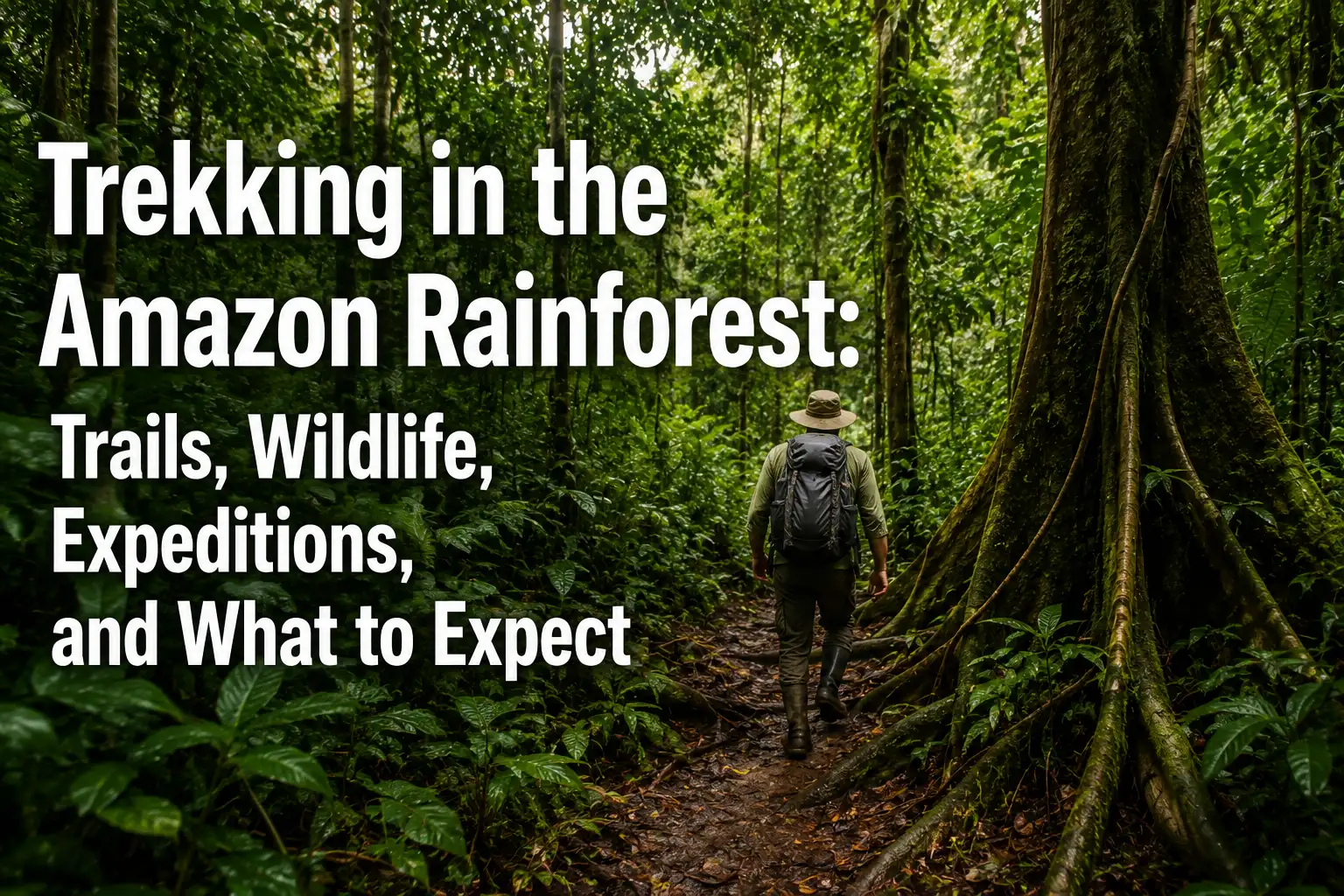
Trekking in the Amazon rainforest is one of the most extraordinary adventure experiences in South America. Unlike hiking in mountains or walking along established national park trails, trekking in the Amazon means entering a living environment where dense vegetation, tropical weather, rivers, wildlife, insects, and constantly changing forest conditions become part of the journey.
The Amazon rainforest is not one single destination with one entrance or one famous hiking route. It is a vast region extending across several South American countries, containing protected reserves, indigenous territories, national parks, rivers, remote lodges, wildlife trails, and expedition routes. Some visitors enjoy short guided walks near jungle lodges, while others join multi-day Amazon rainforest expeditions that involve camping, river travel, survival experiences, and long treks through primary forest.
So, can you hike in the Amazon rainforest? Yes, but trekking in the Amazon is very different from conventional hiking. Trails may be muddy, humid, narrow, flooded, or surrounded by dense vegetation. Wildlife can be difficult to see despite being close by, and an experienced local guide is essential in most rainforest environments.
This guide explains everything you need to know about the best trekking in Amazon rainforest, including trails, wildlife, expeditions, how to visit the Amazon, what to expect, what altitude the Peruvian Amazon has, rainforest reservations, and how to choose Amazon rainforest tour packages.
What Is Trekking in the Amazon Rainforest Like?
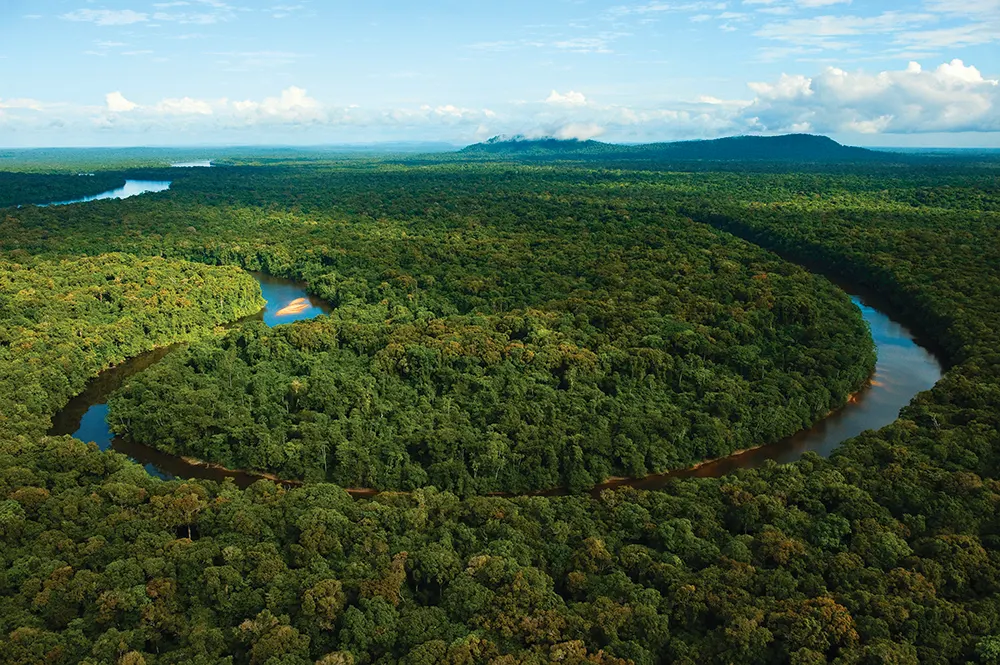
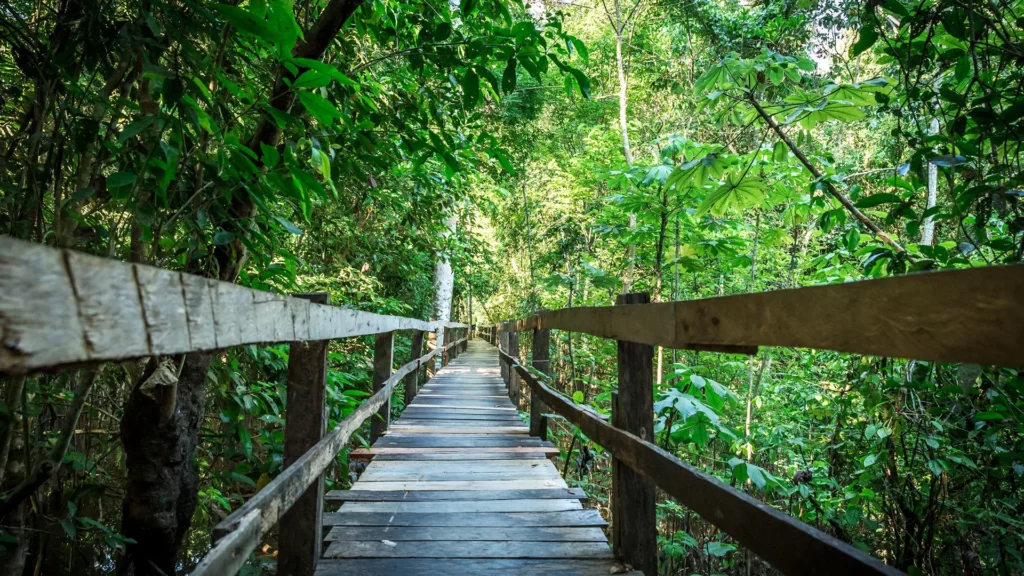
Trekking through the Amazon rainforest is an immersive experience rather than simply a long-distance walk. The forest environment surrounds visitors from every direction. Towering trees block much of the direct sunlight, vines hang from branches, insects move through the vegetation, birds call from the canopy, and the sounds of unseen animals can travel through the forest.
A typical Amazon trek may include walking along narrow forest trails, crossing small streams, observing giant trees, identifying medicinal plants, searching for animal tracks, visiting oxbow lakes, and learning about the rainforest ecosystem.
The difficulty of trekking varies significantly.
Some jungle walks may last only one or two hours on relatively maintained trails. Others can last an entire day and require walking through mud, crossing uneven terrain, climbing small hills, and dealing with high humidity.
What Makes Amazon Trekking Different From Regular Hiking?
Amazon trekking differs from mountain hiking in several important ways.
Humidity
The Amazon can be extremely humid. Even relatively easy walks can feel physically demanding because the body has difficulty cooling itself efficiently.
Dense vegetation
Visibility is often limited. Unlike open mountain landscapes, you may only be able to see a short distance through the forest.
Wildlife is often hidden
Animals may be close without being visible. A guide can identify sounds, tracks, broken branches, feeding signs, and other evidence of wildlife.
Trails constantly change
Rain, flooding, fallen trees, and vegetation growth can change the condition of Amazon trails.
Water is everywhere
Streams, rivers, seasonal flooding, puddles, and wetlands are common features of the rainforest landscape.
Can You Hike in the Amazon Rainforest?
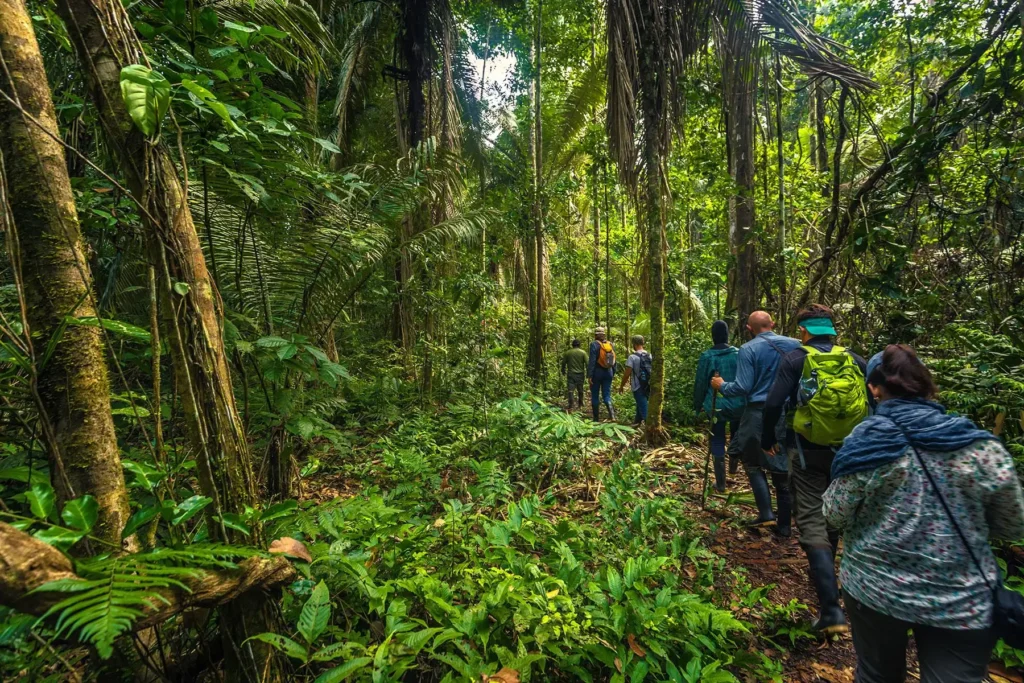
Yes, you can hike in the Amazon rainforest, and guided jungle walks are among the most popular activities for visitors.
However, it is important to understand that you cannot simply enter most remote rainforest areas alone and start walking without preparation.
The Amazon is enormous and can be disorienting. Dense vegetation makes navigation difficult, and trails may disappear into the surrounding forest.
Most visitors should hike with:
- An experienced local guide.
- Appropriate footwear.
- Insect protection.
- Drinking water.
- Rain protection.
- Long-sleeved clothing.
- A small daypack.
- Emergency communication when traveling in remote areas.
Can You Walk Through the Amazon Rainforest?
Yes, you can walk through the Amazon rainforest, but the experience depends heavily on where you are.
Near eco-lodges and protected reserves, visitors may find established walking trails.
In more remote areas, guides may follow traditional routes, animal paths, riverbanks, or temporary trails through dense vegetation.
Walking through primary rainforest can be surprisingly slow. Even when the terrain is relatively flat, roots, fallen branches, mud, streams, and vegetation require careful movement.
A distance that would take one hour on a paved road may take considerably longer in the jungle.
Best Trekking in the Amazon Rainforest
The best trekking in Amazon rainforest depends on the type of experience you want.
Some travelers want comfortable lodge-based walks with opportunities to see wildlife. Others want remote expeditions involving camping and survival skills.
The main trekking styles include:
- Short jungle walks.
- Half-day rainforest hikes.
- Full-day jungle trekking.
- Multi-day expeditions.
- Wildlife-focused walks.
- Night walks.
- Indigenous community trails.
- River and jungle combination expeditions.
- Remote camping expeditions.
Short Amazon Jungle Walks
Short walks are ideal for visitors who want to experience the rainforest without intense physical demands.
These walks often last between one and three hours.
Visitors may see:
- Giant trees.
- Medicinal plants.
- Insects.
- Birds.
- Monkeys.
- Animal tracks.
- Frogs.
- Butterflies.
- Palms.
- Fungi.
Short walks are often included in Amazon rainforest tour packages.
Full-Day Jungle Treks
Full-day treks provide more time to move deeper into the forest.
These experiences may involve several hours of walking with breaks for observation, food, photography, and wildlife tracking.
A full-day trek may include:
- Morning departure.
- Forest interpretation.
- Wildlife tracking.
- Lunch in the jungle.
- River or lake observation.
- Afternoon wildlife activity.
- Return before dark.
The physical difficulty depends on trail conditions and weather.
Multi-Day Amazon Rainforest Expeditions
A multi-day trek is a more demanding form of Amazon rainforest expedition travel.
Participants may travel by boat to remote locations and continue on foot through the forest.
Depending on the expedition, accommodation may include:
- Jungle lodges.
- Basic camps.
- Tents.
- Hammocks.
- Temporary forest shelters.
These expeditions are designed for travelers seeking deeper immersion.
Amazon Rainforest Expedition: What Does It Mean?
An Amazon rainforest expedition usually involves traveling beyond the standard tourist areas and spending more time exploring remote environments.
Expeditions can include a combination of:
- River transportation.
- Jungle trekking.
- Wildlife observation.
- Camping.
- Fishing.
- Canoeing.
- Birdwatching.
- Night walks.
- Plant identification.
- Survival demonstrations.
- Visits to remote communities.
The word “expedition” can mean different things depending on the operator. Some expeditions are comfortable lodge-based programs, while others involve genuinely remote travel.
Before booking, travelers should always understand:
- Daily walking distances.
- Accommodation type.
- Bathroom facilities.
- Electricity availability.
- Food arrangements.
- Communication access.
- Emergency procedures.
- Physical difficulty.
Rainforest Expeditions: Choosing the Right Experience
Not all rainforest expeditions are designed for the same type of traveler.
Beginner-Friendly Expeditions
These are suitable for travelers with average fitness.
They usually include comfortable accommodation and relatively short walks.
Wildlife Expeditions
These focus on animal observation.
Activities may include:
- Early morning walks.
- River safaris.
- Lake exploration.
- Night excursions.
- Birdwatching.
- Wildlife photography.
Adventure Expeditions
Adventure expeditions may involve longer treks, camping, primitive accommodation, and remote transportation.
Photography Expeditions
These are designed around wildlife and landscape photography.
Guides may focus on finding:
- Macaws.
- Monkeys.
- Giant river otters.
- Caimans.
- Birds.
- Butterflies.
- Frogs.
What Can You See in the Amazon Rainforest?
One of the most common questions travelers ask is: what can you see in the Amazon rainforest?
The answer is almost unlimited because the Amazon contains an extraordinary diversity of life.
However, seeing wildlife depends on location, season, weather, time of day, patience, and luck.
Mammals
Possible sightings include:
- Monkeys.
- Sloths.
- Capybaras.
- Tapirs.
- Giant river otters.
- Agoutis.
- Peccaries.
- Coatis.
- Armadillos.
- Bats.
Large predators such as jaguars are much more difficult to see.
Birds
The Amazon is famous for bird diversity.
Visitors may see:
- Macaws.
- Parrots.
- Toucans.
- Hoatzins.
- Kingfishers.
- Herons.
- Eagles.
- Oropendolas.
- Flycatchers.
- Tanagers.
- Woodpeckers.
Early morning is often one of the best times for bird activity.
Reptiles
Amazon reptiles may include:
- Caimans.
- Turtles.
- Lizards.
- Anacondas.
- Boas.
- Smaller snakes.
Many reptiles are difficult to locate because they are camouflaged.
Amphibians
Night walks can reveal:
- Tree frogs.
- Poison frogs.
- Toads.
- Other amphibians.
The rainforest becomes especially active after rain.
Insects
The Amazon contains countless insects.
Visitors may encounter:
- Butterflies.
- Beetles.
- Ants.
- Stick insects.
- Katydids.
- Cicadas.
- Dragonflies.
Some of the most unusual wildlife encounters happen with small animals rather than large mammals.
The Best Time of Day for Amazon Trekking
Wildlife activity changes throughout the day.
Early Morning
Early morning is often excellent for:
- Birds.
- Monkeys.
- Mammals.
- Animal calls.
- Cooler temperatures.
Midday
The forest may become quieter during the hottest hours.
However, insects, reptiles, butterflies, and some other animals remain active.
Late Afternoon
Bird and monkey activity may increase again as temperatures decrease.
Night
Night trekking reveals an entirely different rainforest.
A night walk can provide opportunities to observe:
- Frogs.
- Tarantulas.
- Scorpions.
- Nocturnal insects.
- Spiders.
- Snakes.
- Night birds.
Night Trekking in the Amazon Rainforest
Night walks are among the most unusual rainforest experiences.
During daylight, visitors see the forest visually. At night, they often experience it through sound.
The jungle may seem louder after dark because nocturnal insects and frogs become active.
A guide with a flashlight can reveal tiny creatures that would be impossible to see during the day.
What Makes Night Walks Special?
Many rainforest animals are nocturnal.
The forest floor can reveal:
- Spider eyes reflecting light.
- Frogs calling from leaves.
- Insects with unusual camouflage.
- Nocturnal mammals.
- Snakes moving through vegetation.
Night walks should always be conducted with an experienced guide and appropriate lighting.
How to Visit the Amazon Rainforest
The question how to visit the Amazon rainforest depends on which country and region you choose.
The Amazon extends across several countries, including:
- Peru.
- Brazil.
- Colombia.
- Ecuador.
- Bolivia.
- Venezuela.
- Guyana.
- Suriname.
- French Guiana.
Each region provides different experiences.
Step 1: Choose Your Amazon Destination
Consider whether you want:
- Wildlife.
- Luxury accommodation.
- Remote trekking.
- Indigenous cultural experiences.
- River cruises.
- Photography.
- Birdwatching.
- Budget travel.
Step 2: Choose the Length of Your Trip
Common options include:
- 2 days.
- 3 days.
- 4 days.
- 5 days.
- 7 days or longer.
Short trips provide an introduction, while longer trips allow visitors to travel deeper into the forest.
Step 3: Select a Protected Area or Lodge
The Amazon includes national parks, reserves, wildlife refuges, private conservation areas, and indigenous territories.
Step 4: Prepare for Tropical Conditions
Visitors should prepare for:
- Rain.
- Humidity.
- Insects.
- Mud.
- Heat.
- Sudden weather changes.
Where Can You Find the Amazon Rainforest?
The Amazon rainforest is located in South America.
The largest portion lies in Brazil, but the Amazon basin extends across several countries.
Amazon Countries
The Amazon region includes areas of:
- Brazil.
- Peru.
- Colombia.
- Bolivia.
- Ecuador.
- Venezuela.
- Guyana.
- Suriname.
- French Guiana.
The forest is connected by one of the world’s largest river systems.
Where Is the Best Place to Visit the Amazon?
There is no single best destination.
The best location depends on your interests.
For wildlife
Remote protected reserves are often preferred.
For river experiences
Areas with major navigable rivers are ideal.
For trekking
Regions with established forest trails and protected areas provide good options.
For accessibility
Some Amazon gateways are easier to reach from major cities.
Trekking in the Peruvian Amazon
Peru contains a large section of the Amazon basin and is one of the most popular destinations for rainforest trekking and wildlife tourism.
The Peruvian Amazon includes:
- Madre de Dios.
- Tambopata.
- Manu.
- Loreto.
- Ucayali.
- Other Amazonian regions.
Each area has different ecosystems and travel conditions.
Amazon Rainforest Peru Altitude
The question of Amazon rainforest Peru altitude is important because the Peruvian Amazon includes a wide range of elevations.
The lowland Amazon around Madre de Dios is relatively low in elevation compared with the Andes.
Areas near Puerto Maldonado, Tambopata, and surrounding lowland rainforest are generally around a few hundred meters above sea level.
However, the Peruvian Amazon is not entirely flat.
The Amazon region extends toward the eastern slopes of the Andes, where elevations can increase dramatically.
Why Altitude Matters
Altitude affects:
- Temperature.
- Vegetation.
- Wildlife.
- Rainfall.
- Physical exertion.
The lowland Amazon is generally hot and humid.
Higher cloud forests near the Andes may be cooler and contain different plant and animal species.
Amazon Rainforest Reservations and Protected Areas
The term Amazon rainforest reservations can refer to protected areas, national reserves, conservation concessions, indigenous territories, and other designated forest areas.
Protected areas play a major role in preserving:
- Wildlife habitat.
- Old-growth forest.
- Rivers.
- Lakes.
- Endangered species.
- Indigenous cultures.
- Scientific research opportunities.
Why Are Amazon Reservations Important?
Without protected areas, many forests would face greater pressure from:
- Deforestation.
- Mining.
- Logging.
- Agricultural expansion.
- Infrastructure development.
Reservations and protected areas also create opportunities for responsible tourism.
What Is It Like to Walk on an Amazon Jungle Trail?
An Amazon trail can be very different from what travelers imagine.
The forest floor is often covered with:
- Fallen leaves.
- Roots.
- Branches.
- Mud.
- Small plants.
- Fungi.
Some trails are relatively clear, while others are narrow and surrounded by vegetation.
The Ground Can Be Uneven
Roots can create natural obstacles.
During rainy periods, trails may become slippery.
It Can Feel Cooler Under the Canopy
Despite high temperatures outside the forest, the canopy can reduce direct sunlight.
However, humidity often remains high.
Sounds Become Important
Because visibility is limited, experienced guides often identify animals by sound.
You may hear:
- Howler monkeys.
- Macaws.
- Parrots.
- Frogs.
- Insects.
- Woodpeckers.
- Falling branches.
Interesting Things You May Discover While Trekking
Amazon trekking is not only about seeing large animals.
Some of the most fascinating discoveries are small.
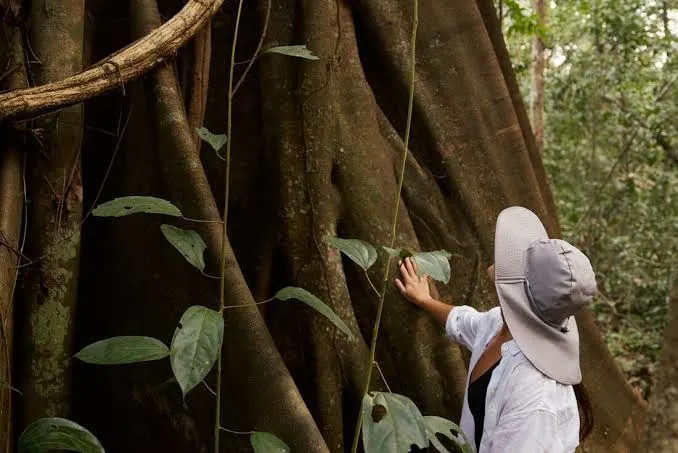
Giant Trees
A guide may show you trees with:
- Buttress roots.
- Medicinal uses.
- Edible fruits.
- Extremely hard wood.
- Natural defenses.
Leafcutter Ant Highways
Leafcutter ants can create impressive trails through the forest while carrying pieces of leaves much larger than their bodies.
Strangler Figs
Some fig species begin life high in another tree and eventually grow roots toward the ground.
Over time, their growth can surround the original host tree.
Natural Camouflage
Many insects and frogs are almost impossible to detect.
They may resemble:
- Leaves.
- Bark.
- Twigs.
- Moss.
What Is Unusual About Trekking in the Amazon?
One of the strangest aspects of Amazon trekking is that the forest can appear quiet even when surrounded by life.
A visitor may walk for an hour without seeing a large animal.
This does not mean the forest is empty.
Animals may be:
- High in the canopy.
- Behind vegetation.
- Sleeping.
- Avoiding humans.
- Active at night.
- Moving silently.
The Forest Has Different Worlds at Different Heights
The Amazon is vertical.
The forest floor is one world.
The understory is another.
The canopy is another.
The emergent layer is another.
Animals that rarely meet may live only a few meters apart vertically.
What to Expect During an Amazon Rainforest Trek
First-time visitors should expect a mixture of beauty, discomfort, surprise, and adventure.
Expect Rain
Even during relatively dry periods, rain is possible.
Expect Humidity
Sweating is normal during physical activity.
Expect Insects
Insect activity varies by location and season.
Expect Mud
Jungle trails can become muddy quickly after rain.
Expect Unexpected Wildlife
Some of the best sightings happen without warning.
Do Not Expect a Zoo
Wild animals are not guaranteed.
The Amazon is a natural ecosystem, and wildlife sightings depend on many factors.
What to Wear for Trekking in the Amazon Rainforest
Appropriate clothing can make a major difference.
Recommended items include:
- Lightweight long-sleeved shirts.
- Long pants.
- Rain jacket or poncho.
- Hat.
- Hiking shoes or jungle boots.
- Extra socks.
- Insect protection.
- Small backpack.
Why Long Sleeves Are Useful
Long sleeves can provide protection against:
- Mosquitoes.
- Vegetation.
- Sun.
- Scratches.
Lightweight fabrics are usually more comfortable in humid environments.
What to Pack for an Amazon Trek
A practical Amazon trekking checklist includes:
Essential items
- Passport and travel documents.
- Reusable water bottle.
- Lightweight clothing.
- Long pants.
- Rain protection.
- Insect repellent.
- Sunscreen.
- Hat.
- Flashlight or headlamp.
- Camera.
- Personal medication.
Optional items
- Binoculars.
- Dry bag.
- Extra batteries.
- Travel towel.
- Waterproof phone protection.
- Small notebook.
Amazon Rainforest Tour Packages
Amazon rainforest tour packages range from simple overnight trips to extended wildlife expeditions.
Most packages combine several activities rather than focusing exclusively on trekking.
Common inclusions may involve:
- Airport or hotel transfers.
- River transportation.
- Jungle accommodation.
- Meals.
- Guided walks.
- Wildlife observation.
- Night activities.
- Canoe excursions.
Short Amazon Tour Packages
Short tours are usually suitable for travelers with limited time.
They may include one jungle walk and a night activity.
Three to Four-Day Packages
These are popular because they provide more opportunities to experience different habitats.
Visitors may combine:
- Jungle trekking.
- River transportation.
- Lake exploration.
- Night walks.
- Wildlife observation.
Longer Expeditions
Trips of five days or more allow visitors to travel farther into remote forest environments.
Longer stays can increase opportunities for wildlife observation because visitors spend more time in different habitats.
How Difficult Is Trekking in the Amazon?
Difficulty depends on the route.
A short lodge trail may be suitable for beginners.
A multi-day expedition may require good physical fitness.
Easy
Characteristics may include:
- Flat trails.
- Short distances.
- Frequent breaks.
- Lodge-based accommodation.
Moderate
May involve:
- Several hours of walking.
- Uneven terrain.
- Mud.
- Heat and humidity.
Difficult
May involve:
- Long distances.
- Remote locations.
- Camping.
- River crossings.
- Limited facilities.
Travelers should always choose a trek appropriate for their fitness level.
Is Trekking in the Amazon Safe?
Guided trekking can be safe when appropriate precautions are followed.
The biggest risks are often not dramatic wildlife encounters.
More common challenges include:
- Dehydration.
- Heat exhaustion.
- Slipping.
- Insect bites.
- Getting lost.
- Falling branches.
- River conditions.
A knowledgeable guide helps visitors understand these risks.
Basic Jungle Safety Rules
- Stay with your guide.
- Do not touch unknown animals.
- Do not eat unknown plants.
- Stay on designated trails when possible.
- Drink sufficient water.
- Inform guides about allergies or physical limitations.
- Wear appropriate clothing.
- Avoid unnecessary noise around wildlife.
Why You Should Not Trek Alone in Remote Amazon Forest
The Amazon can be extremely difficult to navigate.
Dense vegetation makes landmarks hard to identify.
A person leaving a trail may become disoriented surprisingly quickly.
Local guides understand:
- Animal tracks.
- Trail systems.
- Weather patterns.
- Rivers.
- Plant hazards.
- Emergency routes.
Guided trekking also provides a deeper educational experience.
Best Wildlife for Amazon Trekkers
Visitors interested in wildlife should understand that different animals are best observed in different habitats.
Forest trails
Best for:
- Monkeys.
- Insects.
- Birds.
- Frogs.
- Tracks.
Rivers
Best for:
- Caimans.
- Capybaras.
- Birds.
- River otters.
Lakes
Best for:
- Giant river otters.
- Water birds.
- Caimans.
- Turtles.
Canopy areas
Best for:
- Macaws.
- Toucans.
- Parrots.
- Monkeys.
The Role of Local Guides in Amazon Expeditions
A good guide can transform a rainforest walk.
Without local knowledge, visitors may see only trees.
With an experienced guide, the same forest becomes a story.
A guide may point out:
- Animal tracks.
- Nesting sites.
- Medicinal plants.
- Edible fruits.
- Insect colonies.
- Bird calls.
- Camouflaged animals.
- Tree species.
Local knowledge is particularly valuable because many signs are subtle.
Frequently Asked Questions About Trekking in the Amazon Rainforest
Can you hike in the Amazon rainforest?
Yes. Guided hiking and trekking are available in many Amazon regions. Visitors can choose from short jungle walks, full-day hikes, and multi-day expeditions.
Can you walk through the Amazon rainforest?
Yes, but walking conditions vary greatly. Some areas have established trails, while remote areas require guides and specialized navigation.
What can you see in the Amazon rainforest?
Visitors may see monkeys, birds, reptiles, amphibians, insects, giant trees, rivers, lakes, medicinal plants, and many other natural features. Wildlife sightings are never guaranteed.
Where can you find the Amazon rainforest?
The Amazon rainforest is located in South America and extends across several countries, including Brazil, Peru, Colombia, Bolivia, Ecuador, and others.
Is trekking in the Amazon difficult?
It can range from easy lodge walks to demanding multi-day expeditions. Humidity, mud, uneven trails, and heat can make even short walks physically challenging.
What is the altitude of the Amazon rainforest in Peru?
The lowland Peruvian Amazon is generally located at relatively low elevations, while the broader Amazon region extends toward the Andean foothills where altitude increases.
What should I wear when trekking in the Amazon?
Lightweight long clothing, comfortable hiking footwear or jungle boots, rain protection, and insect protection are recommended.
How long should you spend in the Amazon?
A minimum of three days provides a basic introduction, while four to five days allows visitors to experience more habitats and activities.
Final Thoughts: Is Trekking in the Amazon Rainforest Worth It?
Trekking in the Amazon rainforest is one of the most immersive ways to understand the world’s largest tropical forest. Walking beneath giant trees, following narrow trails, listening to monkey calls, discovering tiny insects, and learning how plants and animals interact provides an experience that cannot be fully understood from a boat, photograph, or documentary.
The Amazon is not a place where every step produces a dramatic wildlife encounter. Its greatest mystery is often hidden. A jaguar may be nearby without being seen. Monkeys may move high above the canopy. A frog may be perfectly camouflaged on a leaf only centimeters away.
This uncertainty is part of the adventure.
Whether you choose a short jungle walk, a wildlife-focused lodge program, or a remote Amazon rainforest expedition, trekking allows you to experience the forest at ground level and understand its extraordinary complexity.
The best journeys combine patience, curiosity, preparation, and respect for the environment. With the right guide and itinerary, walking through the Amazon becomes much more than a hike—it becomes an opportunity to enter one of the most biologically diverse and fascinating ecosystems on Earth.
From quiet trails beneath enormous rainforest trees to night expeditions filled with the sounds of frogs and insects, the Amazon offers an adventure unlike any other. For travelers wondering how to visit the Amazon rainforest, trekking remains one of the most authentic ways to discover its landscapes, wildlife, and hidden natural wonders.