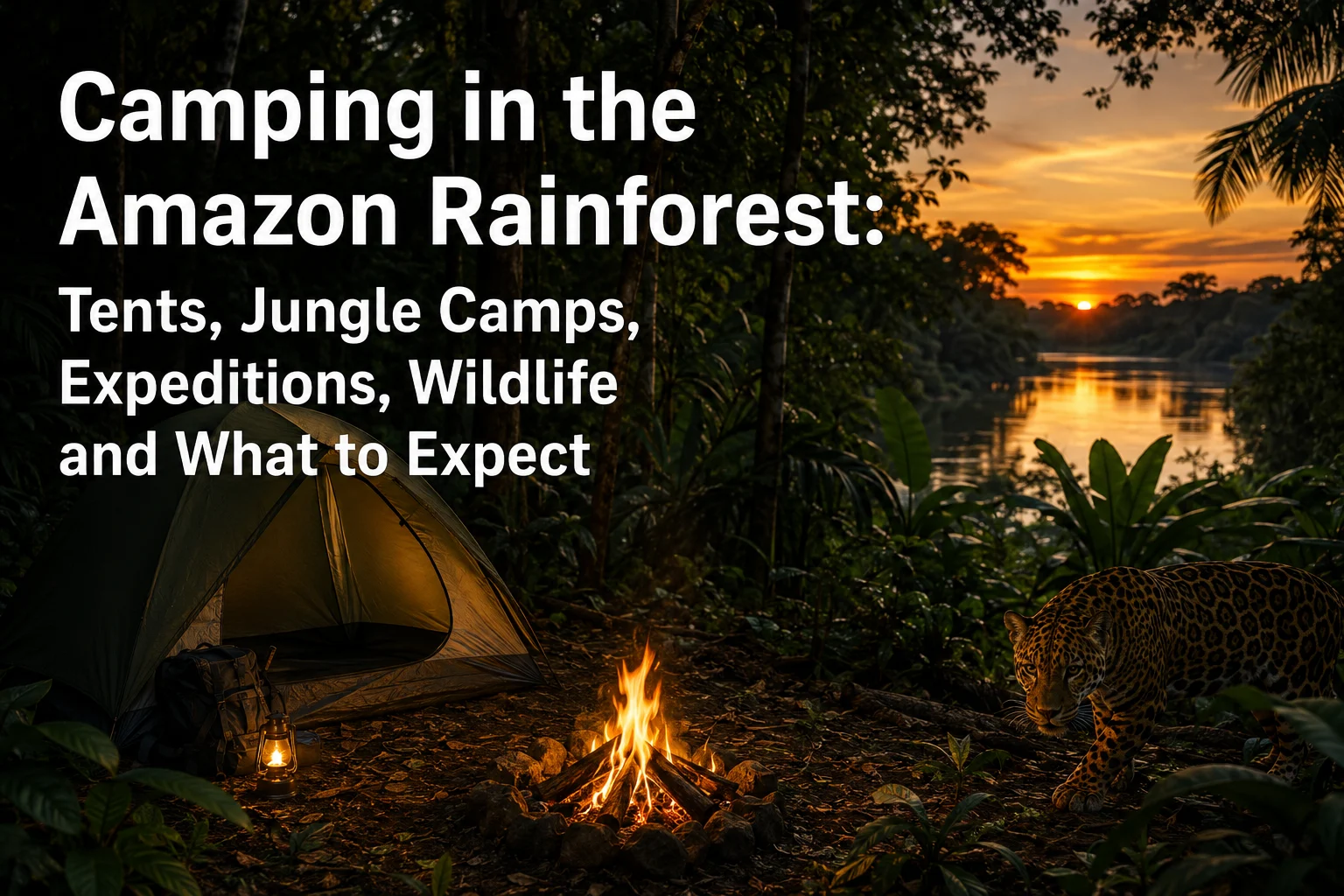
Camping in the Amazon rainforest is one of the most immersive ways to experience the world’s largest tropical forest. Instead of simply visiting the jungle for a few hours, camping allows travelers to experience the sounds, smells, humidity, wildlife, towering trees, rivers, insects, darkness, and extraordinary rhythms of life that make the Amazon so different from an ordinary destination. From tent camping in the Amazon rainforest to comfortable Amazon camp lodges, jungle expeditions can range from adventurous overnight experiences to organized multi-day programs led by experienced local guides.
The Amazon is not a conventional camping destination. It is a living ecosystem where conditions can change quickly, trails can become muddy, rivers can rise, and wildlife is often hidden rather than dramatically visible. A successful Amazon camping experience therefore depends on preparation, responsible tourism, appropriate equipment, local knowledge, and realistic expectations. Whether you are planning an Amazon rainforest trek, joining rainforest expeditions, or looking for a peaceful Amazon rainforest retreat, understanding what camping in this environment is really like will help you make the most of your journey.
Can You Camp in the Amazon Rainforest?
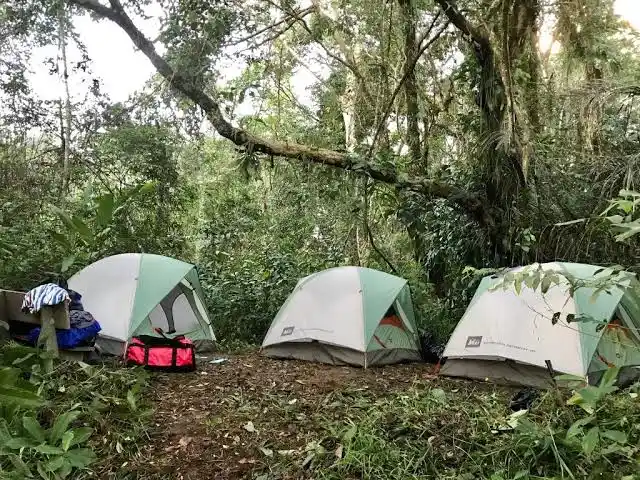
Yes, you can camp in the Amazon rainforest, but the type of camping available depends greatly on where you travel, the regulations of the protected area, the season, and whether you are traveling independently or with an organized expedition.
In many parts of the Amazon, traditional backpacking-style camping is not the normal way visitors explore the forest. Instead, travelers usually stay in designated camps, jungle shelters, research stations, or Amazon camp lodges and explore the surrounding forest during guided excursions. This approach provides greater safety, better logistics, and a much lower environmental impact.
Can You Go Camping in the Amazon Rainforest?
Yes, but responsible camping means following local regulations and using established areas rather than simply putting a tent anywhere in the forest. The Amazon contains protected ecosystems, indigenous territories, private conservation areas, and national reserves where camping may require authorization.
For travelers who want a genuine wilderness experience, an organized jungle camping expedition can provide many of the sensations of traditional camping without unnecessarily exposing visitors to avoidable risks.
Why Amazon Camping Is Different
Camping in the Amazon differs from camping in temperate forests or mountains because of several environmental factors:
- Extremely high humidity
- Heavy tropical rainfall
- Muddy trails
- Numerous insects
- Dense vegetation
- Fast-changing river levels
- High temperatures
- Limited roads
- Difficult navigation
- Potential encounters with wildlife
- Very limited artificial lighting
- Remote medical facilities
The forest is also extraordinarily dense in some areas. A trail that looks short on a map can take much longer because roots, fallen branches, mud, streams, and vegetation can slow progress.
Tent Camping in the Amazon Rainforest
Tent camping in the Amazon rainforest offers one of the most adventurous versions of a jungle experience. Sleeping inside a tent surrounded by tropical forest can make you feel completely separated from modern civilization. At night, the jungle becomes especially dramatic as frogs, insects, birds, bats, monkeys, and other nocturnal creatures create an almost continuous soundtrack.
However, rainforest tent camping requires equipment designed specifically for tropical conditions. A normal recreational tent may not be sufficient for prolonged exposure to heavy rain and humidity.
What Is Tent Camping Like in the Amazon?
A typical tent camping experience may involve traveling by boat from a town or lodge into a more remote area, walking along a forest trail, establishing camp in a designated location, and spending one or more nights under shelter.
The experience can be rustic. You may wake up to birds instead of an alarm clock, discover that your clothes remain damp because of the humidity, and hear unfamiliar sounds throughout the night. There may be no electricity, hot shower, conventional bathroom, or cellular signal.
That simplicity is precisely what attracts many adventure travelers.
What Kind of Tent Is Suitable?
A suitable jungle tent should provide:
- Excellent ventilation
- Protection from heavy rain
- A reliable waterproof floor
- Strong insect protection
- Durable poles and construction
- Good airflow
- Enough space for sleeping equipment
- Protection from condensation
In extremely humid environments, ventilation is almost as important as waterproofing. A completely sealed tent can accumulate condensation quickly.
Best Camping in the Amazon Rainforest
The best camping in the Amazon rainforest depends on what you mean by “best.” Some travelers want complete wilderness and basic facilities, while others want the atmosphere of sleeping in the jungle with comfortable beds, bathrooms, meals, and guided activities.
For most first-time visitors, the best experience is usually a professionally organized jungle camp or lodge combined with guided excursions.
Remote Jungle Camping
Remote camping provides a stronger feeling of isolation. These camps may be reached by boat and hiking trails rather than roads. The advantage is the opportunity to experience areas with less human disturbance.
Remote camping is especially appealing to travelers interested in:
- Wildlife observation
- Photography
- Birdwatching
- Night walks
- Jungle trekking
- Survival skills
- Forest ecology
- Stargazing
- River exploration
Comfortable Amazon Camp Lodges
An Amazon camp lodge provides another interpretation of camping. Instead of sleeping directly on the ground in a conventional tent, visitors stay in rustic or semi-rustic structures surrounded by rainforest.
Depending on the property, accommodations may include:
- Private bungalows
- Raised wooden cabins
- Thatched roofs
- Mosquito nets
- Private bathrooms
- Dining areas
- Hammocks
- Solar or generator electricity
- Guided excursions
This style is often ideal for travelers who want the rainforest atmosphere without sacrificing basic comfort.
Amazon Rainforest Trek
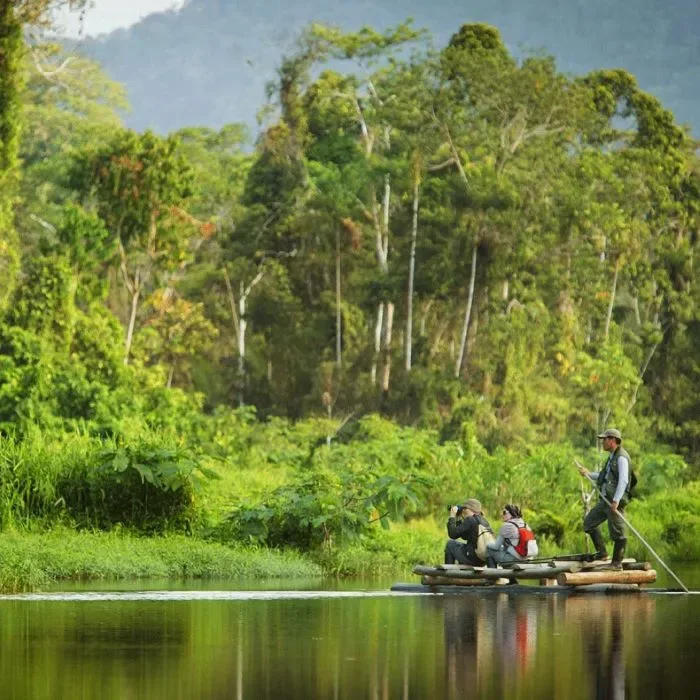
An Amazon rainforest trek is one of the best ways to understand the forest beyond what can be seen from a boat. Walking places you directly inside the ecosystem and allows you to observe details that are easy to miss from a river.
A guide may point out medicinal plants, animal tracks, termite colonies, enormous tree roots, camouflage specialists, insects, fungi, birds, and signs of monkeys moving through the canopy.
What Happens During an Amazon Rainforest Trek?
A jungle trek usually follows established trails through several types of forest habitat. The exact route depends on the destination.
During a trek, you may encounter:
- Giant tropical trees
- Buttress roots
- Vines and lianas
- Palm trees
- Epiphytes
- Orchids
- Mushrooms
- Leafcutter ants
- Termite nests
- Tree frogs
- Tropical birds
- Monkey species
- Animal tracks
- Sloth habitat
- Caiman near waterways
The objective is not necessarily to walk quickly. In the Amazon, slowing down is often the key to seeing wildlife.
Why Walking Slowly Matters
Many Amazonian animals are masters of camouflage. A sloth may remain motionless in a tree. An insect may resemble a leaf. A frog can blend into bark or vegetation.
An experienced guide may stop frequently, scan the canopy, listen to calls, inspect leaves, and identify tracks that an inexperienced visitor would walk past without noticing.
Rainforest Expeditions
Rainforest expeditions are longer, more immersive journeys designed to explore multiple aspects of the jungle. Rather than visiting one attraction and returning immediately to town, an expedition can combine hiking, canoeing, wildlife observation, night walks, river travel, and camping.
An expedition may last several days and include multiple ecosystems.
What Makes a Rainforest Expedition Special?
The biggest difference between a short jungle tour and an expedition is time. Spending several days in the rainforest gives you more opportunities to observe wildlife and understand how the ecosystem changes from morning to afternoon and from daylight to darkness.
A typical expedition might include:
- River transportation
- Jungle hiking
- Canoe exploration
- Wildlife observation
- Night walks
- Birdwatching
- Camp or lodge accommodation
- Sunrise excursions
- Local ecological interpretation
- Return journey by river
The longer you remain in the forest, the more the jungle becomes familiar.
Rainforest Expeditions in Tambopata
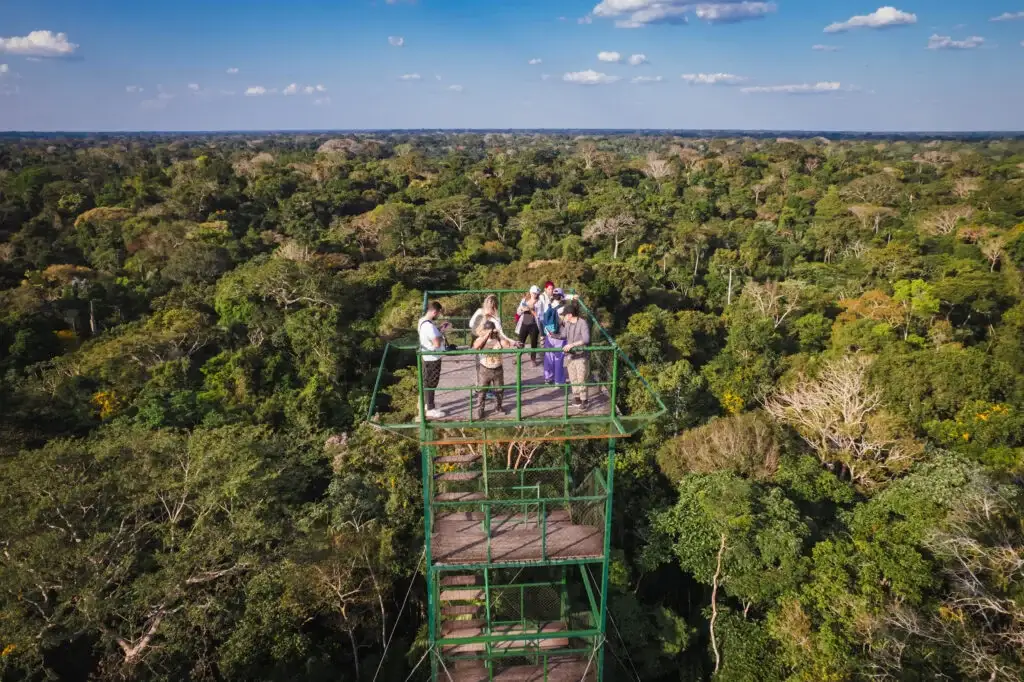
For travelers interested in rainforest expeditions in Tambopata, the region around Puerto Maldonado provides a particularly accessible gateway into the Peruvian Amazon.
The Tambopata landscape combines rivers, oxbow lakes, floodplain forests, terra firme forest, wetlands, and areas of exceptionally high biodiversity. The region is particularly well known for wildlife observation and opportunities to explore the rainforest by boat and on foot.
Tambopata Camping and Wildlife
A multi-day Tambopata expedition can provide opportunities to search for:
- Giant river otters
- Capybaras
- Caimans
- Hoatzins
- Macaws
- Parrots
- Toucans
- Squirrel monkeys
- Brown capuchin monkeys
- Howler monkeys
- Sloths
- Tarantulas
- Tree frogs
- Numerous insects
Wildlife sightings are never guaranteed. The Amazon is not a zoo, and animals are free to move through an enormous landscape. The value of the experience comes from observing natural behavior rather than checking animals off a list.
Amazon Rainforest Retreat
Not every rainforest experience needs to be physically demanding. An Amazon rainforest retreat can be designed around slowing down, disconnecting from technology, observing nature, and enjoying the sounds of the forest.
A rainforest retreat may include:
- Hammock relaxation
- Meditation
- Birdwatching
- Gentle walks
- Canoe trips
- Nature photography
- Reading
- River views
- Sunrise observation
- Evening wildlife excursions
The unusual thing about a rainforest retreat is that doing “nothing” can actually become an activity. Sitting quietly beside a river may reveal birds, monkeys, butterflies, caimans, or other wildlife that would never appear during a noisy group activity.
Amazon Camp Lodge vs. Traditional Tent Camping
The terms “camping” and “jungle lodge” are sometimes used interchangeably, but they can represent very different experiences.
| Experience | Traditional Tent Camping | Amazon Camp Lodge |
|---|---|---|
| Sleeping | Tent | Bungalow, cabin or shelter |
| Comfort | Basic | Basic to comfortable |
| Bathroom | Often shared/basic | Usually available |
| Electricity | Limited or none | Often limited |
| Wildlife | Excellent potential | Excellent potential |
| Rain protection | Depends on equipment | Generally stronger |
| Adventure level | High | Moderate to high |
| Suitable for families | Depends on camp | Often easier |
| Guided activities | Usually organized | Common |
| Weather exposure | Higher | Lower |
Neither option is automatically better. Tent camping is ideal for travelers seeking a stronger wilderness experience, while a jungle lodge can be better for visitors who want comfort combined with immersion.
How to Travel to the Amazon Rainforest
One of the most common questions is how to travel to the Amazon rainforest. Because the Amazon covers a massive area across several countries, the answer depends on your chosen destination.
For the Peruvian Amazon, Puerto Maldonado is one of the principal gateways. Travelers commonly arrive by air or by long-distance road transportation and then continue toward rainforest destinations by river or road.
The general journey is:
City → Amazon gateway → River/road transfer → Jungle lodge or camp → Guided rainforest activities
This transition is part of the adventure. The urban landscape gradually disappears, roads become less important, and the river becomes one of the main transportation routes.
How to Visit the Amazon Rainforest
Knowing how to visit the Amazon rainforest involves more than deciding where to sleep. You should consider transportation, season, accommodation, activities, duration, physical fitness, and whether you want a comfortable lodge or a more adventurous expedition.
How Many Days Do You Need?
A one-day visit can introduce you to the rainforest, but it provides limited time.
A more immersive itinerary generally benefits from several days.
One Day
Good for travelers with limited time, but activities are necessarily compressed.
Two to Three Days
Provides more opportunities for jungle walks, canoe trips, wildlife observation, and night excursions.
Four to Five Days
A strong choice for travelers who want a deeper experience and enough time for different ecosystems and activities.
Longer Expeditions
Ideal for photographers, birdwatchers, researchers, serious wildlife enthusiasts, and adventure travelers who want to spend extended periods in the forest.
What to Expect When Camping in the Amazon Rainforest
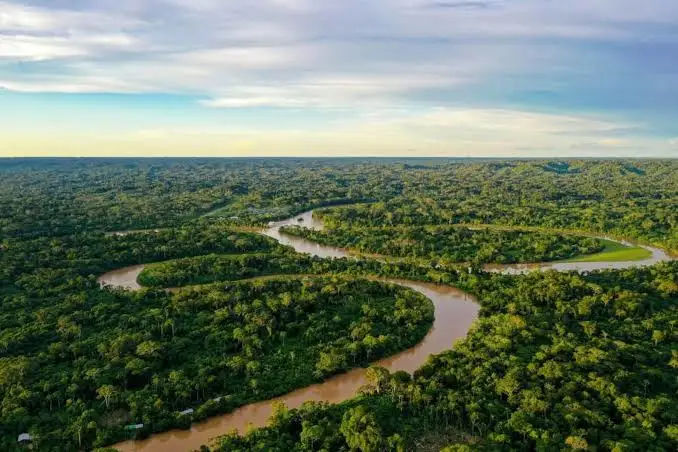
Many first-time visitors imagine the Amazon as an endless wall of dangerous animals. The reality is more subtle.
The rainforest can be challenging, but most organized visitors are not constantly facing dangerous encounters.
Instead, you should expect:
- Heat
- Humidity
- Rain
- Mud
- Insects
- Strange nighttime sounds
- Early mornings
- Limited connectivity
- Basic facilities
- Long boat journeys
- Walking on uneven trails
- Incredible biodiversity
The most important mental adjustment is accepting that the jungle operates according to its own rules.
Wildlife You Might See While Camping
The Amazon contains an extraordinary diversity of species, but wildlife sightings depend on season, habitat, weather, time of day, and luck.
Daytime Wildlife
During daylight, guides may search for monkeys moving through the canopy, macaws flying above the forest, birds near rivers, reptiles along muddy banks, and mammals feeding in the vegetation.
Some animals are easier to detect through sound than sight.
A distant monkey call can reveal an animal that remains completely invisible from the ground.
Nighttime Wildlife
The forest changes dramatically after sunset.
Night excursions can reveal:
- Tree frogs
- Insects
- Spiders
- Bats
- Caimans
- Nocturnal birds
- Sleeping birds
- Night-active mammals
- Other nocturnal species
A flashlight beam can reveal dozens of tiny reflective eyes along a riverbank.
How to Survive in the Amazon Rainforest
The question how to survive in the Amazon rainforest is often associated with extreme survival television, but organized tourism is very different from being stranded alone.
The safest strategy is preparation and following experienced local guidance.
Essential Survival Principles
1. Stay With Your Group
Never wander away from an established trail or expedition group without informing your guide.
2. Protect Yourself From the Environment
Use lightweight clothing, insect protection, sun protection, and reliable rain gear.
3. Drink Safe Water
Carry treated, filtered, or otherwise properly prepared drinking water.
4. Keep Equipment Dry
Use waterproof bags or dry bags for electronics, documents, clothing, and other sensitive equipment.
5. Respect Wildlife
Never attempt to touch, feed, chase, or corner wild animals.
6. Follow Local Instructions
Your guide understands the environment, trails, river conditions, weather patterns, and potential hazards much better than a first-time visitor.
What to Pack for Amazon Camping
Packing correctly can make a major difference.
Essential Clothing
Choose lightweight, breathable clothing that dries relatively quickly.
Recommended items include:
- Long-sleeved shirts
- Lightweight long pants
- Comfortable hiking shoes
- Sandals for camp
- Wide-brimmed hat
- Lightweight rain jacket
- Extra socks
- Swimwear
- Comfortable sleeping clothes
Neutral or natural colors can also be useful for wildlife observation.
Essential Equipment
Depending on the expedition, consider:
- Headlamp
- Flashlight
- Extra batteries
- Dry bags
- Reusable water bottle
- Insect repellent
- Sunscreen
- Small first-aid kit
- Binoculars
- Camera
- Waterproof phone case
- Quick-drying towel
- Personal toiletries
Do not overpack. Carrying unnecessary weight becomes unpleasant during long walks and boat transfers.
Is There WiFi in the Amazon Rainforest?
Is there WiFi in the Amazon rainforest? Sometimes, but you should not expect reliable internet access everywhere.
Remote jungle camps may have little or no connectivity. Some lodges have WiFi in common areas, while others rely on satellite or intermittent connections.
Even where internet is technically available, the connection may be slow or limited.
This can actually become one of the most memorable parts of the experience.
Instead of checking notifications, travelers begin listening to birds, watching monkeys, photographing insects, talking around a dining table, or sitting beside the river.
Should You Disconnect?
For many visitors, yes.
The rainforest provides a rare opportunity to spend several days without the constant pressure of messages, social media, email, and notifications.
Your phone can still be extremely useful as a camera, flashlight, GPS backup, or emergency communication device where service exists.
Food While Camping in the Amazon
Food during organized Amazon expeditions is usually prepared by the camp or lodge rather than collected from the forest.
Meals may include combinations of:
- Rice
- Pasta
- Potatoes
- Vegetables
- Chicken
- Fish
- Soups
- Tropical fruits
- Eggs
- Bread
- Local ingredients
Food availability depends on the remoteness and style of accommodation.
In remote areas, supplies must often travel by boat, which makes simple and practical meals especially important.
Rain and Weather During Amazon Camping
Rain is an essential part of the rainforest ecosystem, but it does not necessarily mean that an entire day will be ruined.
A tropical rainstorm can arrive suddenly, last for a short period, and then give way to sunshine.
You should therefore treat rain as part of the adventure rather than an unexpected disaster.
A Useful Rule
If you visit the rainforest, assume that something will get wet.
Protect electronics, passports, money, cameras, and spare clothing in waterproof bags.
Unusual and Interesting Facts About Amazon Camping
The Amazon becomes even more fascinating when you consider some of its less obvious characteristics.
1. The Jungle Is Loudest When You Stop
Walking creates noise. When you stop moving and remain quiet, you may suddenly hear an astonishing number of species communicating around you.
2. The Forest Has Multiple Vertical Worlds
The Amazon is not simply a forest floor. Wildlife occupies different levels, from underground habitats and leaf litter to the understory, canopy, and emergent trees.
3. Some Trees Have Enormous Buttress Roots
Large rainforest trees can develop wide supporting roots that extend several meters from the trunk. These structures help stabilize trees growing in shallow or nutrient-poor soils.
4. Most Rainforest Animals Are Difficult to See
The Amazon’s reputation for biodiversity does not mean animals are always visible. Many species are nocturnal, arboreal, tiny, camouflaged, or naturally cautious.
5. A River Can Be Your Highway
In remote Amazon regions, boats are often more practical than vehicles. Rivers connect communities, lodges, research stations, and forest destinations.
6. The Forest Smells Different After Rain
Wet vegetation, soil, leaves, flowers, wood, and microorganisms produce a distinctive smell after rainfall. It is one of the sensory experiences that photographs cannot capture.
7. Darkness Is Different in the Jungle
Away from towns and artificial lighting, nighttime can become extraordinarily dark. The sounds of the forest therefore become much more noticeable.
Trees and the Experience of Sleeping in the Amazon
Trees are the architecture of the rainforest. Towering trunks, palms, vines, epiphytes, and enormous crowns create the environment in which much of Amazonian wildlife lives.
When camping or staying at a jungle lodge, you are not simply surrounded by trees; you are sleeping inside a complex vertical ecosystem.
Monkeys may move through branches above you. Birds may feed in the canopy. Insects may live beneath leaves. Epiphytes grow on branches without taking nutrients directly from the host tree, while vines connect different levels of the forest.
Some of the most impressive Amazonian trees can become landmarks during guided hikes because their size, roots, bark, or ecological importance make them easier to identify.
Is Amazon Camping Safe?
Organized Amazon camping can be safe when visitors follow local regulations and experienced guides.
The greatest risks for ordinary visitors are often environmental rather than dramatic attacks from large predators.
Common challenges include:
- Dehydration
- Heat
- Sun exposure
- Slippery trails
- Insects
- Minor cuts and scratches
- Allergic reactions
- Getting lost
- River-related hazards
- Poor preparation
Good guides reduce these risks through route planning, local knowledge, appropriate timing, and safety procedures.
Who Should Try Amazon Rainforest Camping?
Amazon camping is particularly suitable for travelers who enjoy:
- Adventure
- Wildlife
- Photography
- Hiking
- Birdwatching
- Nature
- Remote destinations
- Learning about ecosystems
- Disconnecting from technology
- Unique travel experiences
It may be less suitable for travelers who require constant electricity, high-speed internet, air conditioning, luxury bathrooms, or completely predictable weather.
Fortunately, the range of Amazon accommodation means you do not necessarily have to choose between extreme survival camping and luxury.
How to Choose the Best Amazon Camping Experience
Before booking, consider these questions:
What level of comfort do you want?
Choose between traditional tent camping, rustic jungle camps, comfortable lodges, or upscale rainforest accommodation.
How much wildlife do you want to see?
Look for destinations known for diverse habitats and experienced wildlife guides.
How physically demanding should the trip be?
Ask about hiking distances, trail conditions, canoeing, and transportation.
Do you want a remote experience?
The farther you travel from cities and major access points, the more isolated the experience may become.
How many days can you spend?
More time generally means more opportunities to explore different habitats and observe wildlife.
Final Thoughts: Is Camping in the Amazon Rainforest Worth It?
Camping in the Amazon rainforest is worth it for travelers who want to experience nature rather than simply observe it from a distance. Whether you sleep inside a tent, a rustic jungle camp, or an Amazon camp lodge, the experience can be profoundly different from conventional tourism.
The greatest attraction is not necessarily seeing the largest or rarest animal. It is waking before sunrise to a forest coming alive, traveling down a river surrounded by enormous trees, walking slowly along a muddy trail, hearing monkeys hidden in the canopy, discovering a tiny frog beneath a leaf, watching macaws cross the sky, and realizing that thousands of organisms are living around you even when you cannot see them.
A well-planned Amazon rainforest trek, rainforest expedition, or Tambopata rainforest expedition can combine adventure and comfort while providing an authentic introduction to one of the planet’s most extraordinary ecosystems.
The Amazon does not need to be conquered or survived in the dramatic sense. It needs to be entered with respect, patience, preparation, and curiosity.
And once the city disappears behind you and the boat begins moving deeper into the forest, you may discover that the most unusual part of Amazon camping is not how wild the rainforest is—it is how quickly you begin to feel at home in it.