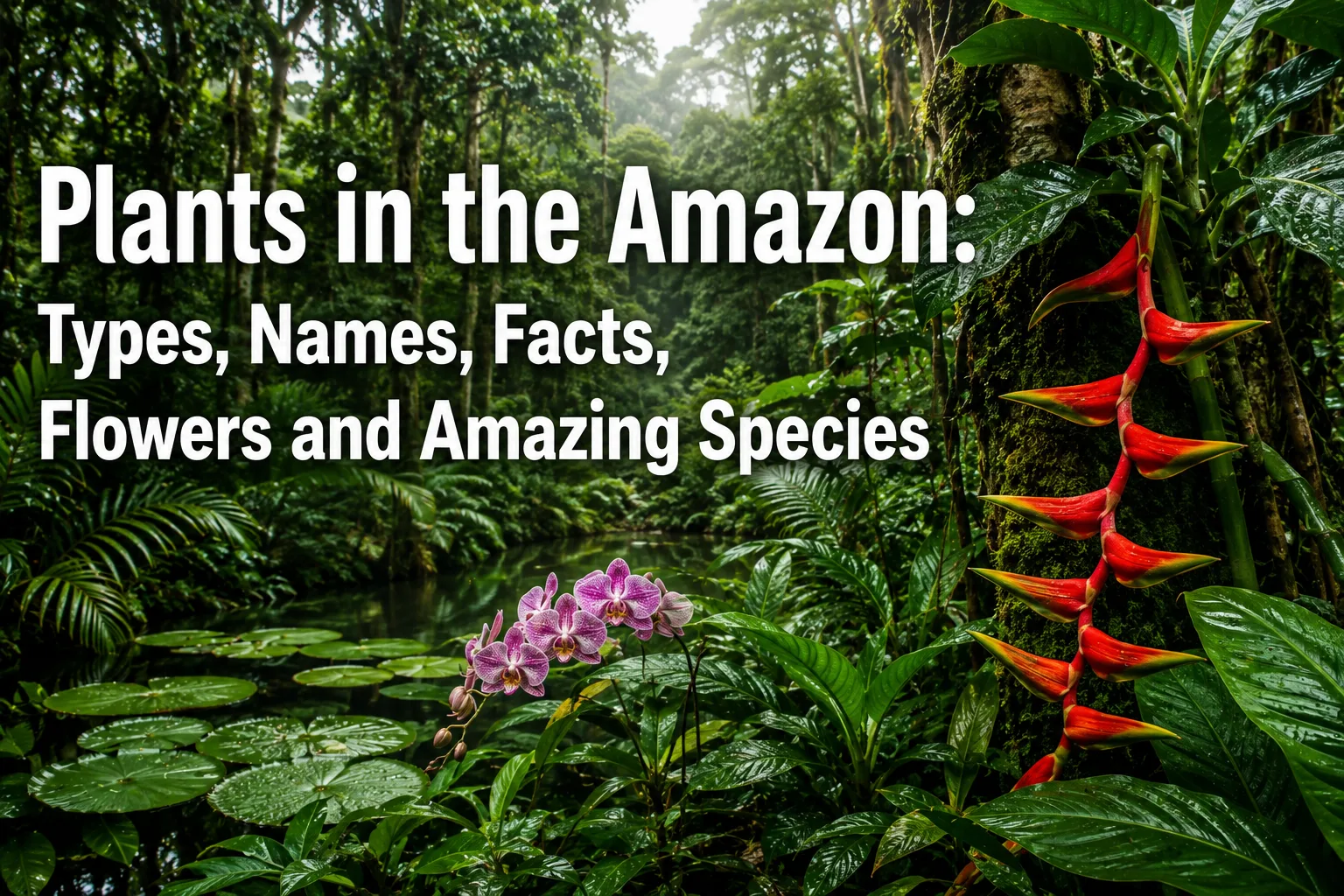
The plants in the Amazon rainforest form one of the most diverse and fascinating plant communities on Earth. From enormous rainforest trees rising above the canopy to delicate orchids, climbing lianas, giant water lilies, palms, ferns, carnivorous plants, and countless medicinal and edible species, Amazonian vegetation occupies almost every available ecological niche. The Amazon is not simply a forest filled with trees; it is a complex living system in which plants compete for sunlight, exchange nutrients, provide food and shelter for animals, and respond to seasonal flooding.
Understanding the types of plants in the Amazon rainforest also means looking beyond the most famous species. Some plants grow high in the canopy, others survive in deep shade on the forest floor, while aquatic plants live in rivers, lakes, and seasonally flooded forests. Some defend themselves with toxins or thorns, others attract pollinators with spectacular flowers, and some obtain nutrients in remarkably unusual ways.
This guide explores Amazon rainforest flora, including common and rare species, Amazon rainforest trees, flowering plants, edible and medicinal plants, aquatic vegetation, carnivorous plants, and fascinating facts about how plants survive in one of the world’s most complex ecosystems.
What Plants Grow in the Amazon Rainforest?
The Amazon rainforest contains an extraordinary variety of plants adapted to different conditions of sunlight, moisture, soil, elevation, and flooding. The broad category of plants that grow in the rainforest includes trees, palms, shrubs, herbs, vines, lianas, epiphytes, ferns, mosses, aquatic plants, flowering plants, and many specialized species.
Trees dominate the overall structure of the forest, but they represent only one part of Amazonian plant diversity. A single area can contain towering canopy trees, smaller understory trees, climbing vines, plants growing on branches, ground vegetation, and seedlings competing for space.
Main Types of Amazonian Plants
A simplified rainforest plants list includes:
- Giant canopy trees
- Understory trees
- Palm trees
- Shrubs
- Herbs
- Vines and lianas
- Ferns
- Orchids
- Bromeliads
- Epiphytes
- Flowering plants
- Aquatic plants
- Carnivorous plants
- Medicinal plants
- Edible plants
Each group occupies a different ecological role. Some capture sunlight, some recycle nutrients, some produce fruits, and others provide shelter or food for insects, birds, mammals, and countless other organisms.
Types of Plants in the Amazon Rainforest
The types of plants in the Amazon rainforest can be classified according to their growth form, habitat, and ecological strategy. This diversity is one reason the Amazon can appear completely different from one location to another.
Amazon Rainforest Trees
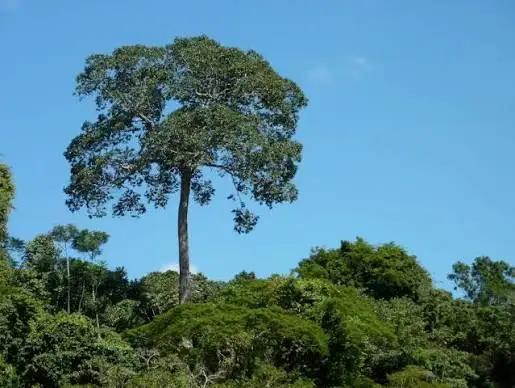
Trees form the structural framework of the rainforest. Some emerge far above the general canopy, while others remain beneath it where sunlight is limited.
Important Amazon rainforest trees include:
- Brazil nut trees
- Rubber trees
- Kapok trees
- Cacao trees
- Ceiba trees
- Various palm species
- Numerous hardwood species
Trees provide fruits, seeds, flowers, leaves, nesting sites, and physical structures used by animals.
Emergent Trees
The tallest trees can rise above the main canopy and receive intense sunlight. These emergent trees experience stronger winds and greater exposure to heat and rainfall than plants growing below them.
Their height gives them access to sunlight, but reaching the upper forest comes with costs. Tall trees must support enormous trunks and branches while coping with wind and heavy tropical rain.
Palm Trees
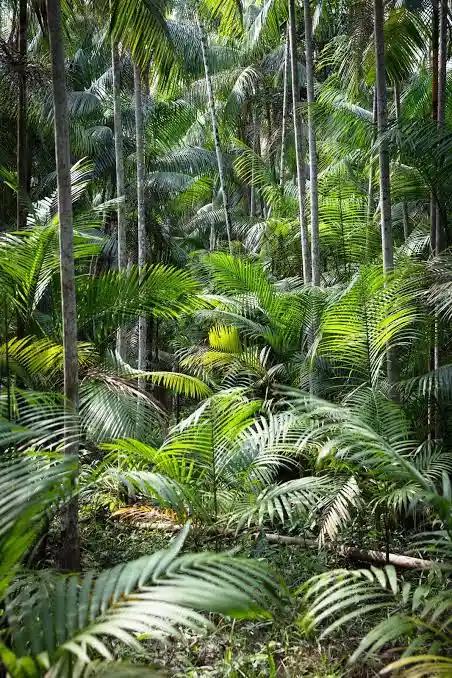
Palms are among the most recognizable Amazonian plants. Some species grow in dense stands, while others occur along rivers, wetlands, and disturbed areas.
Their fruits and seeds can be important food sources for wildlife. Palm leaves also create shelter and nesting opportunities for numerous organisms.
Vines and Lianas
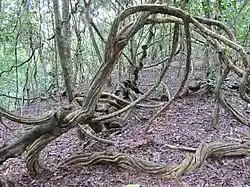
Lianas are woody climbing plants that use trees for structural support. Rather than investing all their energy in producing a massive trunk, they climb toward the canopy using existing vegetation.
Once they reach sunlight, they can produce leaves and flowers high above the ground.
Lianas are particularly important because they physically connect different parts of the forest and can create pathways used by arboreal animals.
Epiphytes
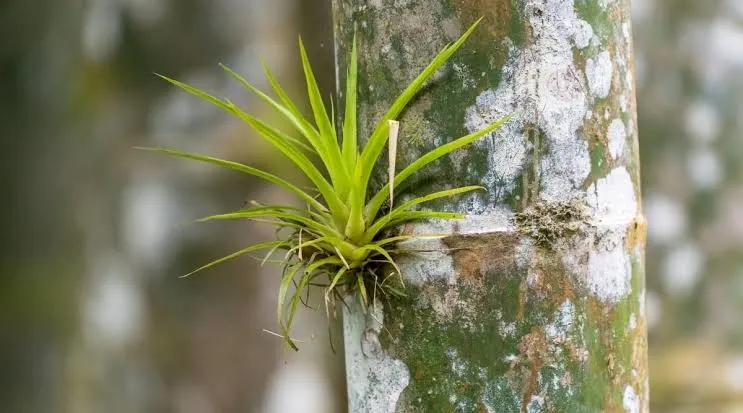
Epiphytes are plants that grow on other plants, especially tree branches, without necessarily taking nutrients directly from their host.
Orchids, bromeliads, ferns, and other epiphytic plants may live high above the ground.
An Important Distinction
An epiphyte is not automatically a parasite.
Instead of stealing food from the host tree, many epiphytes use the tree as a place to live, obtaining water and nutrients from rain, organic debris, dust, or other sources.
Amazon Rainforest Plants: Names and Pictures
People searching for Amazon rainforest plants names and pictures are often trying to identify recognizable species. Visual identification can be difficult because many Amazonian plants look similar, and a single genus can contain numerous species.
Some of the most recognizable Amazonian plants include:
| Plant | Type | Interesting characteristic |
|---|---|---|
| Brazil nut tree | Large tree | Produces edible nuts |
| Rubber tree | Tree | Source of natural latex |
| Kapok tree | Emergent tree | Can develop a huge trunk |
| Cacao | Small tree | Produces cacao pods |
| Açaí palm | Palm | Produces nutrient-rich fruits |
| Victoria water lily | Aquatic plant | Produces enormous floating leaves |
| Heliconia | Flowering plant | Bright, unusual flower structures |
| Bromeliads | Epiphytes/terrestrial plants | Often form water-holding structures |
| Orchids | Flowering epiphytes | Extremely diverse flowers |
| Passionflower | Vine | Complex and distinctive flowers |
Pictures are especially useful when identifying plants because growth form, leaf shape, flowers, bark, fruits, and habitat can provide important clues.
Common Plants in the Amazon Rainforest
Some common plants in the Amazon rainforest are encountered across large portions of the basin, although the exact plant community varies considerably between regions.
Brazil Nut Tree
The Brazil nut tree is one of the best-known Amazonian trees. It can become very large and produces woody fruits containing several edible seeds.
Its reproduction is connected to a complex ecological relationship involving pollinators and the surrounding forest ecosystem.
Rubber Tree
The rubber tree became historically important because its latex can be harvested from the trunk.
Natural rubber is produced from latex, a milky substance found in specialized tissues.
The species is an important example of how a rainforest plant can have major economic significance beyond the forest itself.
Açaí Palm
Açaí palms are associated with seasonally wet environments and produce small dark-purple fruits.
Açaí has become globally famous as a food, but the palm is also an important component of local Amazonian ecosystems and economies.
Cacao
Cacao trees produce pods directly from their trunks and larger branches, a characteristic known as cauliflory.
The seeds inside the pods are the raw material from which chocolate is made.
Amazon Rainforest Flora and Vegetation
The term Amazon rainforest flora refers collectively to the plants occurring throughout the Amazon ecosystem.
Amazon rainforest vegetation is not uniform. It changes according to soil conditions, elevation, water availability, disturbance, and seasonal flooding.
Several broad vegetation environments occur across the Amazon Basin.
Terra Firme Forest
Terra firme forests are areas that generally do not experience regular seasonal flooding.
These forests can support enormous trees and multilayered vegetation.
Flooded Forests
Seasonally flooded forests experience predictable changes in water level.
During high-water periods, rivers spread into surrounding forests, transforming the landscape and creating temporary aquatic habitats.
Plants growing in these areas must tolerate changing water levels and periods of inundation.
Riverbank Vegetation
Vegetation along Amazonian rivers can include palms, grasses, shrubs, trees, and specialized aquatic plants.
River margins are particularly dynamic because erosion and sediment deposition continually alter the landscape.
Rare Rainforest Plants
Not every Amazonian plant is widespread. Some rare rainforest plants have highly restricted distributions or depend on specialized habitats.
A plant can be considered uncommon for several reasons:
- It may occur only in particular soil types.
- It may require specific pollinators.
- It may depend on seasonal flooding.
- It may have a restricted geographic range.
- It may reproduce slowly.
- It may depend on another species for part of its life cycle.
Rarity is therefore not always about appearance. A visually ordinary plant may be ecologically rare, while a spectacular plant may be relatively widespread.
Why Rare Plants Matter
Rare species contribute to the overall genetic and ecological diversity of the forest.
Losing a plant species can also affect insects, birds, mammals, fungi, and microorganisms that interact with it.
Rainforest Plants and Flowers
The Amazon is famous for its spectacular flowers, although the dense vegetation means that many flowering plants remain hidden from casual observers.
Rainforest plants and flowers have evolved remarkable strategies for attracting pollinators.
Some use bright colors, others produce strong scents, and some provide nectar or specialized structures that guide insects toward pollen.
Flowering Plants in the Amazon
The Amazon contains enormous diversity among flowering plants.
These include:
- Orchids
- Heliconias
- Passionflowers
- Bromeliads
- Water lilies
- Palms
- Cacao
- Numerous shrubs and trees
Why Are Flowers Important?
Flowers are reproductive structures. Their colors, shapes, scents, and rewards are often adaptations that increase the likelihood of pollen being transferred between flowers.
Different pollinators respond to different signals.
Tropical Rainforest Flowers
Tropical rainforest flowers can be especially unusual because plants have evolved alongside highly diverse insect, bird, and mammal communities.
Pollinators can include:
- Bees
- Butterflies
- Moths
- Beetles
- Hummingbirds
- Bats
- Other insects and animals
Some flowers are adapted to very specific pollinators, creating complex ecological relationships.
Plants in the Amazon River
The plants in the Amazon River differ from plants growing on dry forest floors because they must tolerate permanent or seasonal contact with water.
Aquatic and semi-aquatic vegetation can occur in:
- Rivers
- Oxbow lakes
- Floodplain lakes
- Marshes
- Slow-moving channels
- Seasonally flooded forests
Plants That Live in the Amazon River
One of the most spectacular examples is the giant water lily, whose enormous floating leaves can spread across the surface of quiet water.
Other aquatic plants may float freely, remain submerged, or root into muddy sediments.
How Aquatic Plants Survive
Aquatic plants have adaptations that help them deal with:
- Buoyancy
- Low oxygen in sediments
- Water movement
- Changing water levels
- Sunlight availability
- Seasonal flooding
The aquatic plant community is an essential component of Amazonian freshwater ecosystems.
Edible Plants in the Amazon Rainforest
Many edible plants in the Amazon rainforest have been used by Indigenous peoples and local communities for generations.
Important food plants associated with the Amazon include:
- Brazil nuts
- Açaí
- Cacao
- Cassava
- Cupuaçu
- Various Amazonian fruits
- Peppers
- Pineapple
- Palm fruits
Amazonian Fruits
The Amazon contains a remarkable diversity of edible fruits.
Some are now internationally recognized, while others remain primarily regional foods.
Fruits provide energy and nutrients for people but also play a major ecological role by feeding birds, monkeys, bats, rodents, fish, and other animals.
Seeds Are Food Too
Some of the Amazon’s most important edible products are seeds rather than fruits.
The Brazil nut is an excellent example of a seed that depends on the larger forest ecosystem for successful production.
Medicinal Plants in the Amazon Rainforest
The Amazon contains thousands of plants with traditional uses, including medicinal plants in the Amazon rainforest.
Indigenous communities have developed extensive knowledge of local plants and their properties. This knowledge can include methods for preparing leaves, bark, roots, seeds, resins, and other plant materials.
Traditional Knowledge Is Complex
It is important not to assume that every plant traditionally used for healing has been scientifically proven to treat a particular disease.
Traditional plant knowledge represents a sophisticated cultural and ecological understanding, while modern medical evidence requires separate scientific evaluation.
Why Amazon Plant Knowledge Matters
Traditional knowledge can provide valuable information for:
- Ethnobotanical research
- Biodiversity studies
- Food systems
- Sustainable harvesting
- Cultural preservation
- Scientific investigation
Protecting the forest therefore also helps preserve knowledge accumulated through generations.
Poisonous and Dangerous Plants in the Amazon Rainforest
The Amazon contains poisonous plants and plants that can be dangerous when handled or consumed incorrectly.
Plant defenses may include:
- Toxic chemicals
- Irritating sap
- Sharp spines
- Stinging structures
- Bitter compounds
- Toxic seeds
- Protective hairs
These defenses discourage herbivores and reduce damage.
Why Do Plants Need Poison?
Plants cannot run away from predators.
Instead, many have evolved chemical or physical defenses.
A leaf containing an unpleasant or toxic compound may be less attractive to herbivores than an undefended leaf.
Important Safety Point
A plant that has medicinal or edible traditional uses may still be dangerous when prepared incorrectly or used in inappropriate quantities.
Wild plants should never be eaten or handled based solely on appearance.
Carnivorous Plants in the Amazon Rainforest
Although carnivorous plants are strongly associated with nutrient-poor environments, carnivorous plants in the Amazon rainforest can also be found in specialized habitats.
These plants supplement their nutrient intake by capturing small organisms.
They may use structures such as:
- Sticky surfaces
- Pitcher-like traps
- Specialized leaves
- Trigger mechanisms
Why Do Carnivorous Plants Eat Animals?
The key reason is usually nutrients rather than energy.
Plants obtain energy through photosynthesis, but certain nutrients can be limited in the soils where carnivorous plants grow.
Capturing small animals can supplement nutrients such as nitrogen.
A Strange Amazon Adaptation
This creates one of the most unusual examples of plant-animal interaction in tropical ecosystems: a plant that looks harmless can function as a predator in miniature.
Plants in the Amazon Rainforest That Animals Eat
The relationship between plants and animals is fundamental to the Amazon ecosystem.
Plants in the Amazon rainforest that animals eat include fruit-producing trees, palms, shrubs, vines, aquatic plants, grasses, and countless other species.
Animals consume:
- Fruits
- Leaves
- Seeds
- Flowers
- Nectar
- Bark
- Roots
- Shoots
- Aquatic vegetation
Fruits and Seed Dispersal
One of the most fascinating relationships is that animals can help plants reproduce.
A bird or mammal may eat a fruit and later deposit its seeds somewhere else.
This can move seeds away from the parent plant and help regenerate different parts of the forest.
Leaves as Food
Leaves are consumed by insects, mammals, reptiles, and other animals.
Some herbivores specialize in particular plants, while others eat a broad range of vegetation.
Flowers and Nectar
Nectar attracts pollinators such as bees, butterflies, hummingbirds, and bats.
This creates a direct relationship between plant reproduction and animal behavior.
Plants in the Amazon Basin
The plants in the Amazon Basin occur across a vast geographic area extending through several South American countries.
The basin includes enormous differences in:
- Rainfall
- Soil
- Elevation
- River systems
- Flooding patterns
- Temperature
- Forest structure
Consequently, plants of the Amazon Basin are not one uniform collection.
A plant adapted to permanently wet conditions may struggle in a well-drained forest, while a species adapted to dry ground may not tolerate prolonged flooding.
Amazonian Plants and Geography
Amazonian plant communities extend through regions of:
- Brazil
- Peru
- Colombia
- Bolivia
- Ecuador
- Venezuela
- Guyana
- Suriname
- French Guiana
The exact composition changes from one region to another.
Amazonian Plants With Unusual Adaptations
Some of the most interesting Amazonian plants are remarkable not because they are large or beautiful but because of how they survive.
Giant Leaves
The giant water lily produces enormous floating leaves that spread across calm water.
Its leaf structure helps distribute weight across the water surface.
Buttress Roots
Some enormous Amazon trees develop broad buttress roots around the base.
These structures help support tall trunks and stabilize trees in shallow or challenging soils.
Drip Tips
Many rainforest leaves have pointed ends known as drip tips.
These shapes can help water drain from leaf surfaces, reducing prolonged water retention.
Climbing Strategies
Lianas climb existing trees instead of developing massive supporting trunks.
This allows them to reach sunlight more efficiently.
Growing on Other Plants
Epiphytes use trees as elevated platforms.
By living high above the ground, they can access more light than they would receive on the shaded forest floor.
Amazon Rainforest Plants Facts
Here are some of the most interesting facts about plants in the Amazon rainforest:
- The Amazon contains enormous plant diversity across many different habitats.
- Trees form the main structural framework of the rainforest.
- Not every Amazon plant grows on the ground.
- Epiphytes can live high in the canopy.
- Lianas use trees as support structures.
- Some Amazon plants are adapted to seasonal flooding.
- Giant water lilies can develop remarkably large floating leaves.
- Brazil nut trees can reach enormous dimensions.
- Cacao pods grow directly from the trunk and larger branches.
- Açaí palms thrive in wet Amazonian environments.
- Many plants rely on animals for pollination.
- Many fruits depend on animals for seed dispersal.
- Some plants use chemical defenses against herbivores.
- Some Amazonian plants are carnivorous.
- Medicinal plant knowledge has deep cultural importance.
- Amazon plants provide food for countless animals.
- Flooding can temporarily transform forests into aquatic environments.
- Some plants specialize in extremely shaded conditions.
- Others compete intensely for sunlight in the canopy.
- Amazon vegetation changes dramatically with soil and water conditions.
Interesting Facts About Amazon Trees and Plants
A Tree Can Become an Entire Ecosystem
A large rainforest tree can support mosses, fungi, insects, spiders, birds, reptiles, mammals, epiphytes, and vines.
The tree is therefore more than an individual organism; it becomes a three-dimensional habitat.
The Forest Floor Can Be Surprisingly Dark
The canopy intercepts much of the incoming sunlight.
As a result, plants growing beneath it must be highly efficient at using limited light.
Some Plants Live Without Touching the Soil
Epiphytes demonstrate that plants do not necessarily need to grow directly from the ground.
They can establish themselves on branches and obtain moisture and nutrients from their surroundings.
The Amazon Is Full of Plant Partnerships
Plants interact with fungi, insects, birds, mammals, and microorganisms.
These relationships can involve pollination, seed dispersal, nutrient exchange, protection, and decomposition.
Why Amazon Rainforest Plants Are Important
The importance of Amazon rainforest vegetation extends far beyond the trees themselves.
Plants provide:
- Food
- Oxygen through photosynthesis
- Carbon storage
- Shelter
- Nesting sites
- Fruits and seeds
- Medicines and traditional resources
- Materials
- Habitat
- Soil protection
- Nutrients for ecosystems
The forest’s plant communities also influence water movement and local climate.
Plants and Animals
The Amazon’s animals could not survive without its plants.
Herbivores depend directly on vegetation, while predators depend indirectly on plants because their prey ultimately rely on plant-based food webs.
This creates an enormous interconnected system.
Amazon Rainforest Plants for Kids
The Amazon is a great place to learn about plant adaptations because many species have features that seem almost unbelievable.
Easy Facts About Amazon Plants
- Some rainforest trees are taller than a 10-story building.
- Giant water lilies can have enormous floating leaves.
- Some plants grow on trees without being parasites.
- Some plants climb trees to reach sunlight.
- Flowers attract animals that help plants reproduce.
- Fruits provide food for many rainforest animals.
- Some plants have poisonous defenses.
- Some plants eat insects.
- Some trees produce nuts, fruits, latex, or other useful products.
- Plants help create the habitat where Amazon animals live.
What Is the Most Remarkable Plant in the Amazon?
There is no single “most remarkable” Amazon plant because different species are extraordinary for different reasons.
The giant water lily is remarkable because of its enormous floating leaves.
The Brazil nut tree is remarkable for its size, longevity, and ecological relationships.
The rubber tree is remarkable for its latex.
The carnivorous plants are remarkable because they capture animals for nutrients.
The orchids are remarkable for their extraordinary diversity and pollination strategies.
The kapok tree is remarkable for its enormous size and role in rainforest structure.
Each represents a different solution to the challenges of tropical life.
Current Challenges Facing Amazon Plant Diversity
Amazonian plant diversity is affected by changes in land use, deforestation, fires, fragmentation, climate variability, and changes to rivers and wetlands.
When forests are divided into smaller isolated patches, plant communities can change because sunlight, temperature, humidity, wind, and animal movements are altered.
The loss of large trees can also affect species that depend on them for pollination, seed dispersal, nesting, or habitat.
Protecting Amazon plant diversity therefore involves conserving not only individual species but also the ecological relationships that allow entire plant communities to function.
Final Thoughts on Plants in the Amazon
The world of plants in the Amazon rainforest is far more complex than a simple list of trees and flowers. The Amazon contains towering emergent trees, palms, lianas, orchids, bromeliads, aquatic vegetation, flowering plants, edible species, medicinal plants, poisonous plants, and even carnivorous plants.
Some plants survive by climbing toward sunlight, others tolerate seasonal flooding, and some live high in the canopy without ever touching the ground. Flowers attract pollinators, fruits feed animals, and seeds travel through the forest with the help of birds and mammals.
The most fascinating fact may be that no Amazon plant exists completely alone. Every species participates in a network of relationships involving soil, water, fungi, insects, birds, mammals, and other plants.
From the enormous leaves of a giant water lily to the towering trunks of Amazon rainforest trees, the diversity of Amazonian flora demonstrates how many different solutions plants have evolved to survive in one of Earth’s most complex ecosystems.