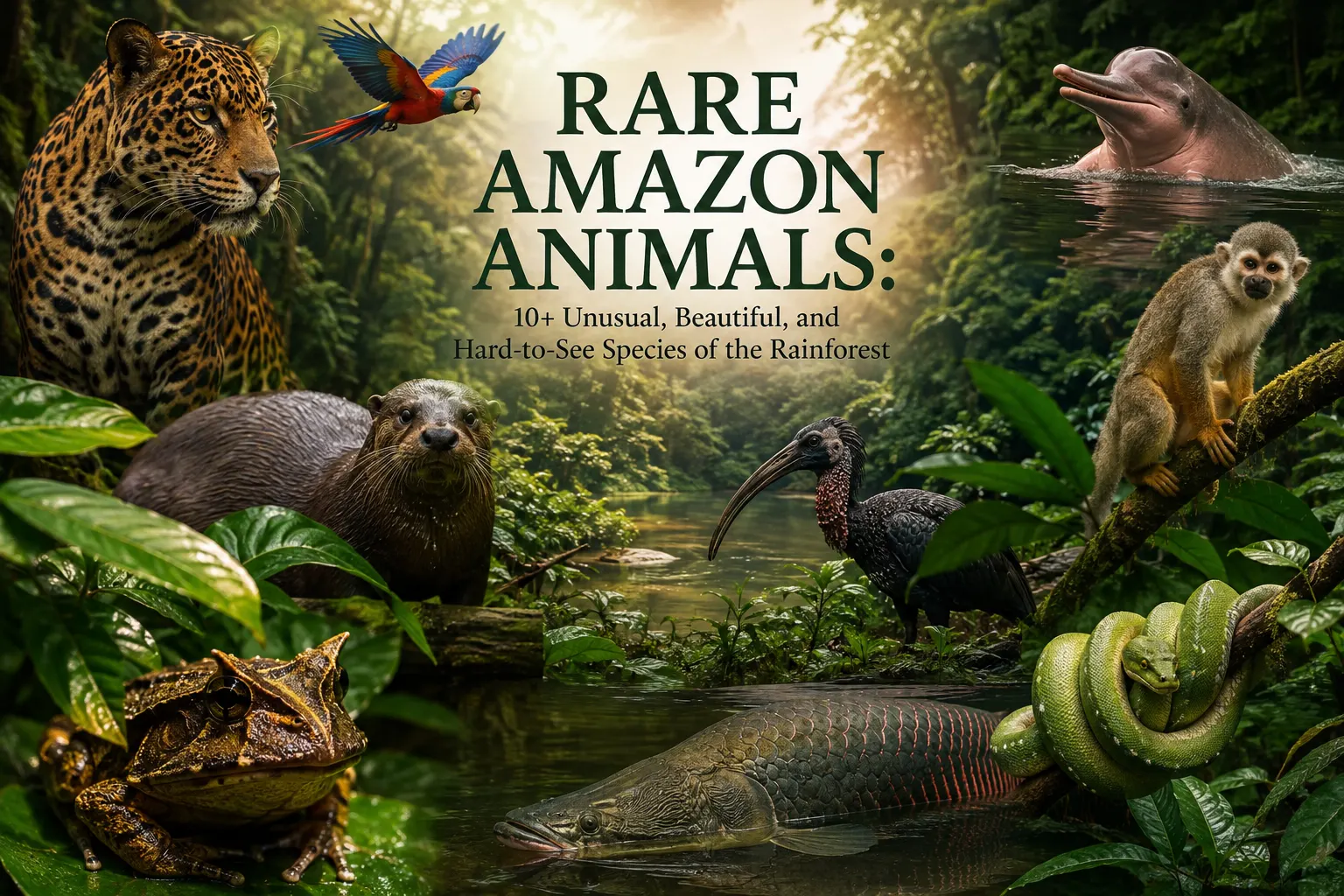
The rare Amazon animals are among the most fascinating creatures on Earth. Hidden beneath dense vegetation, moving through flooded forests, climbing high into the canopy, or appearing only at night, many of the Amazon’s most unusual animals are rarely encountered by people. Some are naturally elusive, while others have become increasingly uncommon because of habitat loss, hunting, pollution, climate change, and other environmental pressures.
The Amazon rainforest is enormous, and its extraordinary variety of habitats creates opportunities for an equally extraordinary diversity of wildlife. From brilliantly colored birds and mysterious river dolphins to secretive cats, unusual monkeys, amphibians, reptiles, and tiny mammals, the rainforest contains animals that can seem almost imaginary.
This guide explores a rare Amazon animals list, including some of the rarest animals in the Amazon rainforest, unusual species, beautiful rainforest wildlife, and animals that are difficult to observe even for experienced naturalists. It also explains what makes an animal “rare,” where these creatures live, why they are difficult to see, and some surprising facts about Amazonian wildlife.
What Are Rare Amazon Animals?
The term rare Amazon animals can have several meanings. An animal may be considered rare because its population is genuinely small, because it occupies a very restricted habitat, because it has declined significantly, or simply because humans rarely encounter it.
This distinction is important. A species can be relatively widespread but extremely difficult to observe because it is nocturnal, lives high in the canopy, avoids humans, or occurs at very low densities.
Other species are rare because their habitat has been reduced or fragmented.
Why are Amazon animals so difficult to see?
Several factors make Amazon wildlife particularly elusive:
- Dense vegetation provides excellent camouflage.
- Many animals are active primarily at night.
- Some species spend most of their lives in the forest canopy.
- Predators naturally avoid humans.
- Many mammals occur at low population densities.
- River animals can disappear beneath muddy water.
- Some amphibians are only active during particular weather conditions.
- Seasonal flooding changes where animals live and feed.
For visitors, this means that rare Amazon rainforest animals are often discovered through tracks, calls, feeding signs, camera traps, or fleeting glimpses rather than prolonged encounters.
Top 10 Rare Amazon Animals
There is no single scientifically accepted ranking of the “top 10” rarest Amazon animals because rarity depends on geographic range, population density, habitat, and conservation status. However, the following species are excellent examples of unusual, elusive, uncommon, or particularly difficult-to-observe Amazon wildlife.
- Amazonian manatee
- Giant river otter
- Harpy eagle
- Giant armadillo
- Bush dog
- Amazon river dolphin
- Lowland tapir
- Margay
- Woolly monkey
- Hoatzin
Some are genuinely threatened or locally uncommon, while others are included because they are exceptionally elusive.
Rare Amazon Animals List: Mammals
1. Amazonian Manatee
The Amazonian manatee is one of the most unusual aquatic mammals of the rainforest. Unlike its marine relatives, this manatee lives exclusively in freshwater environments throughout parts of the Amazon Basin. It spends much of its time beneath the surface, feeding on aquatic vegetation and moving through rivers, lakes, flooded forests, and wetlands.
Its secretive behavior makes it difficult to observe in the wild. The Amazonian manatee can remain underwater for considerable periods and often avoids boats and human activity.
Interesting facts about the Amazonian manatee
- It is a herbivorous aquatic mammal.
- It can live in rivers, lakes, and seasonally flooded forests.
- Its body is streamlined for swimming.
- It uses its broad tail for propulsion.
- Young manatees depend on their mothers for milk.
- Hunting historically contributed heavily to its decline.
- Flooding allows manatees to access temporary feeding habitats.
One of the most fascinating aspects of the species is its connection with the Amazon’s seasonal flood cycle. When water levels rise, aquatic vegetation becomes accessible across enormous areas of flooded forest.
2. Giant River Otter
The giant river otter is one of the most charismatic rare rainforest animals. It is the largest member of the otter family and can live in groups along Amazonian rivers, oxbow lakes, and other freshwater habitats.
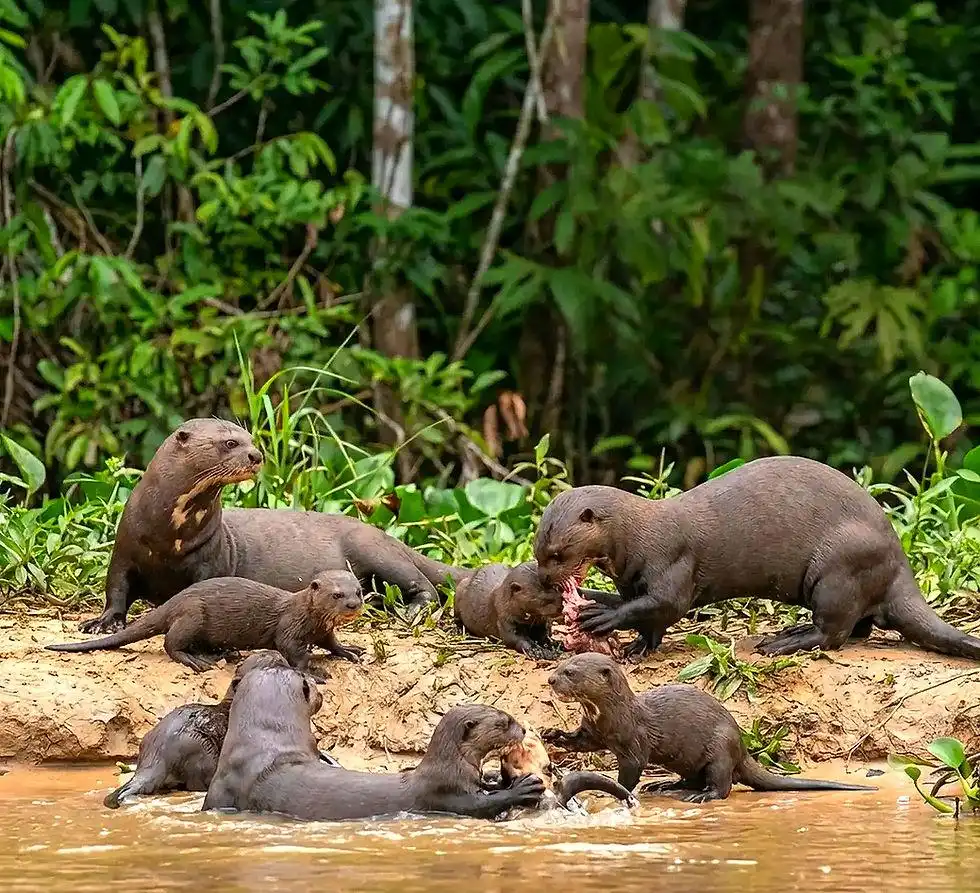
Giant river otters are excellent swimmers and highly social. They communicate using a surprisingly varied collection of vocalizations and often cooperate while hunting fish.
Although they can sometimes be seen by travelers, they are not guaranteed sightings. Their populations are affected by habitat disturbance, historical hunting, fishing pressure, and changes to aquatic ecosystems.
An unusual fact
Giant river otters can become remarkably territorial. Family groups may defend stretches of river and communicate with vocalizations, scent marking, and body movements.
3. Giant Armadillo
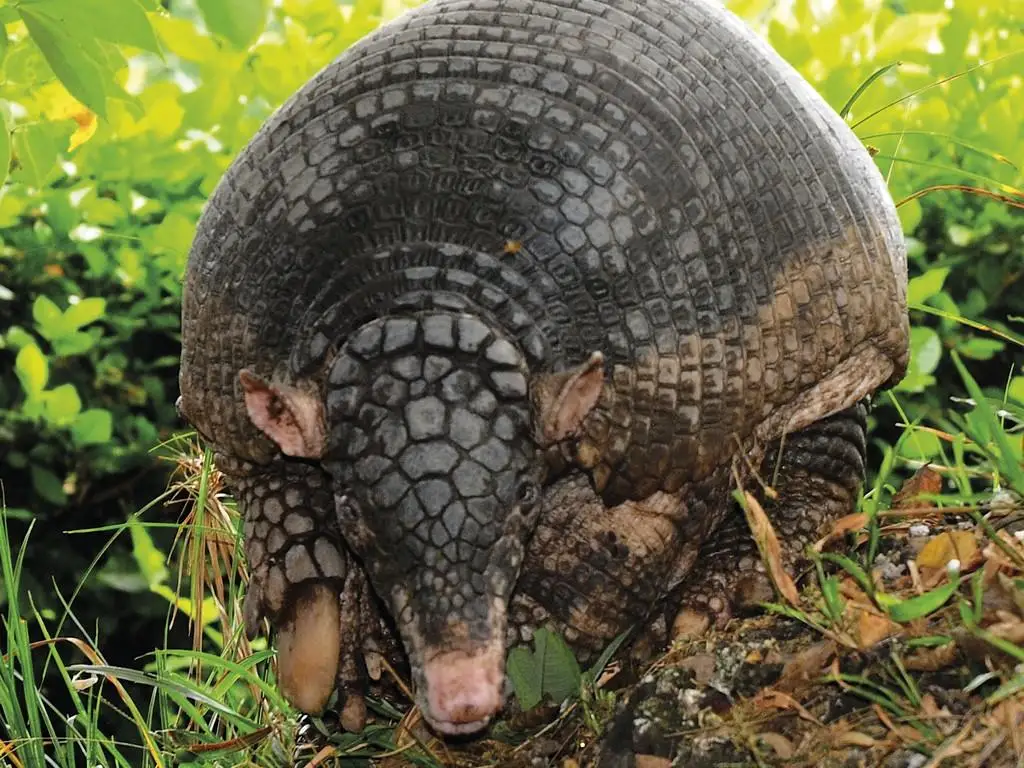
The giant armadillo is one of the least frequently encountered large mammals of the Amazon rainforest.
Despite its impressive size, it is exceptionally difficult to see. It is primarily nocturnal and spends considerable time digging underground shelters.
Its powerful claws allow it to excavate burrows and access ant and termite colonies.
Why is the giant armadillo rare?
The species generally occurs at low densities and requires extensive areas of suitable habitat.
Its secretive behavior makes sightings particularly uncommon.
A person could spend years exploring Amazonian forest without seeing one.
4. Bush Dog
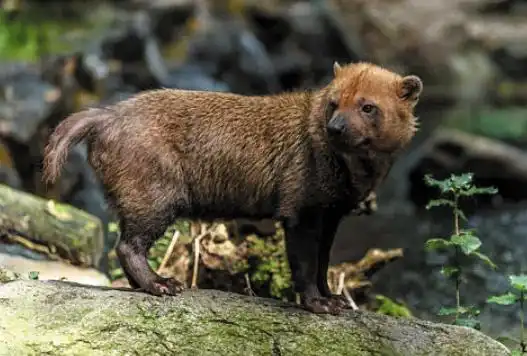
The bush dog, sometimes called the vinegar dog, is one of the most mysterious carnivores in the Amazon.
It is a small, stocky wild canid that can live in groups and is particularly difficult to observe.
Bush dogs have an unusual appearance compared with familiar domestic dogs. Their short legs, compact bodies, reddish-brown coats, and small ears make them distinctive.
They can move through dense vegetation and are associated with forest and wetland habitats.
Interesting fact
Bush dogs are unusually social for a small wild canid and can hunt cooperatively.
Their rarity in wildlife sightings is partly due to their secretive lifestyle and low population density.
5. Margay
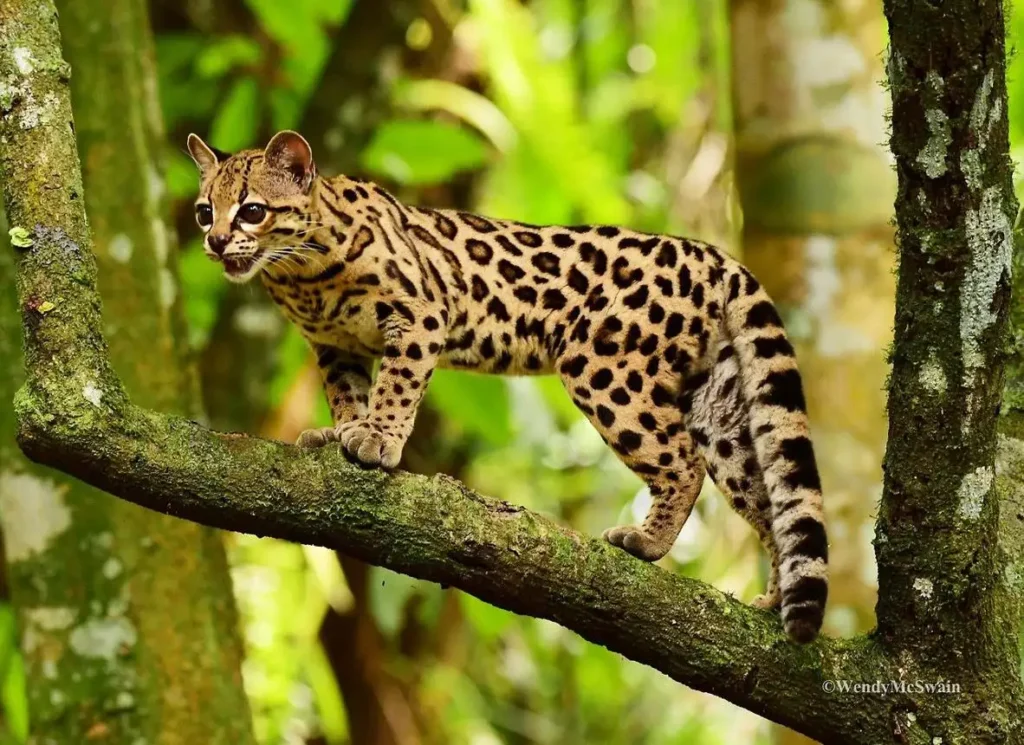
The margay is one of the most beautiful rare Amazon rainforest animals.
This small wild cat resembles a miniature leopard, with large eyes, a spotted coat, and an exceptionally agile body.
Margays are strongly associated with forest habitats and spend much of their time in trees.
Their flexible ankles allow them to descend tree trunks headfirst, an ability that is particularly unusual among cats.
Why are margays so difficult to see?
Margays are:
- Primarily nocturnal.
- Highly secretive.
- Often active in the canopy.
- Camouflaged by spotted fur.
- Solitary for much of their lives.
This combination makes a margay sighting a special experience for wildlife enthusiasts.
Rare Amazon Animals and Birds
Birds make up one of the most spectacular components of the Amazon’s biodiversity.
Some of the most impressive rare Amazon animals and birds are difficult to see because they live in the upper canopy, occur at low densities, or require particular habitats.
6. Harpy Eagle
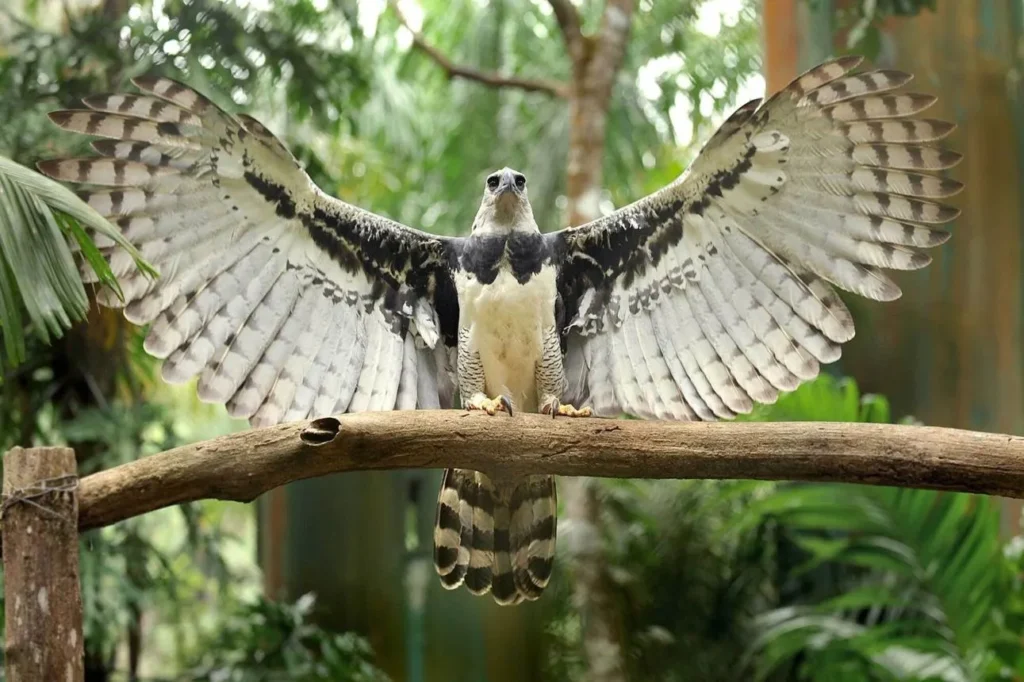
The harpy eagle is one of the most spectacular predators in the Amazon rainforest.
It is enormous compared with many other forest eagles and possesses extraordinarily powerful talons.
Harpy eagles hunt in forest canopies, where they can capture arboreal mammals and large birds.
Their presence is strongly associated with extensive mature forest because they require large territories and suitable nesting trees.
What makes the harpy eagle unusual?
Its massive talons are among its most impressive adaptations. The eagle’s legs and feet are powerful enough to capture substantial prey in the forest canopy.
A harpy eagle sighting can be one of the most memorable experiences for birdwatchers in the Amazon.
7. Hoatzin
The hoatzin is one of the strangest birds of the Amazon.
It has a large crest, unusual coloration, and a distinctive odor that has earned it an unflattering nickname in some regions.
Its chicks are even stranger.
Young hoatzins possess claws on their wings that allow them to climb through vegetation when threatened. These claws disappear as the birds mature.
An unusual fact about the hoatzin
The hoatzin has a specialized digestive system that allows it to ferment leaves.
This makes it one of the most unusual birds in the world.
Although not necessarily one of the rarest Amazon species by population, its bizarre biology makes it an essential addition to any list of unusual rainforest animals.
Rare Amazon Rainforest Animals List: Primates
8. Woolly Monkeys
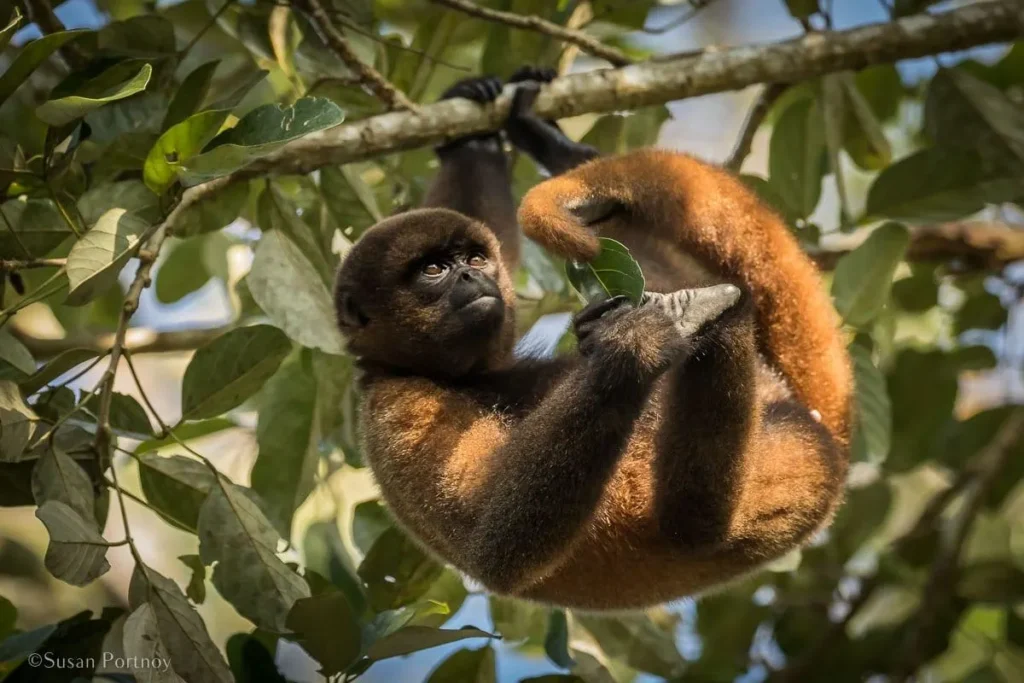
Woolly monkeys are large, highly social primates that spend much of their lives in the forest canopy.
They can be surprisingly difficult to locate because the canopy is enormous and dense.
Woolly monkeys eat fruits, leaves, seeds, flowers, and other plant material. Their movements through the forest can also contribute to seed dispersal.
Some populations have declined because of hunting and habitat loss.
Interesting fact
Woolly monkeys use their long prehensile tails almost like an additional limb, helping them move through the canopy.
9. Giant Otter vs. Giant Armadillo: Two Very Different Amazon Rarities
Although both appear on lists of unusual Amazon mammals, their lifestyles could hardly be more different.
| Animal | Main habitat | Activity | Diet |
|---|---|---|---|
| Giant river otter | Rivers and lakes | Daytime | Mostly fish |
| Giant armadillo | Forest floor | Mostly nocturnal | Ants and termites |
The giant otter is highly social and aquatic, while the giant armadillo is solitary and terrestrial.
This illustrates an important point about the rarest Amazon animals: rarity does not mean all unusual species face the same environmental pressures.
Rare Animals Found in the Amazon Rainforest
10. Amazon River Dolphin
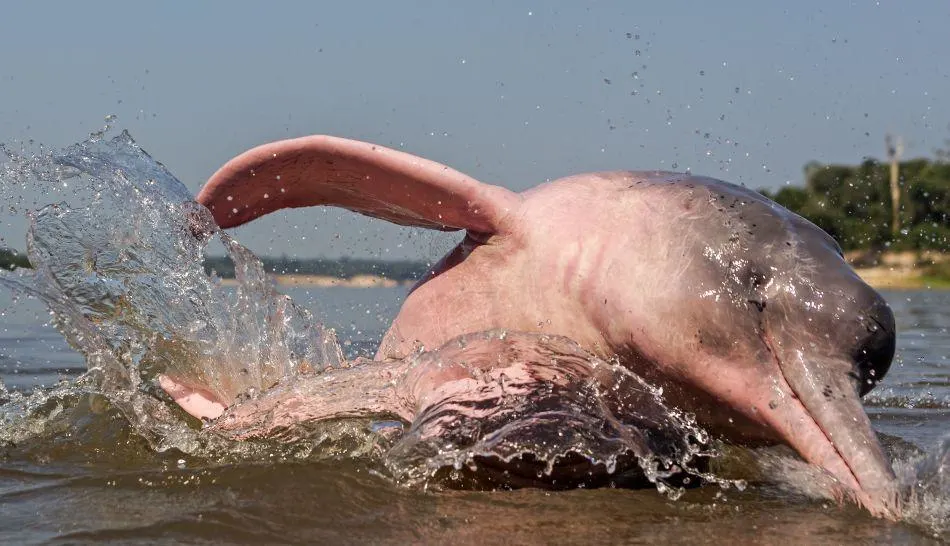
The Amazon river dolphin, commonly known as the pink river dolphin, is one of the Amazon’s most famous aquatic animals.
Its flexible neck and body allow it to maneuver through flooded forests and complex river environments.
The species can enter areas of forest that become flooded during the rainy season, allowing it to exploit food resources unavailable to many terrestrial animals.
Why is the Amazon river dolphin unusual?
Its body is adapted to navigating environments where visibility is often extremely poor.
Instead of depending primarily on vision, river dolphins use echolocation to locate prey and navigate underwater.
11. Lowland Tapir
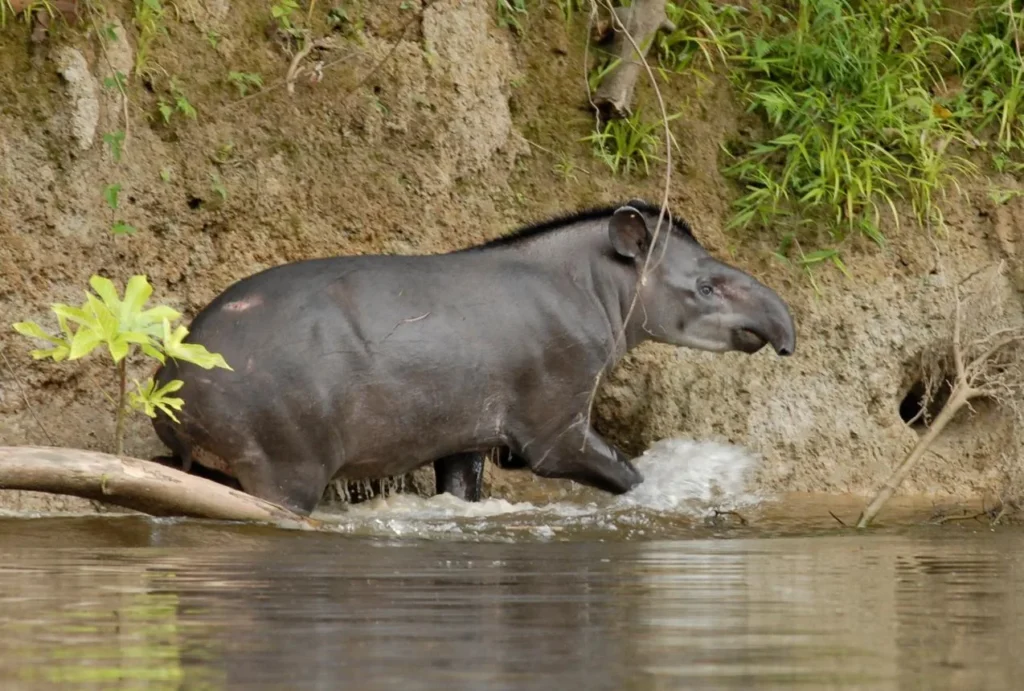
The lowland tapir is the largest native terrestrial mammal in much of the Amazon rainforest.
It has a distinctive short trunk-like nose and a powerful body.
Despite its size, the tapir can disappear surprisingly quickly into thick vegetation.
It is generally associated with areas near water and consumes a wide range of vegetation.
Why is the tapir important?
Tapirs are important seed dispersers.
By consuming fruits and moving through the forest, they can transport seeds away from parent plants and contribute to forest regeneration.
12. Giant Anteater
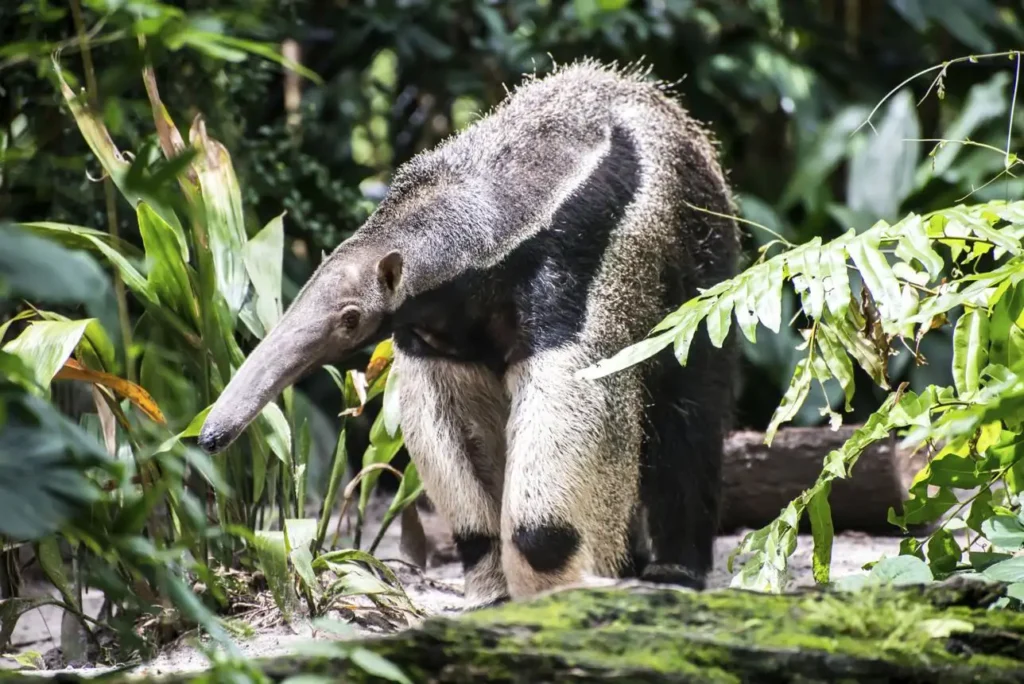
The giant anteater is another unusual mammal found in parts of the Amazon Basin.
Its extraordinarily long snout and tongue are specialized for feeding on ants and termites.
Its tongue can extend far beyond its mouth, allowing it to collect large numbers of insects.
Interesting fact
The giant anteater has no teeth.
Instead, it relies on its tongue, claws, and specialized digestive system to process its food.
13. Golden Lion Tamarin and Other Rare Amazon Primates
Some rainforest species commonly associated with “rare Amazon animals” actually have very restricted ranges.
The golden lion tamarin, for example, is famous for its brilliant orange mane and small size. However, it is primarily associated with Brazil’s Atlantic Forest rather than the Amazon rainforest.
This distinction matters when building a rare Amazon rainforest animals list.
Not every famous Brazilian rainforest animal is an Amazon species.
Examples of Amazonian primates that can be difficult to observe include:
- Spider monkeys.
- Woolly monkeys.
- Bald uakaris.
- Saki monkeys.
- Titi monkeys.
- Lion tamarins in regions where their ranges overlap other ecosystems.
The Bald Uakari: One of the Most Unusual Amazon Monkeys
The bald uakari deserves special attention because its appearance is extraordinary.
It has a very short tail, thick reddish or golden fur depending on the species, and a distinctive hairless face.

Bald uakaris are strongly associated with seasonally flooded forests in parts of the Amazon.
Their specialized habitat preferences mean that they are not equally common everywhere.
An unusual characteristic
Their short tail contrasts sharply with the long, balancing tails of many other Amazonian monkeys.
Rare Resin Animals Amazon: What Does This Keyword Mean?
The phrase “rare resin animals amazon” is not a recognized biological category. It may refer to rare Amazon animals depicted in resin sculptures, resin decorations, carvings, collectibles, or artwork.
For a wildlife article, it is better to interpret this topic as rare Amazon animals represented in resin art and decorative objects, rather than suggesting that “resin animals” are a biological group.
Common Amazon wildlife represented in decorative art includes:
- Jaguars.
- Macaws.
- Toucans.
- Pink river dolphins.
- Sloths.
- Frogs.
- Anacondas.
- Monkeys.
- Harpy eagles.
- Caimans.
Wildlife artwork can be beautiful, but it is important to distinguish artistic representations from actual rare species.
Blue Tiger Rare Amazon Rainforest Animals: Is There a Blue Tiger in the Amazon?
The phrase “blue tiger rare Amazon rainforest animals” appears in searches and online discussions, but there is an important distinction between myth and zoology.
There is no recognized blue tiger species native to the Amazon rainforest.
Tigers are native to Asia, not South America.
Claims about a mysterious blue or “Malayan blue” tiger sometimes appear in internet stories, fictional content, altered images, legends, or sensational wildlife discussions.
Why does this matter?
The Amazon has plenty of genuinely unusual animals without needing invented species.
Real Amazonian wildlife includes extraordinary creatures such as:
- Harpy eagles.
- Giant river otters.
- Pink river dolphins.
- Bald uakaris.
- Margays.
- Giant armadillos.
- Poison dart frogs.
- Electric eels.
- Hoatzins.
In other words, the Amazon is already strange enough.
Amazon Jungle Rare Animals: Why Are They So Difficult to Find?
The Amazon jungle rare animals are difficult to observe partly because the rainforest is structured vertically.
There is not simply “the forest.”
There are multiple ecological layers:
Forest floor
Species such as giant armadillos, tapirs, jaguars, and peccaries move through the understory and ground layer.
Understory
Dense vegetation provides shelter for reptiles, amphibians, insects, and small mammals.
Canopy
Monkeys, birds, sloths, and arboreal cats may spend much of their lives high above the ground.
River and flooded forest
Dolphins, giant otters, fish, caimans, turtles, and aquatic birds occupy freshwater habitats.
Nighttime rainforest
Many of the most elusive animals become active after sunset.
This vertical and temporal complexity is one reason why finding rare animals found in the Amazon rainforest can require enormous patience.
Beautiful Rare Amazon Rainforest Animals
The Amazon’s unusual wildlife is not always frightening or mysterious. Many species are extraordinarily beautiful.
Some of the beautiful rare Amazon rainforest animals include:
- Harpy eagle.
- Scarlet macaw.
- Blue morpho butterfly.
- Jaguar.
- Margay.
- Poison dart frogs.
- Giant river otter.
- Amazon river dolphin.
- Bald uakari.
- Ocelot.
Their colors, shapes, behaviors, and adaptations demonstrate how evolution has produced an extraordinary variety of forms.
Cute Rare Amazon Rainforest Animals
The idea of cute rare Amazon rainforest animals is subjective, but several species frequently attract attention because of their appearance.
Sloths
Sloths have slow movements, rounded faces, and thick fur. Their relaxed behavior makes them popular with visitors.
Giant river otter pups
Young giant river otters are particularly expressive and remain close to their family groups.
Woolly monkeys
Their dense fur, expressive faces, and social behavior make them popular among wildlife observers.
Titi monkeys
Many titi monkeys have small bodies, fluffy fur, and long tails.
Pygmy marmosets
The world’s smallest monkeys are tiny enough to fit comfortably around the size of a human hand.
Their miniature size is one of the most remarkable examples of adaptation among Amazonian primates.
What Rare Animals Live in the Amazon Rainforest?
The answer to “what rare animals live in the Amazon rainforest?” depends on what definition of “rare” is being used.
A broad list of unusual, elusive, locally uncommon, or conservation-sensitive Amazon wildlife includes:
Mammals
- Giant armadillo.
- Giant river otter.
- Amazonian manatee.
- Bush dog.
- Margay.
- Jaguar.
- Lowland tapir.
- Giant anteater.
- Woolly monkeys.
- Bald uakaris.
- Pygmy marmosets.
Birds
- Harpy eagle.
- Hoatzin.
- Scarlet macaw.
- Spix’s macaw historically associated with northeastern Brazil rather than the Amazon rainforest proper.
- Great potoo.
- Amazonian umbrellabird.
Reptiles
- Black caiman.
- Green anaconda.
- Yellow-footed tortoise.
- Mata mata.
- River turtles.
Amphibians
- Poison dart frogs.
- Glass frogs.
- Surinam toad.
- Amazon horned frogs.
Aquatic animals
- Amazon river dolphin.
- Giant river otter.
- Electric eel.
- Arapaima.
Rarest Amazon Animals: Are They Really the Rarest?
There is no universally agreed top 10 rarest animals in the Amazon rainforest.
Scientists generally assess rarity using several factors:
- Population size.
- Geographic range.
- Population density.
- Habitat requirements.
- Rate of population decline.
- Degree of fragmentation.
- Conservation status.
An animal that is difficult to see is not necessarily endangered.
For example, a nocturnal animal with a healthy population can be much harder for tourists to encounter than a common bird that lives around human settlements.
Therefore, “rare” and “endangered” should not be treated as synonyms.
Amazon Animals That Are Rarely Seen
Some animals deserve special recognition simply because sightings are exceptionally uncommon.
Jaguar
Jaguars are widespread across suitable Amazonian habitats but are famously difficult to see.
Their camouflage, solitary behavior, and enormous territories make direct encounters unusual.
Harpy eagle
Even where populations remain healthy, the species requires extensive forest and spends much of its time high in the canopy.
Bush dog
Its secretive nature and low density make sightings highly unpredictable.
Giant armadillo
Mostly nocturnal and extremely elusive.
Margay
A nocturnal tree-dwelling cat that can disappear into the canopy.
Amazonian manatee
An aquatic animal capable of remaining hidden beneath dark or muddy water.
What Is the Most Unusual Animal in the Amazon?
There is no objective answer, but the Amazon contains several strong candidates.
The hoatzin may be one of the best examples because its digestive system, smell, appearance, and clawed chicks are extraordinarily unusual.
The bald uakari is another contender because of its distinctive face and specialized association with flooded forests.
The Amazon river dolphin is unusual because of its flexible body and echolocation-based lifestyle.
The giant armadillo is remarkable because of its enormous claws and subterranean behavior.
And the margay stands out because of its exceptional climbing abilities.
Rare Amazon Animals Pictures: What Should You Look For?
If you are creating a wildlife article or photo gallery about rare Amazon animals pictures, visual variety is more valuable than simply collecting photographs of famous species.
A strong image collection should include different habitats and behaviors.
Recommended image categories
- Rare Amazon mammals.
- Amazon rainforest birds.
- Aquatic Amazon animals.
- Nocturnal rainforest animals.
- Arboreal mammals.
- Amazonian reptiles.
- Rare amphibians.
- Animals in flooded forests.
- Close-up wildlife portraits.
- Animals photographed in their natural habitat.
For an educational article, photographs should ideally show the animal’s natural environment rather than only studio-style portraits.
Why Are Rare Amazon Animals Important?
Rare species often play important ecological roles.
Seed dispersal
Tapirs, monkeys, birds, and other fruit-eating animals can transport seeds through the forest.
Predation
Carnivores help regulate prey populations and contribute to ecological balance.
Nutrient cycling
Animals move nutrients through feeding, digestion, waste, and decomposition.
Ecosystem indicators
Changes in populations of sensitive species can provide clues about habitat degradation.
Cultural importance
Many Amazon animals have deep cultural significance for Indigenous peoples and local communities.
Protecting rare wildlife therefore means protecting ecological relationships, not simply individual animals.
Threats Facing Rare Amazon Rainforest Animals
Rare Amazon rainforest animals can face several overlapping threats.
Habitat loss
Deforestation removes or fragments habitat.
Hunting
Large mammals and birds may be hunted for meat, traditional uses, or other purposes.
Illegal wildlife trade
Some species are captured for the pet trade or sold illegally.
Fire
Forest fires can destroy nesting sites, food resources, and shelter.
Climate change
Changes in temperature, rainfall, drought, and river levels can affect habitats and food availability.
Pollution
Mining, agricultural chemicals, plastics, and other pollutants can affect terrestrial and aquatic ecosystems.
The biggest problem: multiple pressures
The greatest challenge often occurs when several threats happen simultaneously.
A fragmented forest may already be stressed by drought. A drought may increase fire risk. Fire can further degrade the forest, while hunting becomes easier in areas with roads.
This combination can be much more damaging than any single threat acting alone.
Interesting and Unusual Facts About Rare Amazon Animals

1. Some animals are rare because they are specialists
Species that require very specific habitats can be naturally uncommon.
2. The rainforest is divided vertically
Two animals can live in the same forest but almost never encounter each other because one lives on the ground and the other in the canopy.
3. Flooding creates temporary habitats
During high-water periods, fish and river dolphins can enter flooded forest and navigate between trees.
4. Some mammals are better climbers than cats their size
The margay’s unusual ankle flexibility helps it move through trees with extraordinary agility.
5. The Amazon has animals that use sound as their primary clue to the world
River dolphins use echolocation to navigate and locate prey in dark water.
6. Some Amazonian animals are almost invisible
A perfectly camouflaged frog or insect may be only a few centimeters away while remaining completely undetected.
7. A species can be common in one area and rare in another
Local habitat conditions make regional abundance very different.
Conservation: How Can Rare Amazon Animals Be Protected?
Protecting rare Amazon animals requires protecting the ecosystems they depend upon.
Important conservation measures include:
- Protecting intact rainforest.
- Maintaining wildlife corridors.
- Preventing illegal hunting.
- Reducing deforestation.
- Protecting rivers and wetlands.
- Controlling destructive fires.
- Supporting sustainable agriculture.
- Monitoring threatened populations.
- Supporting Indigenous and local communities.
- Reducing pollution.
- Restoring degraded habitats.
Conservation works best when wildlife protection and human livelihoods are considered together.
Frequently Asked Questions About Rare Amazon Animals
What are the rarest animals in the Amazon rainforest?
There is no universally accepted ranking of the rarest animals in the Amazon rainforest. Species such as the giant armadillo, bush dog, Amazonian manatee, harpy eagle, and margay are examples of wildlife that can be exceptionally difficult to encounter, although difficulty of observation does not necessarily mean a species has the smallest population.
What rare animals live in the Amazon rainforest?
Rare, elusive, or locally uncommon Amazon animals include giant armadillos, giant river otters, Amazonian manatees, bush dogs, margays, harpy eagles, bald uakaris, woolly monkeys, Amazon river dolphins, and lowland tapirs.
What are the top 10 rare Amazon animals?
A representative top 10 rare Amazon animals list includes the Amazonian manatee, giant river otter, harpy eagle, giant armadillo, bush dog, Amazon river dolphin, lowland tapir, margay, woolly monkey, and hoatzin. This is not a scientific ranking of population rarity.
Are rare Amazon animals endangered?
Some are threatened, but “rare” does not automatically mean “endangered.” A species may be difficult to see because it is nocturnal, highly secretive, or naturally occurs at low density.
What is the most beautiful rare Amazon animal?
Beauty is subjective, but harpy eagles, margays, Amazon river dolphins, bald uakaris, colorful frogs, and many Amazonian birds are often considered particularly striking.
What is the cutest rare Amazon animal?
Pygmy marmosets, young giant river otters, woolly monkeys, titi monkeys, and sloths are frequently considered among the cutest Amazon rainforest animals.
Is there a blue tiger in the Amazon rainforest?
No. There is no recognized blue tiger species native to the Amazon. Tigers are native to Asia. Stories about blue tigers are generally associated with myths, fictional material, misinformation, or manipulated imagery.
Why are rare Amazon animals difficult to see?
Dense vegetation, camouflage, nocturnal behavior, canopy living, large territories, low population densities, and avoidance of humans all make many Amazon species difficult to observe.
Final Thoughts on the Rarest Amazon Animals
The world of rare Amazon animals is far more diverse than a simple list of endangered species. The rainforest contains animals that are rare, elusive, highly specialized, nocturnal, aquatic, arboreal, or simply extraordinarily difficult to find.
From the powerful harpy eagle and secretive margay to the aquatic Amazonian manatee and giant river otter, each species represents a different solution to the challenges of living in the world’s largest tropical rainforest.
Some animals are beautiful. Others look bizarre. Some are tiny enough to fit in the palm of a hand, while others are among the largest mammals in the forest. Some spend their lives high in the canopy, while others disappear beneath muddy rivers or into underground burrows.
Perhaps the most fascinating lesson is that rarity is not always visible.
An animal can live deep inside an apparently healthy forest and still be difficult to encounter because of its behavior. Another species may become rare because its habitat has been fragmented. Understanding this difference is essential when discussing the rarest animals in the Amazon rainforest.
The Amazon’s rare wildlife ultimately depends on the survival of the habitats connecting everything together—forests, rivers, wetlands, flooded forests, canopy, and forest floor.
Protecting these habitats gives extraordinary animals a chance to remain part of the Amazon for generations to come.