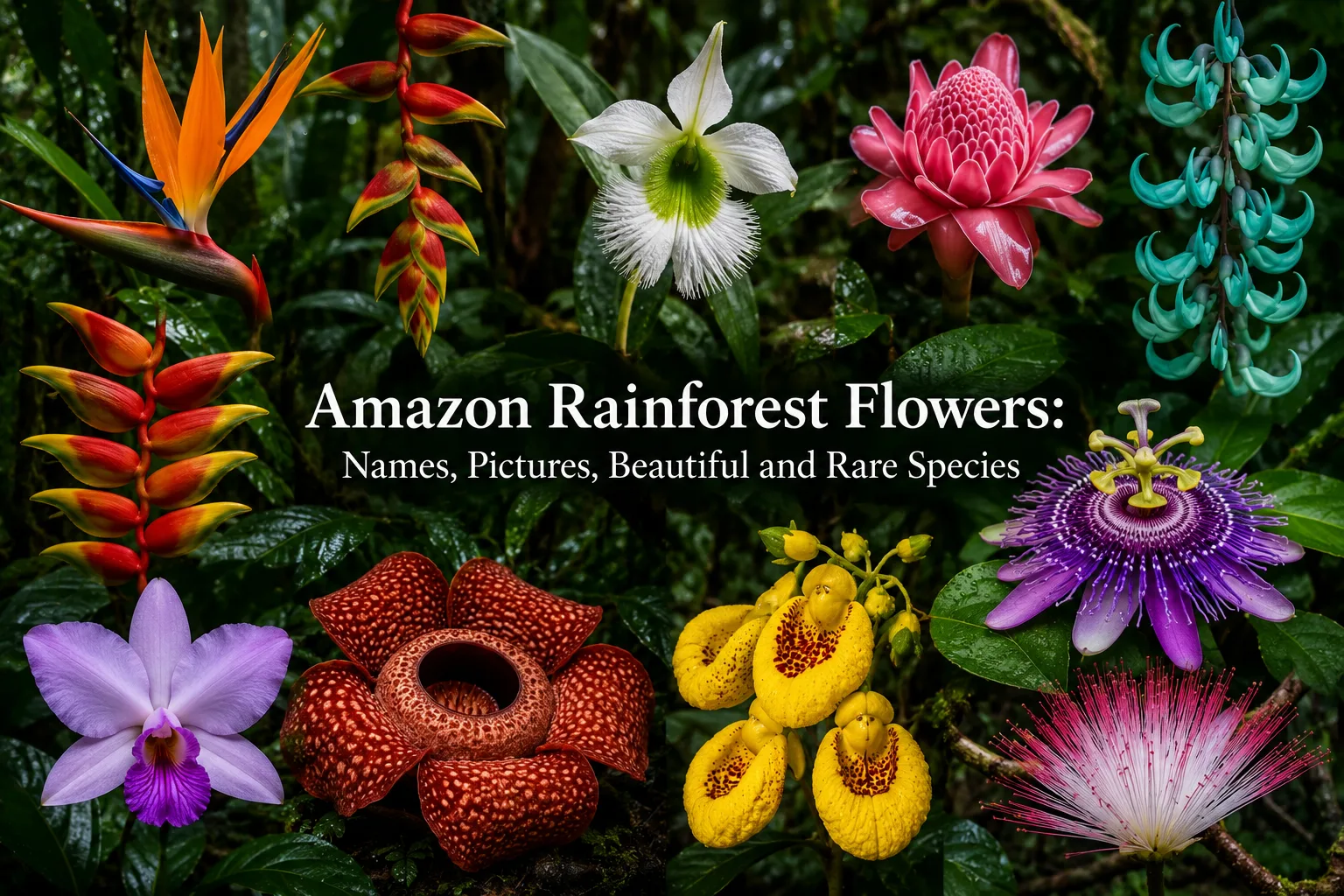
The Amazon rainforest flowers are among the most colorful and fascinating plants in the tropical world. Although the Amazon is famous for enormous trees, exotic wildlife, and dense vegetation, its forest floor, riverbanks, wetlands, vines, shrubs, and canopy are also home to thousands of flowering plants. Some produce spectacular blossoms, while others have tiny or unusual flowers that are easy to overlook.
From brilliant orchids and bromeliads to giant water lilies and climbing vines, Amazonian flowers have evolved extraordinary strategies to survive in one of Earth’s most competitive ecosystems. Their flowers attract bees, butterflies, hummingbirds, bats, beetles, and other pollinators, creating complex relationships that help maintain the rainforest.
This guide explores Amazon rainforest flowers names and pictures, beautiful and rare rainforest flower species, flowering plants of the Amazon, tropical rainforest flowers, and the fascinating biology behind them.
Are There Flowers in the Amazon Rainforest?
Yes, there are thousands of flowering plants in the Amazon rainforest. In fact, flowering plants, also known as angiosperms, make up a huge proportion of the Amazon’s plant diversity.
The rainforest is not simply a sea of green leaves. Look closely and you can find flowers growing at almost every level of the ecosystem: on the forest floor, along streams and rivers, on tree trunks, in the canopy, and floating on wetlands and lakes.
Some flowers are enormous and unmistakable, while others are small, delicate, fragrant, or hidden among leaves.
What Flowers Grow in the Amazon Rainforest?
The Amazon contains an enormous variety of flowering plants, including:
- Orchids
- Bromeliads
- Heliconias
- Passion flowers
- Water lilies
- Aroids
- Ginger relatives
- Palms
- Vines
- Epiphytes
- Shrubs
- Trees with spectacular blossoms
- Aquatic flowering plants
These plants occupy different habitats and have evolved different strategies for obtaining sunlight, water, nutrients, and pollination.
Amazon Rainforest Flowers and Plants
Flowers are only one part of the Amazon’s extraordinary plant community. A flowering plant may begin life as a small seedling on the forest floor, climb toward sunlight, grow on another plant as an epiphyte, or spread across a wetland.
The relationship between flowers and the surrounding vegetation is particularly important. Plants compete for sunlight, but they also depend on animals to move pollen between flowers.
This creates an intricate biological network involving plants, insects, birds, mammals, and other organisms.
Amazon Rainforest Flowers Names and Pictures
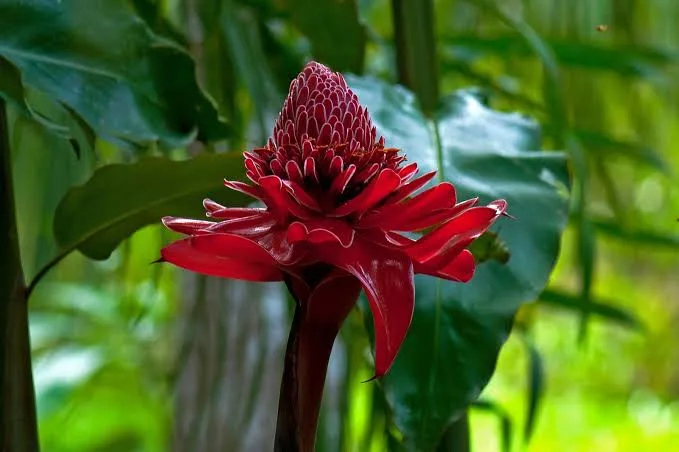
When people search for amazon rainforest flowers names and pictures, they are often looking for recognizable species that demonstrate the diversity and beauty of tropical rainforest plants.
Below are some of the most fascinating examples.
1. Victoria Amazonica – Giant Amazon Water Lily
The giant water lily, commonly known as Victoria amazonica, is one of the most spectacular flowering plants associated with the Amazon. It grows in calm freshwater environments such as lakes, oxbow lakes, ponds, and slow-moving waters.
Its enormous circular leaves can spread across the water surface and are famous for their remarkable size. The flowers rise above the water and can change color as they mature.
Interesting fact
The flowers are associated with beetle pollination. Their changing appearance and fragrance help attract their pollinators at the appropriate stage of flowering.
The plant is an extraordinary example of how a flower can become highly specialized for life in tropical wetlands.
2. Orchids – Some of the Most Beautiful Amazon Flowers
Orchids are among the most famous Amazon flower species. The Amazon supports an enormous variety of orchids, ranging from tiny flowers to spectacular species with elaborate shapes and fragrances.
Many Amazonian orchids are epiphytes, meaning they grow on trees without taking nutrients directly from their hosts like parasites do.
Instead, they use trees primarily as elevated platforms that allow them to reach better light.
Why are orchids so unusual?
Orchids have some of the most specialized pollination systems in the plant kingdom. Their flowers may imitate shapes, scents, or chemical signals associated with potential pollinators.
Some species depend on particular insects, making their survival closely connected to the health of the surrounding ecosystem.
3. Heliconia – Bright Tropical Rainforest Flowers
Heliconias are instantly recognizable because of their bright red, orange, yellow, or pink structures.
They are among the classic tropical rainforest flowers and are especially important to hummingbirds.
The colorful structures that people often think of as petals are frequently bracts, specialized leaves associated with the flowers.
Heliconia and hummingbirds
Heliconias can produce nectar that attracts hummingbirds. The birds visit flowers while searching for food and may transfer pollen between plants.
This relationship is an excellent example of coevolution in the rainforest.
4. Passion Flowers
Passion flowers belong to the genus Passiflora and include numerous tropical species.
Their flowers can be extraordinarily complex, with multiple layers of structures that create a distinctive appearance.
Passionflower vines are particularly interesting because their relationship with insects extends beyond pollination.
Some species have evolved unusual defenses against herbivorous caterpillars, including structures that can resemble insect eggs.
This can discourage butterflies from laying eggs on the plant because they may avoid a leaf that appears to already be occupied.
Beautiful Amazon Rainforest Flowers
The Amazon contains countless beautiful flowers, but beauty is not simply decorative from an ecological perspective.
Color, shape, scent, nectar, timing, and location can all function as communication systems between plants and animals.
Why Are Amazonian Flowers So Colorful?
Bright colors can make flowers easier for certain pollinators to detect against green vegetation.
Different animals perceive colors differently. A flower that looks brilliantly red to humans may appear very different to an insect or bird.
This means that flower coloration is often shaped by the visual abilities of the pollinators that visit it.
Some common flower colors include:
- Red
- Orange
- Yellow
- Pink
- Purple
- White
- Green
- Blue
- Combinations of several colors
In many cases, the flower’s appearance is closely connected to its pollination strategy.
Rare Flowers in the Amazon Rainforest
The phrase rare flowers in the Amazon rainforest can refer to species with restricted distributions, specialized habitats, declining populations, difficult-to-find flowers, or plants that naturally occur at low densities.
Some rare Amazonian flowers are difficult to observe because they bloom for short periods or occur high in the forest canopy.
Others grow in remote locations where botanical surveys are limited.
Why Are Some Amazon Flowers Rare?
Several factors can contribute to rarity:
- Restricted geographic range
- Specialized habitat requirements
- Dependence on particular pollinators
- Short flowering periods
- Low population density
- Habitat fragmentation
- Changes in climate
- Deforestation
- Illegal collection
- Limited scientific knowledge
A plant may therefore be rare without being spectacularly large or visually impressive.
Hidden Flowers of the Amazon
One of the most fascinating characteristics of Amazonian flora is that many flowers are difficult to see.
A plant may bloom several meters above the ground. Another may flower for only a few hours. Some are hidden among dense leaves, while others blend into the surrounding vegetation.
For this reason, even experienced rainforest guides and botanists can encounter unfamiliar flowering plants.
Amazon Rainforest Flowering Plants
The Amazon rainforest contains flowering plants adapted to almost every imaginable tropical habitat.
Flowering Plants of the Forest Floor
The forest floor receives relatively little direct sunlight because the canopy blocks much of the available light.
Plants growing there therefore need special adaptations.
Many have:
- Large leaves
- Shade tolerance
- Slow growth
- Specialized flowers
- Efficient nutrient recycling
Some forest-floor plants depend on small insects or other animals for pollination.
Canopy Flowering Plants
The canopy receives much more sunlight than the forest floor, making it an important habitat for flowering plants.
Epiphytic orchids, bromeliads, vines, and other plants may grow high above the ground.
Why grow in the canopy?
Light is the main advantage.
Instead of competing with thousands of plants on the dark forest floor, canopy plants can occupy branches and tree trunks where sunlight is more abundant.
Aquatic Flowering Plants
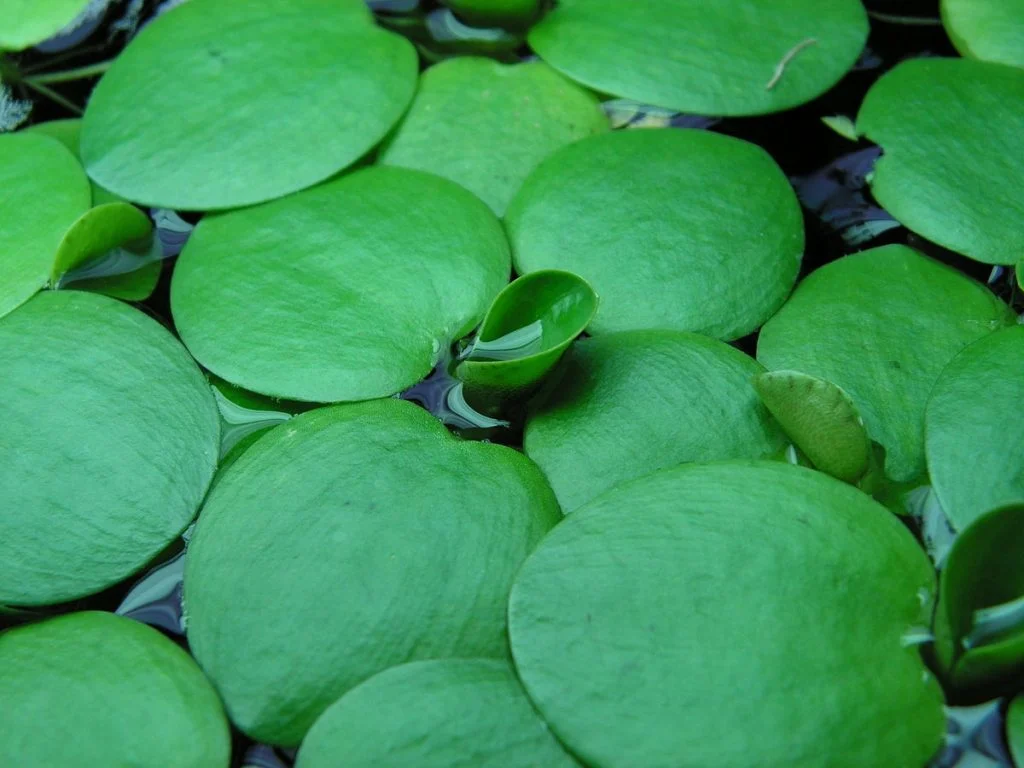
Amazonian waterways support their own fascinating community of flowering plants.
Giant water lilies are the best-known example, but numerous smaller aquatic plants also produce flowers.
These plants have adaptations for:
- Floating
- Anchoring in muddy sediments
- Surviving seasonal flooding
- Reproducing in water
- Attracting aquatic or semi-aquatic pollinators
Amazon Rainforest Flora
Amazon rainforest flora includes an extraordinary mixture of trees, shrubs, herbs, vines, palms, epiphytes, aquatic plants, and flowering species.
Flowering plants are particularly important because they connect different parts of the ecosystem.
A single flowering plant can provide:
- Nectar for hummingbirds
- Pollen for bees
- Food for insects
- Fruits for birds and mammals
- Shelter for small organisms
- Reproductive resources for specialized pollinators
This means flowers are not isolated decorations. They are biological resources that support entire food webs.
Amazon Flower Species and Rainforest Flower Species
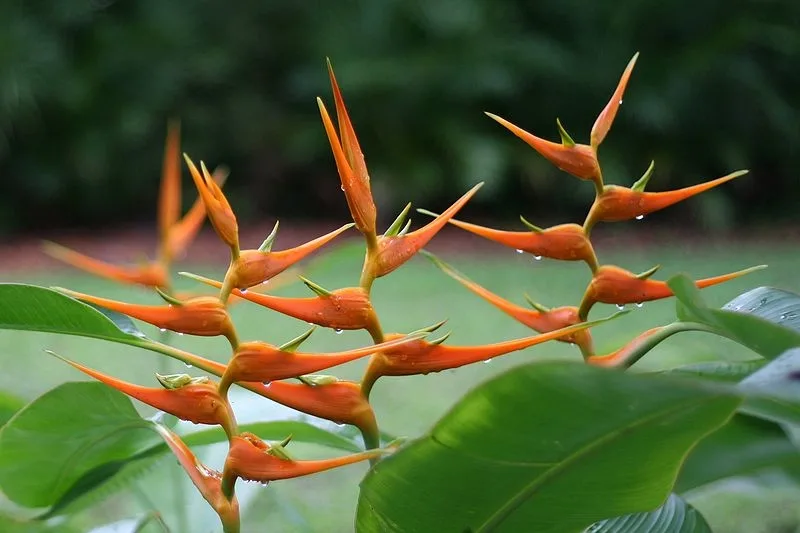
There is no simple list containing every Amazon flower species because the Amazon Basin is enormous and botanical research continues to identify and document plant diversity.
Different regions contain different species depending on rainfall, soil, elevation, flooding, and habitat type.
Flowers Associated With Amazonian Habitats
Floodplain forests
These forests experience seasonal flooding and contain plants adapted to changing water levels.
Terra firme forests
These areas remain above normal seasonal flooding and contain an enormous variety of trees, vines, herbs, and epiphytes.
Riverbanks
River margins provide habitats for plants that tolerate shifting sediments and changing water levels.
Wetlands
Wetlands support aquatic plants and species adapted to saturated soils.
Canopy habitats
Tree crowns contain orchids, bromeliads, vines, and other epiphytes.
Amazon Pollinators: Who Pollinates Amazon Flowers?
The diversity of Amazon pollinators is one of the reasons Amazonian flowers are so varied.
Pollination occurs when pollen is transferred from one part of a flower to another flower of the same species, allowing reproduction.
Animals are responsible for much of this work in tropical ecosystems.
Bees
Bees are among the most important pollinators. They collect nectar and pollen while moving between flowers.
Some Amazonian plants have evolved flowers specifically suited to particular bee species.
Butterflies and Moths
Butterflies often visit brightly colored flowers during the day, while moths may visit flowers at night.
Night-blooming flowers frequently rely more heavily on scent than visual signals.
Hummingbirds
Hummingbirds are extremely important pollinators for many tubular flowers.
Flowers visited by hummingbirds often have:
- Bright colors
- Tubular shapes
- Abundant nectar
- Structures that accommodate a bird’s beak
Heliconias are classic examples.
Bats
Bats are important nocturnal pollinators for certain tropical plants.
Bat-pollinated flowers often produce strong scents and abundant nectar and may be relatively large and robust.
Beetles
Beetles pollinate numerous tropical plants.
Some flowers use strong fragrances or specialized structures to attract beetles.
The giant Amazon water lily provides a particularly interesting example of beetle-associated pollination.
Flowers of the Tropical Rainforest: How Plants Reproduce
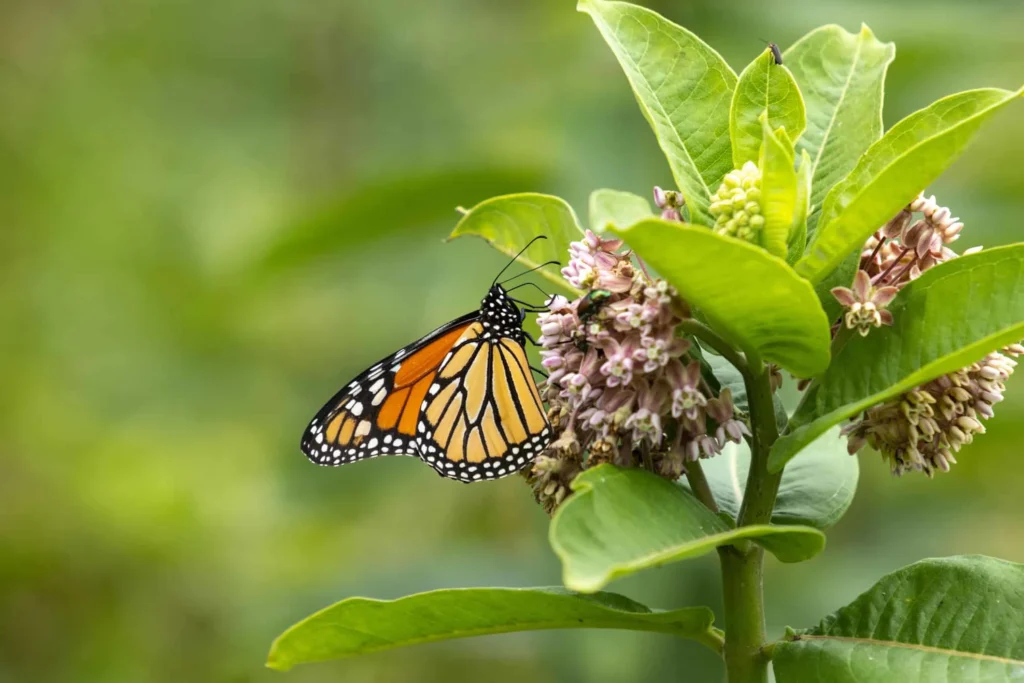
The flowers of the tropical rainforest have evolved under intense competition.
Rainforest plants cannot simply produce flowers and wait for pollinators to arrive. They need to attract the right animals at the right time.
Flowers can therefore act as sophisticated biological signals.
Important flower signals include:
- Color
- Fragrance
- Nectar
- Shape
- Size
- Flowering time
- Heat
- Ultraviolet patterns
Some flowers even produce compounds that mimic chemicals associated with insects.
Unusual Adaptations of Amazon Rainforest Flowers
Amazon flowers have evolved some extraordinary strategies.
Flowers That Bloom at Night
Night-blooming flowers may depend on moths or bats.
Instead of relying primarily on bright colors, they often produce powerful fragrances that travel through the darkness.
Flowers That Imitate Other Organisms
Certain orchids and other plants can imitate insects or use deceptive signals to attract pollinators.
The plant essentially creates an illusion that encourages an animal to visit.
Flowers With Specialized Structures
Some flowers are shaped so that a pollinator must touch a particular reproductive structure.
This improves the probability that pollen will be transferred to another flower.
Flowers That Produce Heat
Thermogenesis, or biological heat production, occurs in some flowering plants.
Heat can help spread fragrance and may attract particular pollinators.
This is an unusual reminder that flowers can regulate their environment in surprisingly sophisticated ways.
The Relationship Between Amazon Flowers and Rainforest Animals
Flowers connect plants to the animal world.
A hummingbird visiting a flower may collect nectar while carrying pollen to another plant. A bee may travel between several flowers in a single morning. A beetle may enter a flower, feed, and unknowingly transport pollen.
The relationship extends beyond pollination.
After flowering, many plants produce fruits that become food for:
- Monkeys
- Birds
- Bats
- Rodents
- Sloths
- Tapirs
- Other mammals
A flower can therefore represent the beginning of a much larger ecological cycle.
How to Identify Amazon Rainforest Flowers
Identifying rainforest flowers can be challenging because many species look similar, and some only bloom briefly.
When identifying an Amazonian flower, researchers and guides may examine:
Flower characteristics
- Number of petals
- Shape
- Color
- Size
- Fragrance
- Arrangement
Plant characteristics
- Leaf shape
- Leaf arrangement
- Stem structure
- Growth habit
- Presence of thorns
- Epiphytic or terrestrial growth
Habitat
Where the plant grows can provide important clues.
For example, a flower found floating in a lake belongs to a very different ecological group from an orchid growing high in a tree.
Amazon Rainforest Flowers Pictures: What to Look For
Pictures are especially useful for understanding rainforest flowers because many species have complex structures that are difficult to describe using words alone.
When comparing Amazon rainforest flowers pictures, pay attention to:
- Flower shape
- Color patterns
- Petal arrangement
- Bracts
- Leaves
- Growth location
- Pollinator access
- Flower size relative to the plant
A close-up photograph can reveal details that are invisible from several meters away.
For educational or travel articles, photographs of orchids, heliconias, passion flowers, giant water lilies, and other recognizable tropical species provide a useful visual introduction to Amazonian flora.
Interesting Facts About Amazon Rainforest Flowers
1. Not everything colorful is a petal
Many spectacular tropical plants use modified leaves called bracts to attract animals.
2. Some flowers are pollinated by animals that work at night
Moths and bats can be essential to the reproductive success of particular rainforest plants.
3. Some orchids grow without touching the ground
Epiphytic orchids can live high in trees, using branches for support while obtaining water and nutrients from their surroundings.
4. Flowers can communicate with animals
Color, scent, shape, and nectar are all forms of biological communication.
5. Some flowers deceive their pollinators
Certain plants attract animals without providing the reward the animal expects.
6. The biggest-looking flower structure may not actually be the flower
What appears to be a giant flower can sometimes be a collection of tiny flowers surrounded by specialized leaves.
7. Amazonian flowers can be extremely specialized
A plant may depend heavily on a particular pollinator species, making the relationship between plant and animal highly interconnected.
8. Some flowers are almost invisible
Tiny flowers can be hidden among leaves or high in the canopy.
9. The Amazon’s flowering seasons are not identical everywhere
Rainfall, flooding, temperature, elevation, and local climate influence when plants flower.
10. Flowers are essential to rainforest biodiversity
Without flowering plants, many insects, birds, bats, and other animals would lose important sources of food.
Current Challenges Facing Amazon Rainforest Flowers
Amazonian flowering plants face many of the same pressures affecting the wider rainforest.
Habitat loss can remove entire plant populations and disrupt relationships with pollinators.
Climate change may also influence flowering seasons. If plants flower at different times than their pollinators are active, ecological relationships could become disrupted.
Fragmentation is another concern. A plant may survive in a small forest fragment, but if its pollinators cannot move between isolated areas, successful reproduction may decline.
Protecting Amazonian flowers therefore means protecting entire ecosystems rather than focusing only on individual species.
Why Amazon Rainforest Flowers Matter
Flowers are one of the most important components of rainforest biodiversity.
They support pollinators, produce fruits, contribute to food webs, and maintain plant reproduction. Their diversity also provides clues about how ecosystems respond to climate, soil, flooding, and ecological disturbance.
The incredible variety of Amazonian flowers demonstrates the evolutionary creativity of tropical ecosystems.
From a giant water lily floating on a quiet oxbow lake to a tiny orchid growing high in the canopy, each flower represents a solution to the same fundamental challenge: how to reproduce successfully in one of the world’s most competitive environments.
Conclusion: The Extraordinary World of Amazon Rainforest Flowers
The Amazon rainforest flowers are far more diverse and fascinating than their spectacular colors might initially suggest. They form a sophisticated biological network involving plants, insects, birds, bats, butterflies, beetles, and countless other organisms.
Beautiful species such as orchids and heliconias capture our attention, while giant water lilies demonstrate the remarkable adaptations of Amazonian wetlands. Less conspicuous flowers hidden in the canopy or forest floor are equally important to the rainforest ecosystem.
The Amazon is home to an enormous diversity of flowering plants, and many remain poorly known. Some are rare, some are highly specialized, and others may bloom for only a short period each year.
Perhaps the most fascinating lesson is that an Amazonian flower is never simply a beautiful object. Its color may be a signal, its fragrance may be a message, its shape may be a mechanical device, and its nectar may be a reward designed to attract a specific animal.
In the Amazon rainforest, flowers are part of an intricate conversation between plants and animals—and that conversation helps keep the entire rainforest alive.