The Amazon weather is one of the most fascinating aspects of the world’s largest tropical rainforest. Hot temperatures, high humidity, abundant rainfall, powerful thunderstorms, sudden changes in conditions, and seasonal variations all influence life in the Amazon. However, there is no single type of weather across the entire Amazon Basin. The region stretches across millions of square kilometers and several countries, so conditions can vary considerably from one location to another.
The terms Amazon rainforest weather, Amazon forest weather, and Amazon jungle weather are often used interchangeably, but the climate of the Amazon is influenced by geography, elevation, rivers, vegetation, atmospheric circulation, and seasonal rainfall patterns. Some areas receive rain throughout the year, while others have a more pronounced dry season.
For travelers, understanding Amazon weather is especially useful because rain, heat, humidity, river levels, and occasional cold fronts can affect jungle excursions and wildlife experiences. In destinations such as Tambopata in southeastern Peru, temperatures remain generally warm throughout the year, but rainfall changes substantially between the wetter and drier parts of the year.
This guide explains Amazon rainforest weather, Amazon weather by month, Amazon weather forecast, Amazon weather today, Amazon weather tomorrow, Amazon weather live, Amazon weather radar, rainfall, humidity, thunderstorms, cold fronts, and Tambopata weather, while exploring interesting facts about the climate of the rainforest.
What Is Amazon Rainforest Weather Like?
Amazon rainforest weather is generally characterized by warm temperatures, high humidity, abundant rainfall, frequent cloud development, and tropical storms. However, the Amazon is so large that conditions differ between the western, central, and eastern parts of the basin and between lowlands and higher elevations.
In tropical rainforest areas, temperatures tend to remain relatively warm throughout the year instead of changing dramatically between summer and winter. The most noticeable seasonal difference is often the amount and timing of rainfall rather than temperature.
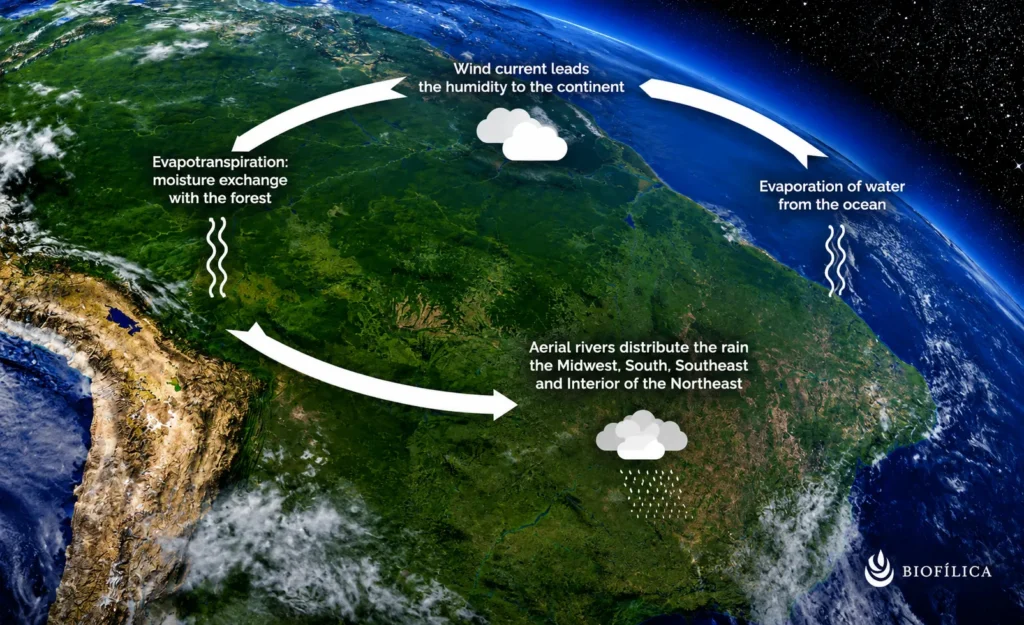
The rainforest itself also interacts with the atmosphere. Trees release enormous quantities of water vapor through transpiration, contributing to the moisture circulating through the ecosystem. This relationship between vegetation, evaporation, clouds, and rainfall is one reason the Amazon climate is so important to the functioning of the rainforest.
Amazon Forest Weather and Temperature
Amazon forest weather is usually warm and humid, particularly in lowland areas. Daytime temperatures can become hot, while nights are generally more comfortable, although humidity can remain high.
The apparent temperature can feel considerably warmer than the actual air temperature because of moisture in the atmosphere. When humidity is high, sweat evaporates less efficiently from the skin, making hot conditions feel more intense.
Typical Amazon Weather Characteristics
- Warm temperatures throughout much of the year
- High relative humidity
- Frequent rainfall
- Cloudy periods
- Strong tropical sunshine
- Short but intense rainstorms
- Thunderstorms
- Seasonal differences in precipitation
- Occasional cooler periods in parts of the southern Amazon
These characteristics create an environment where weather can change rapidly during a single day.
Amazon Jungle Weather: Hot, Humid and Unpredictable
The expression Amazon jungle weather often brings to mind continuous rain, but the reality is more complicated. It does not necessarily rain all day, every day.
A typical rainforest day can include sunshine in the morning, increasing clouds around midday, a heavy afternoon shower, and clearer conditions later. Another day may remain cloudy for several hours before producing only a brief shower.
The timing and intensity of rainfall vary according to location and season.
Does It Rain Every Day in the Amazon?
Rain can occur during any month in many Amazonian locations, but that does not mean it rains continuously.
A tropical rainstorm may be extremely intense for a relatively short period and then disappear. In other situations, clouds can produce prolonged rainfall lasting several hours.
This variability is important for travelers. A rainy forecast does not necessarily mean an entire day will be lost to rain.
How Quickly Can Amazon Rainstorms Develop?
A heavy tropical shower can sometimes appear to arrive almost suddenly. Dark clouds build quickly, winds change, birds become less active, and within minutes a dry trail can become soaked.
The same storm may pass surprisingly quickly, leaving behind bright sunlight and steaming vegetation.
Amazon Weather by Season
Although seasons differ geographically across the Amazon, many areas experience a wetter period and a relatively drier period.
The distinction is not always as simple as “rainy season versus dry season.” Even during a drier season, tropical rain can occur, while the wetter season can contain periods of sunshine.
Wet Season in the Amazon
During the wetter part of the year, rainfall becomes more frequent or intense in many parts of the basin. Rivers may rise, floodplain habitats can expand, and trails can become muddy.
Higher rainfall can also transform the appearance of the rainforest. Streams become fuller, vegetation appears especially lush, and flooded forest environments can become more accessible by boat in some areas.
What Happens During Wet Weather?
- Rivers can rise
- Small streams become more active
- Forest trails become wetter
- Humidity remains high
- Thunderstorms can become more frequent
- Wildlife behavior may change
- Boat travel can become particularly important in flooded areas
The wet season can therefore provide a completely different experience from the drier part of the year.
Drier Season in the Amazon
The drier season does not mean the Amazon becomes completely dry. Instead, some locations experience fewer rainy days or lower accumulated rainfall.
In parts of the southern Peruvian Amazon, the drier period is especially noticeable during the middle of the year.
For visitors, this can mean easier hiking conditions, fewer muddy trails, and more predictable weather on some days.
Amazon Rainforest Weather by Month
The keyword Amazon rainforest weather by month is especially useful for travelers planning a rainforest trip. However, there is no single monthly weather table that applies equally to the entire Amazon.
The following overview describes broad patterns rather than a precise forecast for every part of the basin.
January Amazon Weather
January is generally part of a wetter period in many Amazonian locations. Rainfall can be frequent, and humid conditions are common.
Heavy showers can occur, but periods of sunshine can also appear between storms.
In areas such as Tambopata, January is among the wetter months based on long-term climate averages.
January Travel Considerations
Expect:
- High humidity
- Frequent rainfall
- Muddy trails in some locations
- Lush vegetation
- High river levels in some areas
February Amazon Weather
February is also typically wet in many parts of the Amazon. In Tambopata, long-term climate data indicate substantial rainfall during February.
This can be an excellent period for experiencing a particularly green rainforest landscape, although travelers should be prepared for rain.
March Amazon Weather
March can continue the wetter conditions experienced earlier in the year.
Rainfall remains an important part of the daily weather cycle, while temperatures remain warm.
The combination of heat and humidity can make physical activity feel more demanding, particularly during the warmest part of the day.
April Amazon Weather
April often represents a transition toward somewhat drier conditions in parts of the southern Amazon.
Rain remains possible, but the frequency and total rainfall may begin decreasing compared with the earlier months.
This transitional character can make April an interesting month for visitors who want a balance between lush conditions and somewhat less rainfall.
May Amazon Weather
May can mark a more noticeable transition toward drier weather in parts of the southern Peruvian Amazon.
In Tambopata, long-term climate records show substantially less rainfall in May than during January through March.
Temperatures can still feel hot, but mornings and nights may occasionally feel cooler.
June Amazon Weather
June is often associated with the beginning of a relatively drier period in parts of the southern Amazon.
In Tambopata, long-term averages show considerably lower rainfall in June than during the wetter months.
However, an unusual feature of the southern Amazon is that cold air outbreaks can occasionally reach tropical lowlands during this period.
July Amazon Weather
July can be one of the drier months in parts of the southern Peruvian Amazon. Tambopata climate averages show July among the months with the lowest rainfall.
This does not mean that July is cold. Daytime conditions can remain warm or hot, while nights and early mornings can occasionally feel considerably cooler.
July Weather Fact: Friajes
The southern Amazon can experience occasional cold fronts, locally known as friajes, which can cause temperatures to drop suddenly.
A rainforest that normally feels hot and humid can temporarily become surprisingly cool.
August Amazon Weather
August generally remains relatively dry in parts of the southern Amazon, although rainfall can begin increasing later in the season.
Sunny conditions can be common, and warm afternoons may become particularly noticeable.
For travelers, lightweight clothing, sun protection, insect protection, and rain gear can still all be useful because tropical weather remains variable.
September Amazon Weather
September can become increasingly warm in some southern Amazon locations.
In Tambopata, long-term climate data show rising average temperatures toward September and October, with October among the warmest months in some climate datasets.
Rainfall may also begin increasing compared with the middle of the year.
October Amazon Weather
October often marks a stronger transition toward wetter conditions in Tambopata.
Long-term climate averages show rainfall increasing considerably from the drier middle months toward October.
Temperatures can be high, and humid conditions may become particularly noticeable.
November Amazon Weather
November is generally wetter than the middle of the year in many southern Amazon locations.
Cloud development and rainfall become increasingly common as the region moves toward the wetter part of the annual cycle.
December Amazon Weather
December can be among the wetter months in the southern Amazon.
In Tambopata, long-term climate data show rainfall increasing substantially in December compared with June, July, and August.
The rainforest is typically extremely green, humid, and active during this period.
Amazon Weather Forecast: Today, Tomorrow and Live Conditions
The Amazon weather forecast can be more difficult to interpret than a forecast for a temperate city.
This is partly because tropical weather can change rapidly. A forecast may indicate a high probability of rain, but that does not necessarily mean continuous rainfall.
A tropical forecast is best understood as an indication of atmospheric conditions and the probability of precipitation rather than a guarantee that rain will occur continuously throughout the forecast period.
Amazon Weather Today
The phrase Amazon weather today is geographically incomplete because the Amazon Basin covers an enormous area.
Today’s weather in Manaus can be completely different from today’s conditions in Iquitos, Puerto Maldonado, Leticia, or a remote rainforest lodge.
For an accurate current-weather search, the location should therefore include a specific city or region.
Why Location Matters
Weather conditions depend on:
- Latitude
- Elevation
- Distance from major rivers
- Local topography
- Rainforest cover
- Regional atmospheric conditions
- Season
- Recent rainfall
This is why “Amazon weather today” should be treated as a broad search term rather than a precise forecast.
Amazon Weather Tomorrow
The same principle applies to Amazon weather tomorrow.
A forecast for tomorrow can provide useful information about expected rain, thunderstorms, temperature, wind, and cloud cover, but it must be tied to a specific location.
For travelers, the most useful approach is to check the forecast for the actual destination rather than relying on a general Amazon-wide forecast.
Amazon Weather Live
Amazon weather live generally refers to real-time or near-real-time weather information.
Live weather can be especially useful when planning river trips, jungle hikes, wildlife excursions, or flights.
However, a single weather station cannot represent conditions across the entire rainforest.
A storm may be producing heavy rain several kilometers away while the sky above another location remains clear.
Amazon Weather Radar and Rainfall Monitoring
Amazon weather radar can be useful for observing developing rainstorms and precipitation systems, especially around populated areas and locations with radar coverage.
Radar is particularly useful in tropical regions because thunderstorms can develop quickly.
What Does Amazon Weather Radar Show?
Weather radar can help identify:
- Rainfall intensity
- Storm movement
- Areas of heavy precipitation
- Developing storm systems
- Direction of approaching rain
Radar imagery can be especially valuable when combined with a local forecast and satellite observations.
Why Can Amazon Rainfall Be Highly Localized?
A rainforest storm can be extremely localized.
One village or lodge may experience a torrential downpour while another location only a few kilometers away receives little or no rain.
This is one reason the phrase “Amazon weather” can be misleading when used without specifying a location.
Humidity in the Amazon Rainforest
Humidity is one of the defining characteristics of Amazon rainforest weather.
The rainforest contains enormous quantities of water. Rainfall enters rivers and soils, while plants return water to the atmosphere through transpiration.
The result is a constantly moist environment in many parts of the basin.
Why Does Amazon Weather Feel So Humid?
High humidity means the air already contains a large amount of water vapor.
When temperatures are high, the combination can make conditions feel significantly hotter than the thermometer suggests.
For travelers, humidity is often more noticeable than the actual temperature.
How to Handle Amazon Humidity
- Drink water regularly
- Wear lightweight, breathable clothing
- Avoid unnecessary heavy layers
- Use a hat for sun protection
- Take breaks during strenuous hikes
- Keep electronics protected from moisture
- Allow wet clothing to dry properly
Rainfall in the Amazon Rainforest
Rain is fundamental to the Amazon ecosystem.
Rainwater feeds rivers, streams, wetlands, soils, and plants. It also helps maintain the hydrological cycle that connects the forest with the atmosphere.
Some parts of the Amazon receive extremely high annual rainfall, while others have more pronounced dry seasons.
According to Peru’s protected-area authority, the Tambopata National Reserve has an annual average temperature of about 26°C, annual precipitation in the range of roughly 2,500–3,000 mm, and relative humidity commonly around 80–100%.
Why Does the Amazon Receive So Much Rain?
Several processes contribute to Amazon rainfall.
Moisture enters the basin through atmospheric circulation and is also recycled by the forest itself. Plants release water vapor into the atmosphere, where it can contribute to cloud formation and rainfall.
This creates a remarkable feedback between the rainforest and atmosphere.
Thunderstorms in the Amazon
Thunderstorms are an important part of tropical weather.
Warm, moist air can rise rapidly, producing towering clouds known as cumulonimbus clouds. These clouds can generate heavy rain, lightning, thunder, and strong gusts of wind.
Thunderstorms can develop quickly, particularly during periods of intense atmospheric convection.
What Does an Amazon Thunderstorm Feel Like?
The experience can be dramatic.
The forest may become unusually quiet. The sky darkens, wind moves through the canopy, and distant thunder gradually becomes louder.
Then rainfall can arrive suddenly and intensely.
After the storm passes, the rainforest may become filled with the sounds of insects, frogs, birds, and dripping vegetation.
Cold Fronts and Unusually Cool Amazon Weather
One of the most surprising Amazon weather phenomena is that parts of the southern Amazon can occasionally become quite cool.
During strong cold-air outbreaks from farther south, temperatures can fall rapidly.
These events are known in parts of South America as friajes.
For people accustomed to thinking of the Amazon as permanently hot, this can be surprising.
Why Can the Amazon Get Cold?
The southern Amazon is connected to atmospheric circulation patterns extending far beyond the rainforest.
Cold air can move northward from subtropical and temperate regions, temporarily replacing warm tropical air.
The effect is generally short-lived, but the temperature change can be dramatic.
A Surprising Amazon Weather Fact
A traveler can arrive in the Amazon expecting extreme tropical heat and unexpectedly need a jacket a few hours later.
This is particularly relevant in southern Amazonian destinations such as Madre de Dios.
Tambopata Weather in Peru
Tambopata weather is especially important for travelers visiting southeastern Peru.
The Tambopata National Reserve has a warm, humid climate, with an annual average temperature of approximately 26°C according to official protected-area information. Temperatures can vary considerably during unusual weather events, with the reserve’s official information indicating a broad range from approximately 10°C to 38°C.
Rainfall is seasonal, with the official protected-area information identifying December through March as the rainy season and May through October as the recommended visiting season.
However, travelers should not interpret the drier season as completely rain-free.
Tambopata Temperature
Tambopata remains warm throughout most of the year.
Long-term climate data show relatively small seasonal differences in average temperatures compared with the enormous differences in rainfall. In one long-term dataset, average temperatures range from roughly 23°C in the cooler months to around 26°C in the warmer months.
This means that rainfall often provides a better way to distinguish the seasons than temperature alone.
Tambopata Rainy Season
The wetter period generally extends from late spring through the southern hemisphere summer into early autumn.
January, February, and March can receive particularly substantial rainfall. Long-term climate data show February as one of the wettest months in Tambopata.
Rain does not necessarily prevent rainforest activities. In fact, rain is an essential part of the environment that visitors come to experience.
Tambopata Drier Season
The middle of the year is generally drier.
June and July are among the months with the lowest average rainfall in several climate datasets for Tambopata.
This can make trails easier to walk and outdoor activities more predictable, although rain remains possible.
Interesting and Fun Facts About Amazon Weather
The Amazon climate is full of unusual characteristics that make it different from weather in many other parts of the world.
1. The Amazon Does Not Have One Single Climate
The Amazon Basin is enormous, so weather differs considerably between locations.
2. Rain Does Not Mean It Rains All Day
A forecast showing rain can mean a short but intense tropical shower rather than continuous rainfall.
3. The Forest Helps Recycle Water
Trees release water vapor through transpiration, contributing to atmospheric moisture.
4. Humidity Can Make Heat Feel Stronger
High humidity reduces the efficiency of sweat evaporation, making warm temperatures feel more intense.
5. Thunderstorms Can Develop Quickly
Tropical convection can produce large storms over relatively short periods.
6. The Amazon Can Experience Cold Weather
Southern Amazonian regions can occasionally receive strong cold-air outbreaks.
7. July Can Be Surprisingly Cool in Tambopata
Although July occurs during the tropical winter, rainfall is relatively low and occasional cold fronts can cause noticeably cooler conditions.
8. Rainfall Can Vary Enormously Between Locations
Two rainforest locations relatively close to one another can experience different amounts of rain on the same day.
9. Rivers Respond to Seasonal Rainfall
Rainfall across the basin influences river levels and floodplain habitats.
10. Weather Changes the Sound of the Forest
Before a storm, wind, insects, birds, and other animals can respond to changing atmospheric conditions, creating a noticeable transformation in the rainforest’s soundscape.
What Is the Best Weather for Visiting the Amazon?
There is no universally perfect Amazon weather because travelers have different priorities.
People who prefer drier trails may favor the relatively drier season in destinations such as Tambopata. Official information for the Tambopata National Reserve identifies May through October as the recommended visiting season.
Travelers who enjoy lush vegetation, dramatic rainfall, and higher river levels may also appreciate the wetter season.
Advantages of Visiting During the Drier Season
- Generally fewer rainy days
- Easier hiking conditions
- More predictable outdoor activities
- Lower chance of prolonged rainfall
- Comfortable conditions for many excursions
Advantages of Visiting During the Wet Season
- Extremely lush vegetation
- Dramatic tropical rainstorms
- High water levels in some areas
- Excellent rainforest atmosphere
- Different wildlife and ecological conditions
The “best” season ultimately depends on what kind of Amazon experience you want.
What Should You Pack for Amazon Weather?
Because rainforest conditions can change rapidly, the best strategy is to prepare for both heat and rain.
Essential Clothing for the Amazon
- Lightweight shirts
- Quick-drying trousers
- Comfortable hiking footwear
- Lightweight rain jacket or poncho
- Hat or cap
- Extra socks
- Breathable clothing
- Light layer for unexpected cold weather
Other Useful Items
- Waterproof bags
- Insect repellent
- Sunscreen
- Reusable water bottle
- Small flashlight
- Camera protection
- Dry bags for electronics
A rain jacket can be useful even during the drier season because tropical showers can occur unexpectedly.
How Amazon Weather Affects Wildlife
Weather is deeply connected to rainforest wildlife.
Rainfall affects insects, amphibians, plants, fish, river levels, and fruit production. Changes in water availability can influence where animals feed and travel.
Bird activity can also change according to weather conditions. Some birds become less active during heavy rainfall, while others take advantage of conditions that make food easier to find.
Amphibians are particularly associated with wet conditions because frogs and other species depend heavily on moisture.
Weather and Wildlife Watching
Rain does not automatically mean poor wildlife viewing.
Sometimes animals become active immediately after a rainstorm. The cooler air and increased moisture can trigger activity among insects and amphibians.
In other situations, heavy rain can temporarily reduce animal movement.
This unpredictability is part of the experience of exploring the rainforest.
Amazon Weather and Climate Change
Weather and climate are related but different concepts.
Weather describes atmospheric conditions over short periods, such as today’s temperature, rainfall, wind, or thunderstorms.
Climate describes long-term patterns over many years.
Researchers studying the southern Peruvian Amazon have investigated changes and trends in temperature and precipitation and their relationship with land-use changes, including deforestation.
This distinction is important when discussing unusual weather events. A single exceptionally hot day does not by itself prove a long-term climate trend, while decades of measurements can reveal changes in regional climate patterns.
Why Amazon Weather Matters
The weather of the Amazon affects much more than travelers.
Rainfall influences:
- River levels
- Forest productivity
- Agriculture
- Wildlife
- Fish populations
- Floodplain ecosystems
- Transportation
- Local communities
- Tourism
- Fire risk
- Water availability
Because the Amazon is both a biological and hydrological system, changes in rainfall and temperature can have consequences far beyond a single storm.
Frequently Asked Questions About Amazon Weather
Is the Amazon rainforest hot all year?
Most lowland Amazon areas remain warm throughout the year, although temperatures can vary by location and season. Southern Amazon areas can occasionally experience significant cooling during cold-air outbreaks.
Does it rain every day in the Amazon?
No. Rainfall is common, but it does not necessarily occur every day or throughout the entire day. Some locations have pronounced wetter and drier seasons.
What is Amazon rainforest weather like?
It is generally warm, humid, and rainy, with frequent cloud development and tropical storms. Conditions vary considerably across the enormous Amazon Basin.
What is Amazon weather today?
There is no single “Amazon weather today” because the Amazon spans a huge geographic area. A current forecast should be checked for a specific city or destination.
What is Amazon weather tomorrow?
Tomorrow’s weather also depends entirely on the location. Forecasts for Puerto Maldonado, Iquitos, Manaus, and other Amazonian destinations can differ significantly.
What is Amazon weather live?
Live Amazon weather refers to real-time or near-real-time atmospheric information, such as temperature, rainfall, clouds, wind, or radar observations at a particular location.
What does Amazon weather radar show?
Weather radar can show areas of precipitation and help identify the movement and intensity of rainstorms where suitable radar coverage exists.
What is Amazon rainforest weather by month?
Amazon weather varies by region. Many areas experience wetter and drier periods, but the timing and intensity differ throughout the basin.
What is Tambopata weather like?
Tambopata is generally hot and humid, with an annual average temperature of approximately 26°C. Rainfall is considerably higher during the wetter part of the year, while the middle months tend to be drier.
Can it get cold in Tambopata?
Yes. Although Tambopata is tropical, cold-air outbreaks can temporarily reduce temperatures significantly, especially during the southern hemisphere winter.
What is the rainiest month in Tambopata?
Long-term climate datasets differ somewhat depending on the dataset and methodology, but January and February are consistently among the wettest periods, while June and July are among the driest.
Final Thoughts on Amazon Weather
The Amazon weather is much more complex than the simple image of a permanently hot and rainy jungle.
The Amazon rainforest experiences warm temperatures, high humidity, intense rainfall, thunderstorms, seasonal changes, and occasional periods of surprisingly cool weather. The enormous size of the Amazon Basin means that conditions can vary considerably between countries, cities, rivers, and rainforest regions.
For travelers, understanding Amazon rainforest weather by month can make it easier to choose when to visit and what to pack. In places such as Tambopata, the middle months of the year are generally drier, while rainfall increases toward the beginning and end of the year.
At the same time, there is no need to fear rain. Rain is one of the forces that creates the Amazon rainforest itself. It fills rivers, feeds plants, sustains amphibians, shapes floodplains, and keeps the entire ecosystem alive.
Perhaps the most fascinating fact about Amazon weather is that the forest and atmosphere are not separate systems. They constantly interact. Trees release moisture, clouds form, rain falls, rivers carry water through the landscape, and plants absorb that water before returning part of it to the atmosphere.
The next time a tropical shower suddenly appears over the rainforest, remember that it is more than just bad weather. It is one small part of the enormous water cycle that keeps the Amazon alive.