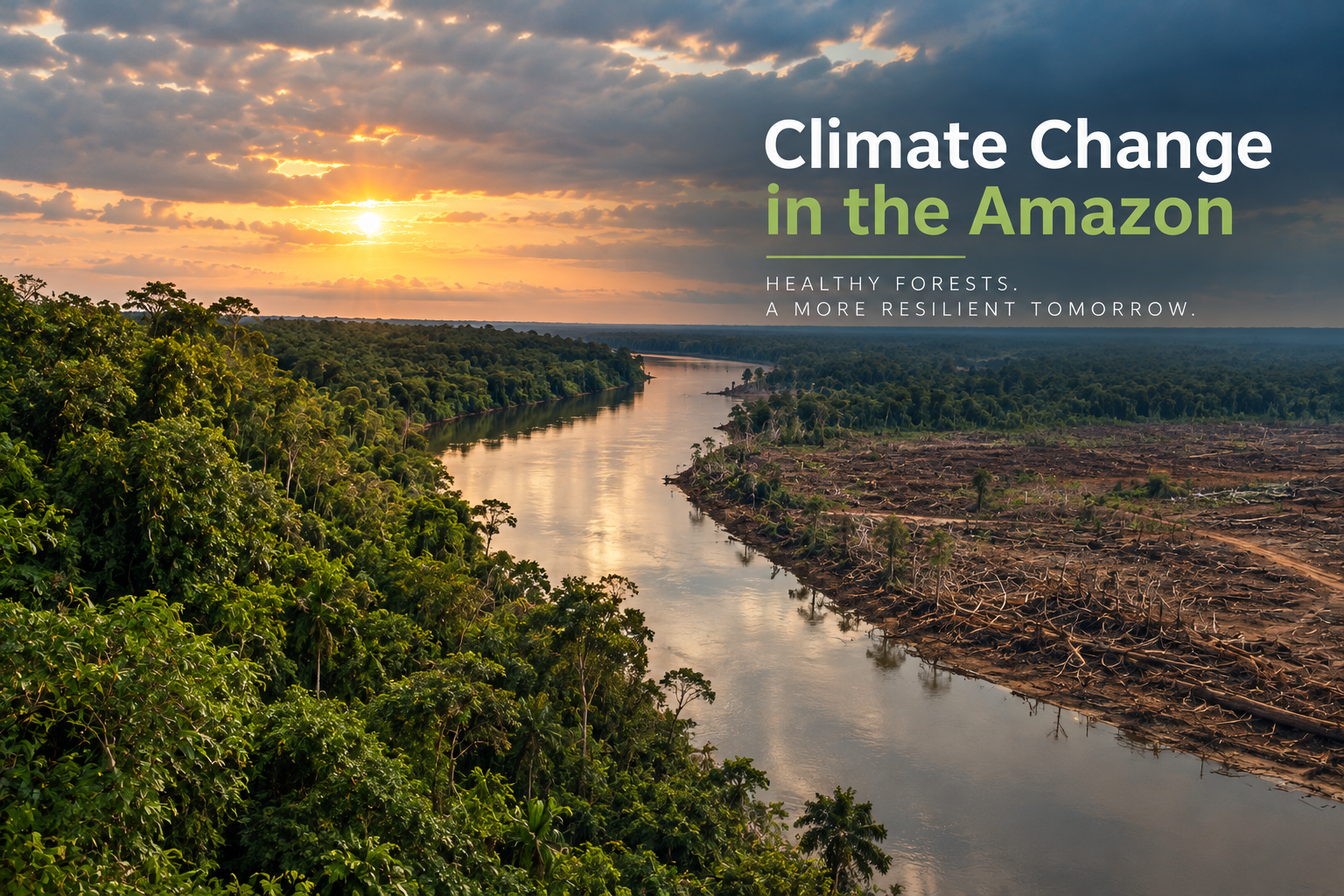
The climate change in the Amazon is one of the most important environmental challenges facing the planet. The Amazon rainforest is experiencing a combination of rising temperatures, changing rainfall patterns, drought, extreme heat, forest fires, deforestation, and other human pressures. These changes affect trees, wildlife, rivers, Indigenous and local communities, agriculture, and the enormous quantities of carbon stored in the forest.
The relationship between the Amazon and climate change is especially important because the rainforest does not simply respond to climate. It also influences climate. Trees store carbon and continually move water from the soil into the atmosphere through transpiration. When forests are cleared, degraded, or repeatedly exposed to fire and drought, these functions can be weakened.
Understanding the causes of climate change in the Amazon, the effects of climate change in the Amazon, and possible solutions is therefore essential for understanding the future of one of Earth’s most important ecosystems.
What Is Climate Change in the Amazon?
Climate change in the Amazon refers to long-term changes in temperature, rainfall, drought, atmospheric moisture, fire conditions, and other environmental characteristics affecting the Amazon Basin. These changes are occurring alongside direct human pressures such as deforestation, agricultural expansion, mining, road construction, forest degradation, and burning.
The Amazon has always experienced natural climate variability. Some years are wetter, others are drier, and phenomena such as El Niño can produce significant changes in rainfall and temperature. Climate change becomes particularly important when long-term warming alters the conditions under which these natural variations occur.
The Amazon is also enormous, covering different climatic and ecological zones. Consequently, climate change does not affect every part of the rainforest in exactly the same way. Some areas may experience greater drought stress, while others may experience changes in rainfall intensity or flooding.
Climate change and natural variability are different
A single drought does not automatically prove that climate change caused every aspect of that event. Scientists instead examine long-term patterns in temperature, precipitation, drought, river levels, vegetation, fires, and atmospheric conditions.
This long-term perspective is essential because the Amazon’s climate is controlled by many interacting factors.
Rainforest Climate Change Facts
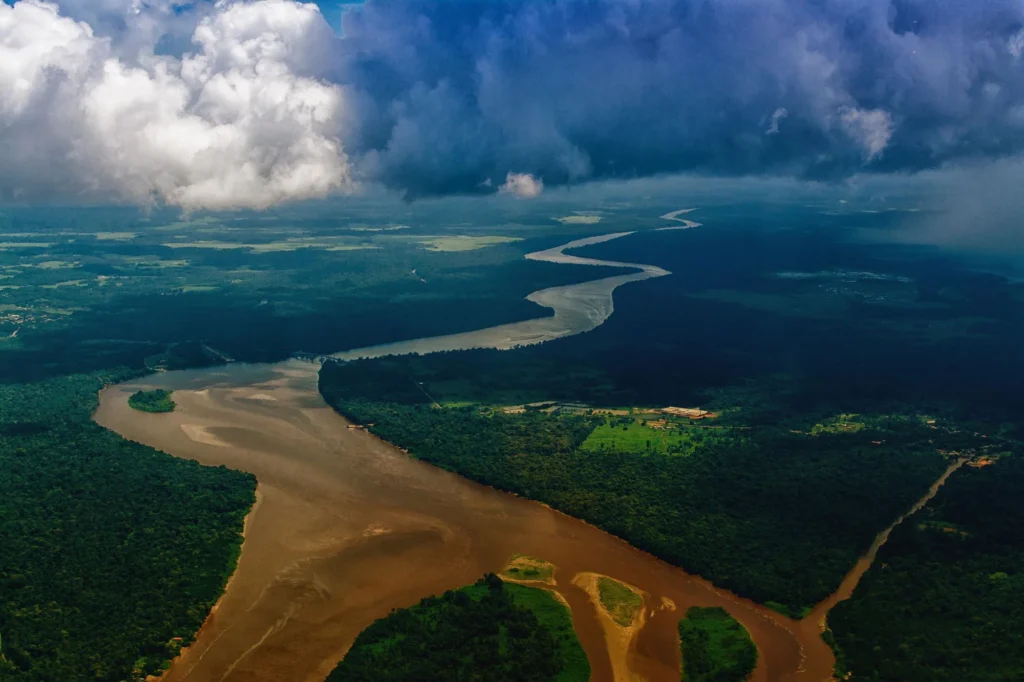
The following rainforest climate change facts help explain why the Amazon is so important:
- The Amazon is one of the world’s largest tropical forest ecosystems.
- Its vegetation and soils store enormous quantities of carbon.
- Trees transfer water from the soil into the atmosphere through transpiration.
- Forest loss can alter local temperature and rainfall patterns.
- Drought can increase the vulnerability of forests to fire.
- Fire releases carbon from vegetation and can damage forests even when it does not completely clear them.
- Deforestation and climate change can reinforce one another.
- Extreme drought can affect rivers, fish, wildlife, transportation, agriculture, and communities.
- Different regions of the Amazon respond differently to climate stress.
- Protecting existing forests is an important climate mitigation and adaptation strategy.
One of the most unusual characteristics of the Amazon is that the forest itself participates in producing and recycling atmospheric moisture. Trees are therefore not simply receiving rainfall—they are active participants in the water cycle.
Causes of Climate Change in the Amazon
When discussing the causes of climate change in the Amazon, it is useful to distinguish between global climate change and local environmental changes.
Global greenhouse-gas emissions are warming the planet. At the same time, activities occurring within the Amazon—particularly deforestation, land-use change, degradation, and fire—can modify local and regional climate conditions.
Research examining the Brazilian Amazon from 1985 to 2020 found that deforestation contributed substantially to increased dry-season temperatures and declining dry-season precipitation, demonstrating that global warming and land-use change can act together rather than independently. (PubMed Central (PMC))
Greenhouse Gas Emissions
The fundamental driver of modern global warming is the increasing concentration of heat-trapping greenhouse gases in the atmosphere. Carbon dioxide, methane, and nitrous oxide are particularly important.
These gases are released by activities including fossil-fuel combustion, industrial processes, transportation, agriculture, energy production, and land-use change.
The Amazon is therefore affected by climate change generated both inside and far beyond the rainforest.
Deforestation
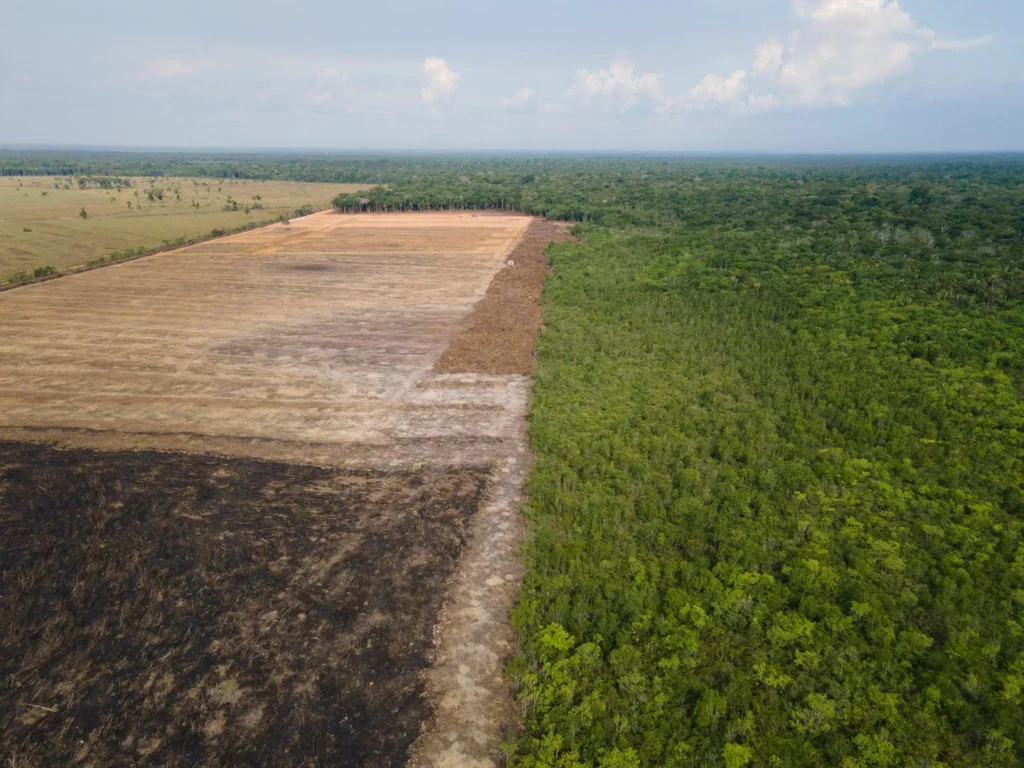
Deforestation is one of the most important local pressures affecting the Amazon’s climate.
When forest is replaced by pasture, crops, roads, settlements, or other land uses, the landscape loses trees that would otherwise:
- Store carbon.
- Shade the forest floor.
- Return water to the atmosphere.
- Moderate local temperatures.
- Protect soil.
- Support biodiversity.
- Maintain ecological connections.
Deforestation also changes the physical characteristics of the land surface, including how sunlight, heat, water, and wind interact with the environment.
Recent research indicates that the relationship is particularly important during the Amazonian dry season, when forest loss can reduce evapotranspiration and contribute to warmer and drier conditions. (Nature)
Agriculture, Cattle Ranching, and Land-Use Change
Agricultural expansion is a major component of land-use change in parts of the Amazon. Forest may be cleared to establish cattle pasture, crops, infrastructure, or other economic activities.
Once the original forest has been removed, the new landscape behaves differently.
Pasture and agricultural land generally have different vegetation structure, surface temperatures, water use, and carbon storage compared with mature forest.
Why land use matters for climate
Land-use change is not simply a biodiversity problem. It is also a climate issue because removing vegetation changes carbon storage and the movement of water through the ecosystem.
This is why climate change, deforestation, agriculture, and fire should not always be considered separate problems.
Fire in the Amazon
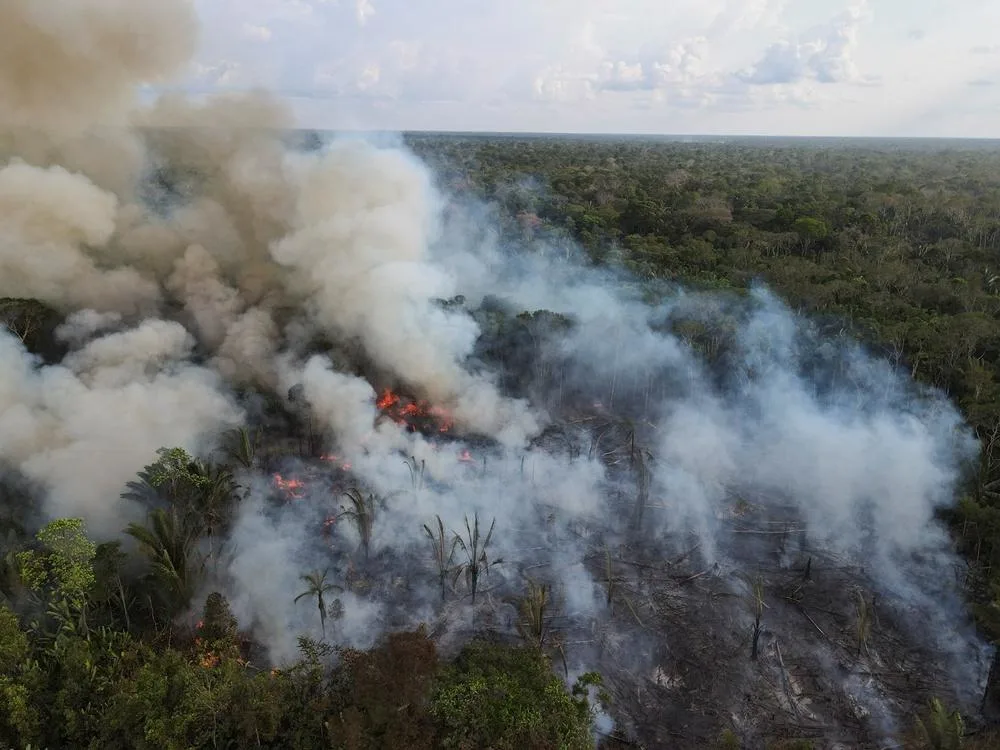
Fire is another major part of the Amazon climate problem.
Many Amazonian forests are not naturally adapted to frequent intense fires. During severe droughts, however, vegetation can become substantially more flammable.
Human activities are an important source of ignition in many areas. Fire may be used to clear vegetation or manage agricultural land, but flames can escape into surrounding forest.
Research has found that drought and land-use change interact strongly in determining Amazon fire activity. A recent analysis of fire activity from 2002–2020 found that land-use changes remained a major driver, while drought anomalies explained a substantial portion of year-to-year fire variability. (ScienceDirect)
Synergism Among Fire, Land Use, and Climate Change in the Amazon
The synergism among fire, land use, and climate change in the Amazon is one of the most important concepts for understanding the region’s environmental future.
These factors can reinforce one another:
Deforestation → hotter and drier conditions → greater fire vulnerability → forest degradation → carbon emissions → greater climate pressure.
At the same time, climate-driven drought can make human-caused fires more likely to spread.
This creates a feedback system rather than a simple chain of cause and effect.
Why this synergy is unusual
A healthy rainforest is generally humid enough to limit the spread of many fires. When forests are cleared and fragmented, however, forest edges can become hotter and drier.
Fires can then penetrate remaining forest.
Once a forest burns, trees may die without being completely consumed. Fallen vegetation creates additional fuel, while openings in the canopy allow more sunlight to reach and dry the forest floor.
This can create conditions in which subsequent fires become easier to spread. Research has documented these feedbacks between fire, canopy damage, drying, and forest flammability. (PubMed Central (PMC))
How Does Climate Change Affect Rainforests?
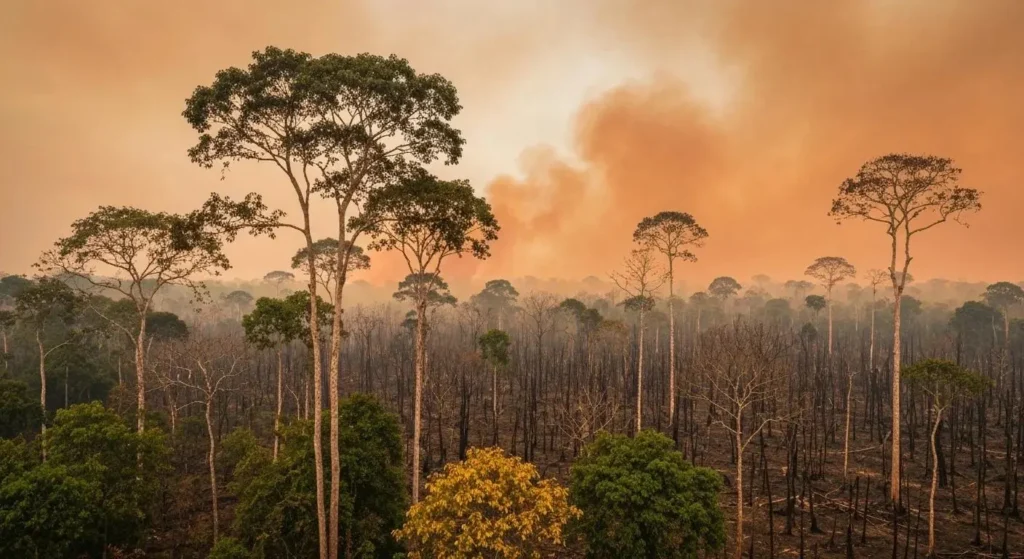
The question “how does climate change affect rainforests?” has several answers because rainforests are complex ecosystems.
Rising temperatures can increase the amount of water plants lose through transpiration. If rainfall does not compensate for this increased demand, trees can experience greater water stress.
Changing rainfall patterns can also influence flowering, fruit production, seedling establishment, animal movements, and river ecosystems.
Major effects include:
- Higher temperatures.
- More intense heat events.
- Changes in rainfall patterns.
- Greater drought stress in some regions.
- Increased fire risk.
- Tree mortality during severe climate extremes.
- Changes in species distributions.
- Changes in ecological relationships.
- Changes in river levels.
- Potential reductions in carbon-storage capacity when forests are severely degraded.
The response is not identical everywhere. Soil, forest type, topography, rainfall, land use, and the condition of the surrounding landscape all matter.
Effects of Climate Change in the Amazon
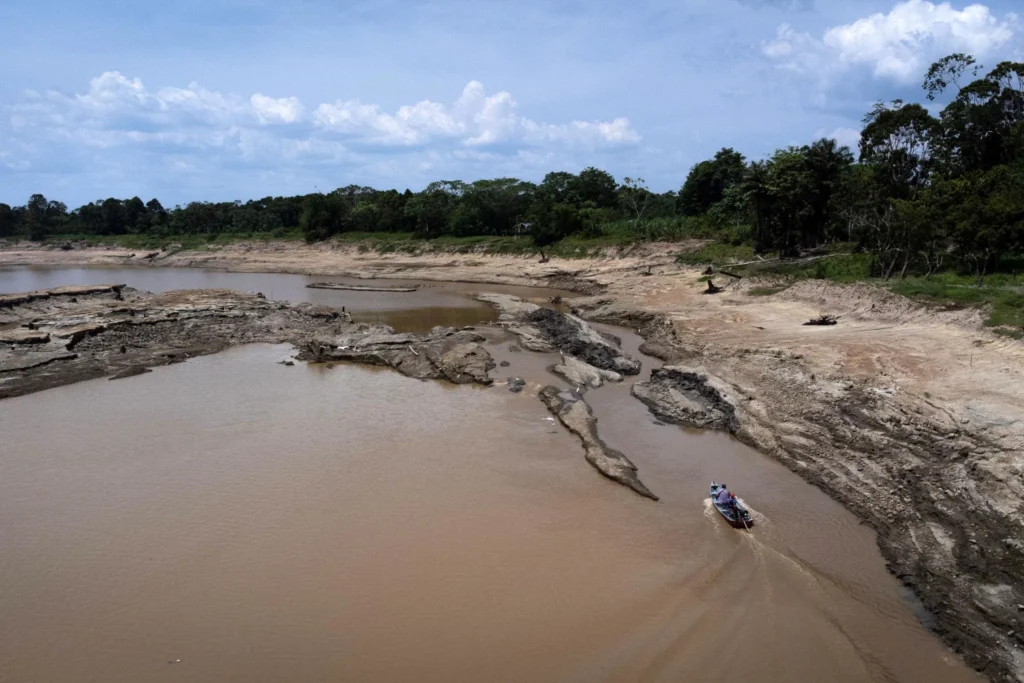
The effects of climate change in the Amazon extend from individual trees to the entire regional ecosystem.
Higher temperatures
One of the most direct effects of global warming is rising temperature.
Warmer conditions increase evaporation and atmospheric demand for water. Plants may therefore need to move more water from soil to leaves to maintain normal physiological processes.
For trees already experiencing drought, additional heat can make water stress more severe.
More severe drought conditions
Drought is particularly important because the Amazon’s ecological functioning depends heavily on water.
During severe drought, rivers can fall dramatically, aquatic habitats can shrink, transportation can become difficult, and forests may become more vulnerable to fire.
Changes in rainfall
Rainfall is not simply about how much rain falls each year. The timing, intensity, duration, and seasonal distribution of precipitation are also important.
A change in the timing of the dry season, for example, can affect forests differently from a change in annual rainfall totals.
How Does Climate Change Affect the Amazon Rainforest?
The question “how does climate change affect the Amazon rainforest?” can be answered at several ecological levels.
Trees and vegetation
Higher temperatures and water stress can affect photosynthesis, growth, reproduction, and survival.
Large mature trees are particularly important because they contain substantial amounts of biomass and carbon.
Wildlife
Animals depend on plants, fruits, seeds, flowers, insects, water, and suitable habitat.
Changes in these resources can influence feeding behavior, reproduction, movement, and population distributions.
Rivers
Changes in rainfall and drought can alter river levels and aquatic habitats.
Fish, river turtles, caimans, dolphins, aquatic plants, and countless other organisms depend on seasonal water cycles.
Soil
Forest degradation and vegetation loss can expose soils to greater heat and erosion. Fire can further alter soil properties and nutrient cycling.
Impacts of Climate Change in the Amazon Rainforest
The impacts of climate change in the Amazon rainforest are interconnected rather than isolated.
Impact on biodiversity
The Amazon contains extraordinary biodiversity, with species adapted to highly specific environmental conditions.
Climate change can alter those conditions. Species may need to adapt, move, or tolerate environments outside the range in which they evolved.
Species with limited geographic distributions or specialized habitat requirements can be particularly vulnerable.
Impact on forest structure
Severe drought and fire can cause tree mortality and alter forest composition.
When large trees die, gaps appear in the canopy. These openings change sunlight, temperature, humidity, and vegetation growth on the forest floor.
Impact on wildlife
Animals can experience changes in:
- Food availability.
- Water availability.
- Nesting locations.
- Reproductive timing.
- Habitat quality.
- Migration routes.
- Predator-prey relationships.
These effects may occur gradually or become dramatic during extreme droughts and fires.
Climate Change and the Amazon Water Cycle

One of the most fascinating aspects of the Amazon is its relationship with atmospheric moisture.
Trees absorb water from the soil and release water vapor through transpiration. Combined with evaporation from soil and water surfaces, this process contributes to evapotranspiration.
The resulting atmospheric moisture contributes to cloud formation and rainfall.
The process can be simplified as:
Rain → soil water → tree roots → leaves → atmospheric moisture → clouds → rainfall.
When forests are removed, this cycle can change.
Why does this matter?
A rainforest does not simply receive rainfall. It helps recycle and redistribute water.
This is one reason why large-scale forest degradation can have consequences beyond the exact location where trees were removed.
Why Is the Amazon So Important for Climate Change?
The question “why is the Amazon so important for climate change?” has several answers.
The Amazon stores enormous amounts of carbon
Trees, roots, dead wood, leaf litter, and soils contain carbon accumulated over long periods.
When forests remain intact, much of this carbon remains within the ecosystem.
When forests are cleared and burned, some of this stored carbon can be released into the atmosphere.
The Amazon influences rainfall
Through evapotranspiration and atmospheric moisture transport, the rainforest participates in regional water cycling.
This makes forest conservation important not only for biodiversity but also for climate and water systems.
The Amazon influences local temperatures
Forests provide shade and move water from soil to atmosphere. These processes can help moderate local conditions compared with heavily cleared landscapes.
The Amazon supports millions of people
Indigenous peoples and local communities depend on forests and rivers for food, materials, livelihoods, transportation, and cultural practices.
Climate change therefore creates social and economic consequences as well as ecological ones.
Climate Change in the Amazon Rainforest
The climate change in the Amazon rainforest should be understood as the interaction between global warming and local ecosystem transformation.
An intact forest can remain relatively humid and resilient, while fragmented landscapes may experience stronger edge effects, higher temperatures, and increased exposure to fire.
This means that simply asking whether “the Amazon is getting hotter” does not tell the whole story.
The more important question is how temperature, rainfall, drought, land use, forest structure, and fire interact.
Climate Change in the Amazon 2021 and 2022
Searches for climate change in the Amazon 2021 and climate change in the Amazon 2022 refer to particular years within a much longer environmental trend.
Individual years are useful because they demonstrate how rapidly conditions can change, but they should not be confused with the entire climate trajectory of the Amazon.
Climate Change in the Amazon 2021
The year 2021 occurred during a period of significant environmental variability across the Amazon Basin. Drought, changing river conditions, fires, and land-use pressures demonstrated the vulnerability of forests and communities to extreme conditions.
The significance of 2021 is therefore best understood as part of a longer record rather than as an isolated climate event.
Climate Change in the Amazon 2022
The year 2022 continued to demonstrate the importance of climate variability, deforestation, fire, and changing hydrological conditions.
Comparing 2021, 2022, and later years helps researchers determine whether extreme events are becoming more frequent, intense, prolonged, or geographically widespread.
Why historical comparisons matter
Climate science requires long-term observations.
One drought or one unusually wet year cannot independently establish a long-term climate trend. Researchers instead examine decades of temperature, rainfall, river levels, vegetation, fire activity, and land-use changes.
Interesting Facts About Climate Change in the Amazon Rainforest
The forest creates water vapor
Trees act like enormous biological pumps, drawing water from the soil and releasing moisture into the atmosphere.
Deforestation can change local climate
Removing trees changes shade, surface temperature, evaporation, wind patterns, and water cycling.
Fire can create a vicious cycle
Drought can increase fire risk, while fire can degrade forests and make subsequent fires easier to spread. (PubMed Central (PMC))
The Amazon is not uniformly wet throughout the year
Different parts of the basin experience different seasonal rainfall patterns. Some regions have pronounced dry seasons, while others remain humid through much of the year.
Rivers are important climate indicators
Changes in rainfall and drought influence river levels, which affect aquatic ecosystems, transportation, fishing, and local communities.
A forest can lose resilience gradually
Repeated disturbance can weaken a forest even when it still appears green from above.
This is important because satellite imagery can sometimes show a continuous canopy while understory degradation, fragmentation, selective logging, or repeated fire has already altered the ecosystem.
What Is Unusual About Climate Change in the Amazon?
One of the most unusual characteristics of the Amazon climate problem is the possibility of feedback loops.
A simplified example is:
Global warming → hotter conditions → greater water stress → increased forest vulnerability → more fire and degradation → carbon emissions and reduced forest function → additional climate pressure.
A second feedback can involve deforestation:
Forest clearing → less evapotranspiration → altered atmospheric moisture → hotter/drier conditions → greater fire vulnerability → additional forest loss.
The Amazon should therefore not be viewed as a passive victim of climate change.
The forest itself influences the climate system.
Attempts to Mitigate Climate Change in the Amazon Rainforest
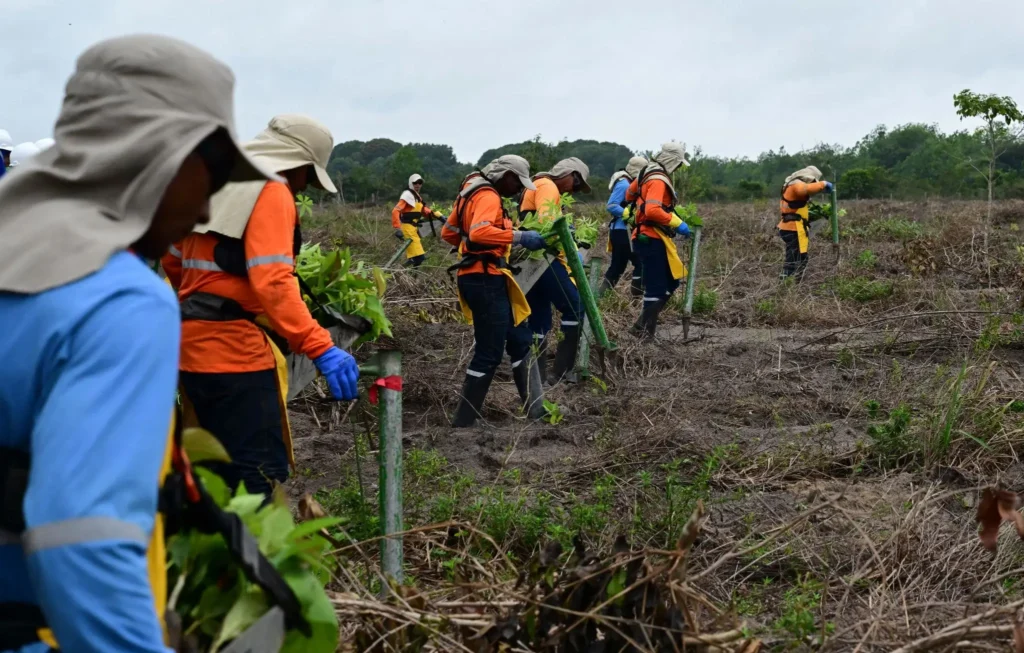
The attempts to mitigate climate change in the Amazon rainforest involve protecting existing forests, reducing deforestation, restoring degraded landscapes, improving agricultural practices, controlling fires, and supporting sustainable livelihoods.
Protecting intact forests
The most direct approach is to prevent forests from being destroyed.
Mature forests already contain carbon, biodiversity, complex ecological relationships, and established water cycles. Protecting them therefore provides multiple benefits simultaneously.
Reducing deforestation
Reducing unnecessary forest clearing is one of the most important climate strategies in the region.
Approaches can include:
- Better land-use planning.
- Forest monitoring.
- Enforcement of environmental regulations.
- Protected areas.
- Recognition of Indigenous and local land rights.
- Sustainable agricultural development.
- Improved supply-chain practices.
Preventing uncontrolled fires
Fire management is increasingly important in landscapes experiencing drought and forest degradation.
Prevention can involve improved agricultural fire practices, early detection, monitoring, rapid response, and reducing the conditions that allow flames to spread into intact forest.
Solutions to Climate Change in the Amazon Rainforest
The solutions to climate change in the Amazon rainforest need to operate at both local and global scales.
Solution 1: Protect existing rainforest
Protecting intact forest is generally more effective than allowing mature ecosystems to be destroyed and attempting to recreate them later.
Solution 2: Restore degraded landscapes
Reforestation and natural regeneration can restore vegetation, reconnect fragmented habitats, improve soil protection, and rebuild some ecological functions.
However, a restored forest does not immediately reproduce all the characteristics of an old-growth ecosystem.
Solution 3: Improve agriculture
Agricultural productivity can potentially be increased on land that has already been cleared, reducing pressure for additional forest conversion.
Better soil management, pasture management, agroforestry, and restoration of degraded land can contribute to more sustainable land use.
Solution 4: Support Indigenous and local communities
People living within Amazonian landscapes possess extensive knowledge of local ecosystems.
Supporting sustainable livelihoods, secure land rights, education, healthcare, and economic opportunities can help align forest conservation with human well-being.
Solution 5: Reduce global greenhouse-gas emissions
Amazon conservation cannot substitute for global emissions reductions.
Even if deforestation were dramatically reduced, the rainforest would continue to experience the effects of global warming.
The long-term solution therefore requires both:
protecting the Amazon + reducing global greenhouse-gas emissions.
How to Stop Climate Change in the Amazon Rainforest
The question “how to stop climate change in the Amazon rainforest” needs a realistic answer: climate change cannot be stopped in the Amazon through a single conservation project or policy.
Instead, the goal is to reduce the causes of warming, increase forest resilience, and prevent additional ecosystem degradation.
A comprehensive approach includes:
- Protecting intact rainforest.
- Reducing deforestation.
- Preventing destructive fires.
- Restoring degraded land.
- Improving agricultural productivity.
- Protecting rivers and wetlands.
- Supporting Indigenous communities.
- Reducing fossil-fuel emissions globally.
- Improving climate monitoring.
- Preparing communities for droughts and floods.
The Amazon needs both mitigation and adaptation.
Mitigation of Climate Change in the Amazon Rainforest
The mitigation of climate change in the Amazon rainforest focuses on reducing greenhouse-gas emissions and protecting natural systems capable of storing carbon.
Forest conservation is particularly important because an intact forest represents a large existing carbon reservoir.
Mitigation strategies can include:
Forest protection
Preventing deforestation avoids emissions associated with clearing and burning.
Forest restoration
Restoring degraded areas allows vegetation to accumulate carbon again over time.
Sustainable land management
Better management can reduce pressure to clear additional forest.
Fire prevention
Reducing unnecessary burning can protect vegetation and prevent additional carbon emissions.
Global decarbonization
Reducing emissions from energy, transportation, industry, and other sectors is essential for reducing the global warming pressure experienced by the Amazon.
Adaptation: Preparing the Amazon for a Changing Climate
Mitigation reduces the causes of climate change, while adaptation helps ecosystems and communities cope with changes that are already occurring.
Adaptation strategies may include:
- Improving drought preparedness.
- Strengthening water management.
- Protecting important wildlife corridors.
- Monitoring vulnerable ecosystems.
- Developing climate-resilient agriculture.
- Improving emergency responses to fires and floods.
- Supporting communities during extreme weather.
- Protecting freshwater resources.
Healthy forests are themselves an important form of adaptation because intact ecosystems generally have greater ecological complexity and resilience than heavily degraded landscapes.
The Future of the Amazon Under Climate Change
The future of the Amazon will depend on several variables acting simultaneously.
Global temperature increases matter. So does the amount of forest that remains intact. Fire management matters. Agricultural practices matter. River conditions matter. Local communities matter.
The future is therefore not predetermined.
Reducing deforestation and degradation can improve the resilience of remaining forests. Restoring damaged landscapes can reconnect ecosystems. Reducing global greenhouse-gas emissions can limit additional warming.
But delays matter because forests affected by repeated drought, fire, and fragmentation may become progressively more vulnerable.
The Amazon’s future is ultimately connected to decisions being made both inside and far beyond the rainforest.
Frequently Asked Questions About Climate Change in the Amazon
What causes climate change in the Amazon rainforest?
The causes of climate change in the Amazon rainforest include global greenhouse-gas emissions, rising temperatures, changing rainfall patterns, deforestation, forest degradation, agricultural expansion, and fire. These factors interact, meaning climate change and local land-use change can reinforce one another.
What are the effects of climate change in the Amazon rainforest?
The effects of climate change in the Amazon rainforest include increasing heat, drought stress, changing rainfall, greater fire vulnerability, changes in river levels, impacts on wildlife, tree mortality, altered carbon storage, and increased pressure on local communities.
How does climate change affect rainforests?
Climate change can make rainforests hotter and alter rainfall patterns. Increased heat and drought can place greater stress on vegetation, increase fire risk, alter wildlife habitats, and potentially reduce the ability of degraded forests to store carbon.
Why is the Amazon so important for climate change?
The Amazon is important because its forests store enormous quantities of carbon, influence regional water cycling, help regulate local temperatures, support biodiversity, and provide livelihoods and resources for millions of people.
What are some important rainforest climate change facts?
Important facts include the Amazon’s enormous carbon stores, its role in recycling atmospheric moisture, the vulnerability of degraded forests to fire, the connection between drought and tree stress, and the interaction between global warming and local deforestation.
Can climate change cause Amazon rainforest fires?
Climate change can contribute to conditions that increase fire risk by producing hotter and potentially drier conditions. Human activities remain an important source of ignition and land clearing in many parts of the Amazon. Research indicates that land-use change and climate variability can interact strongly in determining fire activity. (ScienceDirect)
Can the Amazon recover from climate change?
Some forests can recover from individual disturbances, particularly when degradation is limited and natural regeneration is possible. However, repeated drought, fire, fragmentation, and deforestation can reduce resilience and make recovery more difficult.
What are the solutions to climate change in the Amazon rainforest?
Solutions include protecting intact forests, reducing deforestation, preventing destructive fires, restoring degraded land, improving agriculture, supporting Indigenous and local communities, and reducing global greenhouse-gas emissions.
How can we stop climate change in the Amazon rainforest?
There is no single action that can stop climate change in the Amazon. The most effective strategy combines global emissions reductions with local forest conservation, sustainable land use, fire prevention, restoration, and climate adaptation.
Final Thoughts: Protecting the Amazon in a Changing Climate
The climate change in the Amazon is not simply a story about hotter temperatures. It is a story about the interaction between atmosphere, forest, water, fire, wildlife, agriculture, and people.
The causes of climate change in the Amazon include global greenhouse-gas emissions as well as local pressures such as deforestation, degradation, and fire. The effects of climate change in the Amazon can be seen in drought, heat, changing rainfall, river conditions, wildlife habitats, forest health, and human livelihoods.
Perhaps the most important lesson is that the Amazon is both affected by climate change and influential in the climate system.
Its trees store carbon. Its vegetation moves enormous quantities of water into the atmosphere. Its forests shade the ground and influence local temperatures. Its rivers support extraordinary aquatic ecosystems. Its biodiversity represents millions of years of evolution.
But these functions are not guaranteed forever.
A forest that is repeatedly cleared, burned, fragmented, and exposed to severe climate stress may become less resilient. This is why the interaction between fire, land use, and climate change is so important.
The solutions are equally interconnected.
Protecting intact forests, restoring degraded areas, improving agriculture, preventing destructive fires, supporting Indigenous and local communities, and reducing global greenhouse-gas emissions can work together to protect the Amazon’s ecological functions.
The future of the Amazon will not be determined by climate change alone. It will also be shaped by how societies respond to it.
The Amazon remains an extraordinary living system with enormous ecological resilience. Protecting that resilience is one of the most important environmental challenges of the twenty-first century.