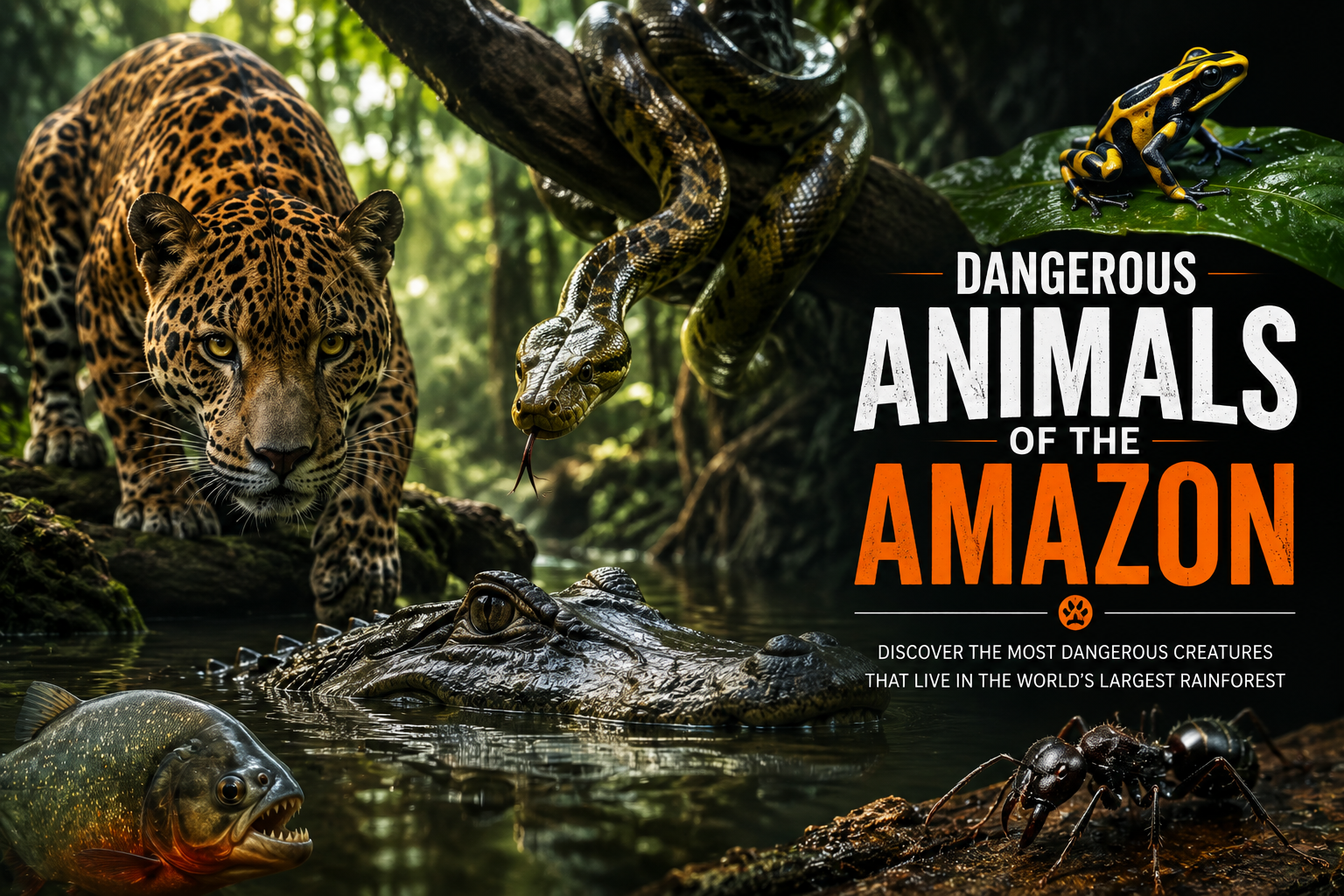
The dangerous animals of the Amazon are among the most fascinating creatures on Earth. The Amazon rainforest and its rivers are home to powerful predators, venomous snakes, electrically charged fish, enormous reptiles, painful insects, and tiny disease-carrying animals. Yet the reality of Amazon wildlife is very different from the frightening scenes often shown in movies.
Most wild animals in the Amazon do not actively seek out humans. Jaguars generally avoid people, anacondas are secretive, caimans spend much of their time hidden in the water, and even piranhas are far less aggressive toward humans than popular culture suggests. The real key to understanding dangerous animals of the Amazon rainforest is learning how different species defend themselves, hunt, and interact with their environment.
This guide explores the top 10 dangerous animals of the Amazon, the most important Amazon River dangerous animals, the famous black caiman, venomous snakes, spiders, insects, and the animals behind the question: What is the deadliest animal in the Amazon?
What Makes an Animal Dangerous in the Amazon?
An animal does not have to be large or aggressive to be dangerous. In the Amazon, danger can come from venom, powerful jaws, sharp teeth, electricity, toxins, disease transmission, or simply an animal defending itself when surprised.
A black caiman can inflict a devastating bite because of its size and strength. A pit viper can inject medically significant venom. An electric eel can produce powerful electrical discharges. A bullet ant is tiny compared with a jaguar but is famous for an exceptionally painful sting.
There is also an important difference between dangerous and aggressive. Many Amazonian animals are potentially dangerous but normally avoid humans. A jaguar, for example, has the physical ability to seriously injure a person, but that does not mean it routinely hunts people.
The main types of danger in the Amazon include:
- Venom: snakes, spiders, and insects can inject venom.
- Powerful bites: caimans and some fish can cause severe wounds.
- Electricity: electric eels use electrical discharges to hunt and defend themselves.
- Physical strength: jaguars, anacondas, and caimans are exceptionally powerful.
- Disease: mosquitoes can transmit serious diseases.
- Defensive behavior: bees, wasps, and ants may attack when colonies are disturbed.
- Toxins: some Amazonian species possess chemical defenses that can be harmful to predators.
Top 10 Dangerous Animals of the Amazon
There is no universally accepted scientific ranking of the “top 10 dangerous animals of the Amazon.” Danger can mean different things depending on whether we are considering venom, physical strength, frequency of human encounters, disease transmission, or the potential severity of an attack.
Nevertheless, these ten animals are among the most fascinating and important species to understand when exploring the Amazon.
1. Black Caiman
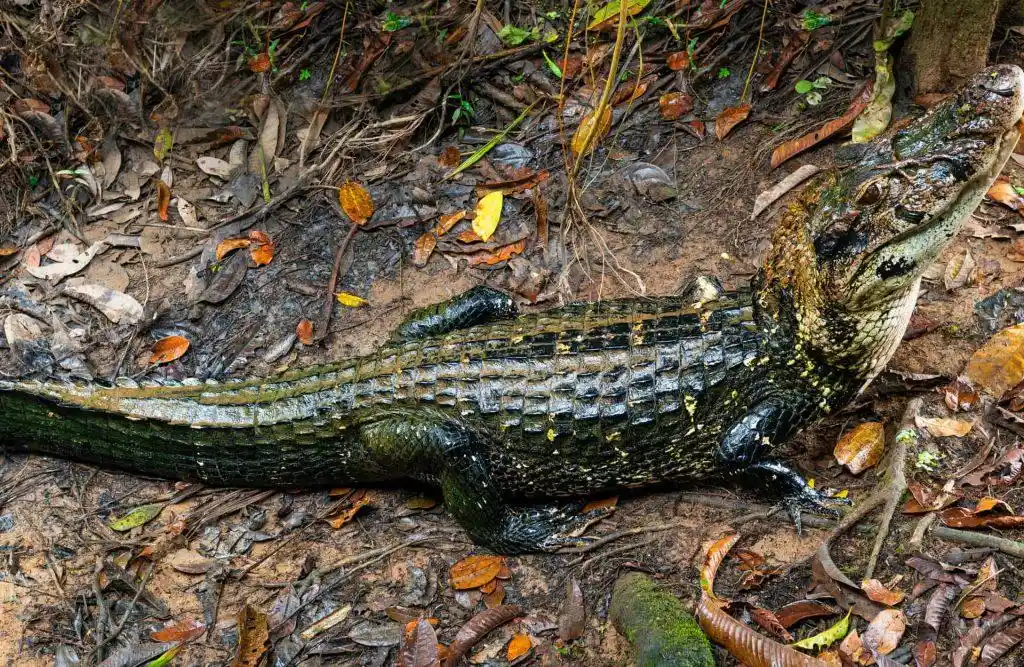
The black caiman (Melanosuchus niger) is one of the largest predators in the Amazon and one of the most impressive animals in the Amazon River and its surrounding wetlands. Its dark body, heavily armored skin, powerful tail, and enormous jaws make it one of the animals visitors instinctively associate with the word “dangerous.”
Black caimans inhabit rivers, lakes, flooded forests, swamps, and other wetlands throughout the Amazon Basin. They are opportunistic predators capable of eating fish, birds, turtles, mammals, and other reptiles. Their powerful jaws are designed to capture and hold prey rather than chew it in the way mammals do.
Why is the black caiman dangerous?
Its greatest advantage as a predator is the combination of size, strength, camouflage, and aquatic hunting ability. A black caiman can remain remarkably difficult to see when only its eyes and part of its head are above dark water.
This is particularly important at night. During nighttime wildlife excursions, visitors may see only the characteristic reflection of a caiman’s eyes before realizing that a much larger animal is nearby.
Interesting black caiman fact
The black caiman is not simply a frightening predator. It is an important apex predator that helps regulate populations of other aquatic and terrestrial animals. Its presence is therefore part of the ecological balance of Amazonian wetlands.
2. Green Anaconda
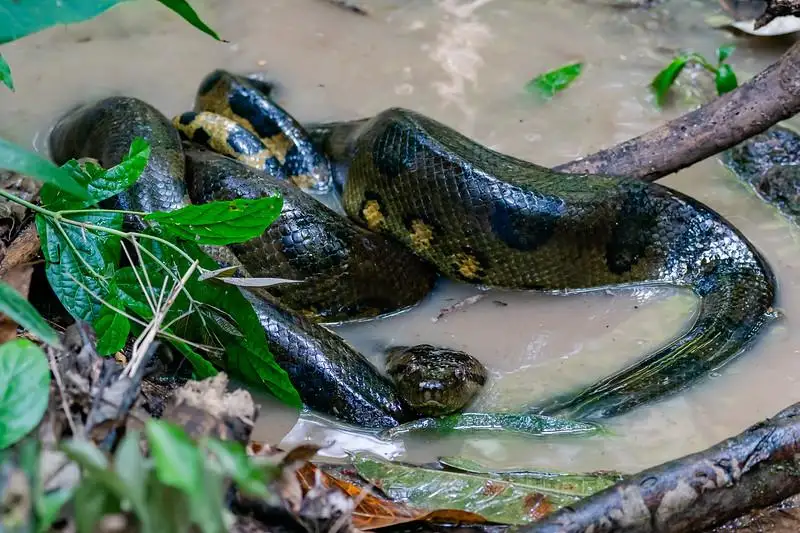
The green anaconda is one of the largest and heaviest snakes in the world and perhaps the most famous snake associated with the Amazon rainforest. Unlike venomous snakes, it does not rely on poison to kill prey. Instead, it uses its powerful body to constrict animals after grabbing them with its jaws.
Green anacondas are strongly associated with water. They can be found in swamps, marshes, slow-moving streams, flooded forests, and other aquatic habitats. Their eyes and nostrils are positioned high on the head, allowing them to remain partially submerged while observing their surroundings.
Are green anacondas dangerous to humans?
Green anacondas are certainly capable of causing serious injury because of their size and muscular strength. However, encounters with people are unusual, and attacks are exceptionally uncommon.
The popular image of an anaconda actively hunting tourists through the rainforest is largely a product of entertainment rather than normal wildlife behavior.
Unusual anaconda fact
Anacondas are excellent swimmers and can remain underwater for significant periods. During the Amazon’s seasonal flooding, their aquatic lifestyle gives them access to enormous areas of flooded forest.
3. Jaguar
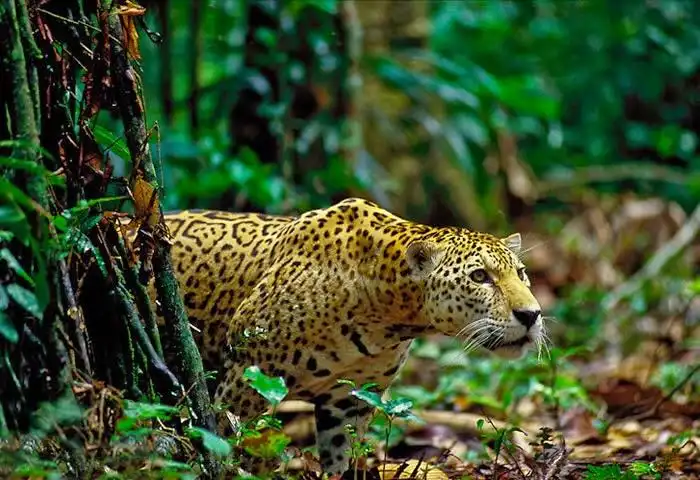
The jaguar is the largest cat in the Americas and one of the most powerful predators in the Amazon rainforest. Its muscular body, strong jaws, claws, climbing ability, and swimming skills make it an exceptionally capable hunter.
Jaguars have a remarkably varied diet. Depending on their habitat, they may hunt capybaras, peccaries, turtles, fish, birds, monkeys, rodents, and even caimans.
Why is the jaguar considered dangerous?
A jaguar is physically capable of causing fatal injuries to a human. Its bite is exceptionally powerful, and it is an ambush predator capable of approaching prey quietly.
However, potential danger does not mean frequent attacks. Jaguars are generally elusive and avoid humans. Seeing one in the wild is a rare and extraordinary experience.
What makes jaguars unusual?
Jaguars are surprisingly comfortable in water. Unlike many domestic cats, they are strong swimmers and may cross rivers or hunt aquatic prey.
This means the jaguar is one of the few Amazon predators that can be highly effective in both forest and aquatic environments.
4. Fer-de-Lance and Other Pit Vipers
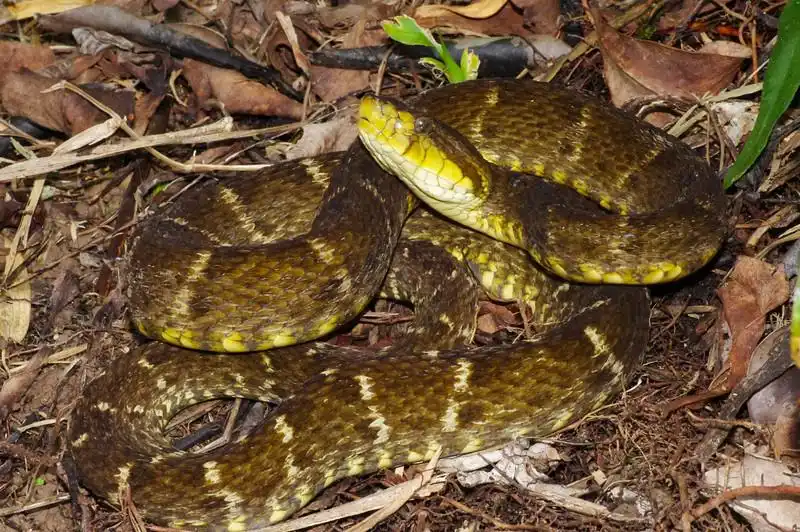
Among the most medically important dangerous animals of the Amazon rainforest are venomous pit vipers, including species of the genus Bothrops. The fer-de-lance is particularly well known in Amazonian regions.
These snakes are ambush predators. Rather than chasing people, they typically remain hidden among leaves, vegetation, or forest-floor debris while waiting for suitable prey.
Why can pit vipers be dangerous?
Their venom can cause serious local and systemic effects. Accidental encounters can happen when a person steps close to a hidden snake or places a hand somewhere the animal is sheltering.
This is why walking carefully through dense vegetation and never attempting to handle a snake are among the most important rainforest safety practices.
How to reduce snakebite risk
- Wear appropriate footwear.
- Use a flashlight during nighttime walks.
- Watch where you step.
- Do not place your hands into holes or hollow logs.
- Avoid reaching blindly into dense vegetation.
- Never attempt to catch or photograph a snake at close range.
- Follow your local guide’s instructions.
A snake that appears calm should still be treated as a wild animal capable of defending itself.
5. Electric Eel
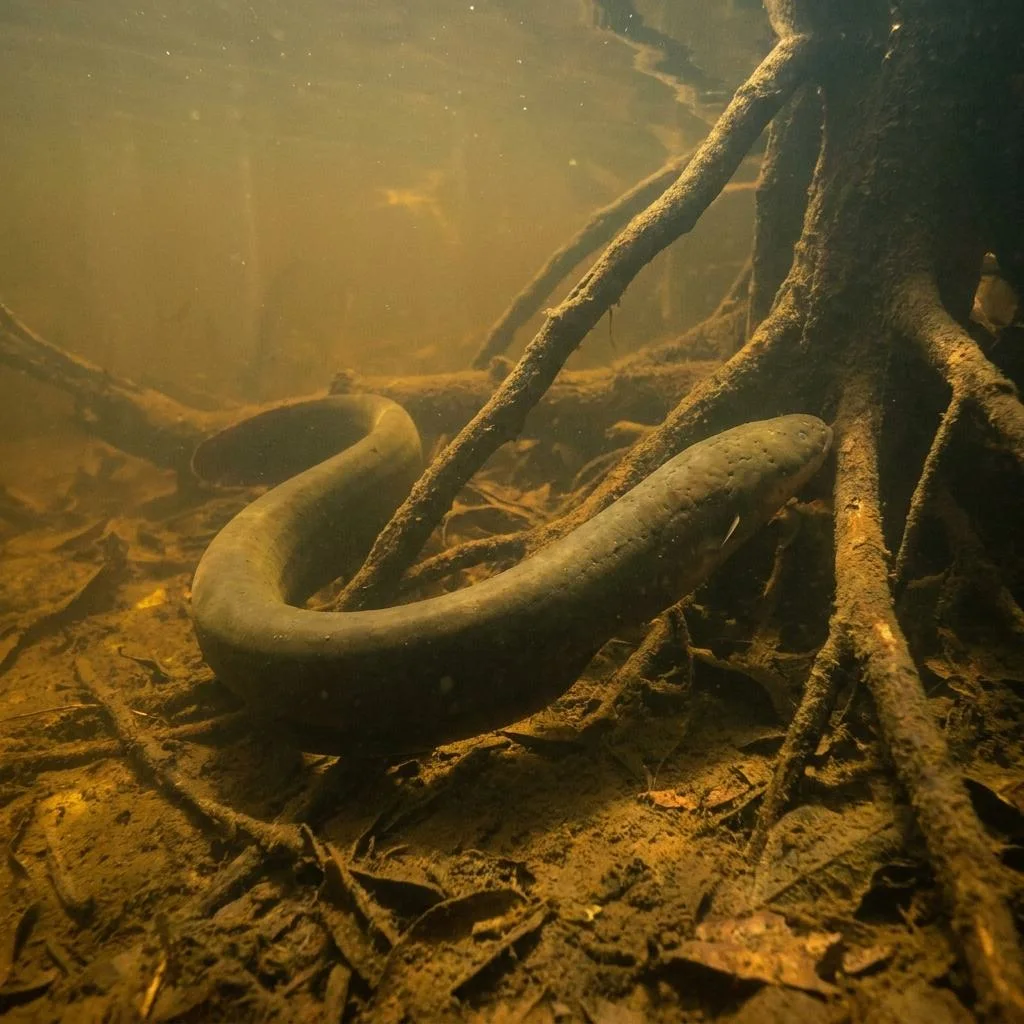
The electric eel is one of the strangest and most fascinating Amazon River dangerous animals. Despite its name, an electric eel is not technically a true eel. It is a type of knifefish that has evolved specialized organs capable of generating electricity.
Electricity is central to its survival. Electric eels can use weaker electrical signals to sense their surroundings, while stronger discharges can stun prey and deter predators.
Can an electric eel hurt a person?
Yes. A powerful discharge can cause intense pain and involuntary muscle contractions. In water, this can be particularly concerning because a person affected by an electrical shock could temporarily lose control of their movements.
An extraordinary fact
Electric eels are among the most remarkable examples of bioelectricity in nature. Their bodies essentially function as biological electrical generators.
This is one reason they deserve a place on any list of dangerous animals of the Amazon even though they do not have claws, fangs, or enormous jaws.
6. Piranhas
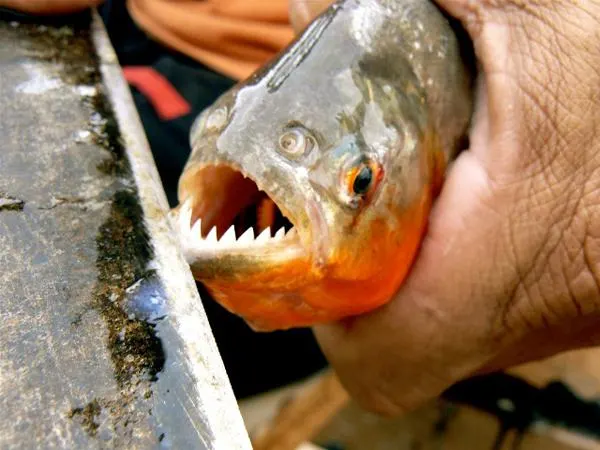
Few animals in the Amazon River have a more frightening reputation than piranhas. Their sharp teeth and powerful jaws have inspired countless stories about schools of fish stripping large animals to the bones within seconds.
The real behavior of piranhas is considerably more complicated.
There are multiple piranha species, and their diets vary. Depending on the species and circumstances, piranhas may consume fish, insects, fruits, seeds, carrion, and other animal material.
Are piranhas dangerous?
Piranhas are capable of biting humans, but they do not normally behave like the unstoppable underwater predators portrayed in fictional movies.
Their behavior can change depending on food availability, water conditions, competition, and whether they feel threatened.
Interesting fact
Piranhas have extremely sharp teeth that fit together almost like a cutting mechanism. Their jaws are adapted for removing pieces of food efficiently.
7. Brazilian Wandering Spider
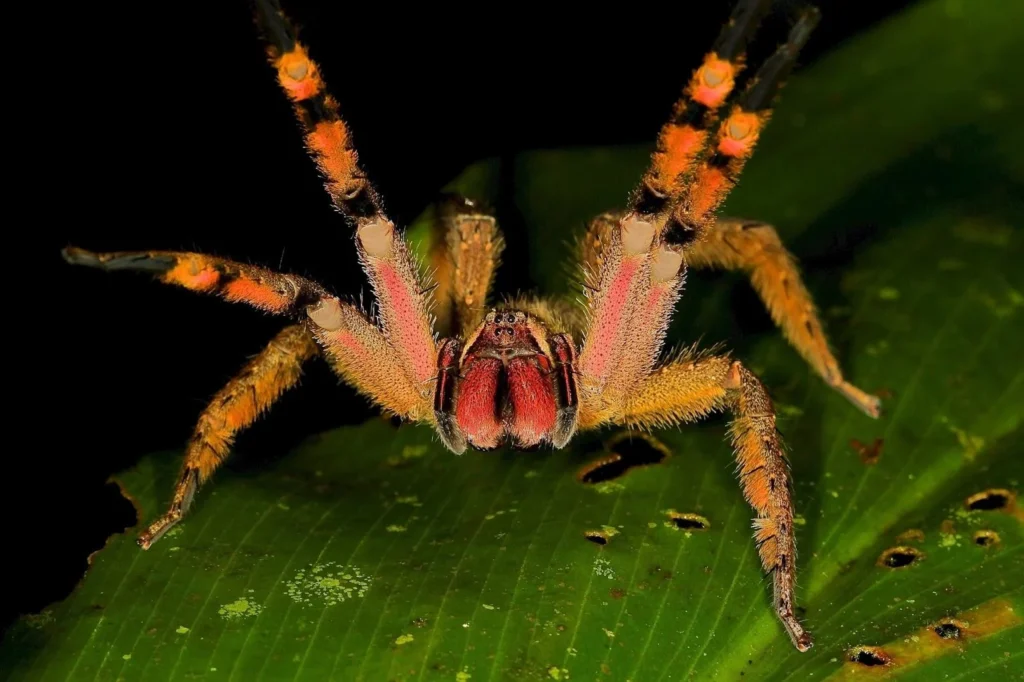
The Brazilian wandering spider, belonging to the genus Phoneutria, is another animal that gives the Amazon a reputation for frightening wildlife.
Unlike spiders that depend on large webs to catch prey, wandering spiders actively move through their environment. They may be encountered on the forest floor or among vegetation, particularly during nighttime activity.
Why is it considered dangerous?
Its venom can cause significant symptoms following a bite. However, as with other venomous animals, the safest approach is not fear but avoidance.
Visitors should never pick up a spider simply because it appears harmless or because they want a photograph.
Unusual spider fact
The wandering spider’s hunting strategy is quite different from that of classic web-building spiders. It actively searches for prey rather than waiting passively in the center of a web.
8. Bullet Ant
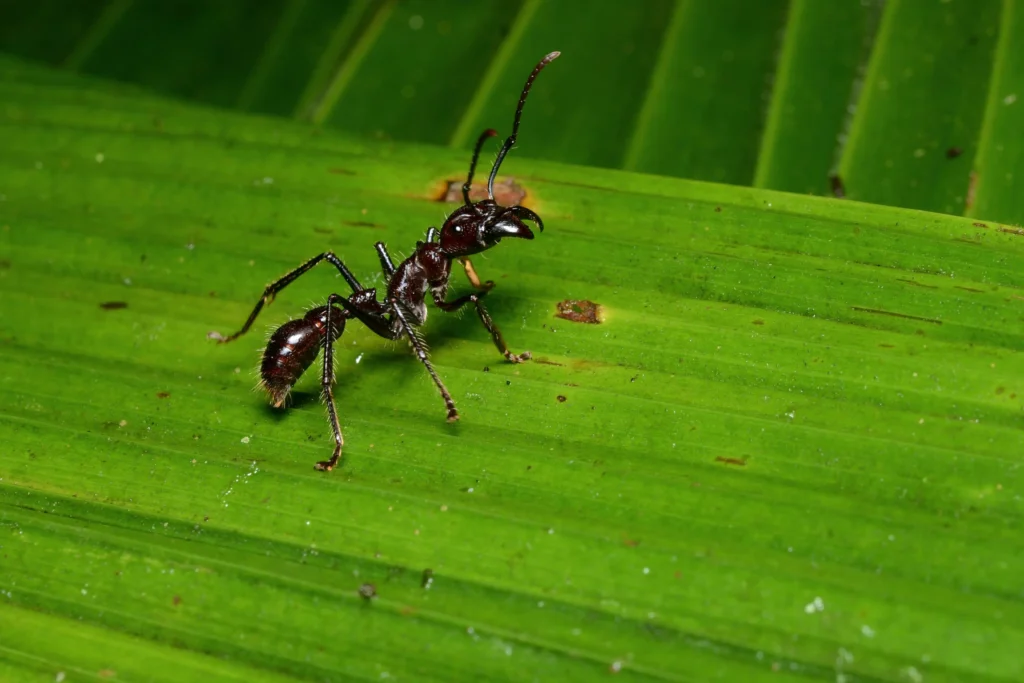
The bullet ant (Paraponera clavata) is tiny compared with a jaguar or caiman, but its sting has earned it a legendary reputation.
The bullet ant is a large tropical ant found in forest environments in parts of Central and South America. It uses its powerful sting as a defense mechanism.
Why is the bullet ant famous?
Its sting is regarded as exceptionally painful and can produce intense discomfort that lasts for many hours.
This makes the bullet ant an excellent example of why size is not a reliable measure of danger in the Amazon.
Interesting fact
Bullet ants are social insects living in colonies, and their role in the rainforest is much more complex than their reputation as painful stingers suggests. Like many insects, they participate in nutrient cycling and the intricate food web of the forest.
9. Mosquitoes
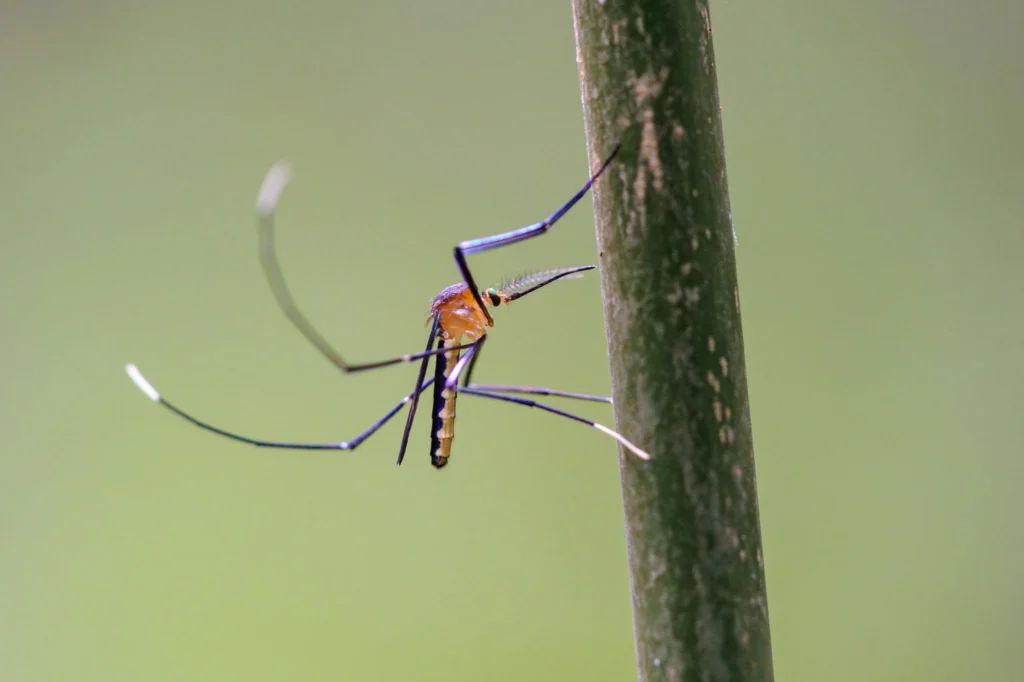
If someone asks “What is the deadliest animal in the Amazon?”, mosquitoes deserve serious consideration.
A mosquito may appear insignificant compared with a jaguar, caiman, or anaconda. Yet certain mosquito species can transmit diseases to humans, making them a potentially much more important health concern.
Depending on the location and circumstances, mosquito-borne diseases in Amazonian regions can include malaria, yellow fever, dengue, and others.
Why mosquitoes can be more dangerous than predators
A jaguar encounter is rare. A mosquito encounter can happen almost anywhere in a tropical environment.
This creates an important distinction between animals that look dangerous and animals that represent a practical health risk.
The unusual lesson
The smallest animal on this list may arguably be more significant to human health than some of the largest predators in the Amazon.
10. Giant Centipede
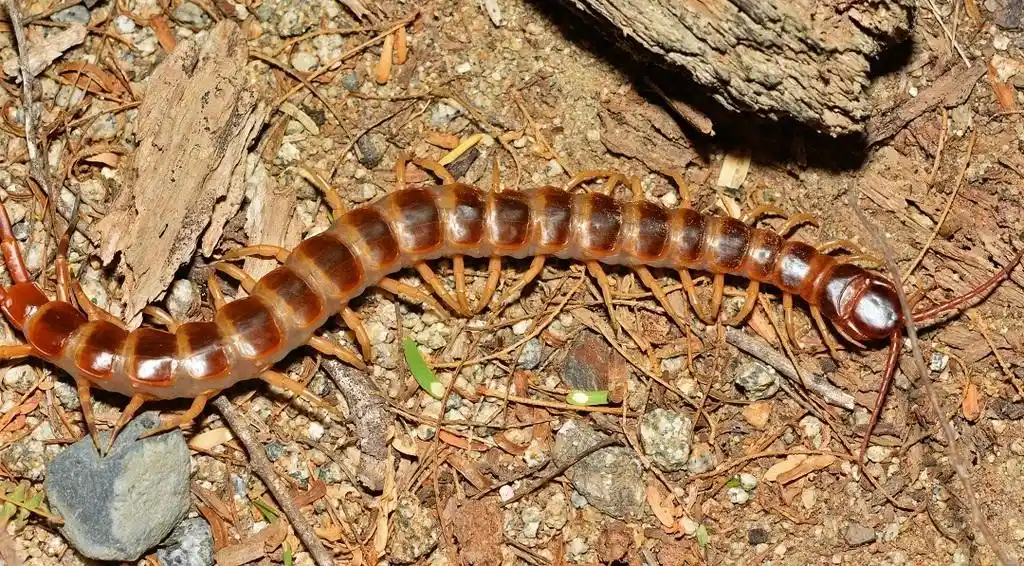
Large centipedes are another group of potentially dangerous Amazon rainforest animals. Some species can become surprisingly large and possess venom-delivering structures called forcipules.
They are generally nocturnal predators that feed on insects, spiders, small vertebrates, and other creatures.
Can a giant centipede hurt a human?
Yes. A bite can be extremely painful, although serious complications are uncommon. As with spiders and snakes, the safest strategy is to leave the animal alone.
Centipedes may hide beneath logs, leaf litter, rocks, bark, or other objects. Therefore, visitors should be careful when moving objects on the forest floor.
Amazon River Dangerous Animals
The Amazon River and its tributaries form an enormous freshwater ecosystem containing thousands of species.
When people search for Amazon River dangerous animals, they usually want to know about species such as black caimans, piranhas, electric eels, anacondas, stingrays, and other potentially dangerous aquatic animals.
However, the river itself can present dangers that have nothing to do with animals.
Strong currents, submerged branches, deep water, unstable riverbanks, changing water levels, boats, and poor underwater visibility can all create hazards.
What Is the Most Dangerous Animal in the Amazon River?
There is no universally correct answer to the question “what is the most dangerous animal in the Amazon River?”
If we focus on size and physical power, the black caiman is one of the animals that deserves the greatest respect.
If we consider electricity, electric eels are unique.
If we consider bites, piranhas and certain predatory fish can cause injuries.
If we consider venomous animals associated with aquatic environments, freshwater stingrays become important.
The answer therefore depends on how “dangerous” is defined.
What kind of dangerous animals live in the Amazon River?
Some of the better-known potentially dangerous aquatic animals include:
- Black caimans
- Electric eels
- Piranhas
- Green anacondas
- Freshwater stingrays
- Large predatory fish
- Other fish with defensive spines or teeth
Importantly, most of these animals do not actively seek out humans.
Is the Amazon River Dangerous to Swim In?
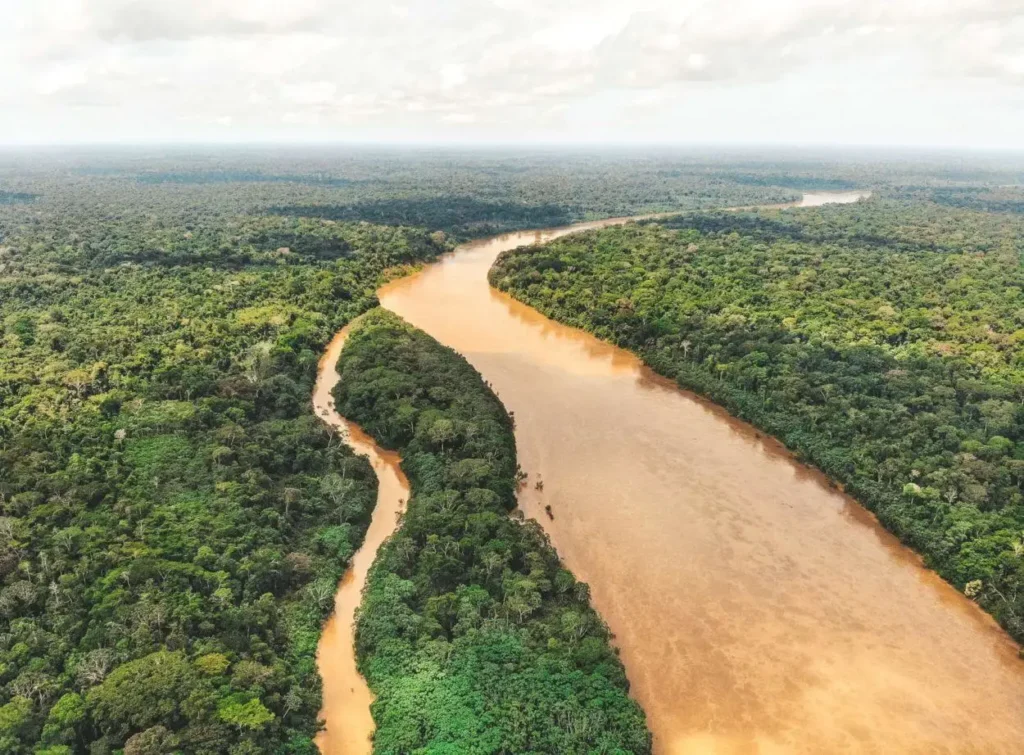
Is the Amazon River dangerous to swim in? It can be.
The risk is not simply that a caiman or piranha might attack. The river is a complex natural environment, and conditions can change rapidly.
Strong currents
Large rivers can contain currents that are much stronger than they appear from the shore.
Poor visibility
Many Amazonian rivers have dark or sediment-rich water. You may not be able to see what is beneath the surface.
Submerged objects
Branches, tree trunks, roots, and other debris can become hidden beneath the water.
Aquatic wildlife
Caimans, electric eels, stingrays, piranhas, and many other species inhabit Amazonian waters.
Seasonal flooding
During high-water periods, the river expands into areas of forest that may have been dry land months earlier.
Should tourists swim in the Amazon?
The safest approach is to follow the recommendations of local guides and authorities and use only locations where swimming is considered appropriate.
Never assume that a quiet-looking stretch of Amazon water is automatically safe.
Dangerous Animals of the Amazon Rainforest vs. Amazon River
One useful way to organize Amazon wildlife is to divide potentially dangerous animals according to their primary habitat.
| Rainforest Animals | River & Wetland Animals |
|---|---|
| Jaguars | Black caimans |
| Pit vipers | Piranhas |
| Wandering spiders | Electric eels |
| Bullet ants | Stingrays |
| Giant centipedes | Green anacondas |
| Mosquitoes | Large predatory fish |
| Wasps and bees | Aquatic reptiles |
This distinction is particularly useful for travelers.
On a forest trail, your main concern may be watching where you place your feet and avoiding hidden animals. Around rivers and lakes, water safety, currents, unstable banks, and aquatic wildlife become more important.
What Is the Deadliest Animal in the Amazon?

The question “what is the deadliest animal in the Amazon?” sounds simple, but there is no single answer.
If “deadliest” means the ability to kill a person through direct physical force, large predators such as black caimans and jaguars deserve attention.
If we are talking about venom, certain snakes and spiders become more relevant.
If we are talking about painful stings, the bullet ant is famous.
But if “deadliest” means the greatest potential impact on human health through disease transmission, mosquitoes may be the most important animal to consider.
This leads to one of the most interesting facts about Amazon wildlife:
The animal that looks the most dangerous is not necessarily the animal that represents the greatest danger to humans.
A jaguar can look terrifying, but you could spend a considerable amount of time in the Amazon without ever seeing one.
A mosquito, meanwhile, can be almost impossible to avoid in some tropical environments.
List of Dangerous Animals in the Amazon Rainforest
For a quick reference, here is a broader list of dangerous animals in the Amazon rainforest:
- Black caiman
- Green anaconda
- Jaguar
- Fer-de-lance
- Other pit vipers
- Electric eel
- Piranhas
- Brazilian wandering spider
- Bullet ant
- Giant centipedes
- Mosquitoes
- Freshwater stingrays
- Wasps
- Bees
- Defensive ants
- Some toxic frogs
- Large predatory fish
These animals should not all be considered equally dangerous. Some pose a potential risk only when handled or disturbed, while others can cause serious injury or transmit disease.
What Are Some of the Most Dangerous Animals in the Amazon Rainforest?
When people ask “what are some of the most dangerous animals in the Amazon rainforest?”, they often expect an answer dominated by jaguars, anacondas, and caimans.
The reality is much more interesting.
The Amazon contains animals that use an extraordinary variety of survival strategies:
- Venom
- Electricity
- Camouflage
- Powerful jaws
- Constriction
- Toxic skin
- Stinging
- Chemical defenses
- Disease transmission
- Sharp teeth and claws
The diversity of these adaptations is one of the reasons the Amazon is such an important ecosystem.
Amazon River Animals Pictures: What You Might See
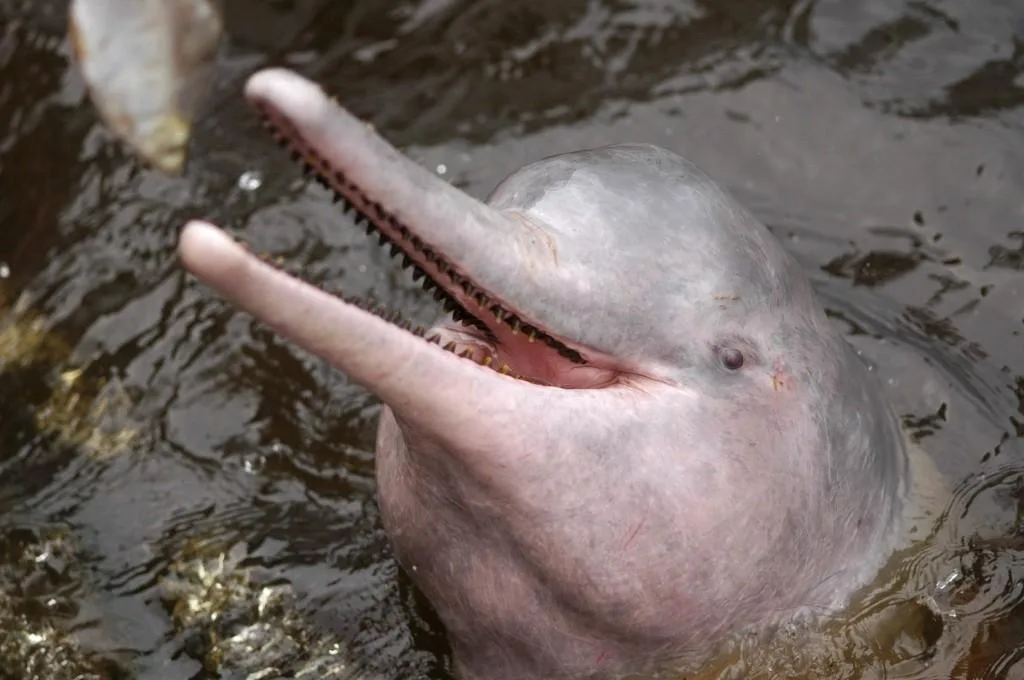
Pictures of Amazon River animals reveal a world that is much more diverse than the classic image of piranhas and caimans.
The rivers and lakes are home to:
- Pink river dolphins
- Black caimans
- Piranhas
- Electric eels
- Giant river otters
- Arapaima
- Freshwater turtles
- Anacondas
- Herons
- Kingfishers
- Thousands of freshwater fish species
And importantly, not every large or intimidating animal is dangerous to humans.
Giant river otters, for example, are powerful aquatic predators but are generally best appreciated as fascinating wildlife rather than feared.
Amazon Dangerous Animals Movie: Fact vs. Fiction
The phrase “Amazon dangerous animals movie” often brings to mind enormous snakes, attacking piranhas, swarms of insects, giant spiders, and predators chasing people through dense jungle.
Movies have contributed enormously to the popular image of the Amazon as a place where every tree and puddle contains something deadly.
The real rainforest is dangerous in some ways, but animal behavior is much more nuanced.
Myth: Piranhas instantly attack every swimmer
Real piranhas do not spend their lives waiting for humans to enter the water.
Myth: Anacondas constantly hunt humans
Anacondas are powerful predators, but humans are not their normal prey.
Myth: Jaguars regularly stalk tourists
Jaguars are secretive and generally avoid people.
Myth: Every snake is aggressive
Most snakes would rather escape than waste energy fighting a much larger animal.
Myth: The rainforest is constantly trying to kill you
The Amazon certainly demands respect, but millions of people live in Amazonian regions, and visitors explore the rainforest every year.
In many ways, the real Amazon is more fascinating than the movie version because animal behavior is based on survival rather than dramatic storytelling.
Unusual Facts About Dangerous Amazon Animals
Black caimans can be difficult to see
Their dark coloration can provide excellent camouflage in the water, particularly under low-light conditions.
Jaguars are powerful swimmers
Jaguars are not restricted to dry forest. They can swim across rivers and exploit aquatic prey.
Anacondas are aquatic specialists
Their bodies are exceptionally well adapted to moving through wetlands, swamps, and flooded forest.
Electric eels generate their own electricity
This is one of the most remarkable examples of biological specialization in freshwater ecosystems.
Piranhas are not exclusively meat eaters
Some species consume fruit, seeds, insects, fish, and carrion depending on environmental conditions.
Bullet ants demonstrate that size does not equal danger
A small insect can produce an extraordinarily painful sting despite being tiny compared with the Amazon’s major predators.
Mosquitoes can be more important than predators
The smallest animal discussed here may have a greater potential impact on human health than some of the largest predators.
Some Amazon predators eat other predators
Food webs in the Amazon can become surprisingly complex. Large caimans, for example, are capable of preying on a wide variety of animals.
The Amazon changes dramatically with the seasons
During high-water periods, huge areas of forest can become flooded. Animals then move through a landscape that may look completely different from the same area during low water.
How to Stay Safe Around Dangerous Amazon Animals
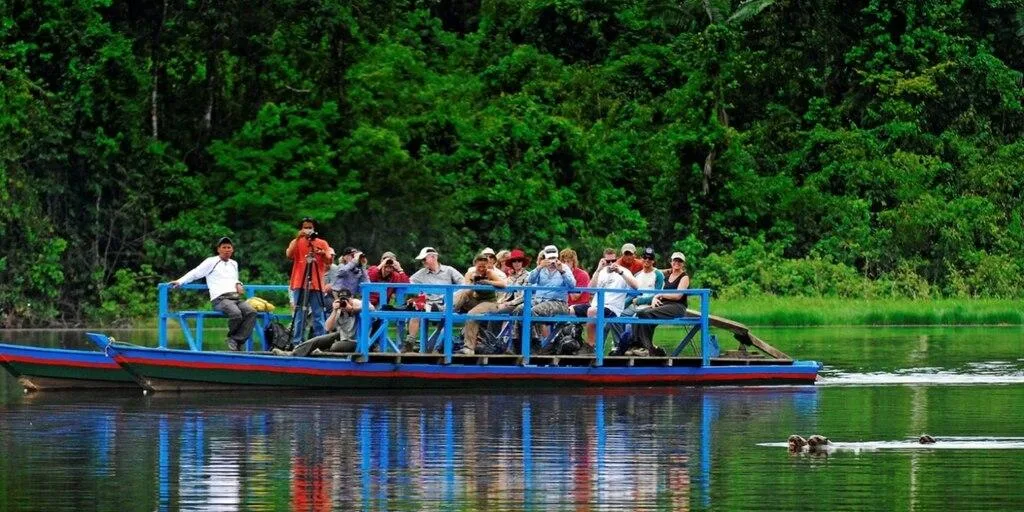
The best strategy for dealing with dangerous wildlife is respect rather than fear.
Wild animals generally do not need to be touched, chased, fed, cornered, or handled.
During rainforest walks
- Stay with your guide or group.
- Watch where you place your feet.
- Wear suitable footwear.
- Do not reach into holes.
- Do not put your hands beneath logs.
- Avoid disturbing vegetation unnecessarily.
- Use a flashlight at night.
- Never handle snakes or spiders.
- Keep a respectful distance from wildlife.
Around rivers and lakes
- Follow local swimming recommendations.
- Do not enter unfamiliar water without local guidance.
- Be careful around muddy or unstable riverbanks.
- Never approach a caiman.
- Do not feed wild animals.
- Follow boat safety instructions.
- Keep hands and feet inside the boat when appropriate.
Around insects
- Use appropriate insect protection.
- Wear suitable clothing.
- Avoid disturbing nests or colonies.
- Follow local recommendations concerning mosquito-borne diseases.
The goal is not to eliminate every possible encounter with wildlife. The goal is to understand how to behave when an encounter occurs.
Why Dangerous Animals Are Important to the Amazon Ecosystem
Calling an animal “dangerous” does not mean that it is harmful to the ecosystem or that it should be removed.
Quite the opposite is true.
Predators are essential to healthy ecosystems. Jaguars help regulate prey populations. Caimans influence aquatic food webs. Snakes control populations of rodents and other animals. Spiders and centipedes consume insects and other small creatures.
Even mosquitoes participate in complex food webs, providing food for fish, birds, bats, amphibians, and insects.
Every animal has a role.
Removing predators or other species simply because humans perceive them as dangerous can disrupt ecological relationships that have developed over thousands or millions of years.
Frequently Asked Questions About Dangerous Animals of the Amazon
What is the most dangerous animal in the Amazon?
There is no universal answer. Mosquitoes may be the most significant from a disease-transmission perspective, while venomous snakes, black caimans, jaguars, electric eels, and other animals can represent different forms of direct danger.
What is the most dangerous animal in the Amazon River?
The black caiman is among the most physically powerful potentially dangerous animals in the Amazon River system. Electric eels, piranhas, stingrays, and other aquatic animals present different types of risk.
Is the Amazon River dangerous to swim in?
Yes, unfamiliar Amazonian water can be dangerous because of currents, submerged objects, changing water levels, poor visibility, and aquatic wildlife. Swimming should only be done in locations where it is considered appropriate by knowledgeable local authorities or guides.
Are piranhas dangerous to humans?
Piranhas can bite humans, but their behavior is significantly more complex than the exaggerated attacks shown in movies. They are not constantly hunting people.
Are black caimans dangerous?
Black caimans are powerful predators capable of seriously injuring people. They should always be observed from a safe distance, particularly around rivers and lakes.
Are anacondas dangerous?
Green anacondas are enormous and powerful constrictors, so they should be treated with respect. However, attacks on humans are extremely uncommon.
What are the most dangerous animals of the Amazon rainforest?
Some of the most important species to know include black caimans, green anacondas, jaguars, pit vipers, electric eels, piranhas, wandering spiders, bullet ants, giant centipedes, and mosquitoes.
Are there dangerous animals in the Amazon River?
Yes. The river system contains potentially dangerous animals including black caimans, electric eels, piranhas, stingrays, anacondas, and other predatory or defensive species.
What animal kills the most people in the Amazon?
There is no simple universal ranking because reliable numbers vary by country, disease, region, and definition of an animal-related death. Disease-transmitting mosquitoes can represent a substantially greater public-health concern than large predators.
Final Thoughts: Should You Be Afraid of Amazon Animals?
The dangerous animals of the Amazon are fascinating precisely because they demonstrate how diverse and sophisticated nature can be.
A black caiman may disappear beneath dark water. A jaguar can move silently through dense vegetation. An anaconda can remain almost invisible among flooded plants. An electric eel can generate electricity. A bullet ant can produce extraordinary pain despite its tiny size. And a mosquito can pose a greater potential health risk than some of the largest predators in the forest.
The Amazon is therefore not simply a place filled with dangerous animals.
It is a complex ecosystem where every species has evolved specialized strategies for survival.
The most important lesson for visitors is respect, not fear. Wildlife should be observed from an appropriate distance, rivers should be approached carefully, and local guides should always be listened to when they explain how to behave around animals and natural hazards.
The cinematic Amazon—with giant snakes chasing people and piranhas attacking every boat—is mostly fiction.
The real Amazon is much more extraordinary.
It is a living world of predators, prey, rivers, flooded forests, insects, reptiles, fish, birds, and mammals interacting in ways that scientists are still discovering. And when you encounter one of its supposedly “dangerous” animals in the wild, the most memorable experience is often not an attack at all.
It is seeing a wild creature behaving exactly as nature intended.
That is the real adventure of the Amazon.