Discover the Living Giants of the Amazon
The Amazon rainforest is one of the most extraordinary natural environments on Earth. Its towering trees, winding rivers, extraordinary wildlife, and ancient ecosystems create a world unlike any other. For travelers looking for the best place to visit the Amazon, the forest offers far more than beautiful scenery. It is an opportunity to walk beneath enormous trees, explore peaceful waterways, discover fascinating plants, and experience the incredible diversity of South America’s tropical wilderness.
Trees are the foundation of this remarkable ecosystem. They provide food and shelter for countless animals, store carbon, regulate the water cycle, and create the layers of vegetation that make the rainforest so distinctive. Some grow into enormous giants that rise above the surrounding canopy, while others produce fruits, flowers, nuts, and medicinal compounds that sustain wildlife and local communities.
Peru is an especially rewarding destination for experiencing Amazonian forests. From the accessible rainforest around Puerto Maldonado to the remote wilderness of Manu National Park and the waterways near Iquitos, travelers can discover different landscapes, tree species, and rainforest experiences.
This guide explores the most fascinating trees in the Amazon rainforest, the best places to visit them in Peru and South America, how to plan a rainforest adventure, and what makes these forests so unusual.
Understanding Trees in the Amazon Rainforest
Why Amazon Rainforest Trees Are So Important
Amazon rainforest trees form the structural foundation of one of the world’s most diverse ecosystems. Their trunks, branches, leaves, flowers, and roots create habitats for insects, birds, mammals, reptiles, and countless other organisms. A single large tree can support an entire community of life, from orchids and bromeliads growing on its branches to monkeys and birds feeding on its fruits.
Trees also influence the Amazon’s climate and water cycle. Their roots absorb water from the soil, while their leaves release moisture into the atmosphere through a process called transpiration. This moisture contributes to cloud formation and rainfall, helping maintain the humid conditions that sustain the forest.
Another important role is carbon storage. Trees absorb carbon dioxide as they grow and store carbon in their trunks, branches, roots, and surrounding soil. Protecting mature rainforest trees therefore helps preserve biodiversity while supporting the stability of the global climate.
The Different Layers of Amazonian Forests
The Amazon rainforest is not a uniform wall of vegetation. It is a complex environment divided into several layers, each with its own conditions and characteristic plants.
Emergent Layer
The emergent layer contains the tallest trees, which rise above the main canopy. These giants receive abundant sunlight and are exposed to stronger winds than trees growing below them. Their upper branches provide nesting and resting places for large birds, including macaws and harpy eagles.
Canopy Layer
The canopy forms the broad green roof of the rainforest. It captures much of the available sunlight and supports a remarkable variety of plants and animals. Many rainforest trees produce fruits and flowers that attract birds, monkeys, bats, and insects.
Understory Layer
The understory receives less sunlight and is generally darker and more humid. Young trees, shade-tolerant plants, palms, and shrubs grow here. It is also an important habitat for insects, frogs, snakes, and animals that move through the forest at lower levels.
Forest Floor
The forest floor receives relatively little direct sunlight, but it plays an essential role in nutrient cycling. Fallen leaves, branches, fruits, and dead trees decompose, returning nutrients to the soil. Fungi, insects, and microorganisms help transform this organic material into resources that plants can use.
Why Amazonian Trees Grow Differently
Many Amazonian trees have adapted to intense competition for sunlight. Some grow exceptionally tall, while others develop broad crowns that capture light above neighboring vegetation. Certain species produce large buttress roots that help support their trunks in shallow or unstable soils.
In seasonally flooded forests, trees may also tolerate prolonged periods with their roots underwater. These adaptations demonstrate how different Amazonian landscapes influence the shape, size, and survival strategies of their vegetation.
Famous Trees of the Amazon Rainforest
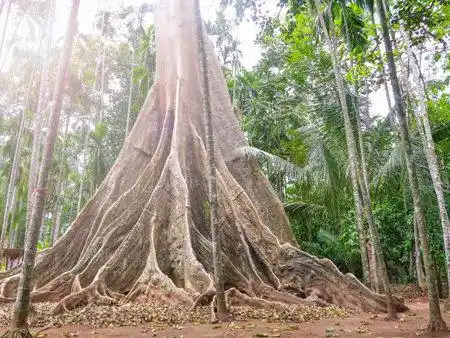
Kapok Tree — The Giant of the Tropical Forest
The kapok tree, known scientifically as Ceiba pentandra, is among the most impressive trees in the Amazon. Its enormous trunk and broad crown can rise above surrounding vegetation, making it a memorable sight for visitors exploring mature rainforest.
One of its most recognizable features is its buttress roots. These broad, flared structures extend outward from the base of the trunk and help stabilize the tree. They also create interesting shapes and sheltered spaces near the forest floor.
Kapok trees provide habitat for birds, insects, and other wildlife. Their flowers and fruits contribute to the forest’s food resources, while their height makes them an important part of the upper rainforest canopy.
Unusual fact: A large kapok tree can appear to have several enormous walls of wood spreading from its trunk. These are not separate trunks but structural roots that help support the giant.
Brazil Nut Tree — A Valuable Amazonian Species
The Brazil nut tree, Bertholletia excelsa, is one of the Amazon’s most important native trees. It produces large, woody fruits containing the edible seeds commonly known as Brazil nuts.
These trees can become very tall and long-lived, and mature specimens are important components of old-growth rainforest. Their fruits provide food resources for animals, while the nuts are collected by people in several Amazonian regions.
Brazil nut harvesting is also associated with forest-based livelihoods. When managed responsibly, gathering nuts from standing trees can provide economic value without requiring the forest to be cleared for agriculture.
Unusual fact: The Brazil nut fruit resembles a hard, round wooden capsule. Inside, its seeds are arranged in a structure that has been compared to the segments of an orange.
Strangler Fig — A Tree with a Dramatic Beginning
Strangler figs are among the most fascinating plants in tropical forests. Many begin life high in the branches of another tree, where their seeds may be deposited by birds or other animals.
As the fig grows, it sends roots downward toward the ground. These roots can gradually surround the supporting tree and eventually form a complex network around its trunk. Over time, the fig may become a large, independent tree.
Strangler figs are important sources of food for rainforest wildlife. Their fruits can attract birds, monkeys, and other animals, making them valuable components of the forest’s food web.
Unusual fact: Some strangler figs begin their lives without touching the soil. Their roots must travel downward through the forest before they can establish themselves fully.
Aguaje Palm — A Tree of Flooded Forests
The aguaje palm, Mauritia flexuosa, is especially associated with wet areas and seasonally flooded Amazonian landscapes. Its tall trunk and crown of large leaves create distinctive palm-filled wetlands known as aguajales.
The palm produces fruits that are important to wildlife and are also consumed by people in Amazonian communities. Its wetlands provide habitats for birds, insects, fish, and mammals, depending on local water conditions.
Aguaje landscapes are particularly interesting because they demonstrate how trees can shape entire habitats. The presence of these palms often indicates a wet environment with specific ecological conditions.
Shihuahuaco — A Slow-Growing Forest Giant
Shihuahuaco is a common name used for several large Amazonian trees, including species in the Dipteryx genus. These trees can develop massive trunks and dense wood, making mature individuals important features of old-growth forests.
Their large branches provide habitat for wildlife, and their fruits contribute to the forest’s food resources. Because some species grow slowly, the loss of mature trees can have long-lasting effects on forest structure.
Protecting large shihuahuaco trees helps preserve the complex habitats associated with mature rainforest.
Best Place to Visit the Amazon Rainforest
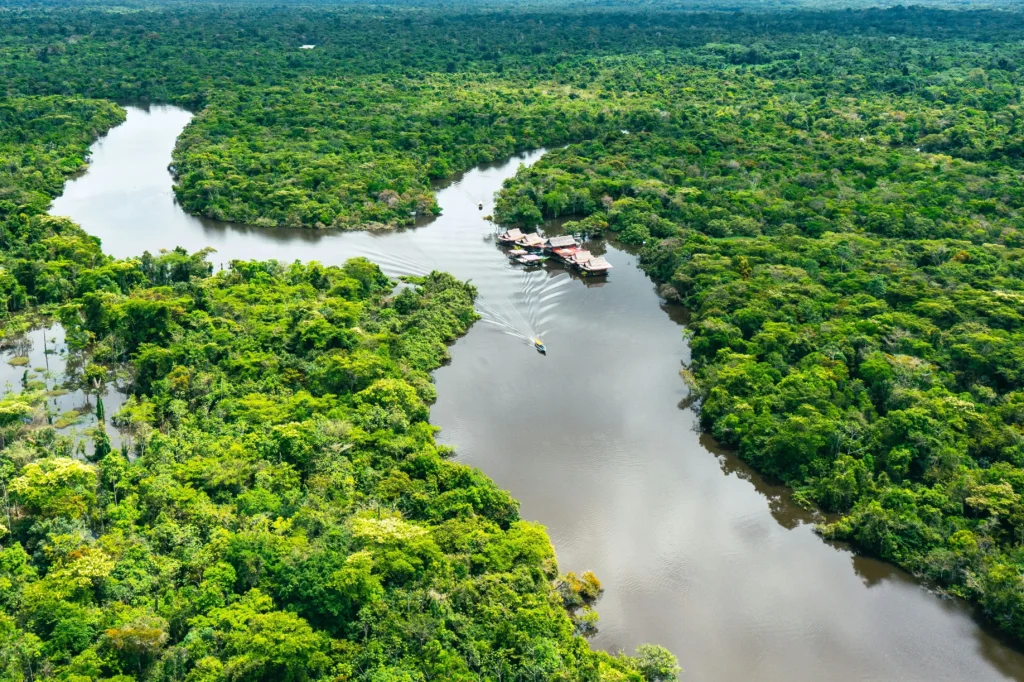
What Makes a Destination the Best Place to Visit the Amazon?
The best place to visit the Amazon depends on the experience a traveler wants. Some visitors prefer accessible rainforest lodges and short excursions, while others want remote river journeys, extensive wildlife observation, or opportunities to learn about forest ecology.
For travelers interested in Amazonian trees, a destination with mature forest, knowledgeable guides, and established trails can be especially rewarding. Guided walks make it easier to notice differences between tree species, identify unusual roots, observe flowers and fruits, and understand how plants interact with wildlife.
When comparing destinations, consider:
- Accessibility and travel time.
- The type of forest and landscape.
- Opportunities for guided nature walks.
- Accommodation and available services.
- The length of the trip.
- Conservation practices and local community involvement.
The best destination is not necessarily the most remote. A well-planned visit to an accessible rainforest reserve can offer excellent opportunities to experience the forest without requiring an extremely long journey.
Best Place to Visit the Amazon in Peru
Peru offers several distinct Amazonian destinations, each with different landscapes and travel experiences. The southern Amazon is particularly convenient for travelers visiting Cusco, while northern Peru provides access to extensive river systems and flooded forests.
Puerto Maldonado and Tambopata
Puerto Maldonado is one of the principal gateways to the Peruvian Amazon. It provides access to rainforest lodges, river excursions, and protected areas in the Madre de Dios region.
The nearby Tambopata National Reserve is an excellent choice for travelers who want to combine forest walks with wildlife observation. Its landscapes include mature rainforest, riverbanks, wetlands, and lakes surrounded by tropical vegetation.
For tree enthusiasts, Tambopata offers opportunities to see Brazil nut trees, palms, towering rainforest giants, and plants adapted to different forest environments. Guided excursions can help visitors understand how these trees support wildlife and contribute to the ecosystem.
Manu National Park
Manu National Park is an extraordinary destination for experiencing the transition between Andean and Amazonian ecosystems. Its landscapes include mountain forests, cloud forests, and lowland tropical rainforest.
This diversity creates opportunities to observe different vegetation types during a single journey. Trees change with elevation, temperature, moisture, and soil conditions, making Manu particularly interesting for nature lovers.
The park is also known for its remarkable biodiversity and extensive protected landscapes. Visits to designated tourist areas should be arranged through authorized operators, with itineraries designed to respect conservation rules.
Iquitos and the Northern Amazon
Iquitos is a major gateway to the northern Peruvian Amazon. Its surrounding region is characterized by extensive rivers, floodplain forests, and waterways that support a rich variety of plants and animals.
River journeys can provide a different perspective on rainforest vegetation. During high-water periods, boats may travel through flooded forest areas where tree trunks and branches rise directly from the water.
This region is especially appealing to travelers interested in river landscapes, local communities, and the ecological differences between flooded forests and better-drained rainforest.
Best Places to See the Amazon River
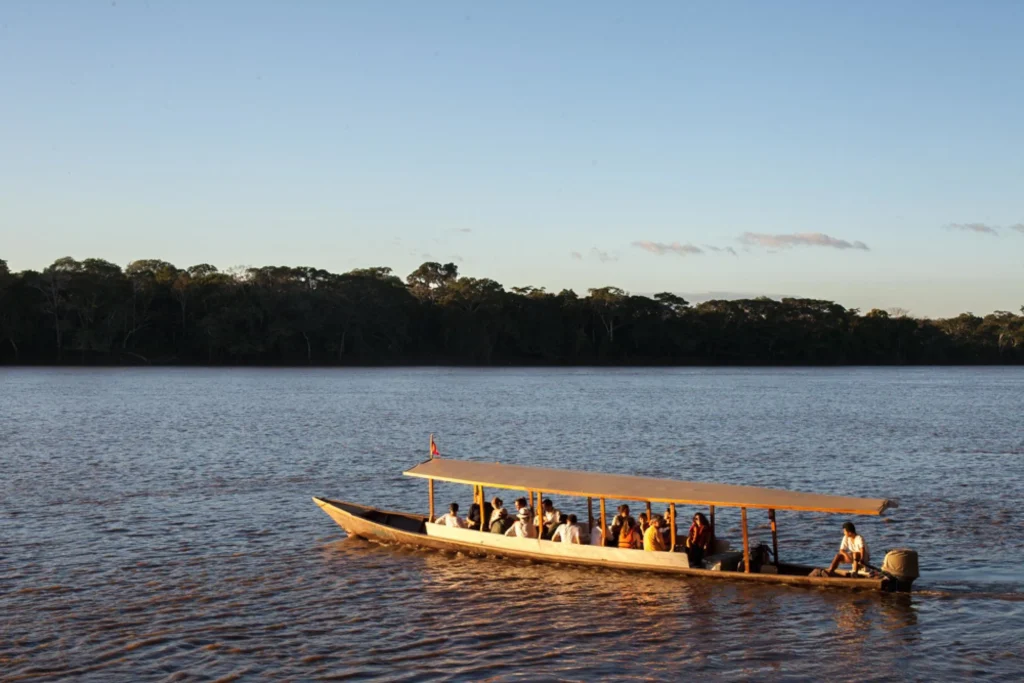
Visiting the Amazon River from Peru
The Amazon River and its tributaries provide some of the most memorable ways to experience the rainforest. Traveling by boat reveals forest edges, river islands, flooded vegetation, and the relationship between water and plant life.
For visitors interested in trees, river journeys offer an opportunity to observe how vegetation changes along the banks. Some trees tolerate seasonal flooding, while others grow on higher ground and remain above the water during much of the year.
The river also connects communities and protected areas. Boat excursions can therefore combine natural scenery with insights into local livelihoods and the importance of healthy waterways.
Puerto Maldonado and the Madre de Dios River
The Madre de Dios River is an important route for exploring the southern Peruvian Amazon. From Puerto Maldonado, visitors can travel by boat toward rainforest lodges and protected areas.
The riverbanks reveal a variety of vegetation, including palms, tall trees, and plants adapted to changing water levels. Short boat trips can be combined with guided walks, allowing travelers to compare river-edge habitats with the forest interior.
Iquitos and the Amazon River System
Iquitos offers access to the northern Amazon’s extensive river network. The surrounding waterways provide opportunities to explore forested islands, flooded landscapes, and communities connected to the river.
Travelers can experience the Amazon from boats, observe vegetation along the banks, and learn how seasonal water levels influence daily life and forest ecology.
How to Visit the Amazon Rainforest in Peru
Choose Your Gateway City
The first step is choosing the region that best matches your itinerary.
Puerto Maldonado is a convenient gateway for travelers visiting Cusco and southern Peru. Iquitos is better suited to those interested in the northern Amazon and river-based journeys. Manu is ideal for travelers seeking a more extensive nature-focused adventure involving different ecosystems.
Consider the total travel time, not just the distance on a map. Roads, rivers, and flight schedules can make journeys longer than expected.
Choose the Right Trip Length
A short rainforest visit can introduce travelers to tropical vegetation and wildlife, but additional days allow for a deeper experience.
A three-day itinerary may include arrival, a guided forest walk, a river excursion, and wildlife observation. A four- or five-day journey can provide more time for exploring different habitats, visiting lakes, and learning about rainforest plants.
Longer itineraries may be especially rewarding for travelers interested in trees because different trails and forest types reveal a wider range of vegetation.
Select Responsible Accommodation
Rainforest lodges provide a base for guided excursions and help visitors experience the forest beyond the main gateway cities.
When choosing accommodation, consider its location, access to trails, guide experience, waste management, and relationship with local communities. Ask whether excursions are conducted by trained guides and whether the lodge follows conservation rules.
A lodge located farther along a river may offer a different experience from one close to a city. However, greater distance does not automatically guarantee better wildlife sightings or a more meaningful forest experience.
What to Pack for a Rainforest Visit
The Amazon is generally warm and humid, but conditions vary by location and season. Pack lightweight clothing that dries quickly, comfortable walking shoes, and a light rain jacket.
Useful items include:
- Insect repellent.
- Sunscreen and a hat.
- Reusable water bottle.
- Binoculars for observing wildlife.
- Camera or phone with a protective case.
- Small daypack.
- Personal medication and basic first-aid supplies.
For forest walks, long sleeves and long trousers can help protect against insects, scratches, and vegetation.
Amazon Rainforest Tours from Cusco
Why Combine Cusco and the Amazon?
Cusco is a popular starting point for travelers exploring southern Peru. Combining a visit to the Andes with a rainforest journey creates an opportunity to experience two very different environments.
The transition from high mountains to tropical lowlands is especially interesting for nature lovers. Vegetation changes dramatically with elevation, and travelers may encounter mountain forests before reaching the warmer Amazonian landscape.
Puerto Maldonado is a practical gateway for this combination. Travelers can arrange a rainforest extension after visiting Cusco and the Sacred Valley, allowing time for guided walks, boat excursions, and wildlife observation.
What to Expect from a Cusco-to-Amazon Tour
A typical tour may include transportation to the rainforest gateway, transfer by boat or road to accommodation, guided excursions, and meals according to the package.
Activities can include:
- Guided rainforest walks.
- River excursions.
- Visits to lakes or observation areas.
- Wildlife watching.
- Night walks with a guide.
- Introduction to useful and traditional rainforest plants.
The exact itinerary depends on the destination, accommodation, weather, and tour length. Travelers should confirm transportation arrangements and included activities before booking.
How Many Days Should You Spend in the Amazon?
For travelers coming from Cusco, three or four nights can provide a useful introduction to the rainforest. A longer stay allows more time to explore different habitats and enjoy the experience at a slower pace.
If trees are the main interest, choose an itinerary that includes several guided walks rather than relying entirely on boat excursions. Walking through different forest environments is one of the best ways to appreciate the variety of Amazonian vegetation.
Is the Amazon in Peru Dangerous?
Understanding the Main Risks
The Amazon is a wild environment, but a well-organized visit can be enjoyable and rewarding. Most common travel concerns involve heat, humidity, insects, changing weather, uneven trails, and the need to follow local guidance.
Wild animals generally avoid people, but visitors should never approach, touch, feed, or attempt to handle wildlife. Even apparently harmless plants and animals should be observed without disturbing them.
River conditions can also change with rainfall and water levels. Travelers should follow their guide’s instructions when boarding boats, walking near water, or exploring flooded areas.
How to Stay Safe in the Rainforest
A few simple precautions can make a rainforest visit more comfortable:
- Use authorized guides and follow their instructions.
- Stay on established trails.
- Wear suitable footwear and protective clothing.
- Use insect repellent and sunscreen.
- Drink safe water and stay hydrated.
- Avoid swimming unless the activity is specifically permitted and supervised.
- Keep a respectful distance from wildlife.
- Tell your guide about allergies, mobility concerns, or relevant medical needs.
Visitors should also respect protected areas and local communities. Responsible travel helps reduce disturbance and supports the long-term conservation of the forest.
Interesting and Unusual Facts About Amazon Rainforest Trees
Some Trees Grow Above the Main Canopy
The tallest rainforest trees rise above the canopy and receive more direct sunlight than most other plants. Their crowns can be visible from a distance, creating the uneven skyline often associated with mature tropical forest.
A Tree Can Become an Entire Habitat
Large trees provide living space for many organisms. Their bark, branches, cavities, and root systems support insects, birds, mammals, fungi, and climbing plants.
Flooded Forests Have Specially Adapted Trees
Some Amazonian trees tolerate seasonal flooding, when water covers the forest floor for weeks or months. These trees are adapted to conditions that would be difficult for many plants growing in drier environments.
The Forest Floor Is Not Always Rich in Nutrients
Although the rainforest is extremely productive, many Amazonian soils are naturally nutrient-poor. Much of the ecosystem’s nutrient cycling takes place in the living vegetation and the thin layer of decomposing organic material on the forest floor.
This helps explain why protecting the entire forest ecosystem is important. Removing trees can disrupt the relationships that allow nutrients to circulate.
Trees Help Create Rainfall
Through transpiration, trees release water vapor into the atmosphere. Across vast areas of rainforest, this process contributes to regional moisture circulation and helps sustain the conditions needed for tropical forests to thrive.
Conservation of Amazon Rainforest Trees
Why Protecting Mature Trees Matters
Mature trees provide habitat, store carbon, produce fruits and seeds, and contribute to the structure of the rainforest. When large trees are removed, the effects can extend far beyond the individual plant.
Forest loss can fragment habitats, reduce biodiversity, and alter local water cycles. Protecting mature rainforest is therefore essential for maintaining the ecological processes that support the Amazon.
How Responsible Tourism Can Help
Responsible tourism can create economic opportunities linked to keeping forests standing. Guided nature experiences, community-based tourism, and conservation-focused accommodation can help demonstrate the value of healthy ecosystems.
Visitors can contribute by choosing responsible operators, respecting protected-area regulations, reducing waste, and supporting local businesses.
Frequently Asked Questions About Visiting the Amazon
What Is the Best Place to Visit the Amazon in Peru?
Puerto Maldonado and Tambopata are excellent options for travelers seeking accessible rainforest experiences in southern Peru. Manu is particularly appealing for extensive biodiversity and varied ecosystems, while Iquitos provides access to the northern Amazon’s river landscapes.
What Is the Best Time to Visit the Amazon Rainforest?
The best time depends on the destination and activities. Drier periods can make walking trails easier, while higher water levels may improve access to flooded forest areas by boat.
In southern Peru, the period from approximately May to October is often preferred for easier travel conditions, although weather can vary from year to year.
Can You Visit the Amazon from Cusco?
Yes. Travelers can combine Cusco with a visit to the southern Peruvian Amazon, commonly using Puerto Maldonado as the gateway. It is important to allow enough time for transportation and rainforest excursions.
How Many Days Do You Need in the Amazon?
Three or four nights can provide a good introduction to the rainforest. Travelers interested in trees, biodiversity, and different forest habitats may benefit from a longer stay.
Are There Dangerous Trees in the Amazon?
Some rainforest plants have irritating sap, sharp structures, or other defenses. Visitors should avoid touching unfamiliar plants and follow their guide’s advice.
Can You See Giant Trees in Tambopata?
Yes. Tambopata contains mature rainforest with large trees, palms, and other tropical vegetation. Guided walks provide opportunities to learn about the trees and the wildlife that depends on them.
Is the Amazon Rainforest Suitable for Families?
Many families can enjoy a rainforest visit when they choose an appropriate itinerary, accommodation, and guided activities. Parents should consider heat, humidity, walking distances, insects, and the needs of younger travelers.
What Should I Bring for a Tree-Focused Rainforest Tour?
Bring comfortable walking shoes, lightweight clothing, insect repellent, a reusable water bottle, binoculars, and a camera. A knowledgeable guide is also invaluable for identifying trees and explaining their ecological importance.
Conclusion: Experience the Amazon Through Its Trees
The trees of the Amazon rainforest are far more than a beautiful backdrop. They create habitats, support wildlife, influence rainfall, store carbon, and sustain the ecological relationships that make the forest extraordinary.
For travelers, the best place to visit the Amazon depends on the kind of experience they want. Puerto Maldonado and Tambopata offer convenient access to southern Amazonian forests, Manu provides a remarkable range of ecosystems, and Iquitos opens the door to the northern Amazon’s extensive river landscapes.
Whether you are fascinated by towering kapok trees, curious about strangler figs, or simply eager to walk beneath the rainforest canopy, a thoughtful visit can reveal the Amazon’s extraordinary natural richness. Choose a destination that fits your interests, travel responsibly, and take time to appreciate the living giants that make this forest one of the world’s most remarkable places.