The reptiles in the Amazon rainforest are among the most fascinating animals in one of the world’s richest ecosystems. From enormous anacondas and powerful caimans to colorful turtles, secretive lizards, and venomous snakes, Amazon rainforest reptiles have evolved remarkable ways to survive in flooded forests, rivers, swamps, tree canopies, and dense jungle vegetation. The Amazon Basin is home to an extraordinary variety of Amazonian reptiles, many of which are perfectly adapted to life around water.
This guide provides a detailed Amazon rainforest reptiles list, explains where different species live, explores the Amazon river reptiles, and highlights some of the largest and most unusual species. It also explains the difference between Amazon reptiles and amphibians, because these two groups frequently appear together when discussing rainforest wildlife.
Whether you are looking for an Amazon reptiles list, a rainforest reptiles list, or simply want to discover some of the most spectacular Amazon reptiles animals, this guide explores the subject from multiple perspectives.
Amazon Rainforest Reptiles
Reptiles are an important part of the Amazon ecosystem. Unlike mammals and birds, reptiles are ectothermic, meaning they rely heavily on environmental heat to regulate their body temperature. This makes the warm tropical conditions of the Amazon particularly suitable for them. Many species spend their mornings basking in sunlight before becoming more active as temperatures rise.
The Amazon rainforest provides an enormous variety of habitats for reptiles. Some species spend almost their entire lives in rivers and lakes, while others live among fallen leaves on the forest floor or climb trees in search of prey. There are also reptiles that specialize in temporary ponds, flooded forests, riverbanks, and open areas created naturally by fallen trees.
Why the Amazon Is Ideal for Reptiles
The combination of warmth, water, vegetation, and abundant prey creates excellent conditions for reptiles. The Amazon Basin contains thousands of rivers and streams, extensive wetlands, oxbow lakes, seasonally flooded forests, and enormous areas of dense vegetation.
These habitats allow different reptiles to occupy highly specialized ecological niches. A caiman may spend much of its life in a river or lagoon, while an arboreal snake may rarely touch the ground. A turtle can exploit aquatic vegetation and fruits, whereas a predatory snake may specialize in fish, birds, rodents, or other reptiles.
Amazon Rainforest Reptiles List
The Amazon rainforest reptiles list includes several major groups: snakes, caimans, turtles, tortoises, and lizards. Each group contains species with dramatically different lifestyles and adaptations.
Snakes
Some of the best-known Amazonian reptiles are snakes. The region contains boas, anacondas, vipers, colubrids, and many other snake groups.
Notable Amazon snakes include:
- Green anaconda
- Common boa
- Emerald tree boa
- Amazon tree boa
- Rainbow boa
- Amazonian bushmaster
- Fer-de-lance
- South American rattlesnake
- Coral snakes
- Parrot snakes
- Vine snakes
- Water snakes
Snakes occupy nearly every major Amazon habitat. Some are terrestrial hunters, others are aquatic, and several species are highly adapted to living in trees. Their diets range from frogs and fish to birds, rodents, bats, and other reptiles.
Caimans
Caimans are among the most recognizable Amazon forest reptiles. They belong to the crocodilian family and are strongly associated with rivers, lakes, swamps, and flooded forests.
Important Amazon caimans include:
- Black caiman
- Spectacled caiman
- Smooth-fronted caiman
- Cuvier’s dwarf caiman
- Broad-snouted caiman in parts of the wider South American region
The black caiman is particularly impressive. Large individuals can reach several meters in length and are powerful predators capable of taking fish, birds, mammals, and other animals.
Turtles and Tortoises
The Amazon is also home to numerous freshwater turtles and terrestrial tortoises. Some are strongly associated with rivers, while others inhabit forest environments.
Examples include:
- Yellow-spotted river turtle
- South American river turtle
- Six-tubercled river turtle
- Giant South American river turtle
- Mata mata
- Yellow-footed tortoise
- Red-footed tortoise
- Big-headed Amazon River turtle
These animals play important ecological roles by consuming aquatic vegetation, fruits, insects, carrion, and other food sources. Some freshwater turtles also help distribute seeds after eating fruits.
Lizards
Lizards are sometimes overlooked when people think about Amazon reptiles, but they are extremely diverse.
Amazonian lizards include:
- Green iguanas
- Black spiny-tailed iguanas
- Basilisks
- Tegus
- Ameivas
- Anoles
- Geckos
- Whiptail lizards
- Spectacled caimans’ smaller relatives among the broader teiid and related lizard diversity
Their lifestyles vary considerably. Green iguanas are excellent climbers and often spend time in trees near waterways. Basilisks are famous for their ability to run across the surface of water for short distances.
Amazon Reptiles List: The Most Iconic Species
Some Amazon reptiles animals have become particularly famous because of their extraordinary size, appearance, behavior, or ecological importance.
Green Anaconda
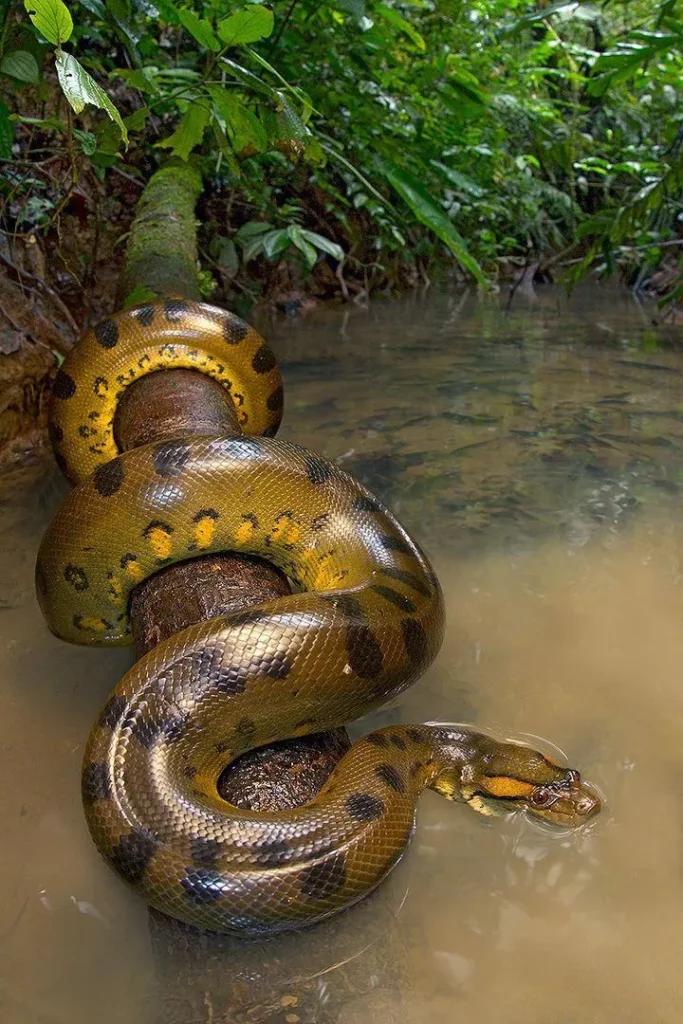
The green anaconda is arguably the most famous snake associated with the Amazon. It is an enormous, heavy-bodied constrictor that spends much of its time in or near water.
Unlike slender tree snakes, the green anaconda has a massive body designed for powerful muscular movement. Its eyes and nostrils are positioned high on its head, allowing it to remain partially submerged while watching for prey.
It feeds on a wide range of animals, including fish, birds, turtles, capybaras, and other mammals. Despite popular stories, anacondas do not routinely attack humans, and encounters with people are unusual.
Black Caiman
The black caiman is one of the largest predators in the Amazon aquatic ecosystem. Adults develop a dark coloration, particularly as they mature, which helps distinguish them from several other caiman species.
Young black caimans eat smaller prey such as insects, crustaceans, and fish. As they grow, their diets become increasingly varied and can include larger fish, birds, turtles, and mammals.
Mata Mata Turtle
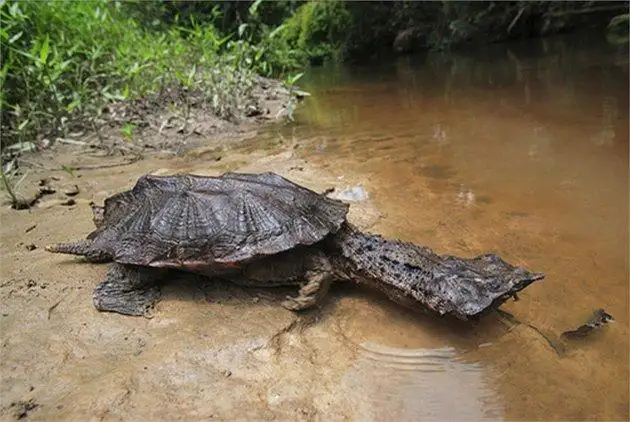
The mata mata is one of the Amazon’s strangest reptiles. Its rough, textured shell, triangular head, elongated neck, and skin flaps make it look remarkably like a piece of bark or a dead leaf.
This unusual appearance is not simply decorative. Camouflage allows the turtle to blend into the muddy bottoms and vegetation of slow-moving waterways. Instead of actively chasing prey, it can remain still and use a powerful suction-feeding technique to capture aquatic animals.
Green Iguana
The green iguana is one of the most recognizable Amazon jungle reptiles. It is primarily herbivorous and is commonly associated with trees, riverbanks, and tropical vegetation.
Young iguanas can be surprisingly colorful, while adults develop robust bodies and long tails. They are strong swimmers and can drop from branches into water when threatened.
Basilisk Lizards
Basilisks have earned the nickname “Jesus Christ lizards” because they can run rapidly across the surface of water for short distances.
They accomplish this using their long toes and specialized feet. When moving quickly, their feet slap against the water and create temporary air pockets that help support their bodies. This is one of the most unusual adaptations found among Amazon rainforest reptiles.
Amazon Forest Reptiles and Their Habitats
The Amazon is not a single uniform environment. Amazon forest reptiles occupy different ecological zones, and understanding these habitats helps explain why the region contains such diverse reptile species.
Forest Floor
The forest floor is home to terrestrial snakes, tortoises, lizards, and other reptiles. Fallen leaves provide camouflage and create habitat for insects and small animals that become prey.
Species living here must deal with darkness, humidity, abundant vegetation, and constantly changing conditions. Many forest-floor reptiles have colors and patterns that break up their body outlines and make them difficult to detect.
Amazon Canopy
The canopy is another important habitat. Tree-dwelling snakes and lizards have developed adaptations that allow them to move among branches and leaves.
Arboreal snakes often have slender bodies, strong muscles, and excellent camouflage. Green iguanas, anoles, and several other lizards also spend substantial amounts of time above the ground.
Flooded Forests
Seasonally flooded forests are among the most interesting habitats for Amazon reptiles. During periods of high water, rivers spread into the surrounding forest, transforming terrestrial areas into temporary aquatic environments.
Some reptiles exploit these seasonal changes to access new food sources. Aquatic turtles may move through flooded vegetation, while caimans can travel through channels and forest pools.
Wetlands and Swamps
Swamps, marshes, ponds, and shallow lagoons provide ideal habitats for aquatic reptiles. These environments contain fish, amphibians, insects, crustaceans, and other potential prey.
Caimans are particularly successful in these habitats because their bodies are adapted to both water and land. They can remain almost completely submerged while waiting for prey.
Amazon Basin Reptiles
The term Amazon Basin reptiles refers broadly to reptiles living throughout the enormous drainage basin associated with the Amazon River and its tributaries.
The basin extends across several South American countries, creating a tremendous range of habitats. Reptile communities therefore vary from one region to another.
The western Amazon, for example, contains extensive rainforest and river systems, while other parts of the basin include seasonally flooded landscapes, savanna-like areas, wetlands, and transitional forests. This geographic variation helps explain the extraordinary diversity of reptiles found across the wider Amazon Basin.
Why the Amazon Basin Is So Diverse
One important factor is connectivity. Rivers provide pathways through the landscape, while seasonal flooding can connect habitats that are isolated during drier periods.
The Amazon’s enormous network of tributaries also creates ecological differences between blackwater, whitewater, and clearwater environments. These differences influence the fish, amphibians, insects, plants, and other organisms available to reptiles.
Amazon River Reptiles
The Amazon river reptiles include some of the region’s most specialized animals. Rivers are not simply transportation routes for wildlife; they are entire ecosystems supporting enormous food webs.
Black Caiman
Black caimans are among the most important large predators in Amazonian waterways. They can occupy rivers, lagoons, oxbow lakes, and flooded forest environments.
Giant River Turtles
Large river turtles are strongly associated with Amazon waterways. Females may travel to sandy beaches or riverbanks to lay eggs, sometimes gathering in areas where nesting conditions are favorable.
Mata Mata
The mata mata prefers relatively slow-moving waters where its unusual camouflage provides a major advantage. Its appearance makes it one of the most memorable Amazon river reptiles.
Anacondas
Green anacondas frequently use shallow water, flooded forest, marshes, and river edges. Water helps support their enormous bodies and allows them to move efficiently.
Biggest Snakes in the Amazon
Few subjects generate more fascination than the biggest snakes in the Amazon. The green anaconda is the undisputed giant among the region’s snakes in terms of body mass.
Green Anaconda
Green anacondas are exceptionally muscular snakes. Rather than relying primarily on length, they are famous for their extraordinary girth and weight.
Their aquatic lifestyle is central to their success. The water supports their heavy bodies while allowing them to approach prey with relatively little movement.
Common Boa
The common boa is smaller than the green anaconda but is still a large and powerful constrictor. It is adaptable and can occupy forests, agricultural landscapes, river edges, and other habitats.
Rainbow Boa
Rainbow boas are known for their attractive coloration and iridescent scales. When sunlight strikes their bodies at the right angle, their scales can produce a rainbow-like sheen.
Emerald Tree Boa
The emerald tree boa is an arboreal specialist. Its green coloration provides remarkable camouflage among leaves, while its prehensile tail helps it remain securely positioned on branches.
An Important Fact About Giant Snakes
One unusual feature of giant constrictors is that they do not need to overpower prey through a prolonged struggle. Their bodies are built for muscular restraint, allowing them to subdue prey before swallowing it whole.
Dangerous Animals: Are Amazon Reptiles Dangerous?
Some Amazon rainforest reptiles can be dangerous, but the word “dangerous” needs context. Most reptiles do not actively seek out humans. Problems generally occur when an animal is accidentally approached, cornered, handled, or surprised.
Several venomous snakes are medically important, particularly lanceheads and bushmasters. Caimans can also be dangerous because of their size, powerful jaws, and aquatic hunting abilities.
Reptiles That Deserve Respect
- Black caiman
- Green anaconda
- South American rattlesnake
- Fer-de-lance and related lancehead snakes
- Bushmaster
- Large constrictors
- Some venomous coral snakes
The safest approach is simple: observe wild reptiles from a respectful distance and never attempt to touch, capture, feed, or provoke them.
Amazon Rainforest Reptiles and Amphibians
Searches for Amazon rainforest reptiles and amphibians often combine the two groups because both are ectothermic vertebrates and both are abundant in tropical environments. However, reptiles and amphibians are biologically different.
Reptiles generally have skin covered by scales, scutes, or other structures that help reduce water loss. Amphibians usually have more permeable skin and are strongly associated with moist environments.
Examples of Amazon Reptiles
- Snakes
- Caimans
- Turtles
- Tortoises
- Lizards
Examples of Amazon Amphibians
- Tree frogs
- Poison dart frogs
- Glass frogs
- Horned frogs
- Toads
- Amazonian salamanders and other amphibians where present
Both groups are important predators and prey within the rainforest food web.
Why Amphibians Are Often Found With Reptiles
Warm, humid rainforest environments provide ideal conditions for amphibians, while abundant insects and aquatic habitats support both amphibians and reptiles.
However, amphibians can be more sensitive to environmental changes because their permeable skin interacts directly with surrounding moisture. This makes many amphibian species particularly interesting indicators of ecosystem health.
Unusual Amazon Reptile Facts
The Amazon is full of reptile behaviors that sound almost unbelievable.
1. Some Lizards Can Run Across Water
Basilisks can move rapidly over water using specialized feet. This behavior helps them escape predators.
2. Turtles Can Use River Beaches as Nesting Sites
Some Amazonian turtles travel to exposed sandy areas when conditions are appropriate for nesting. Large nesting gatherings can occur in favorable locations.
3. The Mata Mata Looks Like a Piece of the River Bottom
Its rough skin and shell make it remarkably difficult to distinguish from submerged vegetation, leaves, and debris.
4. Anacondas Have Aquatic Adaptations
The green anaconda’s eyes and nostrils are positioned high on its head, allowing it to remain partially submerged while observing its surroundings.
5. Caimans Can Change Their Diet as They Grow
Young caimans generally focus on smaller prey, while larger individuals can tackle substantially bigger animals.
6. Some Reptiles Help Spread Seeds
Fruit-eating turtles and tortoises can contribute to seed dispersal. This means reptiles can influence rainforest vegetation as well as animal populations.
7. Reptiles Can Survive Seasonal Transformations
Flooding can completely change the structure of parts of the Amazon forest. Species adapted to these seasonal cycles can take advantage of aquatic environments that appear only for part of the year.
Amazon Reptiles and the Rainforest Food Web
Reptiles are important predators, prey, scavengers, and sometimes seed dispersers. Their ecological importance goes far beyond the species that attract the most attention.
A snake can regulate populations of rodents, birds, frogs, or other reptiles. Caimans can influence aquatic food webs by feeding on fish and other animals. Turtles can consume vegetation and fruit and subsequently move seeds through the landscape.
This creates a complex network of ecological relationships. Removing an important predator or prey species can potentially influence several other organisms within the same ecosystem.
What Is Unusual About Amazon Reptiles?
Perhaps the most unusual characteristic of Amazonian reptiles is the enormous variety of survival strategies found within a relatively interconnected environment.
One reptile may spend most of its life hidden among leaves, another may live in the canopy, another may wait motionless underwater, and another may patrol the edges of rivers. Their bodies reveal these lifestyles: long tails for balance, flattened bodies for swimming, camouflage patterns, powerful jaws, specialized feet, muscular constriction, and shells for protection.
The Amazon demonstrates how evolution can produce dramatically different solutions to the same fundamental challenges: finding food, avoiding predators, reproducing, and surviving in a constantly changing tropical environment.
Rainforest Reptiles List: Quick Reference
For readers looking for a simple rainforest reptiles list, these are some of the most notable reptiles associated with the Amazon and surrounding tropical South American ecosystems:
- Green anaconda
- Common boa
- Rainbow boa
- Emerald tree boa
- Amazon tree boa
- Fer-de-lance
- Bushmaster
- South American rattlesnake
- Coral snakes
- Black caiman
- Spectacled caiman
- Smooth-fronted caiman
- Dwarf caimans
- Green iguana
- Basilisk lizards
- Tegus
- Ameivas
- Anoles
- Giant South American river turtle
- Yellow-spotted river turtle
- Mata mata
- Yellow-footed tortoise
- Red-footed tortoise
- Other freshwater turtles and terrestrial reptiles
This list is not a complete scientific inventory. The Amazon Basin contains many additional species, including smaller and less frequently encountered reptiles that are rarely seen by visitors.
Reptiles in the Amazon Rainforest: Why They Matter
The reptiles in the Amazon rainforest are much more than spectacular animals for wildlife enthusiasts. They are essential components of rainforest ecosystems, occupying positions ranging from top predators to herbivores and seed dispersers.
Their diversity also demonstrates the incredible complexity of Amazonian habitats. Rivers, flooded forests, wetlands, canopy environments, forest floors, and river beaches all support different reptile communities.
From the massive green anaconda sliding through shallow water to a tiny lizard disappearing among leaves, every species represents a specialized response to life in one of the world’s most complex ecosystems.
Final Thoughts
The Amazon rainforest reptiles, Amazonian reptiles, and Amazon Basin reptiles represent an extraordinary collection of evolutionary adaptations. Giant anacondas demonstrate the power of aquatic constriction, caimans dominate many freshwater food webs, turtles connect aquatic and terrestrial ecosystems, and arboreal lizards and snakes exploit the three-dimensional world of the rainforest canopy.
For anyone fascinated by wildlife, the Amazon’s reptiles offer an endless list of discoveries. Their unusual appearances, hunting strategies, reproductive behaviors, and adaptations make them some of the most intriguing animals in South America.
And perhaps the most remarkable fact is that despite everything scientists and explorers have learned, the Amazon continues to reveal new information about its biodiversity. Hidden waterways, remote forests, and poorly studied habitats mean that there is still much to discover about the reptiles living within this extraordinary ecosystem.