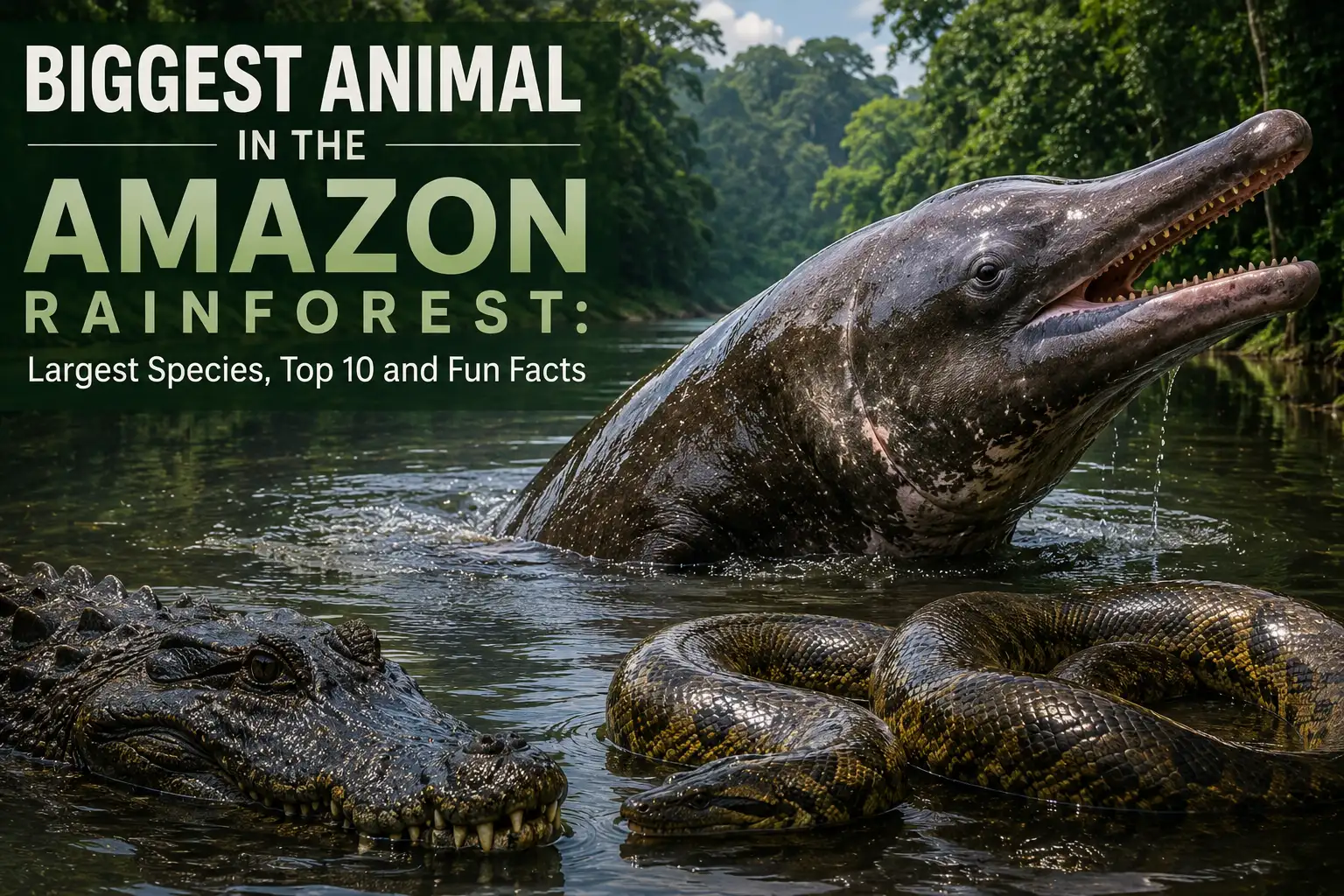
The biggest animal in the Amazon rainforest depends on how you define “biggest.” By body mass, some of the largest Amazonian animals include the Amazonian manatee, green anaconda, black caiman, and South American tapir. By length, the green anaconda is one of the most impressive animals in the Amazon, while the giant river otter is among the largest predators living in Amazonian rivers. The Amazon rainforest is home to an extraordinary variety of animals, from enormous reptiles and mammals to surprisingly large fish and river creatures.
So, what is the biggest animal in the Amazon rainforest? There is no single winner in every category. The answer changes depending on whether we measure weight, length, height, or overall body size. Understanding these differences makes the question even more fascinating because the Amazon contains animals that are exceptionally large for their environments.
From the enormous green anaconda to the powerful black caiman and the peaceful Amazonian manatee, this guide explores the top 10 biggest animals in the Amazon rainforest, including species found in the Peruvian Amazon.
What Is the Biggest Animal in the Amazon Rainforest?
If “biggest” means heaviest mammal, the Amazonian manatee is one of the strongest candidates. Adult Amazonian manatees can reach several hundred kilograms and are perfectly adapted to life in slow-moving Amazonian rivers, lakes, oxbow lakes, and flooded forests.
If “biggest” means longest animal, the green anaconda is a leading candidate. This enormous snake can reach several meters in length and has an exceptionally heavy body compared with most other snakes.
If “biggest” means largest land mammal, the South American tapir is the clear standout. It is the largest native land mammal in much of the Amazon basin and can weigh several hundred kilograms.
Large aquatic animals also deserve attention. The black caiman can become extremely large, and some individuals may weigh hundreds of kilograms. Meanwhile, giant freshwater fish such as the arapaima can reach remarkable lengths and weights.
Therefore, the best answer to what is the biggest animal that lives in the Amazon rainforest is:
- Largest by body mass among Amazonian mammals: Amazonian manatee
- Largest land mammal: South American tapir
- Longest large animal: Green anaconda
- One of the largest reptiles: Black caiman
- One of the largest freshwater fish: Arapaima
- Largest mustelid in the Amazon: Giant river otter
This variety is one reason the Amazon is considered one of the most biologically extraordinary ecosystems on Earth.
Top 10 Biggest Animals in the Amazon Rainforest
The following list groups some of the largest animals associated with the Amazon rainforest and its rivers. Exact maximum sizes vary between individuals, populations, and measurement methods, so these figures should be viewed as approximate rather than absolute records.
1. Green Anaconda
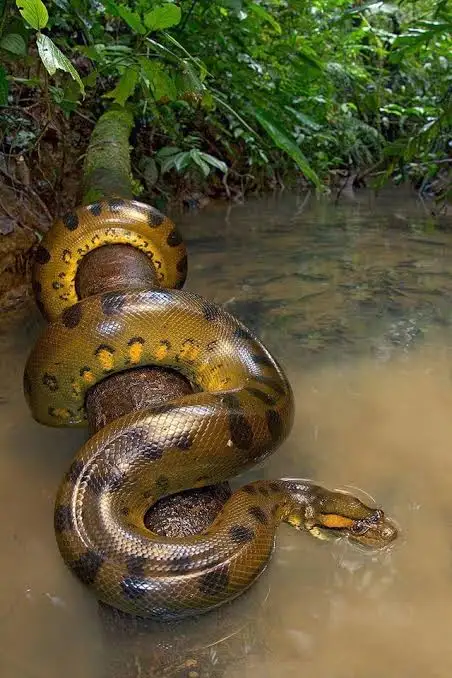
The green anaconda is perhaps the animal most people imagine when they hear about enormous creatures in the Amazon. It is one of the heaviest snakes in the world and has an exceptionally thick, muscular body. Green anacondas are found in wetlands, swamps, rivers, streams, flooded forests, and other areas where water is abundant.
Anacondas do not need to chase prey over long distances. Instead, they rely on ambush hunting. They spend considerable amounts of time in water, where their eyes and nostrils positioned high on the head allow them to remain partially submerged while watching for prey.
Large green anacondas can prey on fish, birds, turtles, caimans, capybaras, and other animals. Despite popular stories, they are not constantly hunting humans. Encounters with people are uncommon, and the snake generally prefers to avoid unnecessary confrontation.
Green anaconda size
Large individuals can potentially reach several meters in length, with exceptionally large females being dramatically heavier than males. Females are considerably larger than males, a phenomenon known as sexual size dimorphism.
Fun green anaconda facts
- Females are much larger than males.
- They are powerful swimmers.
- They can remain submerged for significant periods.
- They kill prey by constriction.
- They give birth to live young rather than laying eggs.
- Newborn anacondas are already capable of swimming and hunting.
- Their eyes and nostrils are positioned toward the top of the head for an aquatic lifestyle.
The green anaconda is therefore one of the best answers to what is the biggest animal in the rainforest when length and overall snake size are considered.
2. Amazonian Manatee

The Amazonian manatee is one of the heaviest mammals living in the Amazon basin. Unlike the feared image associated with some large Amazon animals, the manatee is a peaceful herbivore that spends much of its life eating aquatic vegetation.
Amazonian manatees inhabit rivers, lakes, flooded forests, and other freshwater environments. During periods of high water, they can move through flooded forest areas where aquatic plants become available.
Their streamlined bodies, paddle-like flippers, and powerful tails make them well adapted to aquatic environments. Although they are large, they are remarkably graceful swimmers.
Why is the Amazonian manatee so large?
Their large bodies provide several advantages in the water. A substantial body mass can help maintain energy reserves and allows these animals to survive periods when food availability changes.
Amazonian manatees are primarily herbivorous and may consume large quantities of aquatic plants.
Interesting Amazonian manatee facts
- They are completely adapted to freshwater environments.
- They can live in flooded forests during high-water periods.
- They are herbivores.
- Their closest living relatives include other manatees and the dugong.
- Calves are born underwater.
- They can use their flippers to manipulate food.
- Their large size contrasts with their peaceful behavior.
For travelers exploring the animals in Amazon rainforest Peru, seeing a manatee can be a rare and memorable experience because these animals are generally elusive.
3. Black Caiman
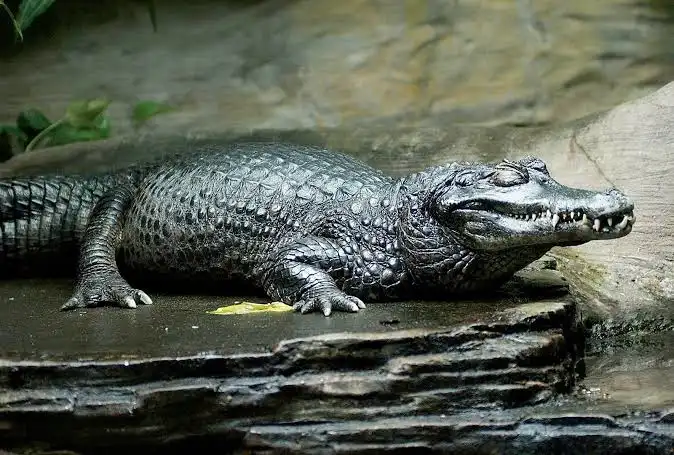
The black caiman is one of the largest predators in the Amazon. It is an enormous crocodilian capable of reaching impressive lengths and weights, particularly in protected habitats where older individuals have greater opportunities to survive.
Black caimans are strongly associated with rivers, lakes, flooded forests, lagoons, and wetlands. They are especially impressive at night, when their eyes can reflect light from a flashlight.
Young black caimans eat smaller aquatic animals, insects, crustaceans, and fish. As they grow, their diet expands to include larger fish, birds, turtles, mammals, and other prey.
Black caiman size
Large adults can reach several meters in length, with exceptionally large males becoming extremely heavy.
Their size makes them one of the most impressive animals that live in the Amazon, particularly when observed from a safe distance along a riverbank.
Unusual black caiman facts
- Their dark coloration helps camouflage them at night.
- They can remain nearly motionless while waiting for prey.
- Females protect their nests and young.
- Their jaws are extremely powerful.
- They are important apex predators in Amazonian aquatic ecosystems.
- They can consume surprisingly large prey.
4. South American Tapir
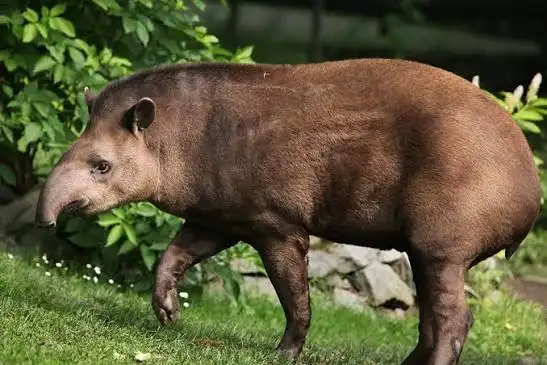
If you are asking for the biggest land animal in the Amazon rainforest, the answer is the South American tapir.
The South American tapir is a large, heavy-bodied mammal with a distinctive short trunk-like snout. It is often described as resembling a combination of a pig, horse, and elephant, although it is not closely related to pigs.
Tapirs are excellent swimmers and often live close to rivers, streams, lakes, and wetlands. They can move surprisingly quietly through dense rainforest despite their large size.
How big is an Amazon tapir?
A large adult can weigh well over 200 kilograms, with some individuals becoming considerably heavier. This makes the tapir the largest native land mammal in much of the Amazon basin.
Tapirs are primarily herbivorous. They consume leaves, fruits, aquatic vegetation, shoots, and other plant material.
Why tapirs are important to the Amazon
Tapirs are sometimes called gardeners of the forest because they consume fruits and move through large areas of rainforest. Seeds can pass through their digestive systems and later be deposited in different locations, helping disperse plants.
South American tapir facts
- They are excellent swimmers.
- They can run surprisingly fast when threatened.
- Their flexible snout helps them gather vegetation.
- They eat many types of fruits.
- They contribute to seed dispersal.
- Young tapirs have distinctive striped and spotted patterns.
- They are generally solitary animals.
For anyone interested in animals in Amazon rainforest Peru, the tapir is one of the most exciting large mammals to look for.
5. Arapaima

The arapaima is one of the largest freshwater fish associated with the Amazon basin. It is famous for its enormous body, large scales, powerful swimming ability, and unusual ability to breathe atmospheric air.
Arapaima live in freshwater environments including rivers, lakes, floodplains, and seasonally flooded forests. Their ability to gulp air allows them to survive in waters where dissolved oxygen levels can become very low.
How big can an arapaima get?
Large arapaima can exceed 2 meters in length, and exceptionally large specimens can become substantially longer and heavier.
Their huge scales are another remarkable feature. These scales help protect the fish from predators and provide a flexible but highly effective defensive covering.
What makes arapaima unusual?
Arapaima must regularly come to the surface to breathe air. This creates a characteristic sound and movement that experienced Amazonian fishermen and guides can recognize.
Fun arapaima facts
- They can breathe atmospheric air.
- They have large protective scales.
- They are powerful predators.
- They can survive in oxygen-poor water.
- They are among the largest freshwater fish in South America.
- They can jump or make powerful movements near the water’s surface.
- They are culturally and economically important in parts of the Amazon.
6. Giant River Otter
The giant river otter is the largest otter species in the world and one of the most fascinating predators of Amazonian waterways.
These highly social mammals live in family groups and spend much of their time swimming, hunting, grooming, and communicating. Their dark brown fur is often marked with distinctive pale patches around the throat and chest.
Unlike solitary predators such as jaguars, giant river otters are extremely social. A family group may work together to catch fish.
How big are giant river otters?
Adults can reach around 1.5 to 1.8 meters in total length, including the tail, and can weigh more than 20 kilograms.
They may look playful, but they are efficient predators. Fish form the majority of their diet, although they can also consume crustaceans and other aquatic animals.
Giant river otter facts
- They are the world’s largest otter species.
- They are highly social.
- They communicate using numerous vocalizations.
- They hunt primarily in water.
- Family groups cooperate while hunting.
- They are excellent swimmers.
- They can be surprisingly vocal.
In Peru, giant river otters are particularly associated with healthy lakes and rivers, making them an exciting species to encounter during wildlife-focused Amazon tours.
7. Jaguar
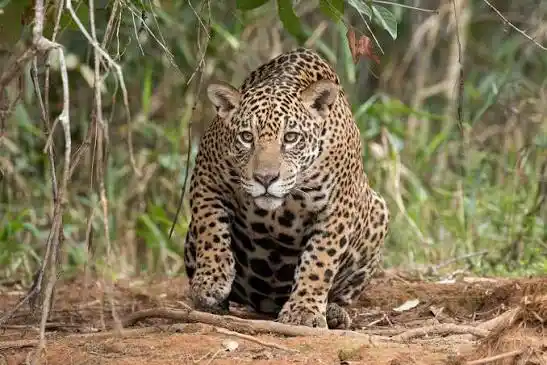
The jaguar is the largest cat in the Americas and one of the most powerful predators in the Amazon rainforest.
Jaguars are muscular animals with a compact body, powerful jaws, and distinctive rosette-patterned fur. Their strength allows them to hunt a remarkable variety of prey, including peccaries, deer, caimans, turtles, fish, and capybaras.
Unlike many cats, jaguars are comfortable around water and are excellent swimmers.
How big is an Amazon jaguar?
Large males can weigh well over 100 kilograms, although body size varies considerably between individuals and regions.
Jaguars are generally solitary and territorial. Because they are elusive and often active when humans are less likely to be present, seeing one in the wild is a rare experience.
What is unusual about jaguars?
One of the most remarkable features of the jaguar is its exceptionally powerful bite. Jaguars can use their jaws to penetrate the shells of turtles and deliver powerful bites to prey.
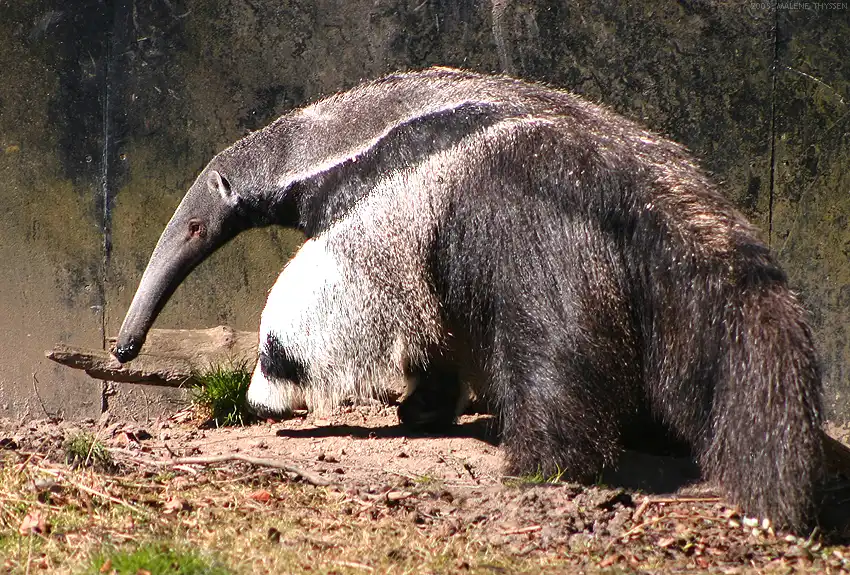
8. Giant Anteater
The giant anteater is one of the largest insect-eating mammals found in South America. It has an extraordinarily long snout, a huge bushy tail, and an extremely long tongue adapted for feeding on ants and termites.
Despite its unusual appearance, the giant anteater is perfectly adapted to its ecological niche.
How does a giant anteater eat?
It uses its powerful claws to break into insect nests and then rapidly extends its long tongue to collect ants and termites. It does not destroy every insect colony it visits, allowing some insects to survive and the colony to recover.
Giant anteater facts
- It can consume thousands of ants and termites in a day.
- Its tongue can extend remarkably far from its mouth.
- It has powerful front claws.
- It has poor eyesight but an excellent sense of smell.
- It can swim.
- Its enormous tail provides insulation and can help conceal the animal while resting.
Although it is not as heavy as a tapir or manatee, its unusual body design makes it one of the most recognizable Amazon rainforest animals.
9. Capybara
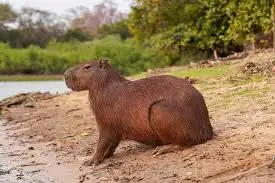
The capybara is the largest living rodent in the world and one of the most recognizable animals in the Amazon.
Capybaras are semi-aquatic animals that live around rivers, lakes, wetlands, and flooded forests. They are excellent swimmers and often escape predators by entering the water.
Their social behavior is another fascinating characteristic. Capybaras usually live in groups, and their communication includes whistles, barks, clicks, and other sounds.
How big is a capybara?
Adult capybaras can weigh more than 50 kilograms, with particularly large individuals reaching considerably greater weights.
Capybara fun facts
- They are the world’s largest rodents.
- They are excellent swimmers.
- They can remain underwater for several minutes.
- They live in social groups.
- Their webbed feet help them swim.
- They are herbivores.
- They frequently stay close to water.
Their combination of size, behavior, and unusual appearance makes the capybara one of the most popular animals in Amazon jungle destinations.
10. Lowland Paca
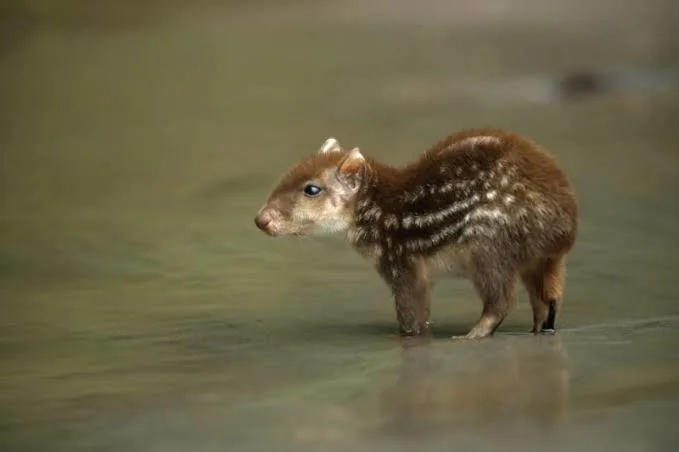
The lowland paca is another large Amazonian rodent, although considerably smaller than the capybara. It has a compact body with rows of white spots along its sides and is strongly associated with forest environments close to water.
Pacas are mainly nocturnal and spend much of their active period searching for fallen fruits, seeds, and other plant material.
Although they are not among the enormous animals of the Amazon, they are important members of the rainforest food web and provide prey for larger predators.
What Big Animals Live in the Amazon Rainforest?
The Amazon contains a surprising number of large animals despite its dense vegetation and complex environment. Some are land mammals, some live primarily in water, and others move between terrestrial and aquatic habitats.
Large mammals
Important large Amazonian mammals include:
- South American tapir
- Amazonian manatee
- Jaguar
- Giant anteater
- Capybara
- Giant river otter
- Lowland paca
- White-lipped peccary
- Collared peccary
- Red brocket deer
Large reptiles
Some of the largest reptiles include:
- Green anaconda
- Black caiman
- Spectacled caiman
- Yellow-spotted river turtle
Large fish
Amazonian rivers also contain impressive freshwater fish, including:
- Arapaima
- Large catfish species
- Giant freshwater stingrays
- Large predatory characins
This diversity explains why the phrase what big animals live in the Amazon rainforest has such a long answer.
Animals of the Amazon Rainforest: Why Are Some Species So Large?
Large body size can provide several advantages in the Amazon. For aquatic animals, size may help with swimming efficiency, energy storage, and predator defense. For large herbivores, a bigger digestive system can help process substantial quantities of vegetation.
However, being large is not always an advantage. Large animals require more food and space, and they may reproduce more slowly than smaller species.
The Amazon therefore contains an extraordinary range of body sizes, from microscopic organisms to animals weighing hundreds of kilograms.
Animals That Live in the Amazon: More Than Just Giant Species
The Amazon rainforest is not defined only by its largest animals. Its ecological importance comes from the interaction of thousands of species.
Among the most recognizable animals that live in the Amazon are:
- Jaguars
- Sloths
- Monkeys
- Toucans
- Macaws
- Anacondas
- Caimans
- River dolphins
- Tapirs
- Capybaras
- Giant river otters
- Anteaters
- Armadillos
- Poison dart frogs
- Tree frogs
- Turtles
- Freshwater fish
- Bats
- Harpy eagles
Many smaller animals perform functions that are just as important as those of the giants. Insects pollinate plants, birds distribute seeds, fungi recycle nutrients, and predators regulate prey populations.
Animals in the Amazon Rainforest Peru
The Peruvian Amazon contains some of the most biologically diverse rainforest habitats in the world. Areas around Madre de Dios, Tambopata, Manu, and the Amazonian lowlands support remarkable wildlife diversity.
Visitors searching for animals in Amazon rainforest Peru may encounter species such as:
- Capybaras
- Caimans
- Giant river otters
- Tapirs
- Howler monkeys
- Spider monkeys
- Squirrel monkeys
- Brown capuchins
- Dusky titi monkeys
- Sloths
- Hoatzins
- Macaws
- Toucans
- Kingfishers
- Harpy eagles
- Anacondas
- Tarantulas
- Tree frogs
- River turtles
The exact species observed depends on habitat, season, water levels, weather, time of day, and luck.
Animales Amazonas Peru
Los animales del Amazonas peruano representan una de las mayores concentraciones de biodiversidad del planeta. En lugares como Madre de Dios y Tambopata se pueden encontrar mamíferos, reptiles, aves, anfibios, peces e innumerables especies de insectos.
Entre los animales más llamativos se encuentran el jaguar, la sachavaca o tapir, el capibara, la nutria gigante, el caimán negro, diferentes especies de monos, guacamayos, tucanes y numerosas especies de peces.
One of the most fascinating aspects of the Peruvian Amazon is that the largest animals are not necessarily the easiest to see. A giant tapir may disappear silently into thick vegetation, while a small monkey can be obvious from the canopy.
Where Are the Biggest Amazon Animals Found?
Large Amazonian animals use different habitats depending on their biology.
Rivers and lakes
Aquatic giants such as manatees, arapaima, giant river otters, caimans, and anacondas are strongly associated with waterways.
Flooded forests
During high-water periods, enormous areas of forest become temporarily flooded. These environments provide food and movement corridors for fish, reptiles, birds, and mammals.
Terra firme forest
Areas that do not regularly flood support animals such as jaguars, tapirs, monkeys, anteaters, and many other terrestrial species.
Riverbanks and oxbow lakes
These areas can be especially productive for wildlife because water, vegetation, fruit, and aquatic prey occur close together.
10 Fascinating Facts About the Biggest Animals in the Amazon
1. The biggest animal depends on the measurement
The longest animal is not necessarily the heaviest. A long, slender anaconda and a shorter but much heavier manatee demonstrate why “biggest” needs to be defined.
2. The largest land mammal is a herbivore
The South American tapir is a peaceful plant eater despite its enormous body.
3. One of the Amazon’s largest animals is a rodent
The capybara belongs to the rodent family and is the world’s largest living rodent.
4. Some giant animals spend most of their lives underwater
Manatees, giant river otters, caimans, and large fish demonstrate how much of Amazonian biodiversity exists below the water’s surface.
5. The largest snake gives birth to live young
Green anacondas do not build nests and lay eggs like many other reptiles. Females give birth to live young.
6. The Amazon has enormous fish
The rainforest is often associated with mammals and reptiles, but some of its rivers contain fish exceeding two meters in length.
7. Tapirs help regenerate the forest
By eating fruits and transporting seeds, tapirs can contribute to the natural regeneration and distribution of vegetation.
8. Giant river otters are highly social
Their family groups cooperate, communicate, and hunt together.
9. Jaguars love water
Jaguars are strong swimmers and may hunt aquatic or semi-aquatic prey.
10. Seeing a huge animal can be harder than seeing a tiny one
Large Amazonian animals can be remarkably elusive. Dense vegetation, nocturnal activity, camouflage, and enormous territories mean that size does not necessarily make an animal easy to find.
What Is the Most Dangerous Big Animal in the Amazon?
“Biggest” and “most dangerous” are completely different categories.
Large predators such as jaguars, black caimans, and green anacondas are capable of injuring humans, but encounters are generally uncommon. Most Amazonian wildlife avoids humans when given the opportunity.
A more useful way to think about danger is to consider the animal’s behavior, habitat, and circumstances. A large predator defending offspring or territory is potentially more dangerous than an animal that normally avoids human contact.
For wildlife observation, maintaining distance and following local guides and safety instructions are essential.
What Is the Rarest Big Animal to See in the Amazon?
Some of the largest Amazon animals are also among the most difficult to observe.
The jaguar is famously elusive, while the tapir can disappear almost silently into dense vegetation. Giant river otters may be easier to locate in productive lakes and rivers, but their populations are patchy and sightings are never guaranteed.
Manatees can also be difficult to see because they spend much of their time underwater.
This creates one of the great paradoxes of Amazon wildlife: the bigger the animal, the more impressive the sighting can be, but size does not make the animal easier to find.
Why the Amazon Has So Many Different Large Animals
The Amazon rainforest is an enormous interconnected ecosystem containing rivers, lakes, wetlands, flooded forests, swamps, grasslands, and upland rainforest.
This environmental variety creates opportunities for animals with very different lifestyles.
A giant anaconda can specialize in aquatic ambush hunting, while a tapir can browse through forest vegetation. A giant river otter can specialize in fish, while a jaguar can hunt across multiple habitats.
The result is an ecosystem where large animals can coexist because they use different resources and occupy different ecological niches.
Biggest Amazon Animal vs. Biggest Rainforest Animal
It is important to distinguish between the Amazon rainforest and rainforests around the world.
If the question is what is the biggest animal in the rainforest, there is no universal answer because rainforests occur across South America, Africa, and Asia.
The Amazon has its own collection of large species, while Asian rainforests contain animals such as elephants, rhinos, and large bovids that do not naturally occur in the Amazon.
Therefore, the biggest animal in the Amazon rainforest should be compared specifically with species native to the Amazon basin rather than with every rainforest animal on Earth.
The Biggest Animals of the Amazon Are Not Always the Most Important
Size is visually impressive, but ecological importance cannot be measured simply in kilograms.
A tiny insect may pollinate hundreds of plants. A small bird may disperse seeds across the forest. A frog may consume large numbers of insects. A fungus may recycle nutrients essential to plant growth.
At the same time, large species can have major ecological effects. Tapirs transport seeds, jaguars regulate prey populations, caimans influence aquatic food webs, and large herbivores affect vegetation.
The Amazon functions because all these organisms interact.
Frequently Asked Questions About the Biggest Animal in the Amazon Rainforest
What is the biggest animal in the Amazon rainforest?
There is no single answer because it depends on the measurement. The Amazonian manatee is among the heaviest mammals, the South American tapir is the largest land mammal, the green anaconda is one of the longest and heaviest snakes, and the black caiman is one of the largest reptiles.
What is the biggest animal that lives in the Amazon rainforest?
If discussing the largest land mammal, the South American tapir is the best answer. If aquatic animals are included, the Amazonian manatee can become substantially heavier, while the green anaconda is famous for its enormous length and body mass.
What is the biggest animal in the rainforest?
There is no universal rainforest champion because different rainforest regions contain different species. For the Amazon specifically, the answer depends on whether size means weight, length, or land-based body size.
What big animals live in the Amazon rainforest?
Large animals include green anacondas, Amazonian manatees, black caimans, South American tapirs, arapaima, jaguars, giant river otters, giant anteaters, and capybaras.
Are there big animals in the Peruvian Amazon?
Yes. The Peruvian Amazon contains many large species, including tapirs, jaguars, capybaras, black caimans, giant river otters, anacondas, large fish, and several species of monkeys and birds.
What is the largest land animal in the Amazon?
The South American tapir is the largest native land mammal in the Amazon basin.
What is the largest snake in the Amazon?
The green anaconda is the largest snake species associated with the Amazon and is particularly notable for its combination of length, girth, and body mass.
Is the anaconda the biggest animal in the Amazon?
It can be considered the biggest in certain measurements, particularly among snakes and in terms of exceptional length and mass. However, an Amazonian manatee or tapir can outweigh many individual anacondas.
Is the jaguar the biggest predator in the Amazon?
The jaguar is the largest cat and one of the most powerful terrestrial predators in the Amazon. However, aquatic predators such as large black caimans can reach greater body sizes.
Final Answer: What Is the Biggest Animal in the Amazon Rainforest?
The answer depends on what you mean by biggest animal in the Amazon rainforest.
For the largest land mammal, look to the South American tapir. For one of the heaviest Amazonian mammals, the Amazonian manatee is a leading candidate. For the largest and heaviest snake, the green anaconda is the famous giant of Amazonian wetlands. The black caiman represents one of the rainforest’s largest reptiles, while the arapaima is one of its most impressive freshwater fish.
The Amazon’s giants are extraordinary not simply because of their size, but because of the different ways they have evolved to survive in one of the most complex ecosystems on Earth. Some swim through flooded forests, some silently hunt from riverbanks, some climb through the canopy, and others disappear into dense vegetation.
From the massive tapir walking through the forest to the enormous anaconda hidden beneath the water, the animals of the Amazon rainforest demonstrate that size takes many forms. And in the Peruvian Amazon, every river, lake, trail, and flooded forest offers the possibility of encountering one of these remarkable giants.