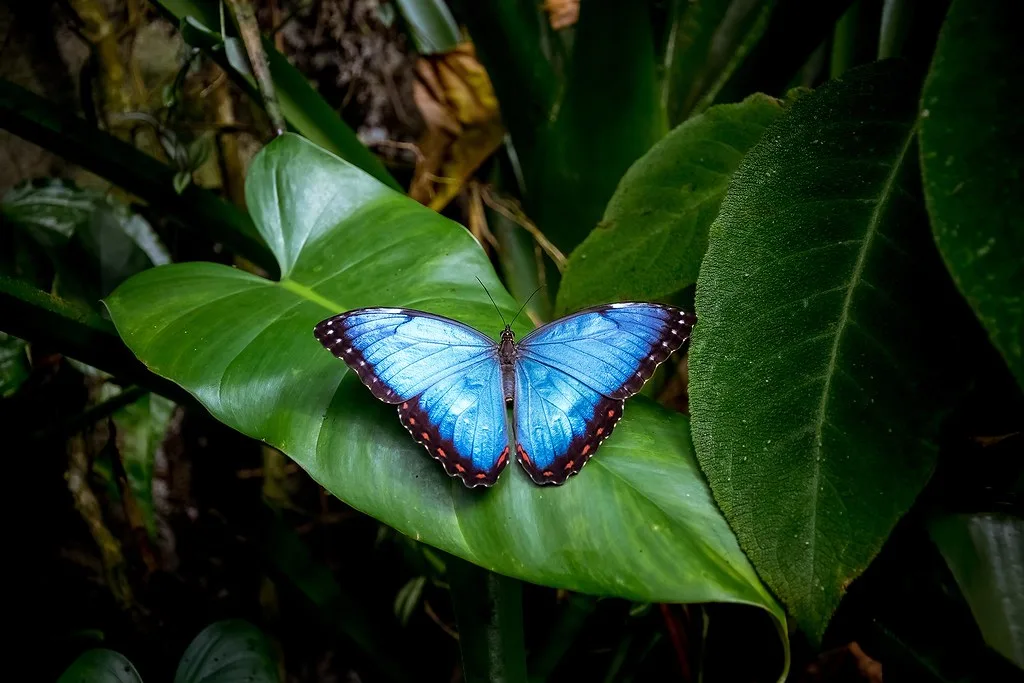
The blue morpho butterfly is one of the most recognizable butterflies in the world, famous for its brilliant blue wings, impressive size, and almost magical appearance in flight. Native to tropical regions of Central and South America, blue morphos belong to the genus Morpho, a group of large forest butterflies known for their striking colors and distinctive wing patterns. Although people often picture one particular butterfly when they hear “blue morpho,” several closely related Morpho species can appear blue, and the exact scientific identification depends on the species being discussed. The blue morpho is interesting not only because of its appearance but also because of its unusual optical coloration, forest lifestyle, caterpillar stage, life cycle, feeding behavior, and cultural symbolism. This comprehensive guide covers blue morpho butterfly facts, habitat, diet, size, scientific name, life cycle, female blue morphos, drawing ideas, tattoos, meaning, prices, children’s-media references, and some unusual facts that make this butterfly particularly fascinating.
What Is a Blue Morpho Butterfly?
A blue morpho butterfly is a large tropical butterfly belonging to the genus Morpho. Its most famous feature is the intense blue coloration visible on the upper surfaces of its wings. The color is especially spectacular when a morpho flies through a shaft of sunlight in the rainforest, causing the wings to appear almost metallic or electric blue. Despite this brilliant appearance, the blue color is not produced in the same way as the colors of many blue flowers or blue pigments.
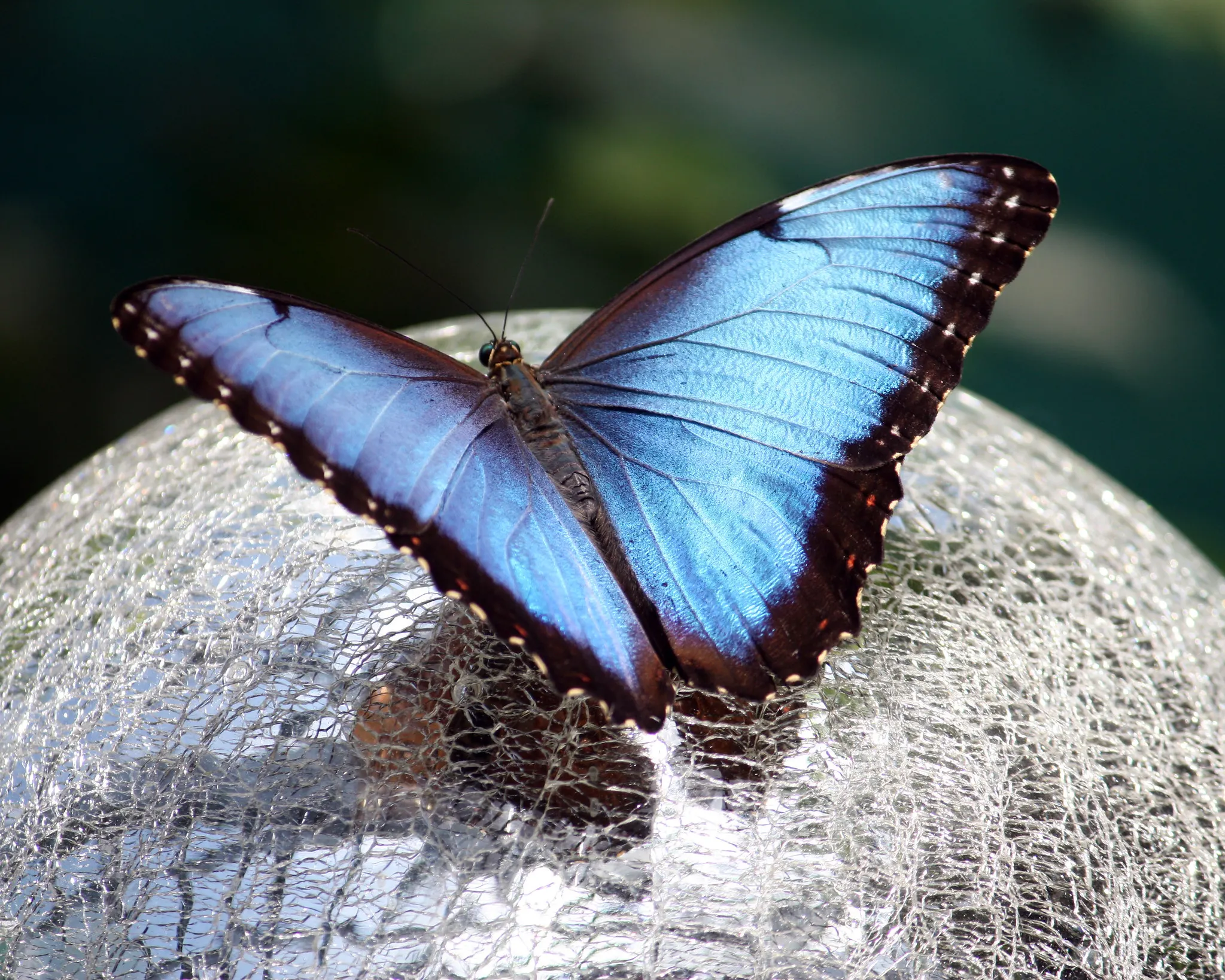
Microscopic structures on the wing scales interact with light to create structural coloration, producing the remarkable blue appearance for which morphos are famous.
Blue morphos spend much of their lives in tropical forests, where their large wings allow them to glide and maneuver through vegetation. Their flight can seem erratic when they are avoiding predators, yet they can also move quickly through forest openings. The contrast between the brilliant upper wing surfaces and the darker, patterned underside is important because the butterfly can effectively change its visual appearance when it closes its wings. This combination of beauty, behavior, camouflage, and optical physics makes the blue morpho an especially interesting subject for nature study, artwork, educational projects, and photography.
Blue Morpho Butterfly Scientific Name
The phrase blue morpho butterfly scientific name does not refer to only one species because “blue morpho” is a common name used for multiple species and forms within the genus Morpho. One of the best-known species associated with the name is Morpho menelaus, commonly called the Menelaus blue morpho. Other blue-colored morphos are also found within the genus, so identifying a particular butterfly accurately may require examining its wing pattern, geographic distribution, size, and other characteristics.
Why the Scientific Name Matters
Scientific names are useful because common names can vary between countries and regions. Two butterflies may both be called blue morphos while belonging to different species. The genus Morpho itself is strongly associated with large Neotropical butterflies, many of which have spectacular blue or blue-green coloration. When discussing a particular blue morpho, therefore, it is better to identify the species when possible rather than assuming every blue morpho belongs to Morpho menelaus.
Blue Morpho Butterfly Size
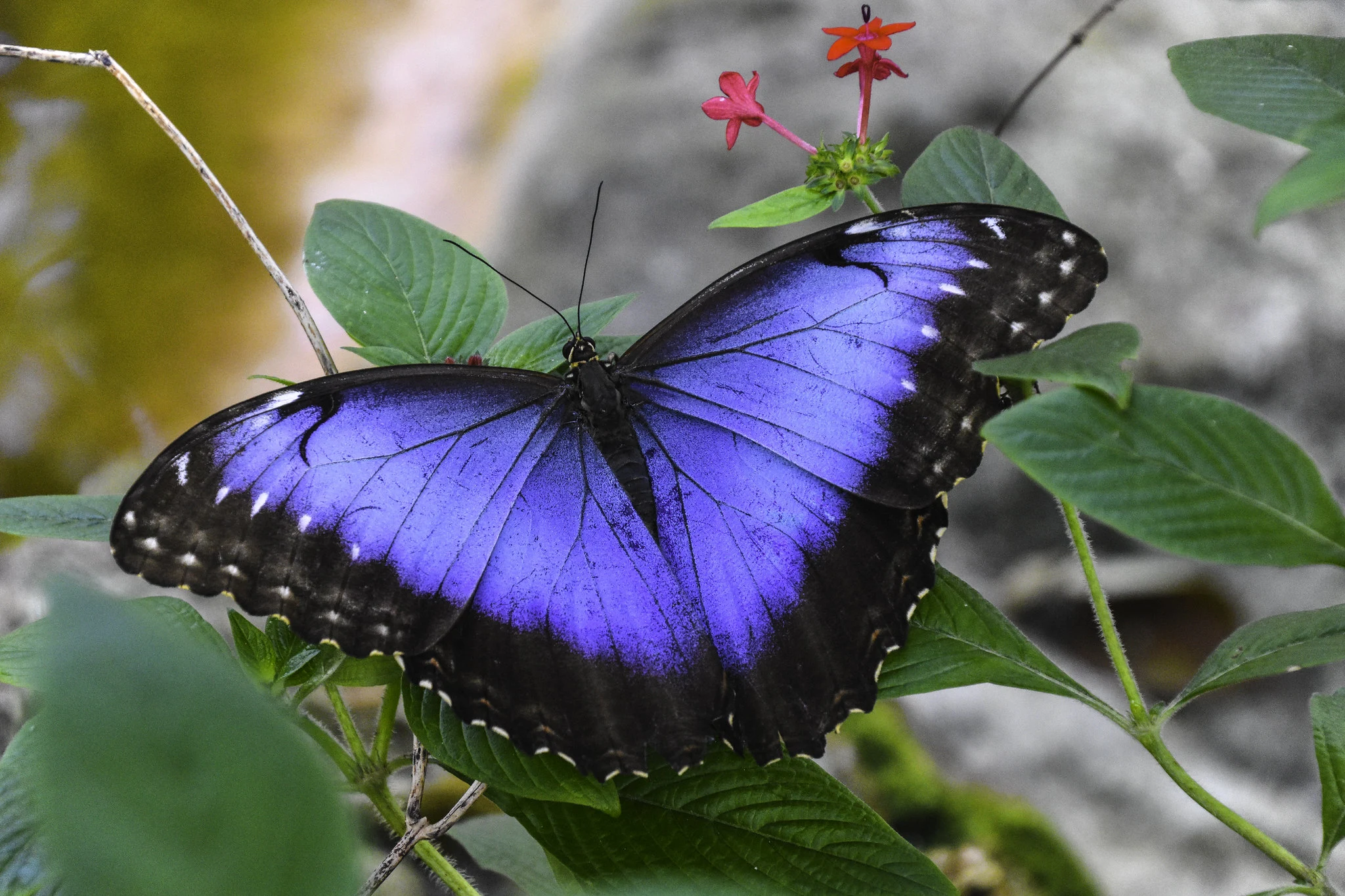
The blue morpho butterfly size is one reason the insect is so visually impressive. Depending on the species and individual, blue morphos can have a wingspan of roughly 3 to 8 inches (about 7.5 to 20 centimeters), although exact measurements vary. Some individuals can therefore look enormous compared with familiar garden butterflies. Their broad wings and strong flight muscles make them well adapted to moving through tropical forest environments.
Why Blue Morphos Look So Large
Wing shape contributes significantly to their impressive appearance. A blue morpho has broad wings that can flash bright blue when opened and then seemingly disappear into darker forest colors when closed. The large surface area also makes their optical coloration particularly noticeable. When sunlight strikes the wing scales at the right angle, the blue can appear extraordinarily vivid, sometimes seeming brighter than many artificial blue colors.
Blue Morpho Butterfly Habitat
The blue morpho butterfly habitat is primarily associated with tropical forests of Central and South America. Different species occur in different parts of the Neotropical region, including areas of the Amazon Basin and other humid forest ecosystems. Blue morphos are particularly associated with forest environments where suitable food plants, shelter, moisture, and opportunities for reproduction are available.
Life in the Rainforest
A blue morpho may spend its time flying through different levels of forest vegetation rather than remaining constantly in one location. Adults can be seen in forest clearings, along paths, near streams, and around areas where sunlight penetrates the canopy. The forest provides both resources and protection. The butterfly’s large blue wings are conspicuous when viewed from above or from certain angles, but the darker underside of the wings can provide a very different visual impression when the butterfly rests.
Blue Morpho Butterfly and Tropical Ecosystems
Blue morphos are part of complex rainforest food webs. Their caterpillars consume plant material, while adults participate in nutrient cycling and serve as prey for other animals. Their presence can also contribute to the ecological richness of tropical forests. Protecting rainforest habitat is therefore important not only for blue morphos but also for countless other insects, birds, mammals, reptiles, plants, fungi, and microorganisms living in the same ecosystem.
Blue Morpho Butterfly Coral Island
The search phrase blue morpho butterfly coral island is commonly connected with children’s educational entertainment and fictional adventure settings rather than a recognized biological habitat called “Coral Island.” A particularly notable connection comes from the children’s animated series Go, Diego, Go!, where blue morphos appear in an adventure context. It is important to distinguish fictional locations or story settings from the real-world habitat of blue morpho butterflies. In nature, blue morphos are associated with tropical forests of the Americas rather than being naturally restricted to a specific fictional Coral Island.
Blue Morpho Butterfly Life Cycle
The blue morpho butterfly life cycle follows the familiar stages of complete metamorphosis: egg, caterpillar, pupa, and adult butterfly. Each stage looks remarkably different from the others, meaning that a blue morpho is almost unrecognizable as the same animal while it is a caterpillar or chrysalis. This transformation is one of the most fascinating aspects of the species.
1. Egg
The life cycle begins when a female blue morpho lays eggs on or near suitable host plants. The tiny eggs provide the developing embryo with the resources needed to begin life. After development is complete, a caterpillar emerges and begins the next stage of the cycle.
2. Blue Morpho Butterfly Caterpillar
The blue morpho butterfly caterpillar looks completely different from the brilliant adult. Instead of having large blue wings, the caterpillar has a soft-bodied, segmented form adapted for feeding and growth. Blue morpho caterpillars generally feed on leaves of suitable host plants. Like other butterfly larvae, they must grow substantially before they can transform into the pupal stage.
3. Pupa or Chrysalis
After reaching the appropriate stage of development, the caterpillar stops feeding and undergoes metamorphosis inside a chrysalis. During this period, its body is reorganized into the adult butterfly form. Wings, antennae, adult legs, reproductive structures, and other features develop during this extraordinary transformation.
4. Adult Butterfly
The adult eventually emerges from the chrysalis. At first, its wings are soft and folded. The newly emerged butterfly must allow its wings to expand and harden before it can fly normally. Once the wings are ready, the adult begins feeding, searching for mates, avoiding predators, and eventually reproducing to begin the cycle again.
A Blue Morpho Butterfly Is Born
The phrase “a blue morpho butterfly is born” is often used to describe the moment a newly developed adult emerges from its chrysalis. Strictly speaking, the butterfly’s life began earlier as an egg and then a caterpillar, but the emergence from the chrysalis is the dramatic moment people commonly imagine as the butterfly being “born.” A newly emerged blue morpho is especially striking because the bright blue wing surfaces gradually become visible as the wings unfold and dry. This transformation is a powerful example of complete metamorphosis and is often used in educational material to explain how insects can undergo dramatic changes during development.
Blue Morpho Butterfly Diet
The blue morpho butterfly diet changes dramatically between the larval and adult stages. The caterpillar is primarily a plant eater, consuming leaves from appropriate host plants, while the adult generally obtains liquid nutrients rather than chewing leaves. Understanding this difference is essential when asking what does a blue morpho butterfly eat?
What Does a Blue Morpho Butterfly Eat?
Adult blue morphos commonly feed on liquids such as fruit juices, particularly from overripe or fermenting fruit. They can also obtain nutrients from other organic sources and mineral-rich materials. Unlike caterpillars, adult butterflies do not have chewing mouthparts designed for eating leaves. Instead, they use a long, straw-like proboscis to take in liquids.
What Does the Blue Morpho Caterpillar Eat?
The caterpillar feeds on leaves from suitable host plants. Its main objective during this stage is growth. Caterpillars can consume significant quantities of plant material because they need to accumulate the energy and nutrients required for metamorphosis and adult development. The precise host plants can differ among Morpho species and populations, so it is not accurate to assume that every blue morpho caterpillar eats exactly the same plants.
Do Blue Morphos Drink Nectar?
Blue morphos are not best known as specialized nectar-feeders. Compared with many brightly colored garden butterflies that regularly visit flowers, adult morphos are strongly associated with feeding on juices from ripe or decaying fruit and other liquid sources. This feeding behavior helps explain why a blue morpho may be encountered in tropical forest environments even when it is not visiting flowers.
Female Blue Morpho Butterfly
The female blue morpho butterfly can differ from the male in coloration, wing pattern, size, and overall appearance depending on the species. In many blue morpho species, males are famous for their intensely bright blue upper wings, while females may have broader, more complex patterns and less extensive blue coloration. However, sexual dimorphism varies, so photographs or illustrations should be interpreted in the context of the particular species.
Male and Female Differences
The bright blue coloration of males is one of the most recognizable features associated with blue morphos. Females may have more muted or contrasting coloration, sometimes including brown, yellow, cream, or other markings. These differences are not simply decorative; coloration can be associated with courtship, species recognition, camouflage, and other biological functions.
Blue Morpho Butterfly Facts
There are many blue morpho butterfly facts that make this insect stand out among butterflies. Its extraordinary blue color, large wings, tropical lifestyle, unusual feeding habits, and dramatic metamorphosis all contribute to its popularity.
- Blue morphos belong to the genus Morpho.
- Several different Morpho species can have brilliant blue coloration.
- Their blue appearance is largely produced by microscopic wing structures rather than ordinary blue pigment.
- They are native to tropical regions of the Americas.
- They can have very large wingspans compared with many familiar butterflies.
- Caterpillars and adults have very different diets.
- Adult morphos can feed on juices from ripe or fermenting fruit.
- Their wing undersides can be much darker and more cryptically patterned than their blue upper surfaces.
- The blue flash of a flying morpho can make the butterfly difficult for predators to track.
- Their life cycle includes egg, caterpillar, chrysalis, and adult stages.
- The caterpillar may have defensive structures and chemical defenses that discourage predators.
- Different species and populations can vary considerably in appearance.
Blue Morpho Butterfly Fun Facts
The most memorable blue morpho butterfly fun facts involve its optical coloration and unusual behavior. The brilliant blue is not simply a layer of blue paint on the wings. Instead, microscopic structures on the scales reflect and interact with light in a way that produces the blue appearance. This is called structural coloration. As the viewing angle changes, the intensity and appearance of the blue can change dramatically, creating the famous flashing effect seen when a morpho flies through the forest.
Another fun fact is that the butterfly can look almost like a completely different insect when it closes its wings. The bright blue upper surfaces are hidden, exposing the comparatively dark underside. This contrast can help the butterfly avoid detection while resting. The wings are therefore not merely beautiful; their different surfaces form part of a sophisticated survival strategy.
Why Is the Blue Morpho Butterfly Blue?
The blue morpho’s color is one of the most unusual features of the insect. Microscopic structures within its wing scales interact with incoming light. These structures are arranged in ways that strongly reflect particular wavelengths associated with blue while reducing the visibility of many other wavelengths. The result is an intense blue appearance that can look metallic or almost luminous.
Structural Coloration Explained
Structural coloration differs from ordinary pigment-based coloration. A pigment absorbs some wavelengths and reflects others because of its chemical properties. Structural color, by contrast, depends heavily on the physical arrangement of microscopic structures. Blue morpho wings demonstrate how extremely small structures can produce an effect visible from many meters away.
Blue Morpho Butterfly Meaning
The blue morpho butterfly meaning varies depending on culture and personal interpretation. Because butterflies generally symbolize transformation, rebirth, freedom, change, and beauty, the blue morpho is often given additional associations with peace, imagination, spirituality, confidence, mystery, and personal transformation. These meanings are symbolic rather than biological facts, and interpretations can differ widely.
The blue morpho’s transformation from caterpillar to butterfly makes it particularly suitable as a symbol of growth and change. Its blue wings can also inspire associations with the sky, water, calmness, openness, and freedom. For this reason, blue morpho imagery is popular in artwork, jewelry, decorative designs, tattoos, educational illustrations, and personal symbols.
Blue Morpho Butterfly Tattoo
A blue morpho butterfly tattoo is often chosen because the insect combines dramatic visual beauty with strong symbolic associations. The bright blue wings can create a highly recognizable tattoo design, while the butterfly’s metamorphosis can represent personal change, resilience, freedom, or a new stage of life.
Blue Morpho Tattoo Design Ideas
A realistic blue morpho can emphasize the intricate wing scales and natural shape. A more artistic design can combine the butterfly with flowers, rainforest leaves, stars, geometric patterns, watercolor effects, or other symbols. Some designs show the butterfly with its wings open to emphasize the brilliant blue, while others depict the underside to create a more unusual natural-history style.
Because the real butterfly’s blue coloration comes from structural effects, reproducing it accurately in tattoo ink is an artistic interpretation rather than an exact duplication of the living insect. A skilled artist can nevertheless create a convincing impression through different shades of blue, highlights, gradients, black detailing, and carefully arranged wing patterns.
Blue Morpho Butterfly Drawing
A blue morpho butterfly drawing can be created as either a realistic scientific illustration or a simplified artistic picture. The key identifying characteristics to capture are the large wings, broad wing shape, strong blue upper surfaces, darker wing edges or markings, delicate body, and characteristic antennae.
How to Draw a Blue Morpho Butterfly
If you are wondering how to draw a blue morpho butterfly, begin with the body and use it as the central axis for the composition. Lightly sketch two large symmetrical upper wings, followed by the lower wing sections. Refine the wing edges and add the distinctive blue surface. For a realistic drawing, use several shades of blue rather than a single flat color. Add darker edges and subtle gradients to create depth.
Step-by-Step Drawing Guide
- Draw a narrow central body with a slightly rounded head.
- Add two thin antennae extending from the head.
- Sketch the large upper wings symmetrically.
- Add the lower wings and refine their curved edges.
- Establish the darker wing borders and natural markings.
- Fill the main wing areas with rich blue tones.
- Add lighter blue highlights where light would strike the wing scales.
- Add fine lines and texture to suggest microscopic wing scales.
- Shade the body and legs with darker natural colors.
- Add a rainforest, flower, branch, or plain background depending on the desired artistic style.
A children’s drawing can simplify these steps into large blue wings, a small body, antennae, and a few decorative markings. A scientific illustration should instead focus on proportions, wing venation, scale patterns, and accurate species identification.
Blue Morpho Butterfly Price
The phrase blue morpho butterfly price can refer to several completely different things, so there is no single universal price. A live butterfly, legally preserved specimen, framed educational display, handmade artwork, print, jewelry item, or decorative object can each have a very different value. Prices also depend on condition, rarity, species, provenance, craftsmanship, legality, and whether the item is a genuine specimen or merely an artistic representation.
A real butterfly specimen may also be subject to wildlife and conservation regulations depending on where it was collected, sold, transported, or imported. Therefore, a high price does not necessarily indicate a rare species, and a low price does not necessarily mean an item is authentic. Anyone considering purchasing a physical blue morpho specimen should verify that it was obtained and sold legally and ethically. For ordinary consumers, artwork and educational reproductions are often much simpler alternatives to owning an actual specimen.
Go Diego Go Blue Morpho Butterfly
The Go Diego Go blue morpho butterfly connection comes from the animated children’s adventure series Go, Diego, Go!, which introduced young audiences to rainforest animals through fictionalized conservation adventures. The program uses animal characters and dramatic story situations to teach children about wildlife, habitats, observation, and helping animals.
Go Diego Go: A Blue Morpho Butterfly Is Born
The phrase “Go Diego Go, A Blue Morpho Butterfly Is Born” is associated with the show’s educational entertainment approach to butterfly metamorphosis. In a children’s story, the emergence of a blue morpho can be presented as an exciting transformation that helps explain the difference between a caterpillar, chrysalis, and adult butterfly. While the animated story is designed for young viewers and may simplify biological details, the central idea reflects real biology: a morpho develops through complete metamorphosis.
The episode-style concept is especially useful for children because a butterfly’s life cycle is easier to understand when the stages are connected to a character and an adventure. A caterpillar that later becomes a large blue butterfly gives children a memorable way to visualize one of nature’s most dramatic transformations.
Unusual Blue Morpho Butterfly Facts
The blue morpho becomes even more interesting when its less obvious characteristics are considered. Its wings are not simply colorful surfaces; they are highly specialized optical structures. A morpho can also appear to vanish visually when it closes its wings because the brilliant blue upper surface is replaced by a darker underside. This rapid change can make the butterfly difficult to follow in the complex visual environment of a rainforest.
Another unusual fact is that the famous blue color is not necessarily visible from every angle. Structural coloration depends on how light interacts with microscopic structures, so the butterfly can appear dramatically brighter or darker depending on illumination and viewing position. This is why a blue morpho flying through sunlight can produce a sudden blue flash that seems to appear and disappear almost instantly.
The caterpillar is another source of surprises. It does not resemble the adult butterfly at all, and its defensive appearance and behavior contrast strongly with the delicate image associated with the adult. The transformation demonstrates how radically insect bodies can change during metamorphosis.
Blue Morpho Butterfly Predators and Defense
Like most butterflies, blue morphos face predators at multiple stages of their lives. Eggs, caterpillars, pupae, and adults can all be vulnerable to different predators. Birds and other insect-eating animals may attack adults, while caterpillars can be eaten by insects, reptiles, birds, and other forest animals.
The butterfly’s contrasting wing surfaces may help with predator avoidance. When flying, the blue upper wings can create a rapidly moving flash that makes the butterfly difficult to track. When resting with its wings closed, the darker underside can make it less conspicuous against vegetation and the complex shadows of the forest.
Blue Morpho Butterfly and Conservation
Blue morphos depend on healthy tropical ecosystems, making habitat protection an important part of their long-term survival. Tropical forests face pressures from deforestation, land conversion, fragmentation, fires, and other environmental changes. Because morphos require suitable plants during their larval stages and appropriate forest conditions as adults, major changes to their habitat can affect their populations.
Conservation is therefore about much more than protecting a beautiful butterfly. Preserving rainforest habitat protects entire ecological communities. Blue morphos are one visible example of the enormous biological diversity supported by tropical forests.
Blue Morpho Butterfly vs. Other Blue Butterflies
The blue morpho is sometimes confused with other blue butterflies because many unrelated butterflies have blue wings. What distinguishes morphos is the combination of large size, characteristic wing shape, Neotropical distribution, and the extraordinary structural blue coloration associated with the genus Morpho.
Not every blue butterfly is a morpho, and not every morpho has the same shade or extent of blue. Species identification should therefore rely on multiple characteristics rather than color alone. This distinction is particularly important in scientific illustrations, museum displays, educational materials, and wildlife photography.
Why Is the Blue Morpho Butterfly So Popular?
The blue morpho has become famous because it combines several qualities that naturally attract human attention: enormous wings, vivid blue coloration, an unusual optical mechanism, dramatic metamorphosis, tropical habitat, and cultural symbolism. It looks almost unreal, yet its appearance is produced by precise biological structures that evolved naturally.
For children, the butterfly provides an accessible introduction to metamorphosis and rainforest ecology. For artists, it offers an extraordinary subject because the wings contain strong colors and symmetrical forms. For scientists, it demonstrates structural coloration and adaptation. For conservationists, it represents the ecological richness of tropical forests.
Frequently Asked Questions About the Blue Morpho Butterfly
Is a blue morpho butterfly actually blue?
Yes, its wings can appear intensely blue, but the famous color is primarily structural rather than simply pigment-based. Microscopic structures in the wing scales interact with light to produce the brilliant appearance.
Where do blue morpho butterflies live?
Blue morphos are native to tropical regions of Central and South America. Different species have different geographic ranges, with many associated with tropical rainforest environments.
What does a blue morpho butterfly eat?
Adults commonly obtain liquid nutrients from ripe or fermenting fruit and other sources. Caterpillars primarily consume leaves from appropriate host plants.
How big is a blue morpho butterfly?
Depending on the species and individual, a blue morpho can have a wingspan of approximately 3 to 8 inches, making it considerably larger than many familiar butterflies.
Are female blue morpho butterflies blue?
Females can have blue coloration, but they are often less uniformly brilliant blue than males and may have more extensive contrasting markings. The exact appearance depends on the species.
What does the blue morpho butterfly symbolize?
It is commonly associated symbolically with transformation, freedom, beauty, change, imagination, and personal growth. These meanings are cultural or personal interpretations rather than scientific characteristics.
Is the blue morpho butterfly rare?
The answer depends on the species and location. “Blue morpho” covers several species, and conservation status, population size, and local abundance can differ. The name alone is not enough to determine whether a particular morpho is rare.
Can a blue morpho butterfly be kept as a pet?
Butterflies have specialized biological requirements and short adult lives, so they are not comparable to conventional household pets. Any captive rearing or possession of specimens should also comply with applicable wildlife regulations and ethical standards.
Final Thoughts
The blue morpho butterfly is much more than a beautiful blue insect. It represents an extraordinary combination of biology, optical physics, rainforest ecology, metamorphosis, and cultural imagination. From the tiny egg and plant-eating caterpillar to the chrysalis and spectacular adult, every stage of its life demonstrates a different aspect of adaptation. Its brilliant blue wings are created by microscopic structures that manipulate light, while its darker wing undersides can help it blend into the forest when resting. Its large size, unusual feeding habits, sexual differences, and dramatic transformation explain why it has become such a popular subject for books, children’s programs, drawings, tattoos, educational projects, and wildlife enthusiasts.
Whether you encounter the blue morpho through a rainforest experience, a scientific illustration, an animated story such as Go, Diego, Go!, or a piece of artwork, the butterfly offers a memorable lesson about transformation and biodiversity. Its most remarkable quality may be that its extraordinary appearance is not an illusion created by human technology: it is the result of natural structures, evolution, and the complex ecological world of tropical forests. The blue morpho therefore remains one of the most captivating examples of how nature can combine beauty, survival, and scientific complexity in a single living creature.