The Amazon rainforest is home to one of the most diverse animal communities on Earth, and many of its species are omnivores—animals capable of eating both plant and animal foods. From monkeys and birds to mammals, reptiles, fish, and insects, Amazonian omnivores occupy an enormous range of habitats and use flexible diets to survive seasonal changes in food availability. Their ability to switch between fruits, seeds, insects, eggs, small vertebrates, fungi, nectar, and other foods makes them important parts of the rainforest food web.
Understanding omnivores in the Amazon also reveals something fascinating about rainforest ecology: animals do not always fit neatly into categories. A species may eat mostly fruit during one season but consume insects, eggs, fish, or other animal foods when those resources become easier to find. This flexibility allows many Amazonian animals to survive in an environment where food can change dramatically from one month to another.
What Does Omnivorous Mean?
An omnivore is an animal that naturally obtains food from both plant and animal sources. The word comes from Latin roots meaning essentially “eating everything.” Unlike a strict herbivore, which depends primarily on plants, or a strict carnivore, which specializes in animal prey, an omnivore has a broader dietary strategy.
Being an omnivore does not mean that an animal eats equal quantities of plants and animals. One species might eat 80–90% plant material and only occasionally consume insects or eggs, while another may regularly combine fruits, seeds, insects, fish, and small vertebrates. The important characteristic is the ability to use foods from both sides of the traditional plant-animal divide.
Why Omnivory Is Useful in the Amazon
The Amazon rainforest changes constantly. Fruits mature at different times, insects become more abundant after rain, fish populations respond to changing water levels, and many animals reproduce seasonally. An omnivorous diet provides flexibility when one food source becomes scarce.
Advantages of being an omnivore
- Access to a wider range of foods
- Greater flexibility during seasonal shortages
- Ability to exploit temporary food sources
- Reduced dependence on a single plant or prey species
- Greater ability to adapt to changing habitats
- Opportunities to occupy different ecological niches
This flexibility is particularly valuable in tropical forests, where enormous biological diversity creates thousands of potential food sources but where individual foods may only be available for short periods.
Omnivores in the Amazon Rainforest
Omnivores in the Amazon rainforest live in virtually every major habitat, including the high canopy, understory, forest floor, river margins, flooded forests, wetlands, oxbow lakes, bamboo stands, and seasonally inundated areas. Some are primarily terrestrial, some spend most of their lives in trees, and others move between land and water.
Amazonian omnivores include familiar animals such as capuchin monkeys, tamarins, coatis, peccaries, giant river otters in their broader dietary flexibility, turtles, macaws, toucans, tinamous, and many fish species. Several predators also occasionally consume fruit or other plant-derived foods, illustrating how difficult it can be to place rainforest species into rigid categories.
List of Omnivores in the Amazon Rainforest
There is no single definitive list because omnivory exists across many animal groups, and dietary classifications can change according to species, age, habitat, season, and available food. Nevertheless, the following animals are useful examples of Amazonian omnivores or species with strongly omnivorous diets.
Mammal Omnivores
- White-faced capuchin
- Brown capuchin
- Squirrel monkeys
- Common woolly monkeys
- Some tamarin species
- Coatis
- Kinkajous
- Peccaries
- Giant anteater relatives and other opportunistic feeders with mixed diets
- Raccoon-like relatives such as crab-eating raccoons
- Giant otters, which are primarily carnivorous but demonstrate dietary flexibility within animal prey
Among these, capuchin monkeys and coatis are particularly recognizable examples because they regularly combine fruits, seeds, insects, eggs, and other animal foods.
Bird Omnivores
Many Amazonian birds combine plant foods with insects or other animal material.
- Toucans
- Aracaris
- Macaws
- Parrots
- Crows and jays in the broader corvid-like ecological category
- Hoatzins, with an unusual primarily folivorous diet but occasional animal-material ingestion
- Tinamous
- Cuckoos
- Certain tanagers
- Woodpeckers with mixed seasonal diets
Bird omnivory is particularly interesting because a species can change its diet according to what is available in different parts of the forest.
Reptile Omnivores
Some Amazonian turtles and tortoises have diets that include both plant and animal material.
- Yellow-footed tortoise
- Red-footed tortoise
- Several freshwater turtle species
- Some river turtles and their juveniles
Young reptiles can sometimes eat proportionally more animal foods than adults, while mature individuals may consume more vegetation, fruits, flowers, or fallen plant material.
Fish Omnivores
The Amazon contains an enormous number of fish species with highly specialized feeding strategies. Some species are omnivores, consuming combinations of fruits, seeds, insects, crustaceans, algae, and smaller animals.
Examples include:
- Pacu
- Several characins
- Some catfish
- Certain cichlids
- Other floodplain fish with flexible feeding strategies
The pacu is one of the most famous examples because it can consume fruits and seeds that fall into Amazonian rivers while also eating insects, crustaceans, and other food.
Invertebrate Omnivores
Omnivory is not limited to large animals. Numerous Amazonian insects, spiders, crustaceans, and other invertebrates consume a mixture of plant and animal material.
Ants are particularly important. Although many species specialize in specific foods, numerous tropical ants are opportunistic and may consume fruits, nectar, seeds, insects, dead animals, and other organic material.
Amazonian Omnivores and Their Habitats
The habitat of an Amazonian omnivore strongly influences what it eats. A monkey living high in the canopy encounters fruit, flowers, leaves, seeds, bird eggs, and insects, whereas a coati searching along the forest floor may find fallen fruit, beetle larvae, eggs, frogs, lizards, and carrion.
Canopy Omnivores
The rainforest canopy is one of the richest feeding environments in the Amazon. Fruits, flowers, seeds, insects, and bird nests are concentrated among the branches.
Monkeys such as capuchins can travel through the canopy searching for seasonal fruits while using their dexterous hands to investigate bark, tree holes, and other hiding places. They may extract insects or raid nests when an opportunity appears.
Birds such as toucans and macaws also exploit canopy resources. Their large bills allow them to process fruits and seeds, while many species supplement plant foods with insects, eggs, or other animal material.
Forest-Floor Omnivores
The forest floor provides a completely different collection of resources.
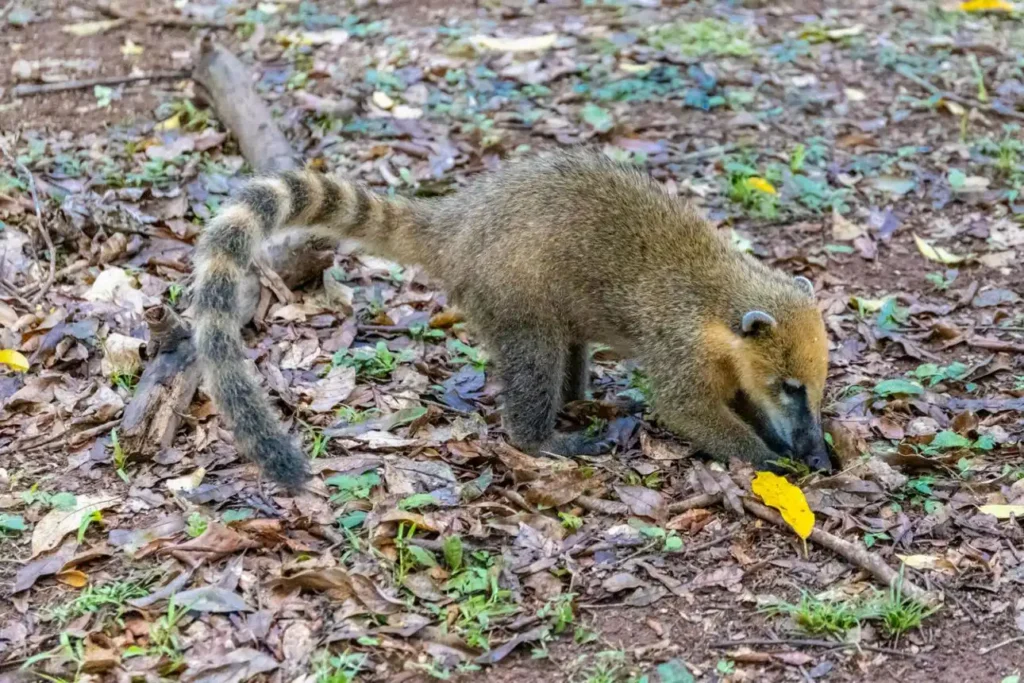
Coatis are excellent examples of forest-floor omnivores. They use their long snouts to investigate leaf litter, soil, fallen logs, and vegetation. Their diet can include:
- Fallen fruit
- Insects
- Beetle larvae
- Eggs
- Small reptiles
- Amphibians
- Small vertebrates
- Carrion
Peccaries also spend substantial time searching the forest floor. Depending on species and habitat, they consume fruits, seeds, roots, fungi, leaves, and other available foods.
River and Wetland Omnivores
Water dramatically expands the Amazon’s food web. During seasonal flooding, rivers can enter forests and create enormous temporary feeding areas.
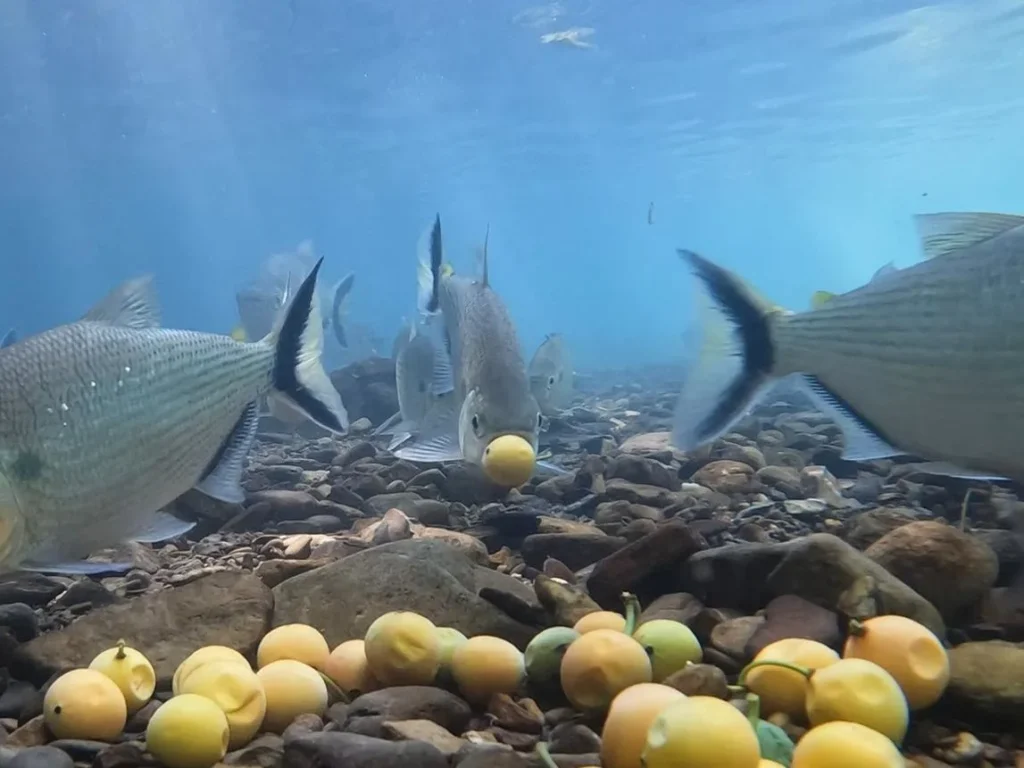
Fish such as pacu may consume fruits and seeds that fall directly into the water. This creates a remarkable connection between terrestrial forests and aquatic ecosystems.
Freshwater turtles may also exploit mixed diets containing aquatic plants, fallen fruits, invertebrates, carrion, and other available foods.
Common Omnivorous Animals of the Amazon
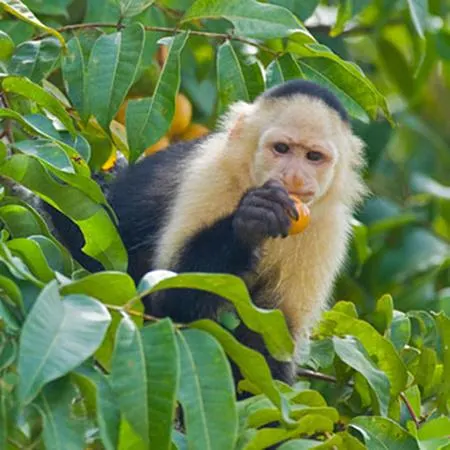
Capuchin Monkeys
Capuchins are among the best-known omnivorous monkeys of the Amazon. They have powerful jaws, dexterous hands, and remarkable intelligence, allowing them to exploit many food types.
A capuchin may eat ripe fruit in the morning, search tree bark for insects, open a hard seed, investigate a bird nest, and later consume a small vertebrate. Their intelligence is closely connected with their ability to locate difficult foods.
An unusual capuchin ability
Capuchins are famous for manipulating objects and using tools in some populations. They can use stones or other objects to access foods that would otherwise be difficult to obtain. This gives them access to resources that less dexterous animals may be unable to exploit.
Coatis
Coatis are highly adaptable members of the raccoon family. Their long noses and flexible bodies are perfectly suited to searching through leaf litter.
They consume fruit, insects, eggs, frogs, lizards, small animals, and other foods. Their diet changes according to season and habitat.
Peccaries
Peccaries are often associated with plant foods, but their feeding behavior is more flexible than the word “herbivore” suggests. They consume fruits, seeds, roots, fungi, and other vegetation while sometimes exploiting animal-derived food.
Their movements can also influence the forest because they disturb soil and transport seeds while traveling and feeding.
Toucans and Aracaris
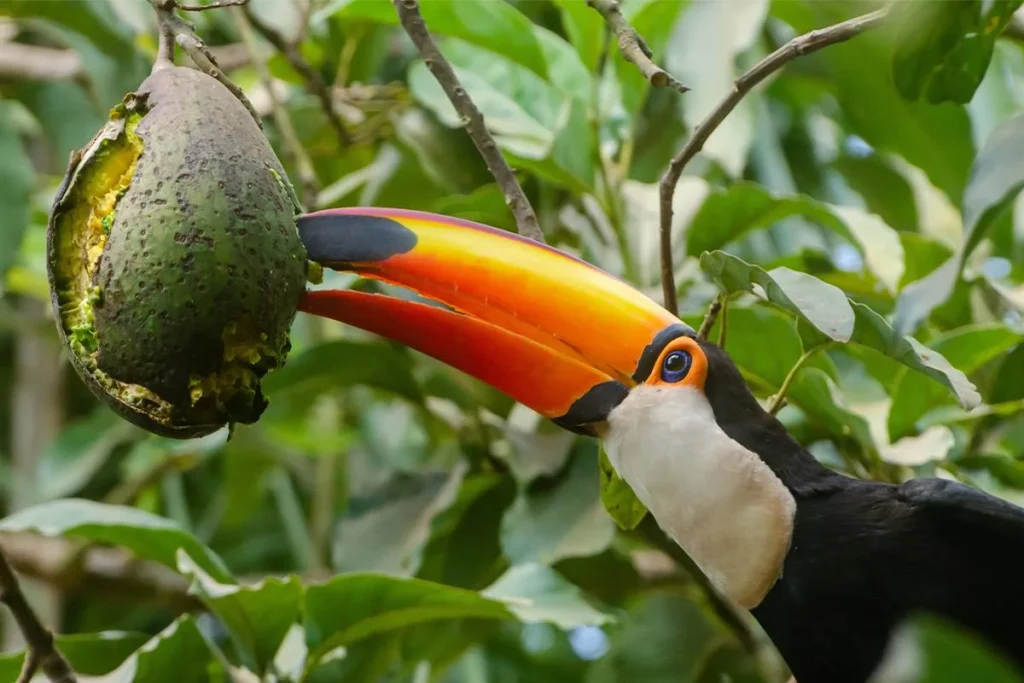
Toucans are strongly associated with fruit, but many species also consume insects, small reptiles, amphibians, eggs, and nestlings when opportunities arise.
Their feeding behavior demonstrates why dietary classification can be complicated in tropical ecosystems: an animal can be predominantly frugivorous while still functioning as an omnivore.
Pacu Fish
Pacu are among the most fascinating Amazonian omnivorous fish. Their powerful teeth and jaws allow them to process hard plant material, including seeds and fruits.
During periods of flooding, fruit-producing trees can effectively become aquatic food sources. Fruits falling from branches may land directly in the river, where fish consume them.
What Do Omnivores in the Amazon Eat?
The diet of Amazonian omnivores is incredibly diverse. Depending on the species, an individual animal may consume dozens or even hundreds of different food items throughout the year.
Fruits and Seeds
Fruits are among the most important foods available to Amazonian omnivores. Tropical trees produce an extraordinary variety of fruits, ranging from tiny berries to large, fleshy fruits.
Omnivores consume:
- Berries
- Palm fruits
- Figs
- Tropical drupes
- Seeds
- Nuts
- Soft fruit pulp
- Fallen fruits
- Flowers and flower parts
Fruit availability can change rapidly. When a particular tree begins producing large quantities of fruit, multiple species may gather around it.
Seeds are more than food
Seeds are important because they connect feeding behavior with forest regeneration. Animals may consume fruits and carry seeds away from the parent tree before depositing them elsewhere.
Some seeds pass through digestive systems and remain viable. In this way, an animal looking for lunch can unintentionally become a seed disperser.
Insects and Small Animals
Animal foods provide concentrated protein and other nutrients.
Amazonian omnivores may consume:
- Ants
- Termites
- Beetles
- Caterpillars
- Grasshoppers
- Crickets
- Spiders
- Snails
- Crabs
- Frogs
- Lizards
- Small fish
- Small mammals
- Nestling birds
Insects are particularly useful because they can be found throughout the forest, including inside bark, under leaves, within rotten wood, and in tree cavities.
Why insects matter
For a fruit-eating monkey, bird, or mammal, insects can provide a valuable nutritional supplement when fruit is temporarily scarce. Rainforest animals have evolved many different techniques for finding them.
Some tear apart rotten wood, others inspect leaves, while some use their fingers, beaks, tongues, or snouts to reach hidden prey.
Eggs and Other Food Sources
Eggs are highly nutritious and can become an attractive seasonal food for omnivores. Animals capable of climbing trees or exploring cavities may locate eggs belonging to birds or reptiles.
Other foods can include:
- Carrion
- Mushrooms and fungi
- Nectar
- Flowers
- Tree sap
- Honey
- Crustaceans
- Fish
- Mineral-rich soil
- Organic material
This ability to exploit unexpected food resources is one of the major advantages of omnivory.
How Many Omnivores Live in the Amazon?
There is no scientifically meaningful single number for how many omnivorous animals live in the Amazon rainforest. The Amazon contains an enormous number of animal species, and dietary classifications overlap.
It is possible to identify individual omnivorous species, but calculating the total number of omnivorous animals or individuals across the entire Amazon Basin would be extremely difficult. Animal populations fluctuate naturally according to rainfall, flooding, fruit production, reproduction, migration, predation, disease, and habitat conditions.
More importantly, omnivory exists on a spectrum.
An animal might be:
Primarily herbivorous → omnivorous → primarily carnivorous
rather than fitting perfectly into one category.
A species that eats mostly fruit but occasionally insects can reasonably be described as omnivorous, while another may eat animal foods regularly but also exploit fruit or seeds.
Omnivores vs. Herbivores and Carnivores
The three traditional feeding categories are useful for understanding ecological relationships, but Amazonian animals demonstrate why nature is more complicated than simple labels.
| Feeding strategy | Main foods | Amazon example |
|---|---|---|
| Herbivore | Plants, leaves, fruits, seeds | Many leaf-eating mammals |
| Omnivore | Plants + animals | Capuchins, coatis |
| Carnivore | Mainly animals | Jaguars, many predatory fish |
| Frugivore | Primarily fruit | Many tropical birds and monkeys |
| Insectivore | Primarily insects | Many specialized birds and mammals |
Omnivores vs. Herbivores
Herbivores generally specialize in plant material. Some have digestive systems adapted to breaking down difficult plant compounds.
Omnivores have greater flexibility and can supplement plant foods with insects, eggs, fish, or small animals. This can be especially advantageous during periods when fruit or vegetation is less abundant.
Omnivores vs. Carnivores
Carnivores are generally adapted to obtain nutrients from animal prey. Jaguars, for example, are highly specialized predators.
An omnivore usually lacks the extreme specialization of a strict predator and can switch between multiple food categories.
Why Omnivores Are Important to the Amazon Ecosystem
Omnivores are not simply animals that eat a little of everything. They can perform several important ecological functions simultaneously.
Seed Dispersal
Fruit-eating omnivores may carry seeds away from parent plants. Some seeds are transported considerable distances before being deposited.
This helps plants colonize new areas and reduces competition between seedlings and mature parent trees.
Population Control
By eating insects, eggs, amphibians, and other small animals, omnivores can influence populations of other species.
Their feeding relationships form numerous connections within the food web.
Nutrient Cycling
Animals consume plant material and animal prey, move through the forest, and eventually return nutrients to the environment through waste and decomposition.
This contributes to the continuous movement of nutrients through rainforest ecosystems.
Connecting Different Habitats
Some omnivores move between canopy, forest floor, river margins, and flooded forests. Their movements connect otherwise separated parts of the ecosystem.
This is particularly important in the Amazon, where seasonal flooding can temporarily transform terrestrial forests into aquatic habitats.
Interesting Facts About Amazon Omnivores
1. Some “fruit eaters” are actually omnivores
A toucan or monkey may appear to be a fruit specialist, but closer observation can reveal insects, eggs, frogs, lizards, or other animal foods in its diet.
2. The Amazon’s rivers can become extensions of the forest
When floodwaters rise, fruit from forest trees can fall directly into the water. Fish such as pacu exploit this unusual connection between trees and rivers.
3. Diet can change with the seasons
An animal may consume large quantities of fruit when trees are producing heavily but rely more heavily on insects, seeds, or other foods when fruit availability decreases.
4. Young animals may have different diets
Juveniles sometimes require foods with higher concentrations of protein and may consume proportionally more insects or animal material than adults.
5. Flooding changes the menu
Seasonal flooding dramatically expands aquatic habitats. It also allows terrestrial plants and aquatic animals to interact in ways that are impossible during low-water periods.
6. Omnivores can be surprisingly intelligent
Many omnivorous animals must locate, recognize, manipulate, and process very different types of food. This can favor behavioral flexibility and problem-solving ability.
Capuchins are an excellent example of an Amazon animal whose feeding ecology is closely connected with intelligence and dexterity.
7. A rainforest meal can come from another habitat
An Amazonian omnivore may eat a fruit produced in the canopy, an insect living under bark, a frog near a stream, and a fish caught at the edge of a river—all within the same general territory.
8. Some omnivores help create future forests
When fruit-eating animals move seeds through the forest, they help determine where future trees can grow. Their feeding behavior can therefore influence forest composition generations into the future.
Unusual Omnivores and Unexpected Feeding Behavior
One of the most interesting aspects of Amazonian ecology is discovering animals that do not behave exactly as people expect.
Fish that eat fruit
Pacu demonstrate that eating fruit is not exclusively a terrestrial behavior. When rivers rise into flooded forests, these fish can consume fruits and seeds from trees.
Birds that eat animals
Many birds commonly considered fruit eaters supplement their diets with insects, eggs, frogs, lizards, or nestlings.
Mammals that search underwater
Some omnivorous mammals explore stream margins and shallow water for aquatic food, demonstrating how dietary flexibility can blur the boundary between terrestrial and aquatic ecosystems.
Seasonal omnivory
Perhaps the most unusual feature is that an animal’s diet can effectively change with the rainforest calendar. The same individual may depend on different foods during different periods of the year.
Amazon Omnivores and the Rainforest Food Web
The Amazon food web is extraordinarily complex. Rather than a simple chain where one animal eats another, thousands of feeding relationships overlap.
A single fruit tree may feed:
Tree → fruit → monkey → predator
but also:
Tree → fruit → insect → bird → predator
and:
Tree → fallen fruit → beetle → frog → snake
An omnivore can participate in several of these pathways simultaneously.
This makes omnivores particularly important because they connect different levels of the food web. A capuchin, for example, can consume plant material as well as insects and small animals, placing it in multiple ecological relationships.
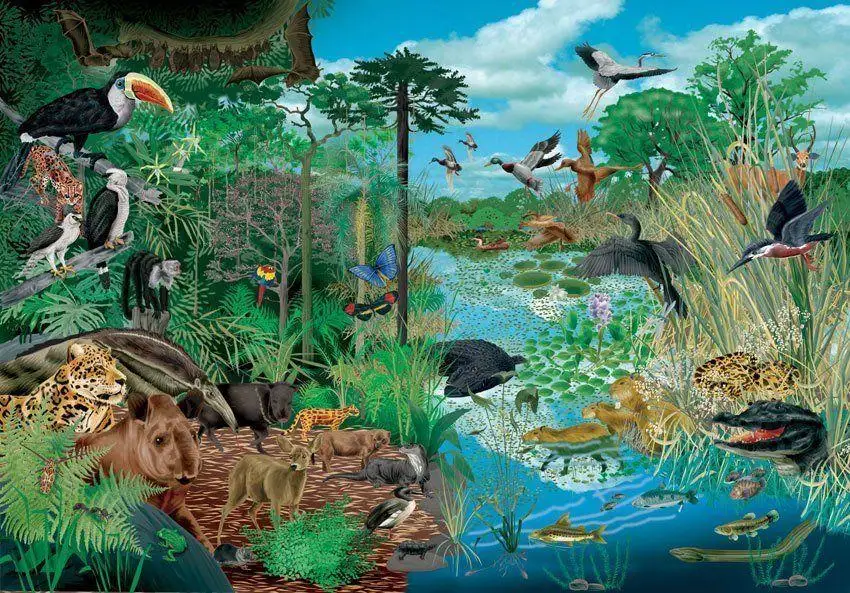
How Climate and Habitat Changes Can Affect Amazon Omnivores
Food flexibility can help omnivores cope with environmental variation, but flexibility does not make them immune to habitat change.
Deforestation can remove fruit-producing trees, nesting sites, water sources, and animal prey. Habitat fragmentation can also prevent animals from moving between areas containing different seasonal resources.
Changes in rainfall and river levels can alter fruit production, insect abundance, fish movements, and floodplain habitats. Because many Amazonian species depend on seasonal cycles, disruptions to those cycles may affect feeding behavior.
The ability to eat many foods may therefore help an omnivore survive short-term shortages, but it cannot completely compensate for the loss of a functioning ecosystem.
Omnivores in the Amazon: A Wildlife-Watching Perspective
For visitors exploring the Amazon rainforest, omnivores can be among the most interesting animals to observe because they often show active feeding behavior.
Capuchins may investigate branches and tree holes, coatis may search through leaf litter, toucans may move between fruiting trees, and fish may gather beneath trees during periods of fruit production.
Wildlife watching becomes particularly rewarding when you observe what an animal is doing rather than simply identifying the species.
Look for:
- An animal searching under leaves
- Monkeys investigating tree cavities
- Birds feeding on fruit
- Fish gathering below fruiting trees
- Coatis digging through soil
- Animals carrying or processing food
- Groups following seasonal food sources
- Feeding interactions between several species
These behaviors reveal the ecological role of each animal much better than a species name alone.
Frequently Asked Questions About Omnivores in the Amazon
What is an omnivore?
An omnivore is an animal capable of obtaining food from both plant and animal sources. Omnivores can eat combinations of fruits, seeds, leaves, insects, eggs, fish, small vertebrates, fungi, and other foods.
What are some omnivores in the Amazon rainforest?
Examples include capuchin monkeys, coatis, peccaries, several Amazonian birds, pacu and other flexible-feeding fish, and various turtles and invertebrates.
Are monkeys in the Amazon omnivores?
Many Amazonian monkeys have omnivorous or highly flexible diets. Capuchins are a particularly good example because they consume fruits and seeds while also eating insects, eggs and small animals.
Are toucans omnivores?
Yes, many toucans have diets dominated by fruit but also consume insects, eggs, nestlings, amphibians, reptiles, and other animal foods.
What is the most common food eaten by Amazon omnivores?
There is no single food eaten by all Amazonian omnivores. Fruit, seeds, insects, and other small animals are among the most important resources, but diets vary greatly by species and season.
Do Amazon omnivores eat fish?
Some do. Certain omnivorous mammals and birds may consume fish, while several Amazonian fish species themselves have omnivorous diets.
Do omnivores eat plants?
Yes. Plant foods are a fundamental part of omnivorous diets. Fruits, seeds, flowers, leaves, nectar, fungi, and other plant-associated foods can all be important.
Do omnivores eat meat?
Many do, although “meat” may mean very different things depending on the animal. An omnivore might eat insects, eggs, fish, frogs, lizards, carrion, or small mammals rather than hunting large prey.
Are omnivores important to the Amazon rainforest?
Absolutely. They can disperse seeds, control insect and small-animal populations, transport nutrients, and connect different parts of the rainforest food web.
Can an animal change from herbivore to omnivore?
Dietary categories are not always fixed. Some animals considered primarily herbivorous may consume animal material opportunistically, while young animals can have different diets from adults. Classification depends on the species’ normal feeding behavior.
Why are there so many omnivores in the Amazon?
The Amazon provides enormous dietary diversity. Thousands of plant species produce fruits, seeds, flowers, and other resources, while insects, fish, amphibians, reptiles, birds, and mammals provide animal foods. A flexible diet allows animals to exploit this changing resource landscape.
Final Thoughts: The Remarkable Diversity of Amazon Omnivores
Omnivores in the Amazon rainforest demonstrate how adaptable wildlife can be in one of the world’s most complex ecosystems. From capuchin monkeys searching tree cavities for insects to coatis investigating the forest floor, toucans supplementing fruit with animal foods, and pacu consuming fruits that fall into flooded rivers, omnivorous animals occupy an extraordinary variety of ecological niches.
Their diets are not simply a mixture of plants and animals. They are closely connected to seasonality, rainfall, flooding, fruit production, insect abundance, habitat structure, reproduction, and competition. An omnivore’s menu can change dramatically as the rainforest changes around it.
Perhaps the most fascinating lesson is that Amazonian wildlife does not always fit neatly into categories. “Herbivore,” “carnivore,” and “omnivore” are useful ways to understand feeding strategies, but the real rainforest is much more dynamic. Animals adapt their diets, exploit unexpected opportunities, and connect different habitats through their movements.
Every fruit eaten, seed transported, insect captured, or egg discovered represents another connection in the enormous Amazon food web. In this sense, omnivores are not merely animals with varied diets—they are important ecological connectors that help keep the rainforest functioning as an interconnected living system.
Leave a Reply