The Amazon rainforest is one of the most biologically diverse places on Earth, providing habitat for thousands of mammals, birds, reptiles, amphibians, fish, and insects. However, many endangered Amazon animals are facing increasing pressure from deforestation, habitat fragmentation, hunting, illegal wildlife trafficking, mining, pollution, fires, climate change, and changes to rivers and wetlands.
The phrase endangered animals in the Amazon rainforest covers a wide range of species and conservation situations. Some are officially classified as Endangered, while others are Vulnerable or Near Threatened but are experiencing serious population declines in particular parts of the Amazon.
This guide brings together the most important keyword topics related to endangered Amazon animals, including an endangered Amazon animals list, the top 10 endangered animals in the Amazon rainforest, species threatened by deforestation, conservation facts, unusual wildlife facts, and the question of how many Amazon animals are actually endangered.
Endangered Animals in the Amazon Rainforest
The Amazon is not simply one continuous forest. It contains flooded forests, rivers, oxbow lakes, swamps, bamboo forests, palm wetlands, seasonally dry forests, upland rainforest, river islands, and enormous areas of interconnected habitat. Each environment supports different animals, which means that the destruction of one habitat can have a particularly serious effect on specialized species.
Some endangered rainforest animals depend on very large territories, while others require specific rivers, nesting trees, food plants, or undisturbed forest. Large predators such as jaguars need extensive habitat, while aquatic species such as giant otters and river dolphins depend on healthy waterways.
What Does “Endangered” Actually Mean?
“Endangered” is a specific conservation category and should not be used to describe every Amazon animal that is experiencing a threat.
Conservation assessments generally distinguish between several levels of concern:
- Critically Endangered – facing an extremely high risk of extinction in the wild.
- Endangered – facing a very high risk of extinction in the wild.
- Vulnerable – facing a high risk of becoming endangered.
- Near Threatened – not currently in a threatened category but approaching one or likely to do so without conservation action.
- Least Concern – currently considered at comparatively lower global risk.
This distinction is particularly important when discussing the most endangered animals in the Amazon rainforest. A species can be Vulnerable globally while having a population in a particular Amazon region that is under much greater pressure.
Why the Amazon Is So Important for Endangered Species
The Amazon functions as a giant ecological network. Forest trees provide food and nesting sites, rivers transport nutrients and connect habitats, wetlands provide breeding grounds, and predators regulate populations throughout the ecosystem.
When a forest is divided into isolated fragments, animals may no longer be able to move between populations. This can reduce genetic diversity, make animals more vulnerable to hunting, and make it harder for species to recover after population declines.
Endangered Amazon Animals List
There is no scientifically objective “top 10 endangered animals in the Amazon rainforest” because species have different conservation statuses, geographic distributions, and threats. Instead, the following list highlights ten Amazon animals that are particularly important from a conservation perspective.
Some are officially classified as Endangered, while others are Vulnerable or Near Threatened and should therefore be described as threatened or conservation-concern species, rather than automatically calling every one “Endangered.”
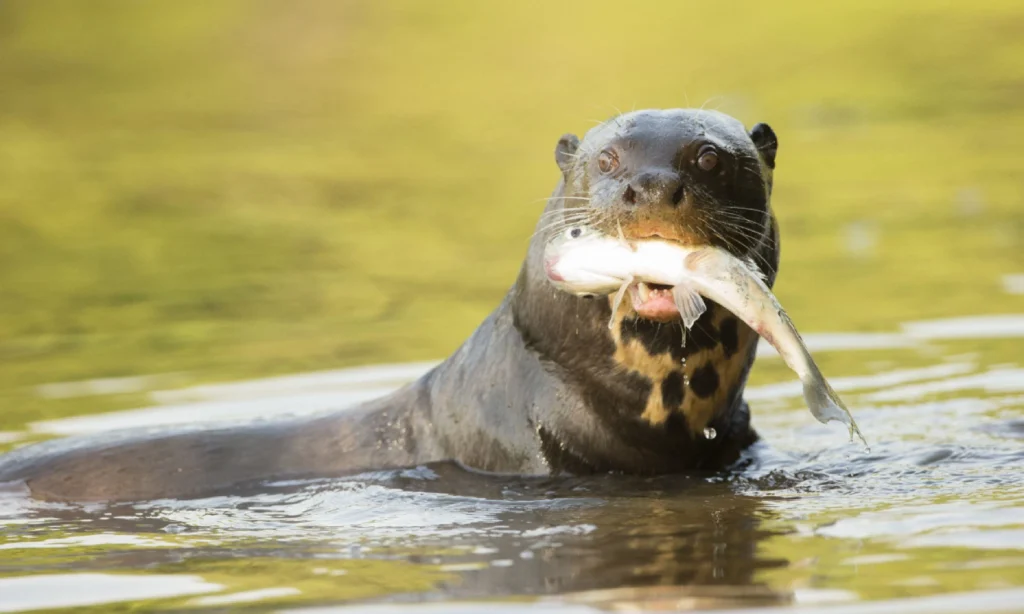
1. Giant Otter
The giant otter is one of the most iconic endangered Amazon animals. It lives in rivers, oxbow lakes, flooded forests, and other freshwater environments throughout parts of the Amazon Basin.
Giant otters are highly social and often live in family groups. They communicate using a surprisingly large variety of sounds, including whistles, chirps, growls, and other vocalizations. Their diet consists mainly of fish, although they can also consume other aquatic animals.
The species has suffered historically from hunting for its valuable fur, while modern threats include habitat destruction, water pollution, mining, reduced fish availability, and disturbance around important river habitats.
The recovery of giant otters in some protected areas demonstrates an important conservation lesson: when hunting pressure is reduced and suitable rivers remain intact, populations can recover.
Why giant otters are important
- They are major aquatic predators.
- They depend on healthy freshwater ecosystems.
- Their presence can indicate relatively productive river environments.
- They live in highly cooperative family groups.
- They are particularly sensitive to disturbance and water pollution.
2. Amazonian Manatee
The Amazonian manatee is a large aquatic mammal adapted to the rivers, lakes, and seasonally flooded forests of the Amazon.
Unlike many large Amazon mammals, manatees are herbivores. They consume aquatic vegetation and plants found along flooded habitats. During periods of seasonal flooding, they can move through extensive areas of forest that become temporarily submerged.
Historically, hunting has been one of the major threats to Amazonian manatees. Their slow reproductive rate makes recovery difficult when populations are heavily reduced.
Although the Amazonian manatee is not generally classified globally as Endangered, it remains an important threatened Amazon animal and a major conservation concern.
An unusual fact
Amazonian manatees can spend significant periods in remote flooded habitats where they are extremely difficult to observe. This makes estimating their true population size challenging.
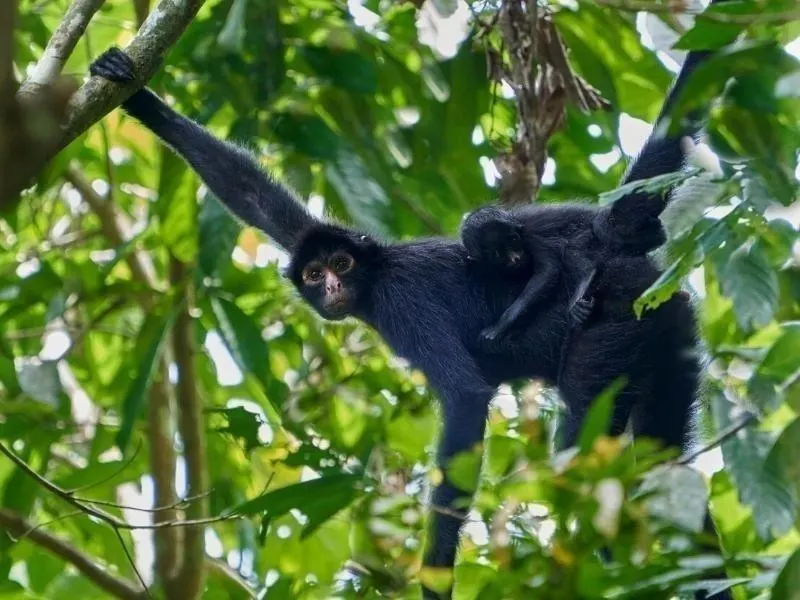
3. Black Spider Monkey
The black spider monkey is among the Amazon’s most important endangered primates. It spends much of its life high in the forest canopy and depends on mature trees for movement, shelter, and food.
Spider monkeys are particularly vulnerable to deforestation because they are highly arboreal. When large sections of forest disappear, populations can become separated from one another.
They also play an important ecological role by eating fruits and dispersing seeds across the forest. This means that protecting spider monkeys can have benefits beyond the species itself.
Why forest fragmentation is dangerous
A continuous rainforest allows spider monkeys to travel through the canopy in search of fruit. Fragmented forest creates gaps that may be difficult or impossible for them to cross.
This can produce small isolated populations that are increasingly vulnerable to hunting, disease, food shortages, and loss of genetic diversity.
4. Giant Armadillo
The giant armadillo is one of the most unusual mammals of the Amazon rainforest. It is much larger than the familiar small armadillos found elsewhere and is adapted to digging through soil.
Giant armadillos are generally solitary and nocturnal, which makes them difficult to observe. They excavate burrows and feed on ants, termites, and other invertebrates.
Their low population density creates a particular conservation challenge. Even large areas of forest may contain relatively few individuals, meaning that hunting or habitat destruction can have significant local consequences.
Unusual fact
Giant armadillo burrows can provide shelter for other animals after the armadillo abandons or temporarily leaves them. Protecting one species can therefore indirectly provide habitat for other rainforest wildlife.
5. Giant Anteater
The giant anteater is another remarkable Amazon mammal threatened by habitat loss and other human pressures.
Its long snout, powerful claws, bushy tail, and specialized tongue make it perfectly adapted to feeding on ants and termites. It does not have conventional teeth and can consume thousands of insects during its feeding activities.
Although the giant anteater is generally considered Vulnerable rather than globally Endangered, populations can be severely affected by habitat destruction, hunting, road mortality, fires, and changes to the landscape.
Why giant anteaters matter
Giant anteaters help regulate populations of social insects and form part of the complex food web connecting insects, plants, predators, and decomposers.
6. Lowland Tapir
The lowland tapir is the largest land mammal native to much of the Amazon rainforest.
These powerful herbivores move through forests, wetlands, river edges, and other habitats searching for fruits, leaves, aquatic vegetation, and other plant material.
Tapirs are particularly important because they can transport seeds over considerable distances. Some of the seeds they consume are large and difficult for smaller animals to disperse.
The lowland tapir is generally classified as Vulnerable rather than globally Endangered, but local populations can decline rapidly when forests are fragmented or hunting pressure increases.
The “forest gardener”
Tapirs are sometimes described as important forest seed dispersers because their movements help distribute plant species throughout the rainforest.
7. White-Lipped Peccary
The white-lipped peccary is a social mammal that can travel through the Amazon in groups. It feeds on fruits, seeds, roots, vegetation, and other foods and is an important part of the forest food web.
Large groups require extensive areas of connected forest. When roads, farms, settlements, and other development divide the landscape, peccary populations can become isolated.
They are also hunted in many parts of the Amazon, making sustainable wildlife management particularly important.
Although classified globally as Vulnerable rather than Endangered, the white-lipped peccary is an important indicator of intact forest landscapes.
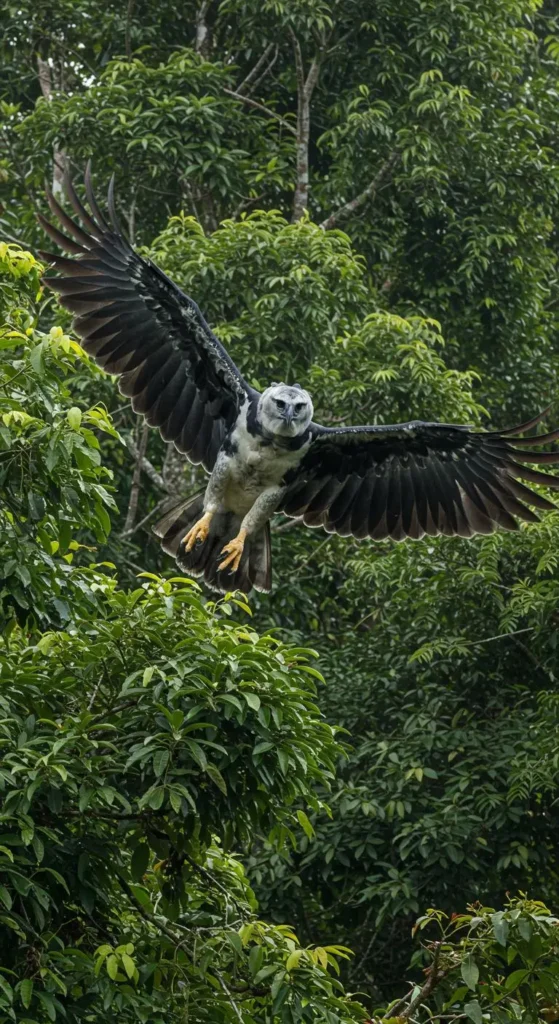
8. Harpy Eagle
The harpy eagle is one of the most spectacular predators of the Amazon canopy. It is famous for its enormous talons, powerful build, broad wings, and distinctive crown of feathers.
Harpy eagles depend on large trees for nesting and require substantial forest habitat to support their prey. Their disappearance from a forest can therefore indicate changes in the structure and quality of the ecosystem.
The harpy eagle is generally classified as Near Threatened rather than globally Endangered, although populations can face serious local pressure.
An unusual harpy eagle fact
Harpy eagles can spend long periods perched quietly in the canopy, making them surprisingly difficult to find despite their enormous size.
9. Amazon River Dolphin
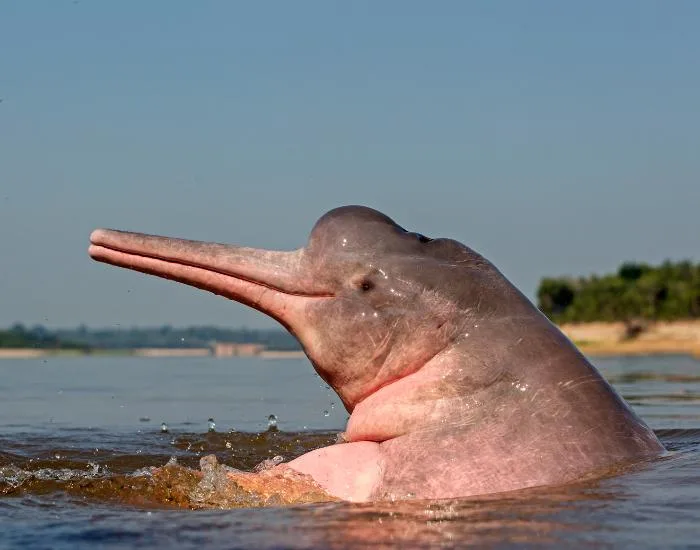
The Amazon river dolphin, commonly known as the boto or pink river dolphin, is one of the best-known aquatic animals of the Amazon.
Its flexible neck and broad flippers allow it to maneuver through flooded forests, branches, submerged roots, and shallow channels where ocean dolphins would struggle.
River dolphins are closely connected to the health of freshwater ecosystems. Pollution, habitat alteration, fishing interactions, river traffic, and contamination can affect their survival.
Why river dolphins are especially vulnerable
Unlike terrestrial animals that can sometimes move into neighboring forest, aquatic species may be restricted by changes to river channels, dams, pollution, and declining fish populations.
10. Bald Uakari and Other Threatened Primates
The bald uakari is an unusual Amazon monkey recognized for its distinctive appearance, short tail, and often strikingly red facial skin.
Different uakari populations and species have different conservation situations, so it is important not to place every uakari automatically into the same global conservation category.
Like many Amazon primates, however, they can be affected by forest fragmentation, hunting, and changes in the availability of fruiting trees.
Primates are particularly useful for understanding forest health because many depend on complex canopy environments and diverse fruit resources.
Most Endangered Animals in the Amazon Rainforest
When people search for the most endangered animals in the Amazon rainforest, they often expect a simple ranking from number one to number ten.
In reality, conservation scientists do not normally rank species this way because extinction risk depends on many different factors.
Important factors include:
- Current population size
- Population trend
- Geographic distribution
- Rate of habitat loss
- Degree of forest fragmentation
- Hunting pressure
- Reproductive rate
- Availability of food
- Dependence on specialized habitats
- Pollution
- Climate sensitivity
- Connectivity between populations
A species with a relatively large population can still be in danger if its habitat is disappearing rapidly. Conversely, a species with a small population can sometimes recover if its habitat is protected and hunting is controlled.
Endangered Animals in the Amazon Rainforest Due to Deforestation
Endangered animals in the Amazon rainforest due to deforestation represent one of the most important conservation topics in South America.
Deforestation does not simply remove trees. It changes the entire structure of the ecosystem.
When rainforest is cleared, animals lose:
- Food sources
- Nesting trees
- Shelter
- Breeding areas
- Travel routes
- Water sources
- Protection from predators
- Connections to other populations
The consequences can continue even after a forest fragment appears green again.
Forest Fragmentation
One of the less obvious dangers is forest fragmentation.
Imagine a huge continuous rainforest being divided into dozens of smaller pieces by roads, farms, mining areas, and settlements. The remaining forest may still contain trees, but animals can no longer move through it as they did before.
Large mammals may require extensive territories. Canopy species may struggle to cross open areas. Birds may lose nesting trees. Aquatic animals may become isolated by changes to waterways.
The edge effect
A forest fragment has more “edges” where forest meets open land.
Edges can become hotter, drier, windier, and more exposed to fires. They can also provide easier access for hunters.
For some species, therefore, losing 10% of forest can create a much larger ecological impact than the simple percentage suggests.
Other Major Threats to Endangered Amazon Animals
Deforestation is extremely important, but it is not the only danger.
Mining and Water Pollution
Gold mining and other forms of extraction can damage rivers and forest habitats. Sediment can change aquatic environments, while contaminants such as mercury can enter food chains.
This is particularly concerning for animals that spend their lives in rivers or eat aquatic organisms.
Giant otters, river dolphins, fish, turtles, and other aquatic wildlife can be affected when water quality declines.
Hunting and Wildlife Trafficking
Hunting can become a serious problem when animal populations are already isolated.
Large mammals are often targeted for meat, while certain birds, reptiles, and primates may be captured for illegal wildlife trade.
The problem is especially serious for species that reproduce slowly because removing only a small number of adults can have long-term consequences.
Roads and Infrastructure
Road construction can divide forests and increase human access to previously remote areas.
Roads can also create direct risks through vehicle collisions and indirectly increase hunting and settlement pressure.
Amazon Forest Fires
Natural fires can occur, but extensive human-caused fires can be devastating to rainforest ecosystems.
Animals may escape an individual fire, but repeated burning can transform forest into degraded habitat that supports a much smaller range of species.
Climate Change
Climate change creates another layer of pressure.
Changes in rainfall, drought intensity, river levels, temperature, and fire conditions can alter the environments on which Amazon animals depend.
Some species may adapt, but animals already stressed by habitat fragmentation may have fewer opportunities to move into suitable areas.
How Many Animals Are Endangered in the Amazon Rainforest?
One of the most frequently searched questions is: how many animals are endangered in the Amazon rainforest?
There is no single universally accepted number.
The answer changes depending on:
- How the Amazon is geographically defined.
- Whether only mammals are counted or all animal groups.
- Whether “Endangered” means the formal Endangered category or all threatened categories.
- Whether subspecies and regional populations are included.
- Which year of conservation assessments is used.
- Whether newly described species are included.
- Whether local extinction risk or global status is being measured.
The Amazon contains an enormous number of species, and many groups remain incompletely studied. For some insects, amphibians, freshwater fish, and smaller organisms, scientists still have limited information about population trends.
Therefore, a website claiming that there is one exact number of “endangered Amazon animals” should be treated cautiously unless it clearly explains the methodology.
Facts About Endangered Animals in the Amazon Rainforest
There are many fascinating facts about endangered animals in the Amazon rainforest that reveal how interconnected this ecosystem really is.
Fact 1: Not All Endangered Animals Are Large
Some of the most vulnerable Amazon wildlife may be small frogs, fish, insects, reptiles, and birds.
Large mammals are easier for humans to recognize, but small species can have extremely restricted distributions.
Fact 2: Some Endangered Animals Are Difficult to See
The Amazon can contain healthy populations of animals that visitors almost never encounter.
Many species are nocturnal, solitary, arboreal, aquatic, or naturally secretive.
Seeing fewer animals does not necessarily mean there are no animals present.
Fact 3: Some Amazon Animals Are Still Being Discovered
Scientists continue to describe new species and new populations in the Amazon.
This is particularly important for amphibians, insects, fish, plants, and microorganisms.
Every newly described species creates another piece of the Amazon’s ecological puzzle.
Fact 4: Protecting One Animal Can Protect Many Others
Conservation rarely benefits only one species.
Protecting a river for giant otters can also protect fish, turtles, birds, dolphins, caimans, plants, and local communities.
Protecting mature forest for harpy eagles can preserve habitat for monkeys, sloths, insects, reptiles, and countless plant species.
Fact 5: Indigenous Communities Are Important Conservation Partners
Many of the Amazon’s most biologically rich landscapes overlap with Indigenous territories and traditional lands.
Local ecological knowledge can contribute to wildlife monitoring, sustainable resource use, forest protection, and identification of important animal habitats.
Fact 6: Wildlife Conservation Can Work
The story of the giant otter demonstrates that conservation is not only about preventing extinction.
When hunting pressure is reduced, protected habitats are maintained, and rivers remain healthy, populations can recover.
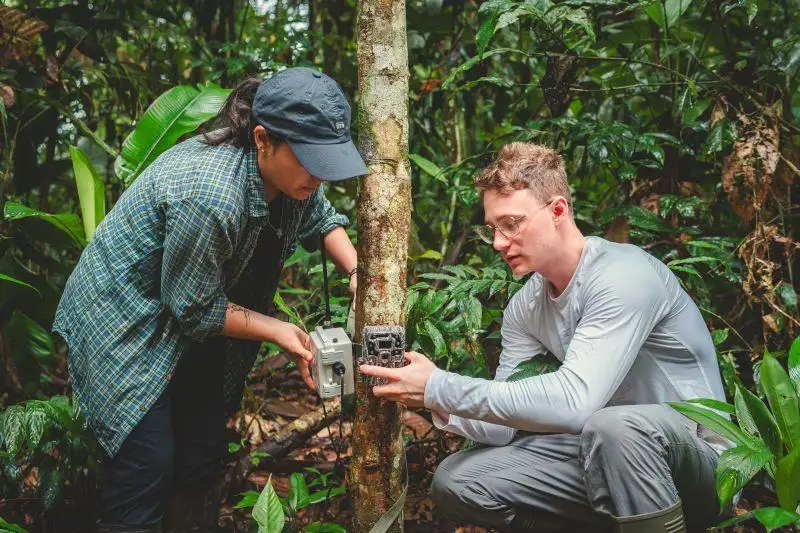
Unusual Endangered Amazon Animals Facts
Some of the most interesting conservation stories come from unusual animal behavior.
Giant Otters Have Family Conversations
Giant otters are highly vocal. Members of a family group can communicate using different sounds during hunting, traveling, defending territory, and interacting with one another.
Their social behavior is one reason they are so fascinating to observe in healthy Amazon rivers.
Giant Armadillos Build Underground Refuges
Giant armadillos are expert diggers and can create large underground shelters.
Their burrows can later become useful to other animals, meaning that their ecological role extends beyond their own feeding behavior.
Harpy Eagles Depend on the Canopy
A mature Amazon tree is not simply a tree. For a harpy eagle, it can be a nesting platform, observation point, hunting base, and part of a much larger territory.
The loss of a single enormous tree can therefore have an ecological consequence that is much greater than its physical size suggests.
River Dolphins Explore Flooded Forests
During seasonal flooding, Amazon river dolphins can enter forest environments where trees stand beneath the water.
This creates one of the most unusual landscapes in the world: a forest where fish and dolphins can swim between tree trunks.
Endangered Amazon Animals and the Food Web
Every Amazon animal occupies a particular ecological role.
Predators such as giant otters and large raptors influence populations of prey species. Herbivores such as tapirs consume vegetation and transport seeds. Primates move through the canopy and disperse fruits. Aquatic animals connect rivers with flooded forests.
Removing one species does not always cause the entire ecosystem to collapse, but repeated losses can gradually change how the ecosystem functions.
This is why protecting endangered Amazon animals is not only about saving individual species. It is about maintaining the ecological processes that allow the rainforest to regenerate and remain productive.
What Can Be Done to Protect Endangered Amazon Animals?
Conservation requires several approaches working together.
Protect remaining rainforest
The most effective strategy for many species is to maintain large areas of intact habitat.
Create wildlife corridors
Connecting isolated forest fragments can allow animals to move between populations.
Protect rivers and wetlands
Aquatic species need clean and functioning rivers, lakes, floodplains, and wetlands.
Reduce illegal hunting
Community-based wildlife management and effective enforcement can reduce pressure on vulnerable species.
Control pollution
Reducing contamination from mining, agriculture, waste, and other activities is essential for aquatic wildlife.
Support local communities
Conservation programs are more sustainable when local communities benefit from protecting forests rather than being excluded from them.
Encourage responsible tourism
Well-managed wildlife tourism can create economic value for keeping forests intact while giving travelers a deeper understanding of Amazon ecosystems.
Endangered Amazon Animals and Responsible Tourism
Wildlife tourism can play a positive role when it is carefully managed.
Visitors should avoid feeding wild animals, touching wildlife, chasing animals for photographs, making excessive noise, or encouraging guides to approach animals too closely.
For sensitive species such as giant otters, maintaining an appropriate distance is especially important.
Responsible tourism can also encourage visitors to understand that seeing a wild animal is a privilege rather than an entitlement. Sometimes the best wildlife experience is observing an animal quietly from a respectful distance without interfering with its natural behavior.
The Future of Endangered Amazon Animals
The future of endangered animals in the Amazon rainforest will depend largely on whether remaining habitats can be protected and connected.
There are reasons for concern, but there are also reasons for optimism.
Protected areas, Indigenous territories, wildlife corridors, ecological monitoring, habitat restoration, responsible tourism, sustainable livelihoods, and stronger control of illegal activities can all contribute to better outcomes.
The Amazon does not need every square kilometer to look exactly the same to remain biologically important. What matters is maintaining enough connected, functioning ecosystems for wildlife populations to survive and reproduce.
Species such as the giant otter demonstrate that recovery is possible. Protecting rivers, reducing hunting, and maintaining suitable habitat can make a measurable difference.
Frequently Asked Questions About Endangered Amazon Animals
What is the most endangered animal in the Amazon rainforest?
There is no universally accepted single “most endangered” Amazon animal. Extinction risk varies by species and by region. Some species are Critically Endangered, while others are Endangered, Vulnerable, or Near Threatened.
Is the giant otter endangered?
Yes. The giant otter is classified as Endangered and is one of the most important conservation species associated with Amazonian rivers.
Are jaguars endangered in the Amazon?
Jaguars are generally not classified globally as Endangered, but they face significant threats in parts of their range. Habitat fragmentation, hunting, prey depletion, and human-wildlife conflict can create serious local conservation problems.
Are Amazon river dolphins endangered?
Amazon river dolphins face significant conservation threats, including habitat degradation, pollution, fishing interactions, and changes to river ecosystems. Their conservation status should be considered carefully because different assessments and populations may vary.
Why are Amazon animals becoming endangered?
The main pressures include:
- Deforestation
- Forest fragmentation
- Hunting
- Illegal wildlife trade
- Mining
- Water pollution
- Fires
- Roads and infrastructure
- Agricultural expansion
- Climate change
- Loss of prey and food sources
How many endangered animals are there in the Amazon?
There is no single definitive number. The answer depends on which geographic boundaries, animal groups, conservation categories, and assessment dates are used.
What is the biggest threat to endangered Amazon animals?
Habitat loss is one of the most important threats, but the greatest pressure varies between species. Aquatic animals can be especially affected by water pollution and river alteration, while terrestrial species may be more affected by deforestation, hunting, and fragmentation.
Conclusion: Protecting the Amazon Means Protecting Its Animals
The endangered Amazon animals found throughout the rainforest represent much more than a collection of rare species. Giant otters depend on healthy rivers, spider monkeys depend on connected forest canopies, tapirs disperse seeds, harpy eagles require mature trees, river dolphins depend on functioning waterways, and countless smaller animals contribute to ecological processes that humans may never see.
The top 10 endangered animals in the Amazon rainforest should therefore not be viewed simply as a ranking. Each species has its own conservation story, and several animals often described as “endangered” are technically Vulnerable or Near Threatened at the global level.
The most important message is that protecting Amazon wildlife requires protecting the ecosystems on which these animals depend.
When forests remain connected, rivers remain healthy, hunting is controlled, pollution is reduced, and local communities participate in conservation, endangered wildlife has a much better chance of surviving.
The Amazon remains one of the world’s greatest wildlife refuges. Its future will depend not only on protecting famous animals such as jaguars and giant otters, but also on conserving the enormous network of plants, insects, fish, birds, reptiles, amphibians, mammals, rivers, wetlands, and forests that makes Amazonian biodiversity possible.
Leave a Reply