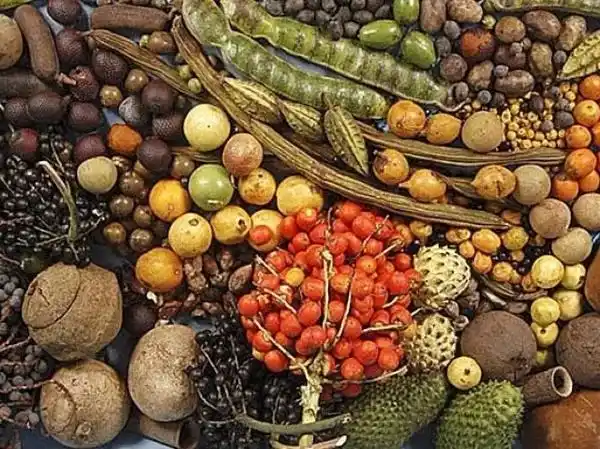
The fruits from the Amazon rainforest are among the most diverse, colorful, unusual, and flavorful fruits in the world. The Amazon Basin is home to hundreds of native fruit species, from famous fruits such as açaí and cacao to lesser-known Amazonian fruits including aguaje, camu camu, copoazú, cocona, ungurahui, uvilla, and arazá. Many of these fruits have been eaten by Indigenous communities for generations and remain important ingredients in local markets, drinks, desserts, and traditional foods.
Unlike many familiar supermarket fruits, Amazon rainforest fruits often grow in specialized environments such as seasonally flooded forests, riverbanks, wetlands, palm swamps, and dense tropical forest. Some fruits grow high in enormous trees, while others develop on palms, shrubs, vines, or relatively small understory plants.
The fruits from the Peruvian Amazon are particularly interesting because Peru contains an extraordinary variety of tropical ecosystems. Regions such as Loreto, Ucayali, San Martín, Amazonas, and Madre de Dios produce many native fruits that are increasingly being used in juices, frozen pulp, ice cream, desserts, natural products, and other foods.
This complete guide explores the top 10 fruits from the Amazon rainforest, provides a broader list of fruits from the Amazon rainforest, explains what fruit grows in the rainforest, introduces important Amazon rainforest fruit trees, and explores unusual facts about these remarkable tropical foods.
What Fruits Come from the Amazon Rainforest?
There is no single list that includes every Amazonian fruit because the Amazon covers an enormous area across several countries and contains thousands of plant species. Some fruits are native to the Amazon itself, while others originated elsewhere but have adapted extremely well to tropical Amazonian conditions.
Among the best-known fruits from the Amazon rainforest are:
- Açaí
- Aguaje
- Camu camu
- Copoazú
- Cacao
- Cocona
- Cupuaçu
- Arazá
- Ungurahui
- Pijuayo
- Guaba
- Caimito
- Uvilla
- Umarí
- Huito
- Sacha mango
- Macambo
- Inga
- Bacuri
- Passion fruit
- Papaya
- Pineapple
- Guava
- Guanábana
Some of these fruits are native Amazonian species, while others have a wider tropical distribution. The important point is that the Amazon is not characterized by one or two famous fruits but by an enormous collection of edible plants adapted to different soils, rainfall patterns, river systems, and forest habitats.
Why Are Amazon Fruits So Diverse?
The extraordinary diversity of Amazon fruits is closely connected to the diversity of Amazonian ecosystems. A fruit tree growing on a dry upland forest may experience very different conditions from a palm growing in a permanently or seasonally flooded wetland.
Different plants have evolved different strategies for producing flowers and fruits, attracting animals, surviving flooding, competing for sunlight, and dispersing their seeds.
Animals are particularly important. Monkeys, birds, bats, rodents, tapirs, peccaries, and other wildlife eat many Amazon fruits and transport their seeds through the forest.
Top 10 Fruits from the Amazon Rainforest
The following selection highlights ten of the most famous, interesting, commercially important, or culturally significant fruits associated with the Amazon.
1. Açaí
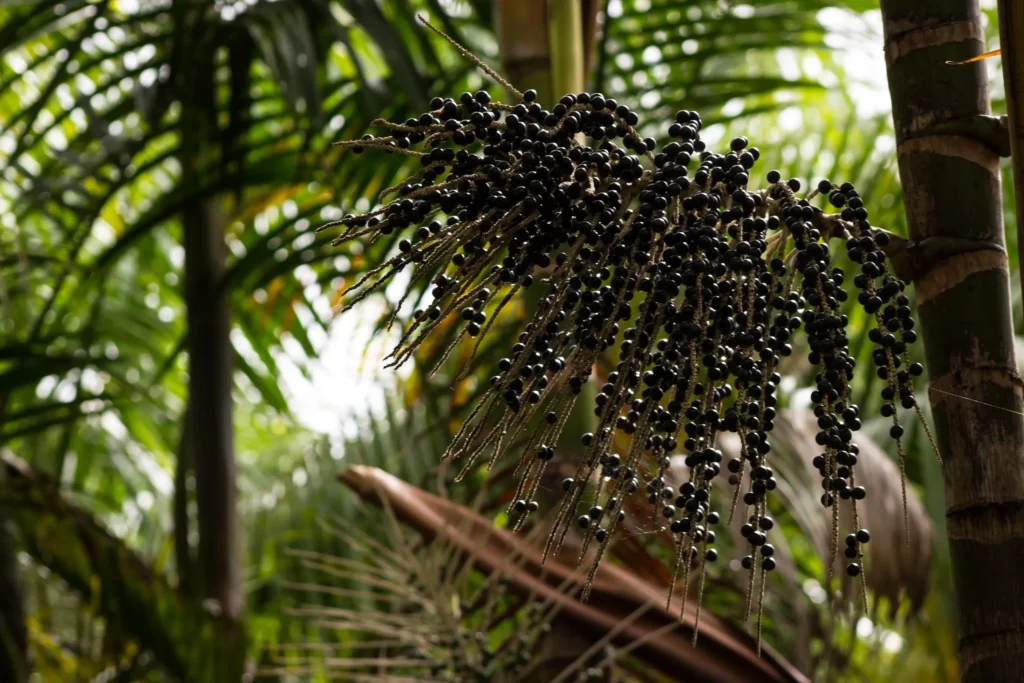
Açaí is one of the world’s best-known Amazonian fruits. It grows on several species of palm and produces small, dark purple fruits that develop in clusters.
Açaí became internationally famous because of its use in smoothies, bowls, frozen desserts, drinks, and other foods. However, its traditional role in Amazonian diets is much older than the modern health-food trend.
The fruit has relatively little edible pulp compared with its seed, which is one reason traditional processing methods are important. In Amazonian communities, fresh açaí pulp is commonly consumed in ways that are quite different from the sweetened açaí bowls popular outside South America.
Interesting açaí fact
Açaí berries grow in large hanging clusters high on palm trees. Harvesters traditionally climb the palms to reach the fruit, making açaí collection a specialized skill.
2. Aguaje
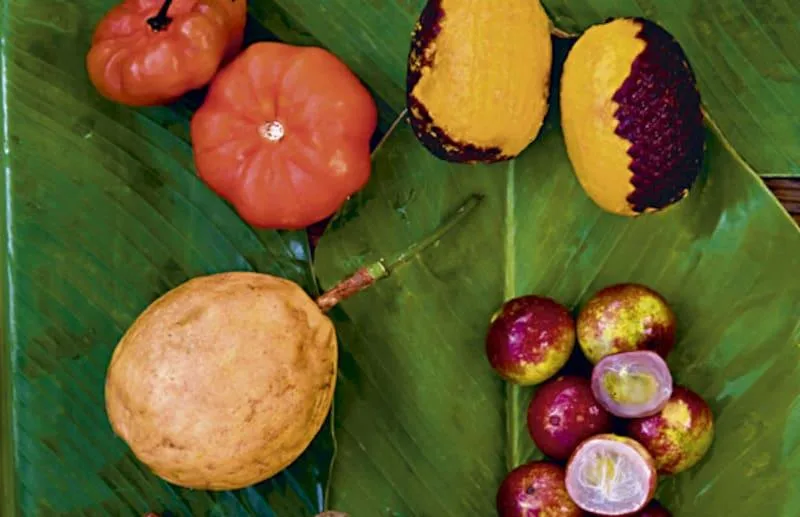
Aguaje is one of the most important traditional fruits of the Peruvian Amazon. It comes from the Mauritia flexuosa palm, a species strongly associated with Amazonian wetlands and swampy environments.
The fruit has scaly skin and orange-yellow flesh. Its flavor can be sweet, slightly acidic, earthy, and distinctive. In Peru, aguaje is commonly consumed fresh or used to make drinks, ice cream, popsicles, desserts, and other preparations.
The aguaje palm is particularly fascinating because it can dominate wetland landscapes and provide food and habitat for numerous animals.
An unusual aguaje fact
Aguaje palms have historically been harvested in ways that involved cutting down the entire palm. More sustainable harvesting techniques, including climbing methods, allow fruit to be collected while keeping the tree alive.
This is an important example of how Amazonian fruit production can be connected to rainforest conservation.
3. Camu Camu
Camu camu is one of the most famous fruits from the Peruvian Amazon. It is a small reddish or purplish fruit with an extremely acidic flavor.
The plant commonly grows along Amazonian rivers and in seasonally flooded environments. Unlike many large tropical fruits, camu camu is relatively small, but it has attracted enormous attention because of its exceptionally high vitamin C content.
Fresh camu camu is often too sour for many people to eat like a sweet apple or mango. Instead, it is commonly processed into juice, pulp, powder, smoothies, desserts, and other products.
Camu camu and vitamin C
Camu camu is notable for having exceptionally high concentrations of vitamin C compared with many commonly consumed fruits. Its exact nutritional composition can vary depending on growing conditions, ripeness, and processing.
Unusual fact
Camu camu plants can survive periodic flooding, making them particularly well adapted to Amazon river environments.
4. Copoazú or Cupuaçu
Copoazú, also called cupuaçu, is closely related to cacao. It produces a large brown fruit with thick skin and aromatic white pulp.
Its flavor is difficult to compare with a single familiar fruit. People often describe combinations of tropical fruit, citrus, chocolate-like aromas, and creamy sweetness.
Copoazú pulp is used to prepare:
- Juices
- Ice cream
- Mousses
- Smoothies
- Desserts
- Sauces
- Sweets
- Frozen pulp
The seeds are also valuable because they can be processed into products similar in some ways to cacao-based ingredients.
Why copoazú is important
Copoazú is an excellent example of an Amazon fruit with both cultural and commercial potential. It can be cultivated in agroforestry systems, where fruit production occurs alongside other plants rather than requiring complete forest clearing.
5. Cacao
Cacao is one of the most globally important fruits with deep Amazonian origins.
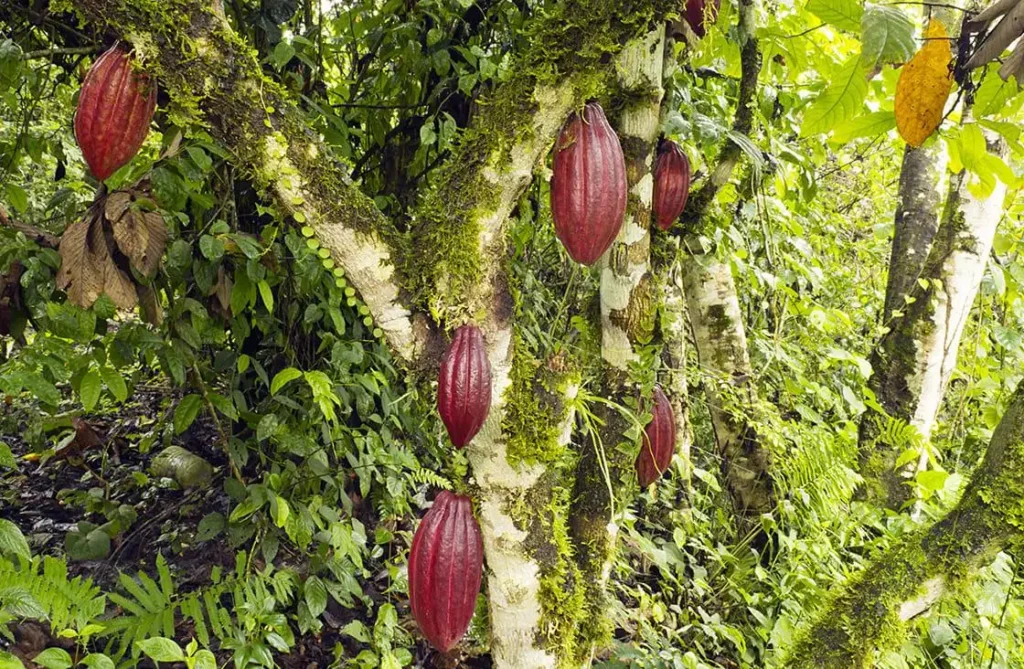
The cacao tree produces large pods directly from its trunk and major branches. Inside the pod are seeds surrounded by sweet, aromatic white pulp.
The seeds are fermented, dried, roasted, and processed to produce cocoa and chocolate.
The surprising part of cacao
The fruit itself is not the chocolate bar. Chocolate begins with the seeds inside the cacao pod, which undergo several stages of processing before becoming the familiar chocolate products consumed around the world.
The white pulp surrounding the seeds is also edible and has a pleasant tropical flavor.
6. Cocona
Cocona is a lesser-known Amazonian fruit belonging to the same botanical family as tomatoes and other Solanum species.
The fruits can vary in color and shape, ranging from yellowish to orange or reddish tones. Their flavor is generally acidic and refreshing, making cocona particularly popular for beverages and sauces.
In the Peruvian Amazon, cocona may be used in:
- Fresh juices
- Sauces
- Desserts
- Jams
- Drinks
- Fruit mixtures
Cocona versus tomato
Although cocona belongs to the same botanical family as tomatoes, its flavor is distinctly fruity and acidic.
This makes it one of the most interesting examples of the enormous diversity of Amazonian edible plants.
7. Ungurahui
Ungurahui is the fruit of an Amazonian palm and is especially interesting because of its creamy texture and traditional uses.
The fruit can be processed into beverages and other foods, and its nutritional properties have made it increasingly interesting in discussions about Amazonian superfoods.
Ungurahui is less internationally famous than açaí or camu camu, but it is an important example of a traditional Amazonian fruit with potential for sustainable local economies.
8. Arazá
Arazá is a small tropical fruit with a strong aroma and pleasantly acidic flavor. It is particularly appreciated for juices, jams, ice creams, desserts, and other processed products.
Because the fresh fruit can be delicate and highly perishable, processing it near the place where it is harvested can be especially useful.
Arazá demonstrates an important characteristic of Amazon fruits: some species are incredibly flavorful but remain relatively unknown internationally because transporting fresh fruit over long distances can be difficult.
9. Pijuayo
Pijuayo, also known as peach palm, produces clusters of colorful fruits on a palm tree.
Unlike many fruits that are eaten raw, pijuayo is commonly cooked before consumption in many Amazonian communities. The cooked fruit has a dense texture and can be eaten with other foods or processed into flour and other products.
Pijuayo is also interesting from an agricultural perspective because the palm can provide several useful products.
Pijuayo fact
The fruits can appear in striking colors, including orange, yellow, and reddish tones depending on the variety.
10. Caimito
Caimito, or star apple, is a tropical fruit with smooth skin and soft, sweet flesh.
When cut open, the fruit can reveal a characteristic star-like pattern created by the internal structure of the fruit.
Its texture is creamy and its flavor is sweet, making it popular as a fresh fruit and in local preparations.
The name “star apple” comes from the appearance of the fruit when it is sliced horizontally.
List of Fruits from the Amazon Rainforest
Beyond the top ten, the list of fruits from the Amazon rainforest is extensive.
Native and traditional Amazonian fruits include:
- Açaí
- Aguaje
- Camu camu
- Copoazú
- Cocona
- Ungurahui
- Arazá
- Pijuayo
- Caimito
- Guaba
- Uvilla
- Umarí
- Huito
- Macambo
- Sacha mango
- Bacuri
- Metohuayo
- Palillo
- Taperibá
- Uvos
- Yarina
- Lucuma
- Inga
- Cacao
Some species have distributions extending beyond the Amazon, while others are strongly associated with particular Amazonian environments.
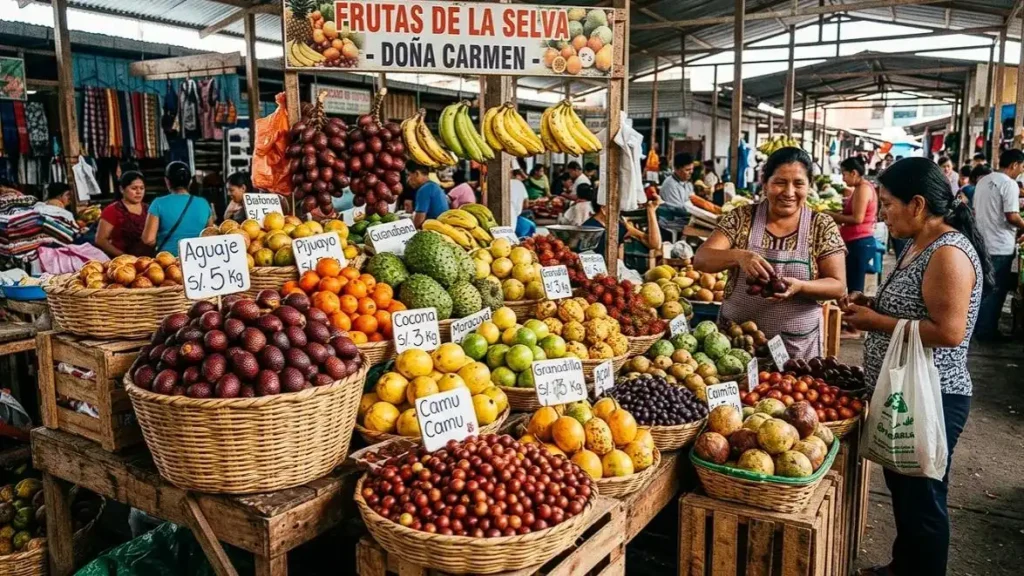
The diversity is so great that two markets located in different Amazon regions can offer noticeably different collections of fruits.
Amazon Rainforest Fruit Trees
The term Amazon rainforest fruit trees includes much more than conventional orchard trees.
Amazonian fruit plants include:
- Tall canopy trees
- Medium-sized trees
- Understory trees
- Palm trees
- Shrubs
- Vines
- Climbing plants
Aguaje Palm
The aguaje palm is one of the most important fruit-producing palms of Amazonian wetlands.
It can grow tall above surrounding vegetation and produces large quantities of fruit.
Its ecological importance extends beyond humans because numerous animals consume its fruits.
Cacao Tree
Cacao trees are relatively small compared with many Amazon canopy trees. Their fruits grow directly from the trunk and major branches, a phenomenon known as cauliflory.
What is unusual about cacao?
Most people expect fruit to grow at the ends of branches. Cacao breaks that expectation by producing its large pods directly from the trunk.
Copoazú Tree
Copoazú belongs to the same broader botanical group as cacao and produces large fruits with fragrant pulp.
It can be incorporated into agroforestry systems and is increasingly recognized as an Amazonian fruit with commercial potential.
Amazonian Palm Trees
Palms are among the most important fruit-producing plants in the Amazon.
Examples include:
- Açaí palms
- Aguaje palms
- Ungurahui palms
- Pijuayo palms
These plants provide food for people and wildlife and can be important components of local economies.
What Fruit Grows in the Amazon Rainforest?
The question “What fruit grows in the Amazon rainforest?” has a surprisingly broad answer.
The rainforest contains fruits with almost every imaginable combination of size, color, aroma, texture, and flavor.
Some are tiny berries, while others are enormous pods or heavy tropical fruits. Some are extremely sweet, while others are so acidic that they are normally processed before eating.
Examples by flavor
Very acidic fruits
- Camu camu
- Cocona
- Arazá
- Some varieties of passion fruit
Sweet and creamy fruits
- Caimito
- Copoazú
- Aguaje
- Certain varieties of guaba
Fruits with unusual flavors
- Copoazú
- Ungurahui
- Cocona
- Huito
- Umarí
The extraordinary variety is one of the reasons Amazonian markets are such fascinating places for travelers interested in food.
Amazon Rainforest Fruits and Vegetables
The distinction between Amazon rainforest fruits and vegetables can sometimes become confusing.
Botanically, a fruit is generally the structure that develops from a flower and contains seeds. Culinary classifications are different.
For example, tomatoes are botanically fruits but are commonly treated as vegetables in cooking.
The Amazon also contains many edible roots, tubers, leaves, shoots, seeds, and fruits.
Common Amazonian plant foods include:
- Cassava
- Sweet potato
- Plantain
- Banana
- Pijuayo
- Cacao
- Aguaje
- Camu camu
- Cocona
- Açaí
- Peppers
- Corn
- Various edible leaves and herbs
This diversity means that traditional Amazonian diets are not based only on fruit. They can include fish, cassava, plantains, fruits, seeds, nuts, vegetables, herbs, and other forest products.
Fruits from the Peruvian Amazon
The fruits from the Peruvian Amazon deserve special attention because Peru’s Amazonian regions contain an extraordinary collection of native and adapted fruit species.
Important Amazonian fruit-producing regions include:
- Loreto
- Ucayali
- Madre de Dios
- San Martín
- Amazonas
Each region has different environmental conditions and local food traditions.
Fruits Commonly Associated with the Peruvian Amazon
Aguaje
Aguaje is particularly important in Amazonian markets and is strongly associated with wetland environments.
Camu Camu
Camu camu grows naturally around rivers and seasonally flooded environments and has become one of Peru’s best-known Amazonian superfruits.
Copoazú
Copoazú is especially interesting for its creamy pulp and relationship to cacao.
Cocona
Cocona is popular for its acidic flavor and use in drinks and sauces.
Ungurahui
Ungurahui is traditionally consumed in various Amazonian preparations and remains an important local fruit.
Arazá
Arazá is valued for its intense aroma and use in beverages and processed foods.
Pijuayo
Pijuayo is both culturally important and nutritionally interesting, with many traditional preparations.
How Amazon Fruits Support Rainforest Wildlife
Amazon fruits are not simply foods for humans.
They are fundamental components of rainforest food webs.
Monkeys eat fruit in the canopy. Birds swallow fruits and disperse seeds. Bats can carry seeds away from parent trees. Tapirs consume fallen fruits on the forest floor. Peccaries eat fruits and seeds. Rodents may collect and bury seeds.
This creates a powerful ecological relationship between plants and animals.
Seed Dispersal
One of the most important functions of Amazonian fruit is seed dispersal.
A fruit tree cannot simply drop all of its seeds beneath itself and expect its offspring to thrive. Competition for light, water, nutrients, and space can be intense.
Animals solve this problem by transporting seeds away from the parent tree.
A single fruit can begin a forest journey
An animal may eat a fruit high in the canopy, travel several hundred meters or more, and later deposit the seed somewhere else.
That seed may eventually become another tree.
In this way, fruit-eating animals help shape the structure of the rainforest itself.
Interesting Facts About Amazon Rainforest Fruits
The Amazon fruit world contains many surprising facts.
1. Some Amazon fruits grow on tree trunks
Cacao is the classic example.
Its pods can emerge directly from the trunk and large branches.
2. Some Amazon fruits grow underwater or in flooded environments
Camu camu is particularly well adapted to riverine and seasonally flooded landscapes.
This is remarkable because flooding would be fatal to many conventional fruit crops.
3. Some Amazon fruits are extremely acidic
Camu camu and cocona can have strong acidic flavors.
Instead of being eaten like a sweet apple, they are often transformed into refreshing drinks, pulp, sauces, and desserts.
4. Some fruits are more important as processed foods
Certain Amazonian fruits are difficult to transport when fresh because they deteriorate rapidly.
Processing them into frozen pulp, juice, powder, jam, or other products can greatly increase their usefulness.
5. Amazon fruits can support sustainable agriculture
Native fruit trees and palms can be incorporated into agroforestry systems.
This creates an alternative to clearing forest for less diverse land uses.
6. Some fruit trees are important to both people and wildlife
A single productive tree can provide food for birds, monkeys, bats, rodents, and humans.
This makes fruit trees important ecological resources.
Unusual Amazon Rainforest Fruits You May Never Have Heard Of
The most famous Amazon fruits are only a small part of the story.
Umarí
Umarí is an unusual Amazonian fruit with a distinctive aroma and rich, oily texture.
It remains relatively unknown outside Amazonian regions but is an excellent example of the diversity of traditional forest foods.
Huito
Huito is another Amazonian fruit with traditional cultural uses. The fruit has a dark coloration when mature and has been used historically for natural dyes and other purposes.
Macambo
Macambo is closely related to cacao but produces larger seeds and has a distinctive culinary potential.
The seeds can be roasted and eaten, making macambo an interesting Amazonian food that is different from conventional chocolate cacao.
Uvilla
Uvilla is a small Amazonian fruit with a delicate texture and sweet flavor. It is often eaten fresh and can also be used in drinks and other preparations.
Guaba
Guaba is produced by trees in the Inga group. The fruit has long pods containing sweet, soft pulp around the seeds.
Opening a guaba pod is almost like discovering a row of small edible cushions inside.
Amazon Fruits and Sustainable Development
Amazonian fruits are increasingly interesting not only as foods but also as potential tools for sustainable rural economies.
Native fruit species can sometimes provide economic value without requiring complete conversion of diverse rainforest into simplified agricultural landscapes.
This concept is particularly important in the Peruvian Amazon, where researchers and agricultural specialists have identified several native fruits with ecological, nutritional, and commercial potential. Copoazú, aguaje, camu camu, cocona, ungurahui, arazá, pijuayo, and other species are examples of fruits that can contribute to diversified agroforestry systems.
The idea is simple: instead of viewing the rainforest only as something that must be cleared to produce economic value, some native species can generate value while maintaining greater biological diversity.
How to Experience Amazon Rainforest Fruits
One of the easiest ways to discover Amazonian fruits is through local markets.
Markets in Amazonian cities can offer seasonal fruits that visitors may never see in supermarkets outside South America.
Fresh fruit juices are particularly popular.
Travelers may encounter:
- Camu camu juice
- Aguaje drinks
- Cocona juice
- Copoazú smoothies
- Açaí preparations
- Ungurahui beverages
- Mixed tropical fruit juices
Trying these fruits is also an excellent way to understand the relationship between Amazonian communities and the surrounding forest.
Frequently Asked Questions About Amazon Rainforest Fruits
What are the most famous fruits from the Amazon rainforest?
Some of the most famous include açaí, aguaje, camu camu, copoazú, cacao, cocona, ungurahui, arazá, pijuayo, and caimito.
What is the most popular Amazon rainforest fruit?
Açaí is arguably the most internationally famous Amazonian fruit because it has become popular worldwide in smoothies, frozen desserts, and açaí bowls. In Amazonian regions, however, locally important fruits such as aguaje, camu camu, and other native species can be equally or more culturally significant.
What fruit comes from the Peruvian Amazon?
Many fruits are associated with the Peruvian Amazon, including aguaje, camu camu, cocona, copoazú, ungurahui, arazá, pijuayo, caimito, uvilla, guaba, huito, and other native species.
What Amazon fruit has the most vitamin C?
Camu camu is famous for its exceptionally high vitamin C content and is widely recognized as one of the richest natural sources of vitamin C.
What is aguaje fruit?
Aguaje is the fruit of the Mauritia flexuosa palm. It grows particularly well in Amazonian wetland environments and is widely consumed in parts of Peru.
Is cacao an Amazon rainforest fruit?
Yes. Cacao has deep origins in the tropical Americas and is strongly associated with Amazonian biodiversity and traditional cultures. Its seeds are the starting material for cocoa and chocolate.
What is copoazú?
Copoazú, also called cupuaçu, is a tropical Amazonian fruit related to cacao. It has fragrant white pulp with a distinctive tropical flavor and is commonly used in drinks, ice cream, desserts, and other foods.
What fruits grow on Amazon rainforest palm trees?
Several important Amazonian fruits grow on palms, including açaí, aguaje, ungurahui, and pijuayo.
Are Amazon rainforest fruits healthy?
Many Amazon fruits provide fiber, vitamins, minerals, pigments, and other naturally occurring plant compounds. However, nutritional value varies considerably between species and preparation methods, so individual fruits should not automatically be considered medicinal foods.
Why are Amazon fruits so unusual?
The Amazon’s extraordinary biodiversity has produced fruits adapted to very different environments. Some survive flooding, some grow high in the canopy, some are dispersed by specialized animals, and others have evolved unusual flavors, textures, colors, or reproductive strategies.
Final Thoughts on Fruits from the Amazon Rainforest
The fruits from the Amazon rainforest represent one of the most fascinating parts of tropical biodiversity. From the tiny, intensely acidic camu camu to the large and aromatic copoazú, from the dark purple açaí berry to the orange flesh of aguaje, Amazonian fruits offer an enormous range of flavors, textures, colors, and ecological adaptations.
The top 10 fruits from the Amazon rainforest are only an introduction. A much longer list of fruits from the Amazon rainforest includes dozens of species that remain relatively unknown outside South America.
The Amazon rainforest fruit trees are also essential components of the ecosystem. Their fruits feed birds, monkeys, bats, rodents, tapirs, peccaries, and countless other animals, while the animals help disperse their seeds and regenerate the forest.
The fruits from the Peruvian Amazon are particularly valuable because many have cultural, nutritional, ecological, and economic importance. Aguaje, camu camu, copoazú, cocona, ungurahui, arazá, pijuayo, and other species demonstrate that the Amazon can provide extraordinary foods while also supporting biodiversity.
Perhaps the most interesting lesson is that an Amazonian fruit is never simply a piece of food. Behind every fruit is an entire ecological story involving trees, rivers, soil, insects, birds, mammals, Indigenous knowledge, seasonal flooding, seed dispersal, and rainforest regeneration.
That is what makes Amazon rainforest fruits so unusual—and why discovering them is one of the most delicious ways to understand the extraordinary biodiversity of the Amazon.
Leave a Reply