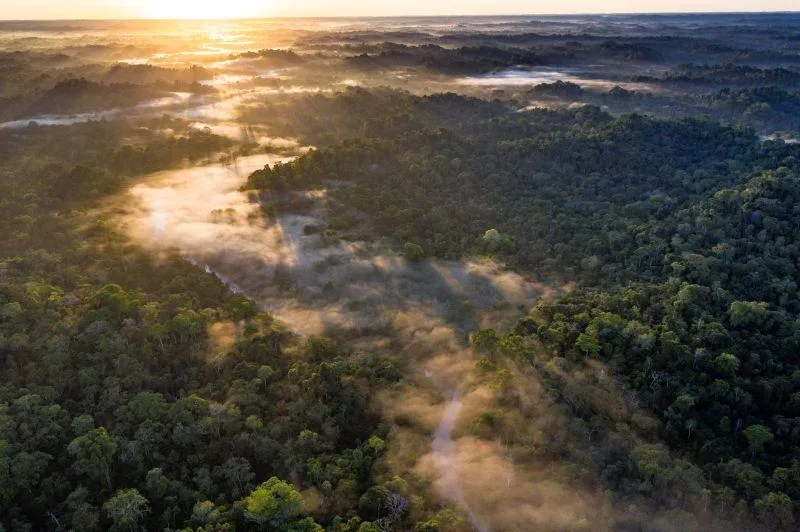
The Amazon rainforest seasons are very different from the traditional four-season cycle found in many parts of the world. Instead of spring, summer, autumn, and winter, most of the Amazon experiences variations between wetter and drier periods, with temperature, river levels, humidity, and wildlife activity changing throughout the year. Understanding the tropical rainforest seasons is especially useful for travelers planning an Amazon adventure because weather conditions can influence boat transportation, hiking, wildlife viewing, fishing, and excursions.
The Amazon is enormous, stretching across several countries and climatic regions, so there is no single weather pattern for the entire rainforest. In the Peruvian Amazon, including the area around Puerto Maldonado and Tambopata, seasonal changes are particularly noticeable through rainfall and river levels rather than dramatic changes in temperature. The result is a rainforest environment that remains warm and biologically active throughout the year.
Does the Amazon Rainforest Have Seasons?
Does the Amazon have seasons?
Yes, the Amazon does have seasons, but they are not usually the same four seasons experienced in temperate countries. The main seasonal difference is between wetter and drier periods, although some areas experience transitional months and noticeable variations in river levels, temperature, cloud cover, and rainfall.
The question “does the Amazon rainforest have seasons?” can therefore be answered with an important distinction: the Amazon has seasonal weather patterns, but these patterns are generally defined by rainfall rather than by spring, summer, autumn, and winter. Because the rainforest lies largely in tropical and equatorial regions, temperatures remain relatively warm throughout the year.
Seasonality can also vary dramatically depending on location. The western Amazon, including much of the Peruvian Amazon, can have different rainfall patterns from the central and eastern Amazon. Elevation, distance from the equator, river systems, and regional climate patterns all influence local weather.
How many seasons does the Amazon rainforest have?
There is no universal number of seasons for the entire Amazon rainforest. In many tourist regions, the year is broadly divided into two major seasons: a wetter season and a drier season. Other descriptions divide the year into four periods or several transitional seasons because rainfall and river conditions change gradually rather than suddenly.
For practical purposes, travelers can think about the Amazon in terms of:
- Rainy or high-water season
- Dry or lower-water season
- Transition periods between the two
This is more useful than applying a strict four-season calendar.
Four Seasons in the Amazon Rainforest
Does the Amazon have four seasons?
The Amazon can be described using four seasonal periods in some regions, but these are not equivalent to the conventional four seasons of spring, summer, autumn, and winter.
A simplified four-part model might include:
- Early wet-season transition
- Wet or high-water season
- Early dry-season transition
- Dry or lower-water season
The exact timing varies by location and year. In some parts of the Amazon, rainfall can occur throughout every month, meaning that even a “dry season” can include heavy rainstorms.
Why Amazon seasons are different
The Amazon’s proximity to the equator means that solar energy remains relatively consistent during the year. Instead of dramatic seasonal temperature changes, the ecosystem responds strongly to changes in rainfall, cloud cover, humidity, river height, and sunlight.
This creates one of the most interesting features of the rainforest seasons: a month can be considered relatively dry while still receiving substantial rainfall.
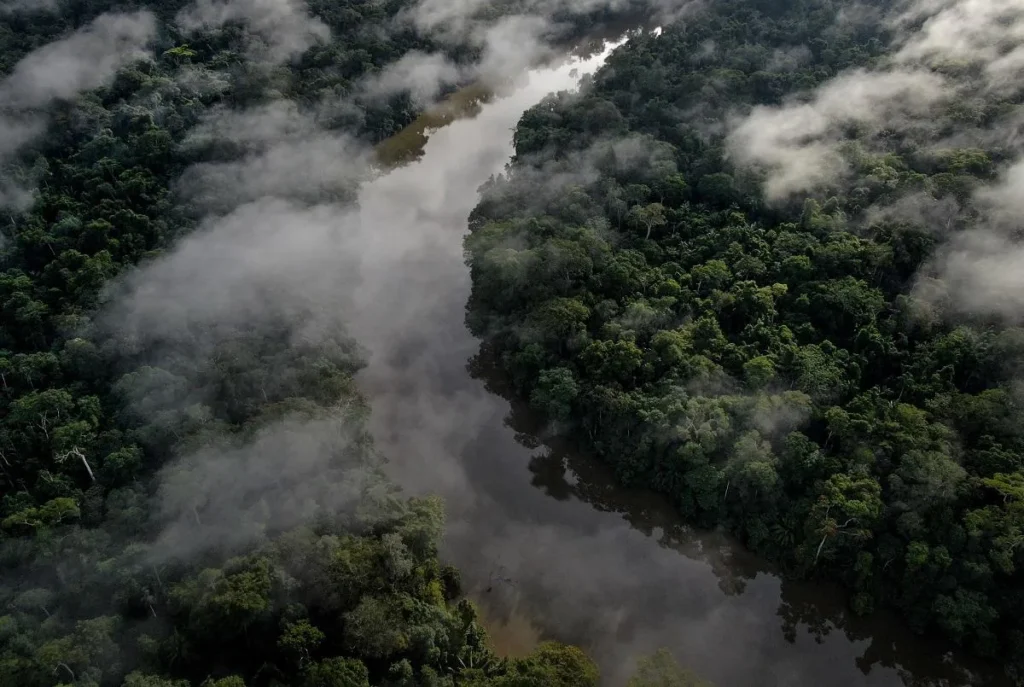
What Are the Seasons Like in the Amazon Rainforest?
The seasons of the Amazon are primarily defined by water.
During wetter periods, rivers rise, flooded forests expand, streams become easier to navigate by boat, and some animals take advantage of the increased availability of aquatic habitats and food. During drier periods, trails may become more accessible, riverbanks can appear, and animals may concentrate around remaining water sources.
Neither season is simply “better.” Each provides different opportunities for experiencing the rainforest.
Amazon Rainforest Wet Season
The rain season in the Amazon is characterized by more frequent rainfall, higher river levels, increased humidity, and extensive flooded areas in regions influenced by seasonal rivers.
Rain does not necessarily fall continuously throughout the day. A typical tropical rainstorm can be intense but relatively short, followed by periods of sunshine or cloudy weather. Some days may be mostly dry despite occurring during the wetter part of the year.
What happens during the wet season?
During high-water periods:
- Rivers and streams expand.
- Flooded forest becomes more extensive.
- Boat travel can reach areas that are difficult to access during low water.
- Aquatic habitats become more important for wildlife.
- Humidity can remain very high.
- Rainforest vegetation grows rapidly.
- Cloud cover can increase.
- Sudden tropical showers are common.
One unusual feature is that rain can transform the appearance of the forest within minutes. Leaves become darker and glossier, streams swell, and the soundscape changes dramatically as insects, frogs, birds, and flowing water become more noticeable.
Amazon Rainforest Dry Season
The Amazon rainforest dry season does not mean that the rainforest becomes completely dry. Tropical rainforests can continue receiving significant rainfall even during their relatively drier months.
Instead, the term “dry season” generally means a period with lower average rainfall compared with the wetter months.
In many Amazon destinations, lower river levels can expose beaches, muddy banks, rocks, fallen trees, and sections of forest that are underwater during high-water periods.
What happens during the dry season?
Typical characteristics can include:
- Lower river levels.
- More exposed riverbanks.
- Greater concentration of wildlife around water.
- Easier access to some trails.
- Periods of intense sunshine.
- High temperatures and humidity.
- Occasional powerful rainstorms.
- Increased visibility along certain river areas.
For wildlife enthusiasts, the dry season can sometimes make animals easier to locate because water and food resources become more concentrated in particular places.
Amazon Rainforest Climate
The Amazon rainforest climate is primarily tropical and humid. However, the enormous geographic size of the Amazon Basin means that conditions vary considerably between locations.
Most lowland Amazon rainforest areas experience warm temperatures throughout the year, high humidity, substantial rainfall, and relatively small annual temperature changes compared with temperate climates.
The climate is influenced by:
- Latitude
- Elevation
- Rainfall
- River systems
- Vegetation
- Cloud cover
- Seasonal winds
- Regional geography
Why Is the Amazon So Humid?
The rainforest continuously moves enormous amounts of water between soil, plants, rivers, and atmosphere.
Trees release water vapor through a process called transpiration. Combined with evaporation from rivers, wetlands, lakes, and wet soil, this contributes to the humid atmosphere characteristic of the rainforest.
This means the Amazon is not simply a forest that receives rain from outside. The ecosystem itself participates in the movement and recycling of water.
Amazon Rainforest Temperature
The Amazon rainforest temperature generally remains warm throughout the year, especially in lowland regions.
Daytime temperatures commonly reach the upper 20s or low 30s Celsius, although exact temperatures depend on location, elevation, season, cloud cover, and short-term weather conditions. Nighttime temperatures are generally lower but remain relatively mild.
The rainforest canopy can also create surprisingly different temperatures within a very small area. A shaded forest trail may feel considerably cooler than an exposed riverbank or open clearing.
What Is the Temperature in the Amazon Rainforest in Winter?
The answer depends on what is meant by “winter.”
In the Southern Hemisphere, winter generally occurs from approximately June through August. During this period, much of the Amazon remains warm, but occasional cold-air incursions can temporarily cause temperatures to drop, especially in the southern and southwestern Amazon.
In the Peruvian Amazon, these sudden cool periods are sometimes associated with strong cold-air outbreaks from the south. Temperatures can temporarily become surprisingly cool compared with the normal tropical conditions.
This creates an unusual contrast: a rainforest can be hot and humid for most of the year but occasionally experience several cool days.
Does the Amazon have a cold winter?
Not in the conventional sense experienced in temperate climates. There is generally no long, freezing winter across the lowland tropical rainforest.
Instead, winter can bring:
- Slightly cooler conditions at times.
- Occasional cold-air outbreaks.
- Changes in rainfall.
- Cloudy periods.
- Temporary drops in nighttime temperatures.
Frost and freezing conditions are not typical of the lowland Amazon rainforest.
Amazon Rainforest Weather by Month
Understanding Amazon rainforest weather by month can help travelers choose when to visit, but monthly conditions should be treated as general patterns rather than guarantees.
Rainfall can vary considerably from one year to another, and weather can change rapidly within a single day.
January
January is generally part of a wetter period in many Amazon regions. Rainfall can be frequent, humidity is high, and rivers may be rising or already elevated.
The forest is intensely green, and rainstorms can create dramatic conditions for photography and wildlife observation.
February
February commonly continues the wetter seasonal pattern in many parts of the Amazon. High humidity and rain are normal, but sunshine can still appear between showers.
Boat excursions can benefit from higher water levels in regions where flooded forests are accessible.
March
March is often associated with humid conditions and significant rainfall in many areas. Vegetation remains lush, and waterways can be important routes through seasonally flooded environments.
April
April can be a transitional month in some regions. Rainfall patterns may begin changing, although conditions remain tropical and wet.
The transition between seasons is not necessarily sudden. Some years can remain very rainy while others become noticeably drier.
May
May can bring changing river levels and shifting rainfall patterns. In some parts of the Amazon, it represents a transition toward lower-water conditions.
Wildlife remains active, and temperatures remain warm.
June
June is part of the Southern Hemisphere winter but should not be confused with a conventional cold season. The Amazon can remain hot, humid, and tropical.
In the southern and southwestern Amazon, however, occasional cold-air events can temporarily lower temperatures.
July
July is often associated with relatively drier conditions in several Amazon destinations. Sunny periods can become more frequent, although rain remains possible.
River levels may be lower, depending on the region and the year’s rainfall.
August
August can continue the drier seasonal pattern in many areas. Lower water levels can expose additional riverbanks and beaches.
Hot sunny conditions can alternate with tropical storms.
September
September can be an especially interesting transitional period. Temperatures can feel high, rainfall patterns may begin shifting, and the forest can experience changing humidity and cloud conditions.
October
October often marks increasing rainfall in some regions as the wetter period approaches. Storms may become more frequent, while the forest remains warm and humid.
November
November can bring increasing rainfall and rising humidity. Rivers and streams may gradually respond to the changing precipitation pattern.
December
December commonly belongs to a wetter part of the annual cycle in many Amazon regions. Tropical storms, high humidity, and lush vegetation are typical.
However, December is not uniformly rainy across the entire Amazon Basin.
Weather in the Amazon Rainforest, Peru
Weather Amazon Rainforest Peru
The weather in the Amazon rainforest of Peru varies according to location, elevation, and season. Important destinations include Puerto Maldonado, Tambopata, Iquitos, Manu, and surrounding rainforest regions.
Puerto Maldonado and the Tambopata region generally experience a warm tropical climate, with noticeable changes in rainfall and river conditions rather than dramatic seasonal temperature changes.
The Peruvian Amazon is particularly interesting because occasional southern cold-air events can produce surprisingly cool weather. These events are temporary and are very different from a normal winter in a temperate country.
What should travelers expect?
Visitors to the Peruvian Amazon should be prepared for:
- Warm daytime temperatures.
- High humidity.
- Strong tropical sunshine.
- Sudden rain showers.
- Wet trails during rainy periods.
- Muddy conditions in some areas.
- Cooler periods during occasional cold fronts.
- Rapid weather changes.
- Mosquitoes and other insects, especially in humid conditions.
The best strategy is not to expect perfectly predictable weather. Instead, prepare for several different conditions during the same trip.
Rainforest Seasons and Wildlife
Seasonal changes influence wildlife because water availability affects where animals feed, travel, reproduce, and find shelter.
Wildlife During the Wet Season
High water levels can open access to flooded forest habitats. Fish may enter areas that are inaccessible during lower water periods, while birds, monkeys, reptiles, amphibians, and mammals respond to changing food and habitat conditions.
Aquatic wildlife can become particularly important during high-water periods.
Wildlife During the Dry Season
During lower-water periods, animals may become more concentrated around rivers, lakes, ponds, mineral-rich areas, fruiting trees, and remaining water sources.
This can create excellent wildlife-viewing opportunities because animals are sometimes easier to locate in predictable habitats.
However, wildlife is never guaranteed. Rainforest animals move according to food, weather, predators, disturbance, and countless other factors.
How Rain Changes the Amazon Rainforest
Rain is not simply weather in the Amazon. It is one of the main forces shaping the ecosystem.
A heavy storm can:
- Refill streams.
- Raise humidity.
- Cool the forest temporarily.
- Move nutrients.
- Trigger amphibian activity.
- Change animal behavior.
- Create temporary pools.
- Wash leaves and vegetation.
- Affect river conditions.
Rain also contributes to one of the rainforest’s most recognizable sensory experiences: the dramatic change in sound.
Before a storm, insects and birds may become unusually noticeable. During heavy rain, the sound of falling water can dominate the forest. Afterward, frogs, insects, birds, and dripping vegetation create a completely different soundscape.
Unusual Facts About Amazon Rainforest Seasons
1. The dry season is not necessarily dry
One of the biggest misunderstandings about the Amazon is that the dry season means no rain. It does not. It simply indicates a period with less rainfall relative to the wetter season.
2. Winter can occasionally feel surprisingly cool
Although the Amazon is tropical, southern cold-air outbreaks can temporarily bring much cooler conditions to parts of the rainforest.
3. The river can change the forest
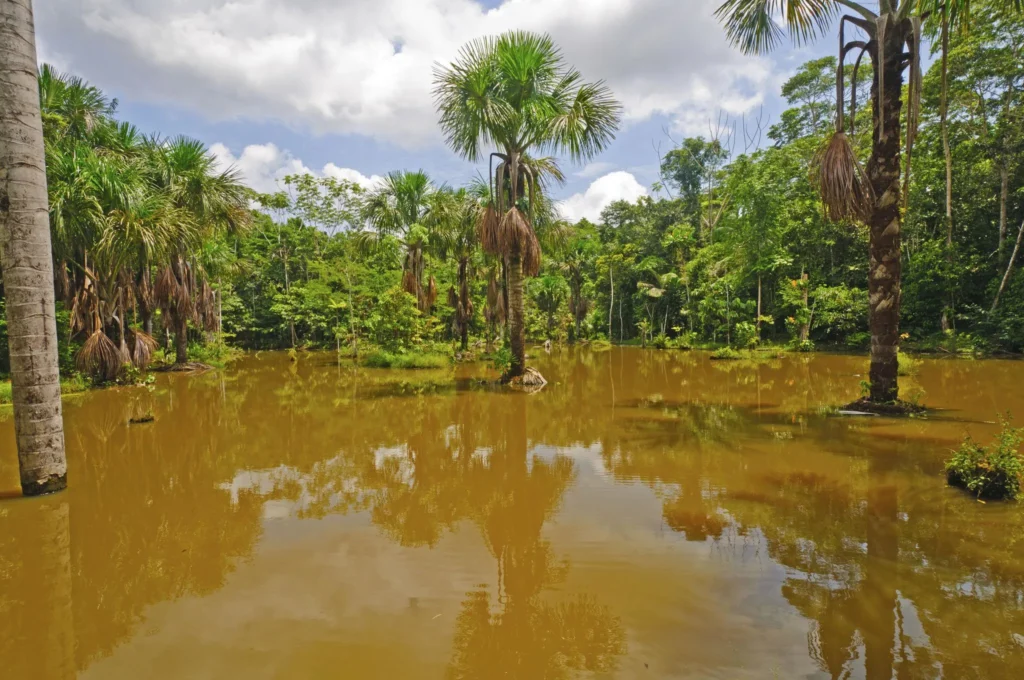
Seasonal flooding can transform ordinary-looking forest into aquatic habitat. Trees can stand in water for extended periods, creating unique flooded ecosystems.
4. Rainforest weather can change within minutes
A sunny morning can turn into a heavy tropical shower surprisingly quickly. Conditions can then return to sunshine shortly afterward.
5. River levels influence how people explore the forest
During high-water periods, boats can sometimes enter flooded forest channels that are inaccessible or much harder to navigate during low water.
6. Some animals respond to water more than temperature
In tropical Amazon environments, changes in river height and rainfall can be more ecologically important than modest temperature changes.
7. The forest helps move water into the atmosphere
Trees release enormous quantities of water vapor through transpiration. This contributes to the humid atmospheric conditions associated with tropical forests.
8. The Amazon is not climatically identical everywhere
The Amazon Basin is enormous. A seasonal pattern experienced in Peru may not perfectly match conditions in Brazil, Colombia, Ecuador, Bolivia, or other parts of the basin.
9. The canopy creates its own microclimate
Temperature, humidity, wind, and sunlight can differ considerably between the top of the canopy and the forest floor.
10. A rainy day can still be excellent for wildlife
Rain does not automatically stop wildlife activity. Frogs and insects can become particularly active, while some birds and mammals continue moving through the forest.
Best Season to Visit the Amazon Rainforest
There is no single universally best season because each period offers different experiences.
Travelers interested in boat exploration and flooded forest habitats may prefer periods of higher water.
Travelers interested in walking trails, exposed riverbanks, and concentrated wildlife near water may enjoy lower-water periods.
For photographers, rainy weather can produce dramatic skies, reflections, mist, wet vegetation, and saturated greens, while dry periods can provide stronger sunshine and different river landscapes.
The best season ultimately depends on what type of Amazon experience you want.
Amazon Rainforest Seasons for Travelers
Before visiting, it is useful to think about four practical factors:
- Rainfall: How comfortable are you with tropical showers?
- River levels: Do you prefer flooded forest or exposed riverbanks?
- Wildlife: Are you interested in aquatic species, birds, mammals, or amphibians?
- Activities: Do you prefer hiking, boating, fishing, photography, or a combination?
Because the rainforest is dynamic, flexibility is often more valuable than choosing a particular month.
Amazon Rainforest Seasons: What Should You Pack?
Regardless of season, visitors should prepare for tropical conditions.
Useful items include:
- Lightweight breathable clothing.
- Long-sleeved shirts.
- Long trousers.
- Waterproof footwear or suitable jungle boots.
- Rain jacket or poncho.
- Insect repellent.
- Sun protection.
- Hat or cap.
- Reusable water bottle.
- Dry bags for electronics.
- Binoculars.
- Camera protection against humidity and rain.
During potentially cooler periods, carrying one lightweight warm layer is also a good idea, particularly for early mornings and occasional cold-air events.
Frequently Asked Questions About Amazon Rainforest Seasons
Does the Amazon rainforest have seasons?
Yes. The Amazon has seasonal patterns, but they are primarily related to rainfall, river levels, humidity, and flooding rather than four temperate seasons.
Does the Amazon have four seasons?
Not in the traditional spring, summer, autumn, and winter sense. Some regions can be divided into four transitional seasonal periods, but wet and dry patterns are generally more useful.
How many seasons does the Amazon rainforest have?
Many areas are broadly described as having a wet season and a dry season, with transitional periods between them. The exact seasonal pattern varies throughout the Amazon Basin.
What are the seasons like in the Amazon rainforest?
They are warm and humid throughout much of the year, with seasonal changes in rainfall, river levels, flooding, cloud cover, and wildlife habitat.
What is the Amazon rainforest climate?
The Amazon has a predominantly tropical, warm, humid climate with substantial rainfall and relatively small annual temperature differences in many lowland areas.
What is the Amazon rainforest temperature?
Lowland temperatures are generally warm throughout the year, with daytime temperatures commonly reaching the upper 20s or low 30s Celsius, although exact conditions vary by location and weather.
What is the temperature in the Amazon rainforest in winter?
During Southern Hemisphere winter, the Amazon generally remains warm. However, temporary cold-air events can cause noticeably cooler weather, especially in southern and southwestern areas.
When is the Amazon rainforest dry season?
The timing varies by location. Many Amazon destinations experience a relatively drier period during part of the year, but the exact months depend on the region.
When is the rain season in the Amazon?
Rainfall occurs throughout the year in many Amazon locations, but some months receive substantially more rain than others. The wet season varies geographically.
Is the Amazon rainforest hot all year?
It is generally warm year-round in lowland regions, but temperatures can fluctuate and occasional cold-air outbreaks can create surprisingly cool conditions.
Does it rain every day in the Amazon?
No. Rain can occur frequently, but it does not necessarily rain every day or continuously. Even during wetter periods, there can be sunny and dry intervals.
Is the Amazon rainforest colder in winter?
Usually not dramatically colder. The seasonal temperature difference is much smaller than in temperate regions, although temporary cold fronts can produce noticeable cooling.
Is the dry season better for visiting the Amazon?
It depends on the experience desired. Lower water can make some trails and riverbanks easier to explore, while high-water periods can provide access to flooded forest environments.
Final Thoughts: Understanding Amazon Rainforest Seasons
The Amazon rainforest seasons are best understood through water rather than the traditional four-season calendar. The rainforest remains warm and biologically active throughout most of the year, while rainfall, river levels, flooding, humidity, and sunlight create important seasonal differences.
The tropical rainforest seasons are therefore not simply “summer” and “winter.” A better way to think about the Amazon is as a constantly changing ecosystem moving through wetter periods, drier periods, and transitional conditions.
For travelers, these seasonal changes can completely transform the experience. High water can open flooded forests and aquatic routes, while lower water can expose riverbanks and concentrate wildlife around remaining water sources. Rain can arrive suddenly, temperatures can change with cloud cover or cold-air events, and the forest can look different from one month to another.
Perhaps the most important fact is that there is no single Amazon season that represents the entire rainforest. The Amazon Basin is vast, and conditions vary from Peru to Brazil, Colombia, Bolivia, Ecuador, and beyond.
The Amazon is not a place where the seasons simply change the weather. The seasons change the relationship between water, forest, wildlife, and people. That constant movement is one of the reasons the world’s great tropical rainforest remains such an extraordinary ecosystem to explore.
Leave a Reply