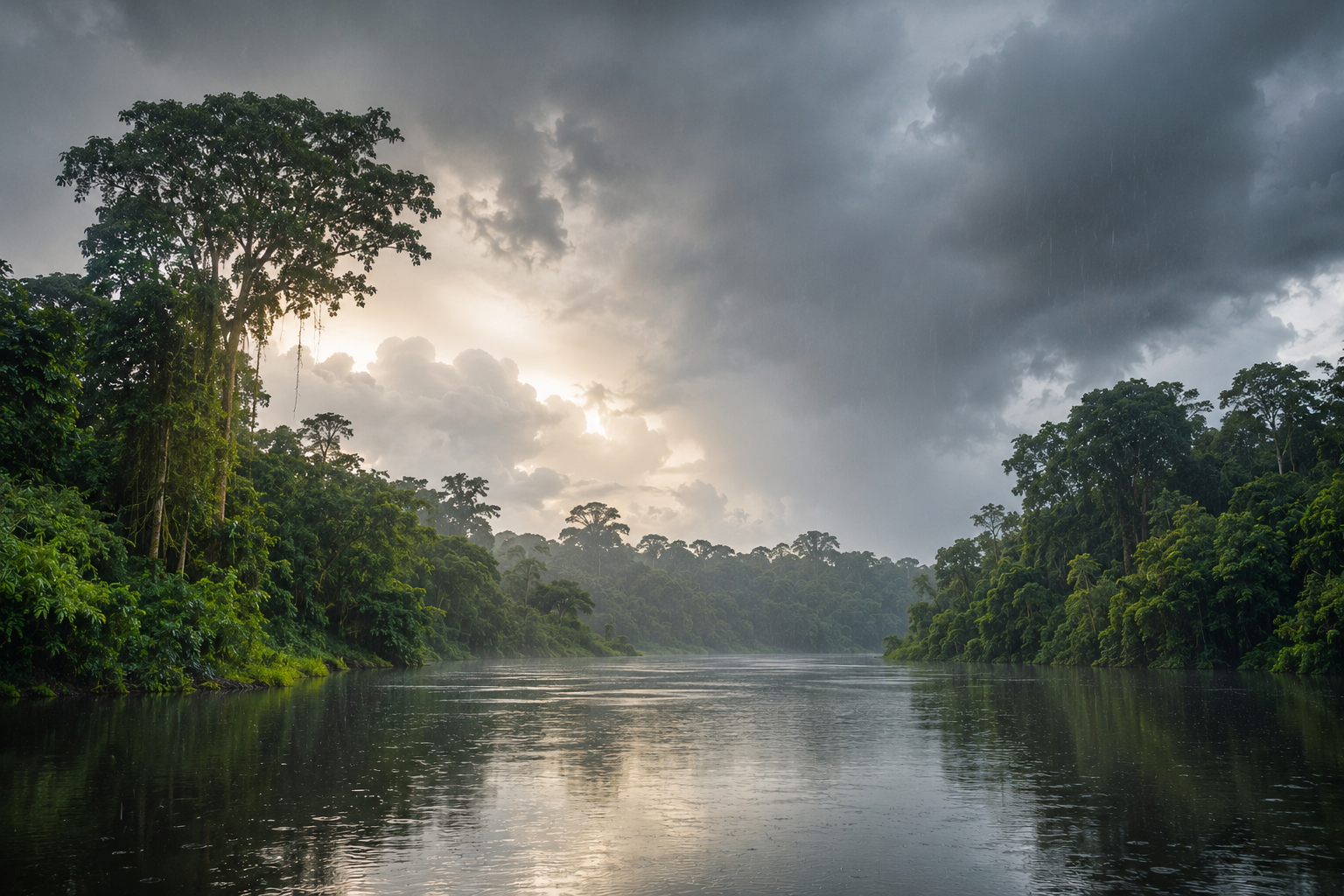
The question “how old is the Amazon?” sounds simple, but the answer depends on what you mean by “Amazon.” The Amazon can refer to the Amazon rainforest, the Amazon River, the Amazon biome, the geographical region, or even the modern Amazon company. These are completely different subjects with very different ages.
The Amazon rainforest is millions of years old, although the forest we recognize today developed through a long and complicated geological and climatic history. The Amazon River is also ancient, but its modern eastward-flowing configuration is much younger than the earliest geological history of the river basin. The Amazon biome has evolved over enormous periods of time as plants, animals, rivers and climates changed.
There is also a common confusion between the Amazon rainforest and the second largest rainforest in the world. The Amazon is actually the world’s largest tropical rainforest, while the Congo rainforest is generally recognized as the second-largest tropical rainforest.
So, how old is the Amazon rainforest? There is no single birthday for the Amazon. Instead, its history stretches back tens of millions of years and includes dramatic changes in geography, climate, rivers and ecosystems.
How Old Is the Amazon?
The Amazon rainforest is tens of millions of years old, although scientists do not assign it one exact age because the ecosystem has changed substantially through geological time.
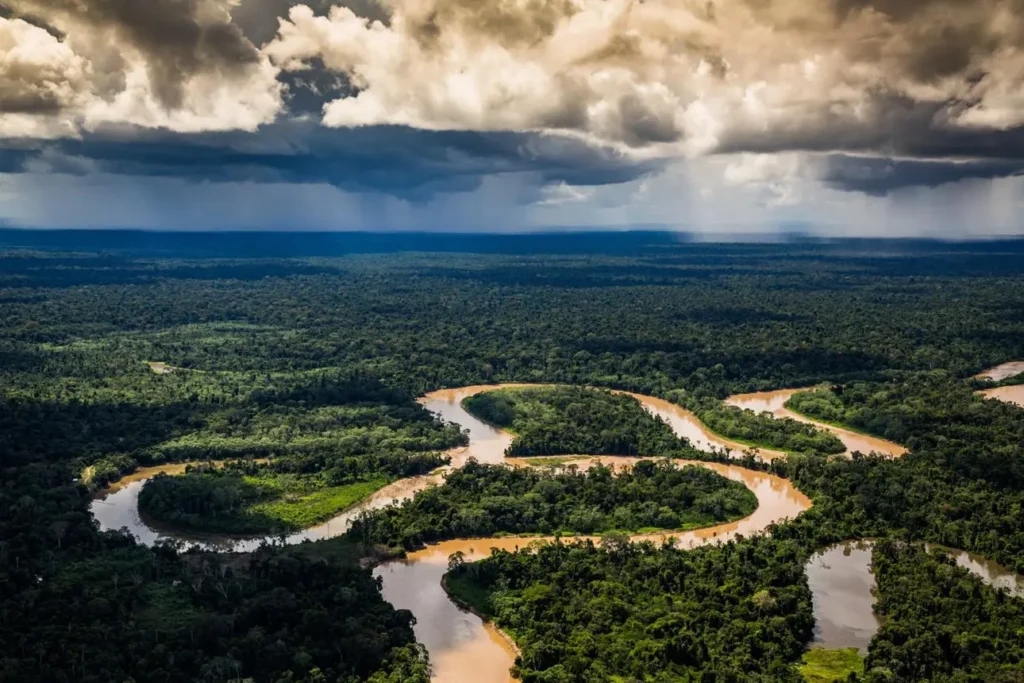
Some evidence indicates that tropical forests existed in parts of the Amazon region during the Paleogene, more than 50 million years ago. However, the Amazon rainforest was not necessarily identical to the enormous, continuous forest that exists today.
The modern Amazon developed through repeated changes in rainfall, temperature, sea levels, mountains, rivers and continental geography. During some periods, parts of the region were much wetter or drier than they are today.
This means that saying “the Amazon is 50 million years old” is useful as a broad indication of its deep history, but it should not be interpreted as meaning that today’s exact rainforest has existed unchanged for 50 million years.
How old is the Amazon forest?
The phrase “how old is the Amazon forest” is closely related to the age of the rainforest itself. Individual trees in the Amazon are generally nowhere near as old as the ecosystem. Most trees live for decades or centuries, while some exceptionally long-lived trees can survive for many centuries.
The forest is therefore not one ancient collection of the same trees. Instead, it is a continuously regenerating ecosystem.
When an old tree dies, seedlings grow, vines expand, fungi break down organic material and animals disperse seeds. New generations replace older ones. The age of the rainforest refers to the continuity and evolution of the ecosystem, not the age of individual trees.
A rainforest older than human civilization
The age of the Amazon becomes easier to appreciate when compared with human history. Agriculture, cities and written civilizations appeared only thousands of years ago, while the geological history of Amazonian ecosystems extends back millions of years.
Even the earliest human societies associated with the Amazon appeared extremely recently when viewed against the geological timescale.
The rainforest has therefore experienced enormous environmental changes long before humans began modifying landscapes.
How Old Is the Amazon River?
The answer to “how old is the Amazon River?” is more complicated than it first appears because the Amazon River has not always flowed in exactly the same direction or followed exactly the same route.
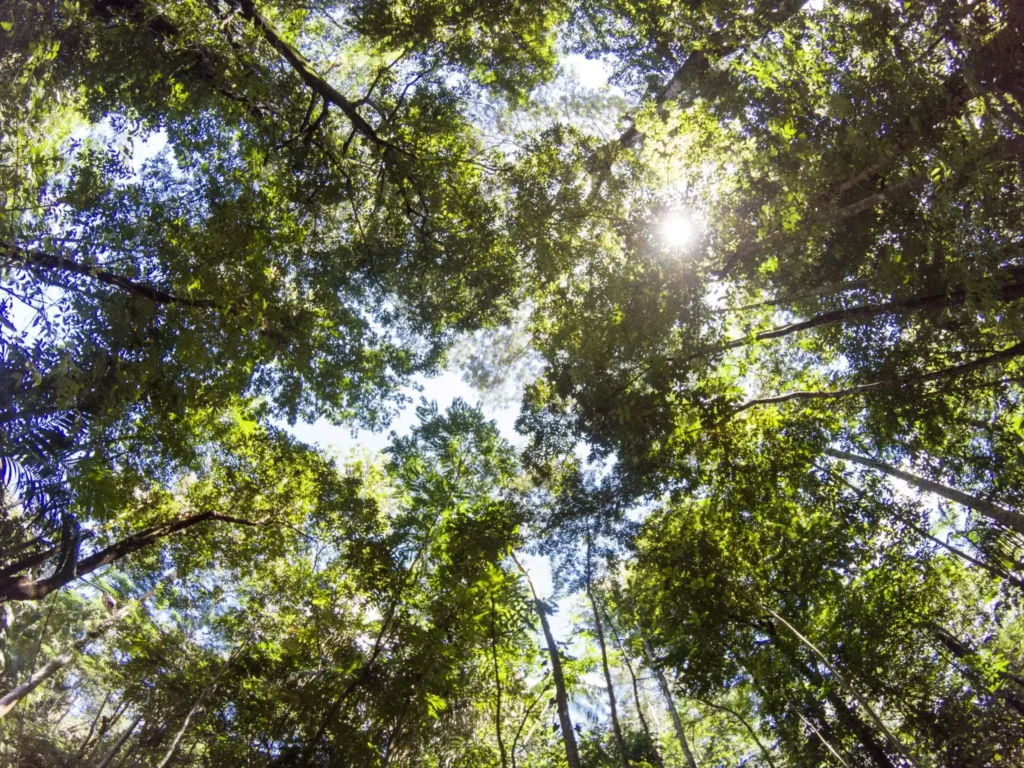
The geological history of the Amazon drainage system goes back millions of years. During different periods, portions of the region drained in different directions.
The modern Amazon River system, characterized by its enormous eastward flow toward the Atlantic Ocean, developed relatively recently in geological terms. Major changes in the Andes and the formation of the Amazon basin helped create the drainage system that we recognize today.
Scientists have proposed different dates for the establishment of the modern Amazon drainage system, with important developments occurring during the Miocene and later geological periods.
The Amazon River is younger than the continent
South America itself is vastly older than the Amazon River in its modern configuration. The continent’s geological history extends back hundreds of millions of years.
The Amazon River is therefore not a river that has remained unchanged since the formation of South America. Rivers constantly evolve.
Erosion changes channels, sediment accumulates, tributaries appear and disappear, lakes form and drain, and tectonic movements alter landscapes.
The Andes helped create the modern Amazon
One of the most important pieces of the Amazon’s history is the relationship between the river and the Andes Mountains.
The Andes provide enormous amounts of sediment and water to the Amazon basin. As the mountains rose and landscapes changed, drainage patterns across western South America were transformed.
The development of the Andes and the changing geography of the continent played a major role in eventually creating the enormous eastward-flowing Amazon system.
The ancient Amazon River system
Did the Amazon always flow east?
No. The Amazon drainage system has undergone major changes during geological history.
Evidence indicates that ancient drainage systems in what is now the Amazon basin were influenced by geological uplift, subsidence and changing connections between inland basins and the Atlantic.
At certain times, parts of the basin contained enormous wetlands, lakes and inland seas rather than functioning exactly like the modern river system.
This makes the Amazon River one of the most fascinating examples of how landscapes evolve over geological time.
Where Is the Amazon?
Where is the Amazon rainforest?
The Amazon rainforest is located in South America and extends across several countries.
Brazil contains the largest portion of the Amazon rainforest, but the forest also extends into:
- Peru
- Colombia
- Bolivia
- Venezuela
- Ecuador
- Guyana
- Suriname
- French Guiana
The Amazon basin covers an enormous area, with the rainforest stretching across millions of square kilometers.
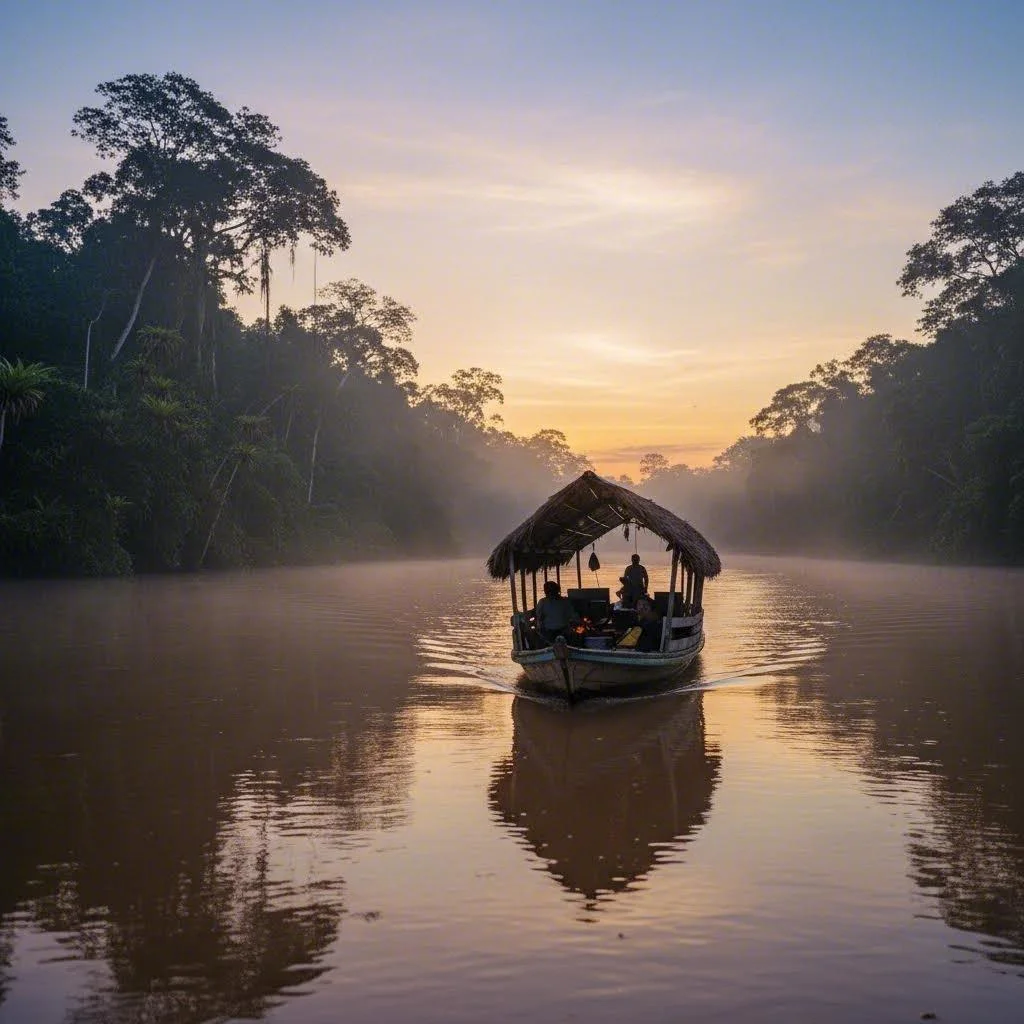
Where is the Amazon River?
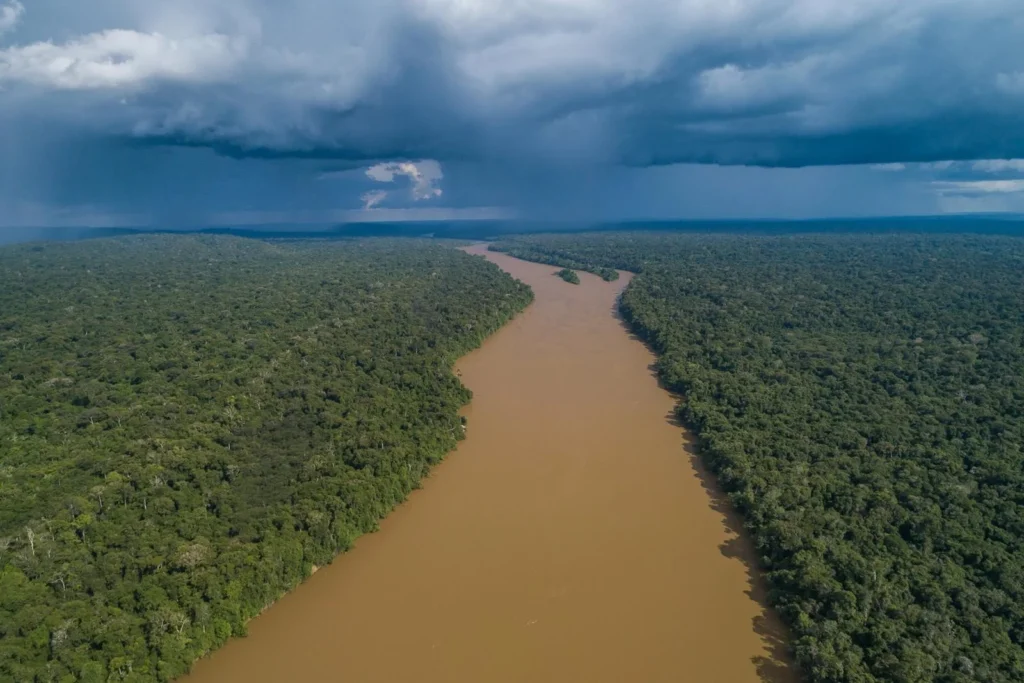
The Amazon River flows primarily through Peru and Brazil, with its enormous drainage basin extending into several other South American countries.
The river begins in the Andes of Peru through a complex network of headwaters and eventually travels eastward across the continent before reaching the Atlantic Ocean in Brazil.
The river system is so large that it is better understood as a network than as one isolated river.
Amazon River in which country?
If someone asks “Amazon River in which country?”, the most accurate answer is: the Amazon River flows through Peru and Brazil, while its wider basin extends across multiple countries.
The lower and central portions of the main river are strongly associated with Brazil, while the river’s western origins are located in Peru.
This is one reason the Amazon is an international geographical system rather than something belonging exclusively to one country.
How Old Is the Amazon Biome?
What is the Amazon biome?
The Amazon biome is much more than a collection of trees. It is a huge ecological system containing forests, rivers, wetlands, floodplains, lakes, grasslands and other habitats.
The biome supports extraordinary biological diversity, including:
- Jaguars
- Giant river otters
- Pink river dolphins
- Tapirs
- Sloths
- Monkeys
- Macaws
- Harpy eagles
- Caimans
- Thousands of fish species
- Millions of insects and other invertebrates
- An enormous diversity of plants
The biome has evolved through constant interactions between climate, geology, rivers, plants and animals.
The Amazon biome is constantly changing
It is tempting to imagine the Amazon as an ecosystem frozen in time, but the opposite is true.
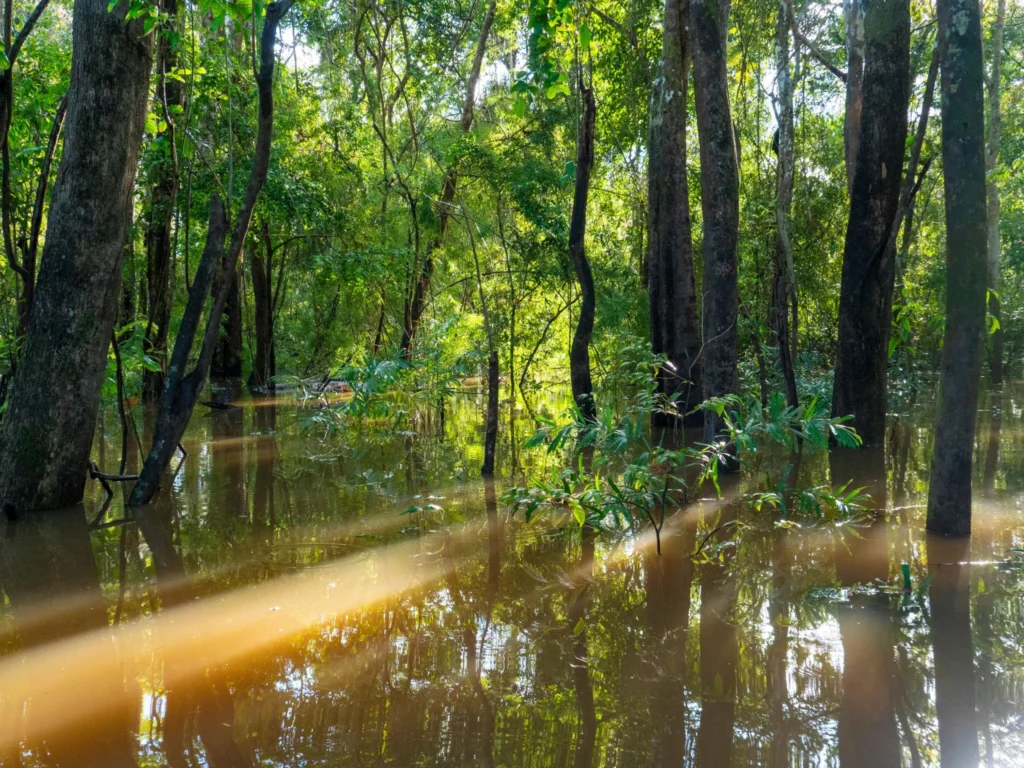
Floodwaters move through forests every year. Rivers change channels. Trees fall and create gaps in the canopy. Lightning and drought can alter vegetation. Animals transport seeds across enormous distances.
The Amazon is therefore an ancient ecosystem that is also constantly renewing itself.
How climate shaped the Amazon
Climate has played a fundamental role in determining the age and appearance of Amazonian ecosystems.
Periods of greater rainfall expanded humid forests, while drier periods created more fragmented environments. During colder periods in Earth’s history, tropical South America experienced significant climatic changes.
These fluctuations influenced where species lived and how forests were connected.
Some researchers have proposed that forest refuges during periods of climatic change helped generate the extraordinary biodiversity seen in the Amazon today.
Is the Amazon the Second Largest Rainforest in the World?
2nd largest rainforest in the world
The keyword “2nd largest rainforest in the world” can cause confusion.
The Amazon is the largest tropical rainforest in the world, not the second largest.
The Congo rainforest in central Africa is generally considered the world’s second-largest tropical rainforest.
The distinction is important because “rainforest” can be defined in different ways. Tropical rainforests are only one category of rainforest, and rankings can change depending on whether researchers are measuring intact forest, geographical region, tropical forest area or another definition.
Amazon vs. Congo rainforest
The Amazon and Congo rainforests are both enormous tropical ecosystems, but they have different geographical histories and species communities.
The Amazon is located in South America and is closely connected to the Andes and the enormous Amazon River basin.
The Congo rainforest is located in central Africa and is associated with the Congo Basin.
Both forests are extremely important for global biodiversity and climate systems.
How Much of the Amazon Has Been Explored?
How much of the Amazon has been explored?
There is no scientifically precise percentage answering “how much of the Amazon has been explored?”
This is because “explored” can mean many different things.
Aerially, satellite imagery has allowed scientists to map enormous portions of the Amazon. Researchers have also mapped rivers, roads, vegetation and land cover in remarkable detail.
But biologically and scientifically, huge gaps remain.
Scientists continue to discover new species, behaviors, ecological relationships and archaeological sites.
Explored from above, but not completely understood
This distinction is important.
It would be incorrect to say that large areas of the Amazon are completely unknown. Modern satellites and remote sensing technologies provide extensive information about the landscape.
At the same time, knowing what an area looks like from space is very different from understanding every organism living beneath the canopy.
A forest can be mapped from above while remaining poorly studied at ground level.
New species are still discovered
Researchers regularly describe species new to science from the Amazon.
Some are completely new species. Others were already known locally but had never been formally described by scientists.
The most difficult organisms to document are often small or cryptic species such as insects, fungi, microorganisms, plants and tiny aquatic organisms.
This means that the Amazon is not simply an old ecosystem. It is also one of the world’s greatest ongoing biological discoveries.
What is still unusual about the Amazon?
A forest can hide an entire ecosystem below the canopy
One of the most unusual characteristics of the Amazon is its vertical structure.
The rainforest can contain several ecological layers:
Emergent layer
The tallest trees rise above the main canopy and receive intense sunlight.
Canopy
The canopy forms a vast living roof where many birds, insects, monkeys and epiphytes spend much of their lives.
Understory
Below the canopy, reduced sunlight creates a darker environment inhabited by specialized plants and animals.
Forest floor
The ground layer receives relatively little direct sunlight but plays an essential role in decomposition and nutrient cycling.
This means that exploring the Amazon is not simply walking across its surface. Scientists can investigate entirely different communities depending on whether they study the soil, leaf litter, understory, canopy, rivers or treetops.
The Amazon Before the Modern Rainforest
What did the ancient Amazon look like?
The ancient Amazon was not always a continuous rainforest identical to the present ecosystem.
Millions of years ago, changing geological conditions created different landscapes, including extensive wetlands and water systems.
The western Amazon in particular experienced major geological transformations as the Andes developed.
At different points in geological history, enormous areas may have been covered by wetlands or connected aquatic environments.
Ancient animals of the Amazon
The Amazon’s prehistoric ecosystems supported animals very different from many species living there today.
Fossil evidence from the broader Amazonian region reveals ancient crocodile relatives, enormous turtles, giant fish and other remarkable creatures.
Some prehistoric crocodilian relatives were exceptionally large, demonstrating that Amazonian waterways once contained predators far larger than modern caimans.
The fossil record shows that the Amazon has repeatedly served as an evolutionary laboratory.
How Old Is the Amazon Compared With Humans?
Humans arrived much later
The Amazon ecosystem is vastly older than human settlement in South America.
People have lived in Amazonian environments for thousands of years and have influenced forests through agriculture, fire management, hunting, fishing and the cultivation of useful plants.
However, human occupation does not mean that the Amazon was an untouched wilderness before Europeans arrived.
Indigenous societies developed sophisticated relationships with forests and rivers.
Ancient Amazonian landscapes
Archaeological discoveries indicate that Indigenous peoples modified parts of the Amazon landscape.
They cultivated plants, managed useful trees, created settlements and altered soils.
One remarkable example is Amazonian dark earth, often called terra preta, a fertile human-created soil found at archaeological sites.
This demonstrates that the history of the Amazon includes not only natural evolution but also thousands of years of human interaction.
15 Fascinating Facts About the Age of the Amazon
1. The Amazon is older than humanity
The rainforest’s geological and ecological history extends millions of years into the past.
2. The Amazon River changed over geological time
The modern eastward-flowing river is the result of enormous geological transformations.
3. The Andes are crucial to the Amazon
The mountains influence rainfall, sediment and water flow throughout the basin.
4. The Amazon was not always one continuous forest
Climate changes repeatedly altered the distribution and connectivity of forests.
5. Individual trees are much younger than the rainforest
A forest can be millions of years old even though individual trees live for only a fraction of that time.
6. The Amazon is the largest tropical rainforest
The Congo rainforest is generally considered the second-largest tropical rainforest.
7. The forest is still being scientifically discovered
New species continue to be described.
8. Satellite mapping does not mean complete biological exploration
Scientists can map landscapes while still knowing relatively little about some organisms living there.
9. The Amazon contains ancient human landscapes
Indigenous peoples have influenced portions of the forest for thousands of years.
10. Some Amazonian soils were modified by people
Amazonian dark earth demonstrates long-term human environmental management.
11. The Amazon River carries enormous quantities of freshwater
Its discharge into the Atlantic is greater than that of any other river.
12. The rainforest creates its own moisture cycles
Trees release enormous quantities of water vapor through transpiration, contributing to regional atmospheric moisture.
13. The forest is constantly rebuilding itself
Fallen trees create canopy gaps where sunlight reaches the forest floor and new vegetation develops.
14. The Amazon and Amazon.com share a name for a reason
The technology company was named after the enormous Amazon geographical system.
15. The two Amazons have completely different ages
The rainforest is measured in millions of years, while the company is measured in decades.
Frequently Asked Questions About How Old the Amazon Is
How old is the Amazon?
If you mean the Amazon rainforest, its ecological history extends tens of millions of years, although the present-day rainforest has changed significantly over geological time.
How old is the Amazon rainforest?
Parts of the Amazon region supported tropical forest ecosystems more than 50 million years ago. The modern rainforest developed through a long process of geological and climatic change.
How old is the Amazon River?
The Amazon drainage system has a geological history spanning millions of years. The modern river system developed relatively recently compared with the age of the South American continent.
How old is the Amazon forest?
The Amazon forest ecosystem is millions of years old, but individual trees are generally much younger.
Where is the Amazon?
The Amazon rainforest and basin are located in South America, extending across Brazil, Peru, Colombia, Bolivia, Venezuela, Ecuador, Guyana, Suriname and French Guiana.
What country is the Amazon River in?
The main Amazon River flows through Peru and Brazil, while its enormous drainage basin extends across several South American countries.
How much of the Amazon has been explored?
There is no reliable percentage because “explored” can mean mapped, physically visited, biologically studied or archaeologically investigated. Large portions have been mapped, but many species and ecological relationships remain poorly understood.
Is the Amazon the second-largest rainforest?
No. The Amazon is generally recognized as the largest tropical rainforest in the world. The Congo rainforest is generally considered the second-largest.
The Amazon Is Ancient—but Never Finished
So, how old is the Amazon? The best answer is that it depends on which Amazon you mean.
The Amazon rainforest has an extraordinarily deep history extending tens of millions of years. The Amazon biome developed through repeated changes in climate, geology, rivers and biological evolution. The Amazon River also has a complex geological history and has changed its drainage patterns over millions of years.
But the Amazon is not simply an ancient relic. It is a living system that constantly changes.
Trees grow and die. Rivers move. Floodplains expand and contract. Animals migrate. New species are discovered. Forests regenerate after disturbances. Rainfall patterns shift. Indigenous communities continue their relationships with the landscape.
The Amazon therefore combines two apparently opposite qualities: it is incredibly ancient and continuously new.
That is perhaps the most remarkable answer to the question “how old is the Amazon rainforest?” It is old enough to have witnessed millions of years of geological transformation, yet alive enough to be changing every day.